
Breast Cancer
Breast Cancer – Common Signs & Symptoms
Breast cancer remains one of the most prevalent health concerns globally. While medical science has made significant strides in treatment and survival rates, the cornerstone of effective management remains early detection. Understanding the warning signs is not merely about awareness; it is an essential proactive step for your health.
This blog provides a straightforward, expert breakdown of breast cancer symptoms, differentiating between common signs and rare conditions, to empower patients and readers with the knowledge needed to seek timely medical advice.
What is Breast Cancer?
Breast cancer occurs when cells in the breast tissue mutate and grow uncontrollably, forming a mass of tissue known as a tumour. While it most commonly begins in the milk ducts (ductal carcinoma) or the milk-producing lobules (lobular carcinoma), it can occur in the fatty or connective tissues within the breast.
Although it is statistically the most common cancer diagnosed in women, it is vital to remember that men can get breast cancer too, as everyone is born with some amount of breast tissue.
Common Signs and Symptoms of Breast Cancer
Knowing what is normal for your body is the first line of defence. While symptoms vary significantly between individuals—and some may experience no symptoms at all in the early stages—there are specific changes to look out for.
1. The Breast Lump
The most widely recognised symptom is a lump in the breast.
- Texture: These lumps often feel hard, painless, and have irregular edges. However, some cancerous lumps can be tender, soft, or round.
- Location: They can appear anywhere in the breast tissue or the armpit (axilla).
- Persistence: Unlike hormonal fluctuations related to the menstrual cycle, a cancerous lump typically does not disappear after a period.
It is important to note that not all lumps are cancerous. Many are caused by benign breast conditions such as cysts or fibroadenomas. However, any new mass requires immediate evaluation by a healthcare professional.
2. Changes to the Skin Texture
Visual changes to the skin covering the breast can indicate underlying issues.
- Dimpling: The skin may pucker or dimple, resembling the texture of an orange peel. In medical terms, this is known as peau d’orange.
- Irritation: Unexplained redness, scaliness, or thickening of the skin that does not resolve.
- Colour Changes: In lighter skin tones, the breast may look red or pink. In darker skin tones, including those common among Indian women, the area may appear darker, purple, or bruised.
3. Nipple Abnormalities
The nipple area is sensitive to changes caused by tumour growth.
- Retraction: A nipple that turns inward (inverted) instead of pointing outward.
- Discharge: Spontaneous nipple discharge that is not breast milk is a warning sign. This is particularly concerning if the discharge occurs without squeezing, affects only one breast, or contains traces of blood.
- Skin Changes: Crusting, ulcers, or eczema-like symptoms on the nipple or areola (the dark skin surrounding the nipple) can be a sign of Paget’s disease of the breast.
4. Change in Size or Shape
While breasts naturally change size during menstruation, pregnancy, or weight fluctuation, sudden or unexplained asymmetry should be investigated. If one breast becomes significantly larger or drops lower than the other unexpectedly, consult a doctor.
5. Pain and Discomfort
Generally, breast cancer is painless in its early stages. However, some women describe a persistent aching or distinct pain in one specific area that does not go away. Breast pain (mastalgia) is more commonly linked to hormonal changes, but it should not be dismissed if it is localised and persistent.
Symptoms of Invasive vs. Non-Invasive Types
Understanding the type of cancer can sometimes correlate with specific symptoms.
Ductal Carcinoma In Situ (DCIS)
Often referred to as Stage 0, this is a non-invasive cancer where abnormal cells are found in the lining of a breast duct. DCIS usually has no symptoms and is most often detected via a routine mammogram screening. Occasionally, a lump or slight discharge may be present.
Invasive Ductal Carcinoma (IDC)
This is the most common type of breast cancer. Because it has spread into the surrounding breast tissue, it is more likely to present with the classic hard lump, skin dimpling, or nipple retraction described above.
Inflammatory Breast Cancer (IBC)
This is a rare but aggressive form of cancer that blocks lymph vessels in the skin. Unlike other types, it often does not present with a lump.
- Symptoms: The breast becomes swollen, red, and warm to the touch. The skin may look pitted (like an orange peel).
- Misdiagnosis: It is often mistaken for a breast infection (mastitis). If antibiotics do not clear the symptoms rapidly, a biopsy is essential.
Metastatic Breast Cancer Signs
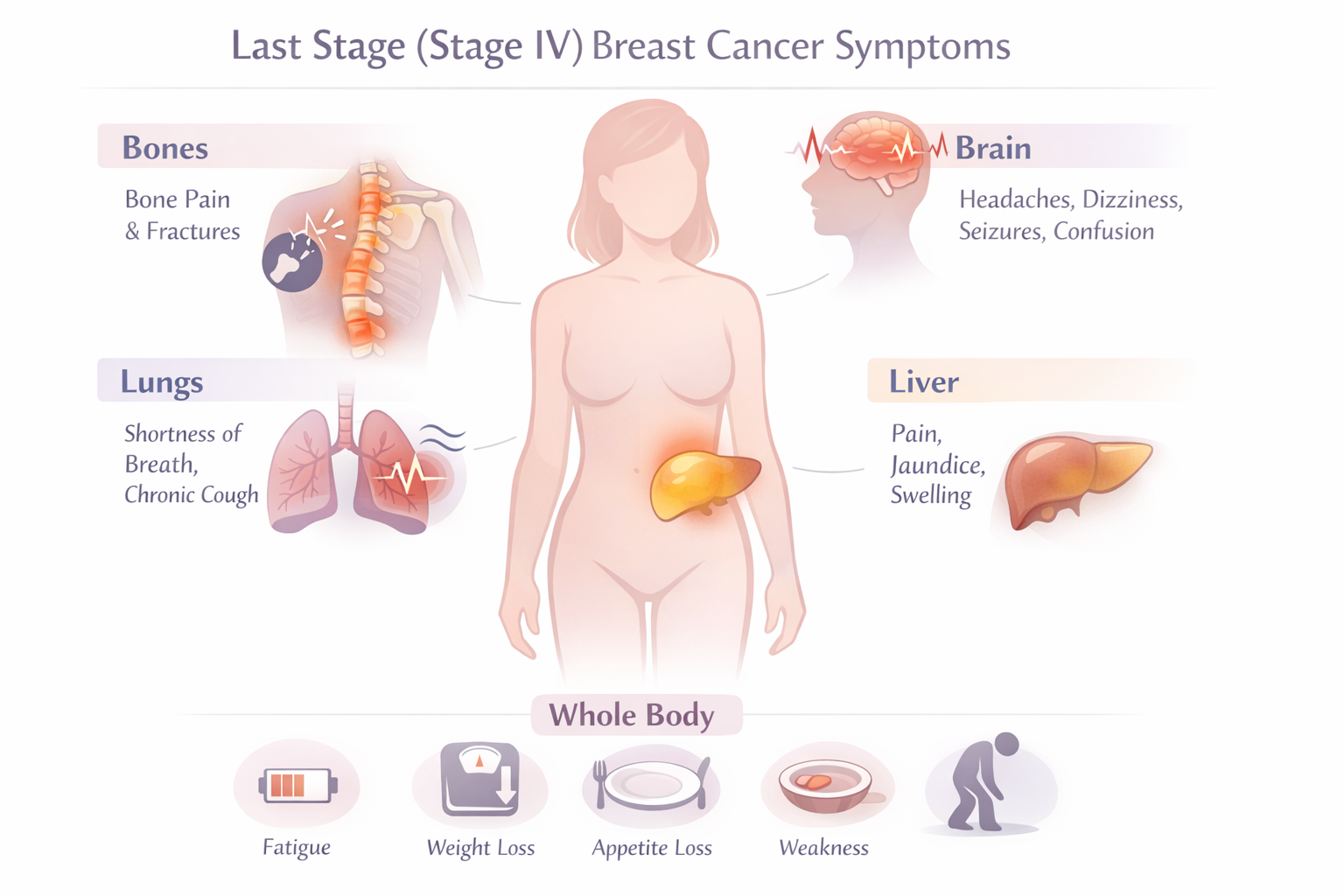
If cancer spreads beyond the breast to other parts of the body, it is known as metastatic breast cancer (or secondary breast cancer). Symptoms depend on where the cancer has spread:
- Bones: Severe, persistent bone pain or fractures.
- Lungs: Chronic cough or shortness of breath.
- Liver: Jaundice (yellowing of skin/eyes) or abdominal swelling.
- Brain: Persistent headaches, vision changes, or seizures.
Breast Cancer in Men
Though rare, accounting for less than 1% of cases, male breast cancer is a reality. The symptoms are similar to those in women and include:
- A painless lump or thickening in the breast tissue (usually behind the nipple).
- Changes to the nipple skin, such as dimpling or redness.
- Discharge from the nipple.
Risk Factors and Epidemiology in India
While global rates are high, the demographic profile of breast cancer is shifting. In India, there is a rising trend of breast cancer being diagnosed in younger age groups compared to the West.
- Genetic Factors: Mutations in BRCA1 and BRCA2 genes significantly increase risk.
- Lifestyle: Urbanisation, delayed childbearing, and reduced breastfeeding duration are contributing factors.
- Screening: Due to a lack of awareness, many cases in India are diagnosed at later stages. This highlights the urgent need for breast cancer awareness in India.
How to Check Your Breasts (TLC Method)
Medical experts recommend being “breast aware” rather than following a rigid self-exam technique. The UK National Health Service promotes the TLC method:
- TOUCH: Can you feel a lump, thickening, or bumpy area in the breast or armpit?
- LOOK: Do you see any change in shape, skin texture, or nipple appearance in the mirror?
- CHECK: If you notice anything unusual, check with your General Practitioner (GP) or oncologist immediately.
5 easy Steps to Get Treated in India

Share Case Details

Get Expert Opinion and Hospital Quotes

Get Visa Invitation & Hotel Recommendations

Get Received At Airport and Start Your Treatment

Travel Back and Get Followups Through Us
 Chat on WhatsApp
Diagnosis and Next Steps
If you identify a symptom, consult a leading breast cancer doctor. The doctor will likely recommend a “Triple Assessment”:
- Clinical Exam: A physical examination by a specialist.
- Imaging: A mammography (X-ray) or an ultrasound scan. For younger women with denser breast tissue, ultrasound is often preferred.
- Biopsy: Taking a small tissue sample to be analysed under a microscope.
For patients, accessing a breast cancer specialist in India or a dedicated breast clinic in major metropolitan areas can provide access to advanced diagnostic tools like 3D Mammography (Tomosynthesis) and MRI.
Conclusion
Breast cancer symptoms can be subtle. A slight thickening, a change in contour, or a persistent rash could be the only indication that something is wrong. While the discovery of a change can be frightening, remember that early diagnosis significantly improves survival rates.
Do not wait for a scheduled screening if you notice a change today. Prioritise your health, perform regular checks, and consult a healthcare professional regarding any concerns.
You May Be Also Interested In
Best Oncologist in IndiaBest Breast Cancer Doctors in ChennaiBest Breast Cancer Doctors in MumbaiBest Breast Cancer Doctors in NoidaBest Breast Cancer Doctors in BangaloreBest Breast Cancer Doctors in DelhiBest Breast Cancer Doctors in GurgaonBest Breast Cancer Doctors in IndiaCancer Treatment Cost in IndiaBreast Cancer Treatment Cost in IndiaBreast Cancer Treatment in India
Related Patient Stories

 See Video
Forever grateful to Cancer Rounds and Dr. Priya Tiwari for supporting me through chemo. Your care means everything.
 See Video
So grateful to Cancer Rounds and Dr. Sudip Raina for helping me through my breast cancer journey. I'm healing, hopeful, and feeling like myself again!
 See Video
I was scared and uncertain, but Cancer Rounds helped me find answers. Thanks to their support and Dr. Arun Behl’s care in India, I found peace of mind—no cancer. Forever grateful for the kindness and clarity I received.
 See Video
Thank you Cancer Rounds and Dr. Deepak Jha for your support and care during my breast cancer journey. I'm healing with hope because of you.

Cancer Rounds guided me to the right hospital. My breast tests came out fine. Thanks to Dr. Pandey, I now feel calm and healthy.

I'm deeply grateful to Dr. Kapil Kumar and BLK Max Hospital for helping me overcome Stage II breast cancer. Thanks to Cancer Rounds, I’m now cancer-free and thriving!

I had both breast cancer and diabetes. With Cancer Rounds and Dr. Rashmi Sharma’s care, I’m now free of cancer and feeling strong again.
 See Video
I flew from Fiji to India for breast cancer care. Thanks to Cancer Rounds, Apollo Chennai, and Dr. Sapna Nangia, I returned home cancer-free.
 See Video
From Namibia to India for breast cancer care — grateful to Dr. Sudip Raina & team at Batra Hospital for the support and treatment.
Explore More Insights
View All →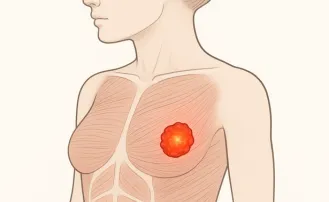
April 6, 2019
Breast Cancer
Breast cancer has been recognized for thousands of years, with early documentation dating back to ancient Egypt around 1600 BCE…

January 23, 2026
Tahira Kashyap’s Inspiring Cancer Journey – From Diagnosis to Recurrence
When we talk about celebrity cancer journeys that touch the heart of global audiences, the story of Tahira Kashyap is…
January 2, 2026
Last Stage Breast Cancer Symptoms
When you or someone you love is diagnosed with Stage 4 breast cancer, the world feels like it shifts on…

November 25, 2025
Martina Navratilova’s Cancer Journey: From Diagnosis to Recovery
Resilient, disciplined, and determined to the very end, Martina Navratilova, a top-tier sports icon, was never in doubt. Later on,…
Get expert guidance instantly
Talk to a Specialist
Share a few details and our medical team gets back to you within 4 hours with the next steps.
✨ YOUR MEDICAL TRAVEL PARTNER
Find the Right Care for Your Condition
Tell us what you are facing and our medical team will guide you to the right doctors, hospitals and treatment.
✅
Free Review, No Commitment
Free assessment with no pressure to proceed.
👥
Trusted by 100,000+ Patients
Across 125+ countries worldwide
🏥
500+ Top Partner Hospitals
Globally accredited medical facilities
👨⚕️
5000+ Expert Specialists
Senior doctors across major specialties.
Our Impact So Far
Making quality healthcare accessible to patients worldwide
5000+
Specialists
500+
Partner Hospitals
100,000+
Patients Served
24/7
Support
Recommended for You
Joint Replacement Treatment Cost in India
Hip Arthroscopy Treatment Cost in India
Arthroscopic Surgery Treatment Cost in India
Best Adrenalectomy Doctors in India
Best Obstetricians and Gynecologists in India
Best Nephrologists in India
Best Spine Surgeons in India
Best Urologists in India
Best Hematologists in India
Best Cardiologists in India
Best Gastroenterologists in India
Best Kidney Hospitals in India
Best Spine Hospitals in India
Best ENT Hospitals in India
Best Eye Hospitals in India
Best Orthopedic Hospitals in India
Best General Surgery Hospitals in India
Best Pulmonology Hospitals in India
Best Endocrinology & Diabetes Hospital in India
Best Urology Hospitals in India
Best Rheumatology Hospitals in India
Best Hospitals for Dermatology in India
Best Hematology Hospitals in India
Best Gastroenterology Hospitals in India
Best Liver Hospitals in India
Best Maternity Hospitals in India
Best Vascular Surgery Hospitals in India
Best Children’s Hospitals in India
Best Heart Hospitals in India
Cervical Cancer Vaccine Cost in India
Mammography Test Cost in India
Best Oncologists at Max Hospital, Patparganj, Delhi
Best Oncologists at Indraprastha Apollo Hospital, New Delhi
Best Oncologists at Apollo Cancer Hospital, Chennai
Best Oncologists at Jaslok Hospital Mumbai
Best Oncologists at Rajiv Gandhi Cancer Hospital, Delhi
Best Oncologists in Sir Ganga Ram Hospital, New Delhi
Best Cancer Hospitals in India
Genetic Testing Cost For Cancer in India
Full Body Cancer Screening Cost in India
Best Oncologist in India
Best Cancer Hospitals in Gurgaon
Best Neurosurgeons in India
Top Dendritic Cell Therapy Hospitals in India for Cancer Treatment
Top Cancer Specialists in Medanta Hospital Gurgaon
Best Cancer Doctors in Max Hospital, Saket
Best Oncologists in BLK Max Super Speciality Hospital, Delhi
Top Cancer Specialists in Artemis Hospital, Gurgaon
Best Cancer Doctors in Apollo Proton Cancer Centre, Chennai
Best Cancer Specialists in Kokilaben Hospital, Mumbai
Best Cancer Specialists in Fortis Hospital, Gurgaon
Top Oncologists at Apollo Hospital, Chennai
Best Cancer Hospitals in India
Pituitary Gland Tumour Treatment Cost: Affordable Options & Insights
HCV Test Price in India
Surgery for Cancer
Common Questions About Our Services
Everything you need to know about choosing the right hospital, doctor and treatment plan.