
Skin Cancer
Skin Cancer: Early Warning Signs and Symptoms
In today’s time, skin cancer has become one of the fastest-rising health concerns, affecting people of all age groups but especially middle-aged and older adults. In many cases, skin cancer is directly linked to our everyday habits and lifestyle choices. Excessive sun exposure without protection, frequent use of tanning beds, repeated sunburns, smoking, a weak immune system, and long-term exposure to harmful chemicals. All these factors significantly increase the risk of developing this disease.
In India, the challenge is growing steadily. Rising temperatures, prolonged outdoor work, lack of awareness about sunscreen use, and delayed diagnosis make the situation even more serious. Overexposure to UV rays, especially without proper skin protection, remains the leading cause. Additionally, genetic factors, fair skin tone, previous radiation treatment, and certain viral infections such as HPV further contribute to the risk.
The good news is that when skin cancer is detected early, its treatment is highly effective, and outcomes are often very successful. This is why recognizing its early symptoms and consulting a doctor promptly are extremely important.
What is Skin Cancer?
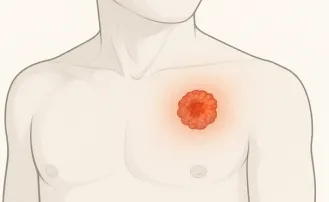
Skin cancer is a condition in which abnormal cells start growing uncontrollably in the skin. It can develop in any part of the body, including the face, scalp, arms, legs, back, and chest, and even in areas rarely exposed to the sun. Although it can occur at any age, it is more commonly seen in middle-aged and older adults.
In the early stages, these changes may look very mild, like a small spot, a new mole, a change in an existing mole, a scaly patch, or a sore that doesn’t heal. Because these signs often resemble common skin issues, people tend to ignore them.
The condition becomes serious when these abnormal cells continue to grow over time and start spreading to deeper skin layers, nearby tissues, lymph nodes, or even other organs. Early detection and timely treatment can prevent complications and significantly improve survival rates.
Skin cancer is often linked to the following factors:
- Excessive sun exposure (UV rays) without protection
- Frequent sunburns or use of tanning beds
- Family history of skin cancer
- Fair skin tone or sensitive skin
- Exposure to harmful chemicals
- Weak immune system or certain viral infections (including HPV)
This article provides expert-verified information to help you clearly understand the risk factors and symptoms of skin cancer.
Early Signs and symptoms of Skin Cancer
Recognizing the early symptoms of skin cancer is extremely important because the earlier it is detected, the better the treatment outcomes are.
If any of the symptoms below persist for more than two weeks, you should consult a dermatologist or skin specialist immediately.
1. A Non-Healing Skin Sore
Any sore, ulcer, or wound on the skin that does not heal for a long time can be an early sign of skin cancer, whether it is painful or painless.
2. New Spots, Moles, or Changes in Existing Moles
Skin cancer often appears as new growths or visible changes in existing moles. Warning signs include:
- Asymmetry: one half looks different from the other
- Irregular borders: not smooth or well-defined
- Color variation: shades of brown, black, red, white, or blue
- Increase in size: growing in diameter
- Evolving: rapid changes in shape, color, or symptoms
These changes should never be ignored.
3. Persistent Itching, Pain, or Burning Sensation
Any patch or lesion on the skin that continues to itch, burn, or hurt without a clear cause may be a sign of abnormal cell growth.
4. A New Lump, Bump, or Thickened Area
A firm, raised bump, a scaly patch, or thickened skin, especially if it continues to grow, should be evaluated immediately.
This may appear on sun-exposed areas like the nose, lips, ears, face, hands, or scalp.
5. Rough or Scaly Patches (Actinic Keratosis)
Dry, scaly, crusty patches, particularly on sun-exposed areas, can be precancerous lesions that may progress to skin cancer if left untreated.
6. Unexplained Numbness or Tingling
Although less common, numbness or reduced sensation in a skin area may indicate deeper nerve involvement due to an underlying tumor.
7. A Dark Spot That Looks Different From Other Marks
A mole or spot that stands out (“ugly duckling sign”) or looks unusual compared to others on your skin needs medical attention.
8. Bleeding Without Any Obvious Injury
A mole or skin lesion that bleeds, oozes, or forms a crust without any injury can be a warning sign of skin cancer.
9. Persistent Redness or Inflammation
Red, inflamed skin that doesn’t respond to regular creams or remedies may be a sign of early skin cancer.
Many people develop skin cancer even without having obvious risk factors, which makes early recognition and routine dermatological checkups extremely important.
Risk Factors for Skin Cancer
According to clinical evidence, the following habits and conditions increase the risk:
- Prolonged sun exposure: especially without sunscreen
- Frequent sunburns: particularly during childhood
- Use of tanning beds: artificial UV radiation
- Fair or sensitive skin: burns easily in the sun
- Family history of skin cancer
- Exposure to harmful chemicals: arsenic, industrial chemicals
- HPV infection: certain strains can increase risk
- Weak immune system: due to medications or medical conditions
- Previous radiation therapy
Understanding these risks and recognizing early symptoms can help detect skin cancer early and achieve successful skin cancer treatment.
How Is Skin Cancer Diagnosed?
If any skin symptom persists for more than two weeks, you should immediately consult a dermatologist or skin cancer specialist. Doctors usually perform the following tests:
1. Physical Examination
The doctor closely examines the skin for any suspicious moles, spots, patches, sores, or abnormal changes.
2. Skin Biopsy
A small sample of the affected skin is taken and examined under a microscope to confirm the presence of cancer cells.
This is the most accurate test for diagnosing skin cancer.
3. Imaging Tests (CT Scan, MRI, or PET Scan)
If the cancer is suspected to be deeper or spreading, imaging tests help determine the tumor’s size, depth, and possible spread to nearby tissues or lymph nodes.
4. Dermoscopy
A dermoscope (a specialized magnifying tool) is used to examine moles or lesions more clearly, especially their patterns, colors, and structures.
Prevention Tips for Skin Cancer
- Limit sun exposure, especially between 10 AM–4 PM
- Use a broad-spectrum sunscreen daily (SPF 30 or higher)
- Wear protective clothing such as hats, sunglasses, and long sleeves
- Avoid tanning beds and artificial UV exposure
- Check your skin regularly for new or changing moles
- Maintain a healthy diet rich in fruits and vegetables
- Consult a dermatologist annually for a full-body skin check
Frequently Asked Questions (FAQ)
1. Can skin cancer be cured in early stages?
Yes. When detected at Stage 1 or Stage 2, the success rate is very high, often 80-90% or more. Treatment usually includes surgical removal of the lesion, and in some cases, radiation therapy.
2. Is every new mole or skin spot a sign of cancer?
No. Most moles and spots are harmless. However, any mole or patch that changes in size, shape, or color, or doesn’t heal for more than 2 weeks, should be shown to a dermatologist immediately.
3. What is the biggest cause of skin cancer?
Excessive exposure to UV radiation from the sun or tanning beds is the leading and most preventable cause of skin cancer worldwide. Factors such as fair skin, repeated sunburns, smoking, and a weak immune system further increase the risk.
You May Be Also Interested In
Best Doctor for Skin Cancer Treatment in NoidaBest Doctor for Skin Cancer Treatment in MumbaiBest Doctor for Skin Cancer Treatment in Delhi, IndiaBest Doctor for Skin Cancer Treatment in Chennai, IndiaBest Doctor for Skin Cancer Treatment in GurgaonBest Skin Cancer Treatment Doctor in BangaloreBest Doctor For Skin Cancer Treatment in IndiaSkin Cancer Treatment Cost in IndiaSkin Cancer Treatment in India
Get expert guidance instantly
Talk to a Specialist
Share a few details and our medical team gets back to you within 4 hours with the next steps.

✨ YOUR MEDICAL TRAVEL PARTNER
Find the Right Care for Your Condition
Tell us what you are facing and our medical team will guide you to the right doctors, hospitals and treatment.
✅
Free Review, No Commitment
Free assessment with no pressure to proceed.
👥
Trusted by 100,000+ Patients
Across 125+ countries worldwide
🏥
500+ Top Partner Hospitals
Globally accredited medical facilities
👨⚕️
5000+ Expert Specialists
Senior doctors across major specialties.
Our Impact So Far
Making quality healthcare accessible to patients worldwide
5000+
Specialists
500+
Partner Hospitals
100,000+
Patients Served
24/7
Support
Recommended for You
Joint Replacement Treatment Cost in India
Hip Arthroscopy Treatment Cost in India
Arthroscopic Surgery Treatment Cost in India
Best Adrenalectomy Doctors in India
Best Obstetricians and Gynecologists in India
Best Nephrologists in India
Best Spine Surgeons in India
Best Urologists in India
Best Hematologists in India
Best Cardiologists in India
Best Gastroenterologists in India
Best Kidney Hospitals in India
Best Spine Hospitals in India
Best ENT Hospitals in India
Best Eye Hospitals in India
Best Orthopedic Hospitals in India
Best General Surgery Hospitals in India
Best Pulmonology Hospitals in India
Best Endocrinology & Diabetes Hospital in India
Best Urology Hospitals in India
Best Rheumatology Hospitals in India
Best Hospitals for Dermatology in India
Best Hematology Hospitals in India
Best Gastroenterology Hospitals in India
Best Liver Hospitals in India
Best Maternity Hospitals in India
Best Vascular Surgery Hospitals in India
Best Children’s Hospitals in India
Best Heart Hospitals in India
Cervical Cancer Vaccine Cost in India
Mammography Test Cost in India
Best Oncologists at Max Hospital, Patparganj, Delhi
Best Oncologists at Indraprastha Apollo Hospital, New Delhi
Best Oncologists at Apollo Cancer Hospital, Chennai
Best Oncologists at Jaslok Hospital Mumbai
Best Oncologists at Rajiv Gandhi Cancer Hospital, Delhi
Best Oncologists in Sir Ganga Ram Hospital, New Delhi
Best Cancer Hospitals in India
Genetic Testing Cost For Cancer in India
Full Body Cancer Screening Cost in India
Best Oncologist in India
Best Cancer Hospitals in Gurgaon
Best Neurosurgeons in India
Top Dendritic Cell Therapy Hospitals in India for Cancer Treatment
Top Cancer Specialists in Medanta Hospital Gurgaon
Best Cancer Doctors in Max Hospital, Saket
Best Oncologists in BLK Max Super Speciality Hospital, Delhi
Top Cancer Specialists in Artemis Hospital, Gurgaon
Best Cancer Doctors in Apollo Proton Cancer Centre, Chennai
Best Cancer Specialists in Kokilaben Hospital, Mumbai
Best Cancer Specialists in Fortis Hospital, Gurgaon
Top Oncologists at Apollo Hospital, Chennai
Best Cancer Hospitals in India
Pituitary Gland Tumour Treatment Cost: Affordable Options & Insights
HCV Test Price in India
Surgery for Cancer
Common Questions About Our Services
Everything you need to know about choosing the right hospital, doctor and treatment plan.