
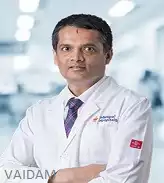
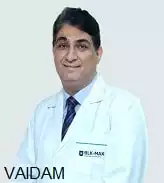

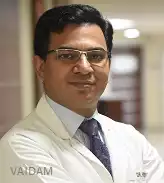

Best Scoliosis Treatment Doctors in India

Dr. Rajagopalan Krishnan

Dr. Vidyadhara S.

Dr. Puneet Girdhar

Dr. Sajan K Hegde

Dr. Hitesh Garg


Dr. Kalidutta Das

Dr. Vikas Tandon


Dr. Charanjit Singh Dhillon

Dr. Vishal Peshattiwar

Dr. H. S. Chhabra

Dr. Navaladi Shankar

Dr. M.L. Bansal


Dr. Manoj Miglani


Dr. Anil Mishra
What Parents and Patients with Scoliosis Worry About Most
Adolescent scoliosis is usually picked up in a school screening or by a parent noticing one shoulder is higher than the other. Parents worry about the cosmetic appearance, the need for years of bracing, and the prospect of a long surgery. Adults with progressive degenerative scoliosis worry about back pain that worsens each year, leg pain from nerve compression, and balance issues. The honest position is that not all scoliosis needs surgery. Curves under twenty-five degrees in a child are observed, twenty-five to forty-five degrees in a growing child are braced, and curves above forty-five to fifty degrees often need surgery to prevent lifelong progression.
How Scoliosis Is Diagnosed
Standing posteroanterior and lateral X-rays of the full spine measure the Cobb angle, the apex level (thoracic, thoracolumbar, lumbar), the curve flexibility on bending films, and the skeletal maturity by Risser sign or Sanders staging. Magnetic resonance imaging is added in juvenile scoliosis, left thoracic curves, rapidly progressive curves, and any neurological symptoms to rule out tethered cord, syrinx, or tumour. Pulmonary function tests are done before surgery for curves above seventy degrees. Three-dimensional surface topography is used to track curve change without repeat radiation.
Treatment Options for Scoliosis in India
Observation with three to six-monthly X-rays is the management for skeletally immature patients with curves under twenty-five degrees. Bracing (Boston, Rigo Cheneau, or thoracolumbosacral orthosis) is used for curves twenty-five to forty-five degrees during growth, worn eighteen to twenty-three hours a day. Vertebral body tethering is an emerging fusionless option for selected growing patients. Posterior instrumented fusion with pedicle screws is the standard for curves above forty-five to fifty degrees. Growth-friendly systems (growing rods, magnetically controlled growing rods, vertical expandable prosthetic titanium rib) are used for early-onset scoliosis. Adult degenerative scoliosis with spinal stenosis is treated with decompression and selective fusion. Centres at Medanta, Apollo, Fortis Memorial Research Institute, BLK-Max, and Manipal run high-volume paediatric and adult deformity programmes.
Recovery, Success Rates, and Follow-Up
Bracing prevents curve progression in seventy to eighty percent of compliant adolescent idiopathic scoliosis patients. Posterior instrumented fusion corrects the Cobb angle by sixty to seventy percent and gives a balanced spine. Hospital stay is six to eight days. Return to school is at four to six weeks, sport (non-contact) at four to six months, and contact sport at one year. Implant infection is around two percent. Pseudarthrosis is under five percent. Curve progression after fusion is rare. Yearly follow-up X-rays continue until skeletal maturity and then every two to five years.
How to Choose the Right Spine Surgeon for Scoliosis
Choose a deformity-trained paediatric spine surgeon at a centre that does over a hundred deformity cases a year, with neuromonitoring (motor evoked potentials and somatosensory evoked potentials) in every case. Ask the team to show pre- and post-operative Cobb angles, the published complication rate, and the centre’s experience with growth-friendly systems for early-onset cases. A multidisciplinary team with paediatric anaesthesia, paediatric intensive care, and rehabilitation is essential.
Support for International Patients
Cancer Rounds arranges the medical visa invitation letter, accommodation that is family-friendly, airport pickup, and multilingual support in eleven plus languages. Families travel from Nigeria, Bangladesh, Kenya, Iraq, Ethiopia, Oman, and the United Arab Emirates. The case manager handles the second opinion, pre-anaesthesia workup with pulmonary function tests, the operation scheduling, intensive care arrangements, rehabilitation, and a one-year teleconsult follow-up.
Frequently Asked Questions
At what age is scoliosis surgery done?
For adolescent idiopathic scoliosis, around twelve to sixteen years of age once the curve crosses forty-five to fifty degrees. Early-onset scoliosis uses growth-friendly systems from younger ages.
Will my child grow normally after fusion?
After fusion, the fused segments stop growing but the unfused parts continue to grow. Final adult height is usually within one to two centimetres of the predicted height.
Can scoliosis be corrected without surgery?
Curves under twenty-five degrees are observed. Twenty-five to forty-five degrees in growing children are braced. Bracing prevents progression but does not correct an established curve.
Is vertebral body tethering a true alternative to fusion?
For selected skeletally immature patients with flexible curves, vertebral body tethering offers motion preservation. Long-term data is still maturing and the procedure is not suitable for all curves.
How long is the recovery after fusion?
Hospital stay is six to eight days. School return is at four to six weeks. Non-contact sport at four to six months and contact sport at one year.
Will scoliosis return after surgery?
The fused part stays corrected. A small loss of correction over years is normal. Adding-on or junctional curves are uncommon in well-planned constructs.