
Liver cancer in Germany is managed by dedicated hepato-oncology teams who choose treatment based on tumour size, liver function, and whether the cancer has spread. Smaller tumours are removed surgically or treated with radiofrequency ablation, intermediate-stage tumours respond to TACE or Y-90 radioembolization, and advanced HCC is now treated with the atezolizumab plus bevacizumab immunotherapy combination as first-line care.
Reply in 4 hours · Plan and quote in 2 days · 100% confidential
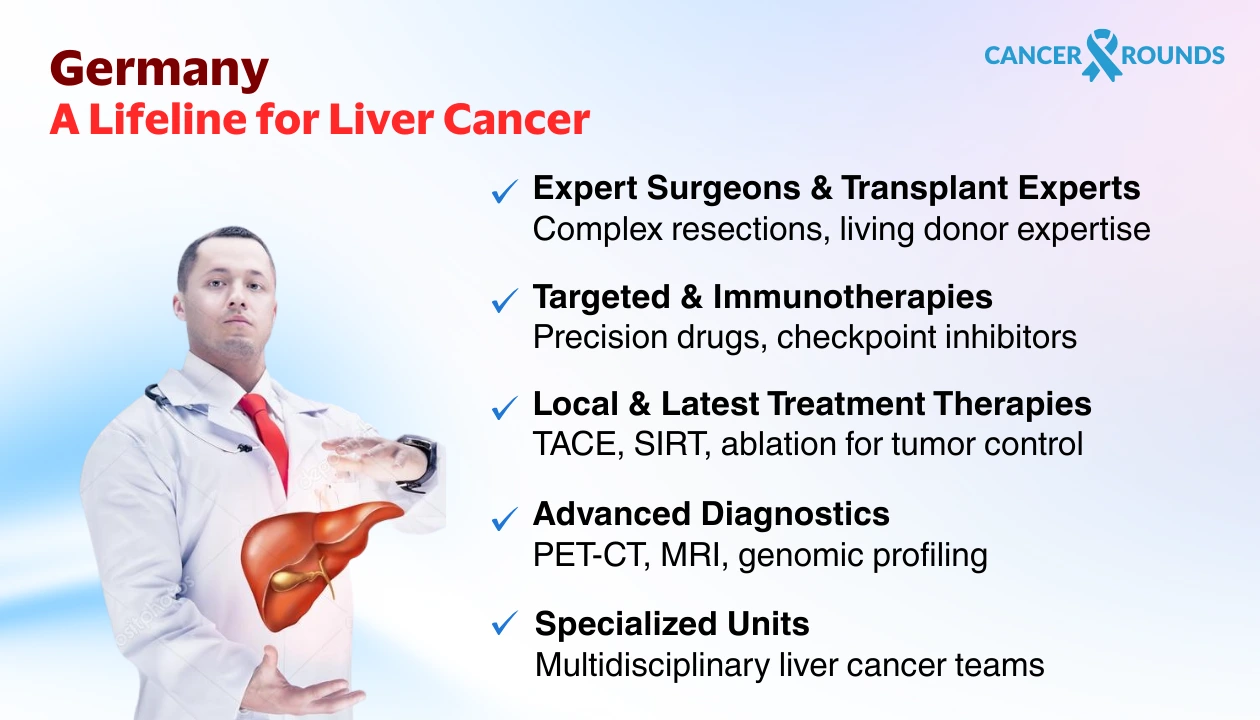
Germany is globally acclaimed for its unmatched expertise in liver cancer treatment, where medical science is seamlessly blended with precision, innovation, and compassionate care. The country’s renowned cancer centers and university hospitals are equipped with the latest technologies, ensuring that every patient receives an individualized treatment strategy. Whether it is hepatocellular carcinoma (HCC), cholangiocarcinoma, or metastatic liver cancer, German specialists approach each case with a meticulous assessment of the type of liver cancer and its stage of progression. This allows them to design therapies that not only aim to control the disease but also to enhance long-term survival and quality of life. By offering a comprehensive range of both conventional treatments such as surgery, chemotherapy, and radiation, as well as innovative options like immunotherapy, targeted therapy, and radioembolization, Germany stands at the forefront of global cancer care—providing hope, precision, and excellence to patients from around the world.
Liver cancer may arise from chronic hepatitis infections, cirrhosis, alcohol use, or genetic predisposition. It can also be caused due to prolonged exposure to toxins (e.g., aflatoxin).
The corresponding initial treatment in Germany includes:
| Symptoms | Details | Corresponding Treatment in Germany |
| Fatigue, weight loss, loss of appetite | Often early signs of liver cancer, linked with impaired liver function and metabolic imbalance | – Nutritional therapy & supportive care – Targeted therapies (sorafenib, lenvatinib) to slow tumor progression – Immunotherapy for advanced cases |
| Pain in the upper abdomen | Due to tumor enlargement or pressure on surrounding organs | – Localized treatments: Transarterial chemoembolization (TACE) or Radioembolization (SIRT) – Analgesic & palliative care – Surgical resection if tumor is operable |
| Jaundice (yellowing of skin & eyes) | Caused by bile duct obstruction or advanced tumor spread | – Biliary stenting or drainage procedures in German hospitals – Surgical removal of obstructing tumors – Chemotherapy or radiation to reduce tumor mass |
| Liver cancer red spots on skin | Rare but possible sign of liver dysfunction or coagulopathy | – Comprehensive blood tests & coagulation management – Targeted systemic therapy – Liver transplantation in eligible patients |
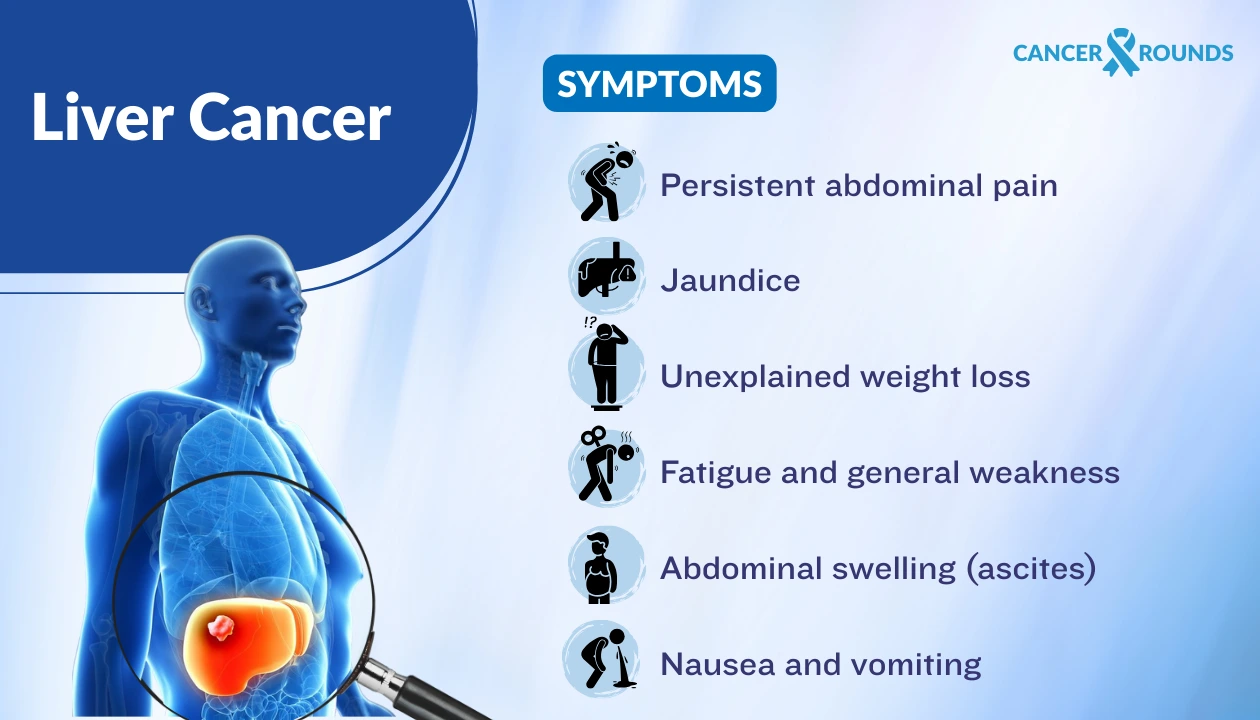
The treatment approach is decided by various factors such as:
The treatment for liver cancer in Germany involves conventional approaches like surgery, chemotherapy to innovative approaches such as targeted therapy and radioembolisation.
Conventional Approaches
Innovative Approaches
Treatment Approaches
| Types of Liver Cancer | Liver Cancer Stages | Innovative Treatment Approach | Mutation-Based Targeted Therapy |
| Hepatocellular Carcinoma (HCC) – the most common among all types of liver cancer | Early to intermediate liver cancer stages | Liver resection Liver transplantation TACE / SIRT | VEGF/PD-L1 targeted therapies: Sorafenib, Lenvatinib, Atezolizumab-Bevacizumab |
| Cholangiocarcinoma (Bile Duct Cancer) | Locally advanced or unresectable | Surgical resection Biliary stenting & drainage Systemic chemotherapy | FGFR2 mutations: Pemigatinib IDH1 mutations: Ivosidenib |
| Metastatic Liver Cancer – including life expectancy for stage 4 colon cancer spread to liver | Advanced/ Stage 4 liver cancer | Immunotherapy Systemic targeted therapy Radioembolization (SIRT) | KRAS/BRAF mutations in colon-liver metastasis → Cetuximab, Encorafenib |
| Rare Liver Tumors (Angiosarcoma, Hepatoblastoma) | Pediatric or advanced adult stages | Precision surgery Experimental immunotherapy trials | Clinical trial-based mutation-targeted drugs |
Indications:
Contraindications:
The top hospitals for liver cancer treatment in Germany are:
In Germany, the liver cancer survival rate has steadily improved thanks to advanced medical technologies and highly specialized oncologists. Overall, the 5-year relative survival rate for liver cancer is around 17% for both men and women, with about 11–12% reaching the 10-year mark. These outcomes vary significantly depending on the type of liver cancer, the stage of liver cancer, and the chosen liver cancer treatment strategy.
For patients diagnosed at an early stage, the prognosis is considerably more favorable. Partial liver resection can achieve a 5-year survival rate of 30–63%, while liver transplantation offers even better outcomes, with about 65% overall survival at 5 years and nearly 70% recurrence-free survival.
At advanced stages, outcomes are more challenging, but German hospitals still provide meaningful improvements. Patients with stage 4 liver cancer benefit from systemic therapies, interventional radiology, and innovative targeted drugs. In cases of life expectancy for stage 4 colon cancer spread to liver, survival can extend to 22–23 months on average, with some patients living beyond 10 years when surgery and targeted therapies are successfully combined.
When metastatic liver cancer develops, or when colon cancer spreads to the liver, German oncology centers deploy multidisciplinary strategies. These may include precision surgery, targeted therapies, and genetic testing to personalize treatment. Nationally, the 5-year survival rate for metastatic colon cancer with liver involvement is about 23%, but German protocols can raise these figures significantly. For example, patients with wild-type KRAS mutations may achieve 42% survival at 36 months, while less favorable mutations lower long-term outcomes.
Although the overall stage 4 liver cancer survival rate remains modest, Germany’s world-class hospitals achieve results that far exceed global averages. Local tumor control through surgery, transplantation, and interventional radiology has transformed outcomes. With personalized care, integration of genetic and mutation-based therapies, and age- and stage-specific planning, patients can achieve not just extended survival, but also improved quality of life—even in advanced or metastatic disease.
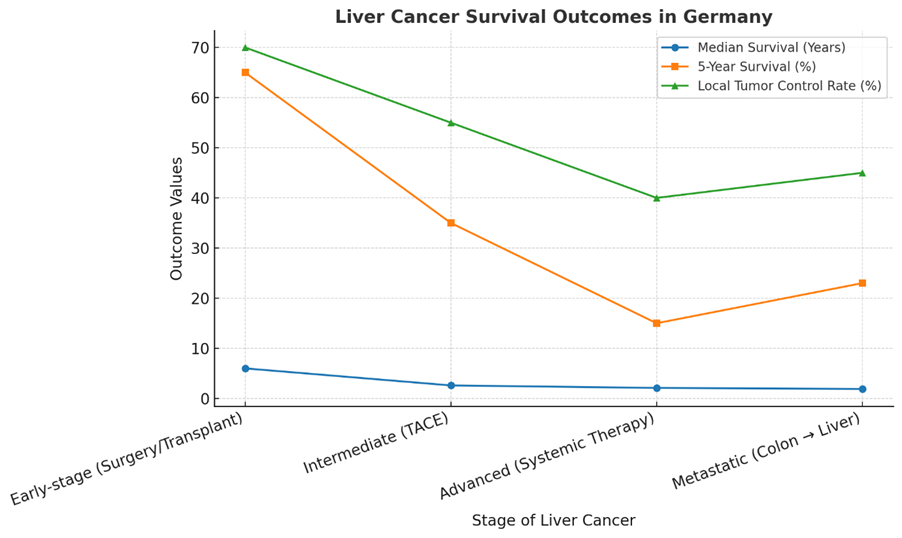
Graph-1: survival outcomes graph showing three key parameters for liver cancer treatment in Germany:
This visualization highlights how early-stage treatments like surgery or transplant dramatically improve outcomes, while advanced and metastatic cases still achieve meaningful results with German therapies
Liver cancer treatment in Germany varies significantly by type and stage, with standard treatments costing approximately €80,000 – €150,000, while innovative methods, such as immunotherapy, can range from €25,000 – €60,000.
On average, treatment costs range from:
For Domestic Patients
For International Patients
For international patients seeking the most advanced liver cancer treatment abroad, Germany stands as a preeminent global destination. Its profound expertise in hepatobiliary oncology, interventional radiology, and surgical precision attracts individuals from the UK, US, Canada, Ireland, Saudi Arabia, Holland, the broader Middle East, and worldwide. If you’re an international patient navigating complex healthcare systems, Cancer Rounds serves as your dedicated hepatology medical facilitator, cancer care coordinator, and medical tourism expert, simplifying access to Germany’s world-class liver cancer care and specialized services in leading medical centers in cities like Heidelberg, Essen, Munich, and Hamburg.
German medical institutions are globally recognized for their sophisticated approach to liver cancer, seamlessly integrating advanced diagnostics, innovative surgical techniques, precision interventional therapies, and comprehensive systemic treatments. Patients choose Germany for compelling reasons, making it a top choice for liver cancer medical tourism:
At Cancer Rounds, we deeply appreciate the complexities international patients face – from navigating diverse healthcare systems and securing prompt specialist appointments to overcoming language barriers and logistical hurdles. We serve as your essential liaison, directly connecting you with Germany’s top liver cancer specialists and university hospitals in key medical cities like Heidelberg, Essen, Munich, and Hamburg. We are leaders in international patient support for cancer care.
If you are from the UK exploring advanced liver cancer therapies, including specialized interventional procedures like TACE or SIRT, or require an expert second opinion beyond what’s available domestically, Cancer Rounds facilitates direct pathways to renowned German excellence. We ensure swift consultations and access to innovative treatments, providing comprehensive medical review from esteemed overseas specialists.
Patients from the US looking for pioneering European hepatobiliary oncology approaches, access to specific interventional treatments, or a second opinion from German liver cancer experts can leverage Cancer Rounds’ services. We offer expedited appointments and connections to leading specialists in cities like Munich and Heidelberg, simplifying your journey to obtain advanced, personalized liver cancer care in Germany.
We understand the specific challenges confronting patients from the Middle East and Saudi Arabia when pursuing liver cancer treatment in Europe. Cancer Rounds meticulously streamlines your journey, arranging swift access to leading German liver cancer specialists in cities such as Essen and Hamburg, coordinating fast-track second opinions, and linking you with innovative surgical and interventional treatments. We are your dedicated ally in securing high-quality cancer care in Germany without the typical logistical complexities.
Whether you are from Canada facing specific access challenges for advanced liver cancer therapies, or from Ireland, Holland, and other international locations seeking world-class hepatobiliary care, Cancer Rounds ensures a seamless and efficient process. We simplify access to specialized liver cancer programs, including transplantation assessments and personalized treatment planning in Germany’s leading cancer centers, empowering you to focus entirely on your health and recovery.
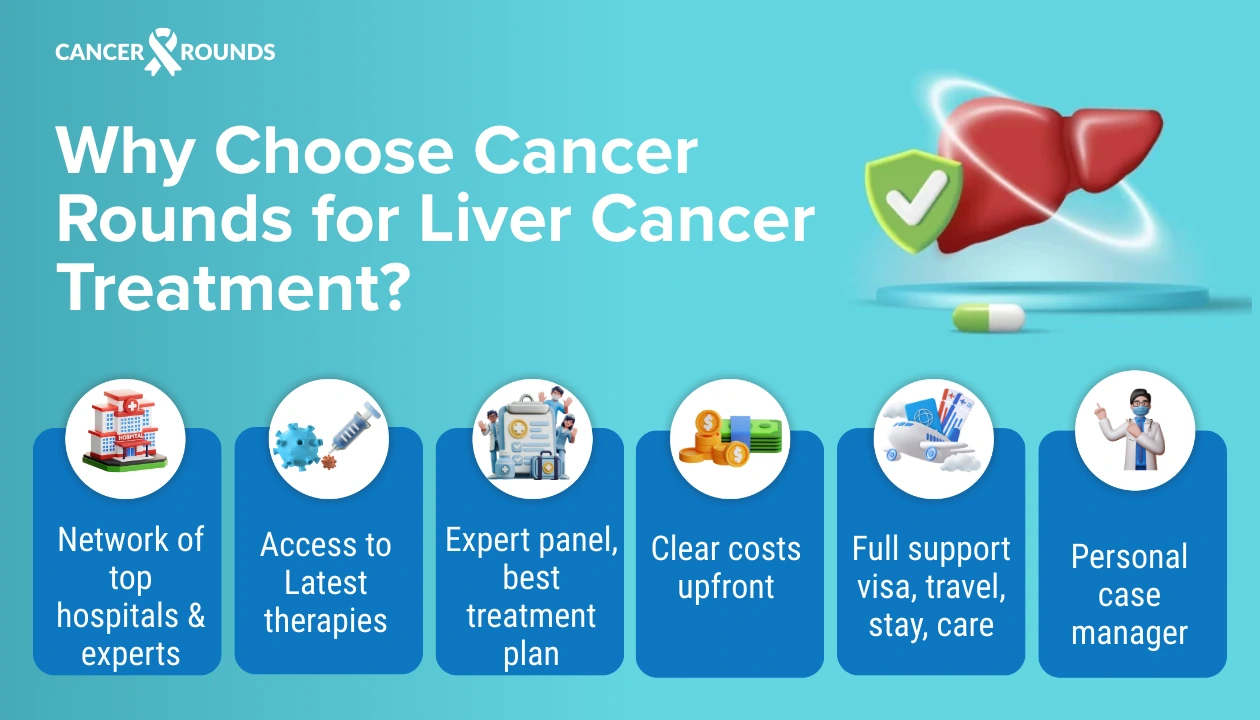
Cancer Rounds offers meticulous, end-to-end support for all international patients. Our services encompass all logistical intricacies, including medical record translation, visa assistance, travel arrangements, accommodation, and crucial language assistance throughout your medical journey in Germany. We meticulously manage these details so you can concentrate solely on your health, making international medical travel stress-free. Our extensive network guarantees you receive a bespoke treatment strategy, leveraging Germany’s advanced medical capabilities, precisely tailored to your individual needs as an international cancer patient.
Do not let geographical distance or administrative complexities impede your access to the finest liver cancer treatment in Germany. Let Cancer Rounds be your trusted guide to receiving timely, comprehensive, and advanced hepatobiliary care in Germany’s celebrated medical centers. Contact us for Germany cancer treatment cost information and to understand more about how to get treatment in Germany for cancer.
1. What makes Germany a top destination for liver cancer treatment?
Germany is renowned for advanced oncology centers, modern hospitals, and specialized liver cancer surgeons. With support from Cancer Rounds, patients get access to cutting-edge therapies like immunotherapy, targeted therapy, and robotic-assisted surgery.
2. How does Cancer Rounds help international patients seeking liver cancer treatment in Germany?
Cancer Rounds provides end-to-end assistance, including medical record evaluation, treatment cost estimates, hospital selection, visa support, and interpreter services.
3. What types of liver cancer are treated in Germany?
German hospitals manage hepatocellular carcinoma (HCC), cholangiocarcinoma, and metastatic liver cancer. Cancer Rounds helps match the cancer type with the best German specialists.
4. What are the latest innovations in liver cancer treatment in Germany?
Innovations include radioembolization, proton beam therapy, targeted immunotherapy, genetic mutation-based therapy, and liver transplantation. Cancer Rounds ensures patients are connected with hospitals offering these advanced treatments.
5. Can stage 4 liver cancer be treated in Germany?
Yes. While stage 4 liver cancer is challenging, German oncologists use personalized treatments like TACE, immunotherapy, and palliative surgery to extend survival. Cancer Rounds helps patients choose the right hospital for stage 4 cases.
6. What is the liver cancer survival rate in Germany?
Early-stage patients may achieve 60–70% 5-year survival after surgery, while advanced cases benefit from quality-of-life improvements. Cancer Rounds provides patients with survival rate comparisons based on hospital outcomes.
7. What is the average liver cancer treatment cost in Germany?
Costs vary depending on surgery, transplant, or immunotherapy. On average, €25,000–€60,000, but Cancer Rounds negotiates cost-effective packages with top hospitals.
8. Can international patients get a liver transplant in Germany?
Yes, with strict eligibility criteria. Cancer Rounds supports patients by connecting them with accredited transplant centers and guiding through documentation.
9. What are the risks or contraindications of liver cancer surgery?
Contraindications include poor liver function, advanced metastasis, and severe comorbidities. Cancer Rounds help patients get second opinions before surgery.
10. Do German hospitals offer minimally invasive liver cancer surgeries?
Yes, many hospitals perform laparoscopic and robotic liver resections, reducing recovery time. Cancer Rounds ensures patients access hospitals specializing in these techniques.
11. How does Cancer Rounds support post-treatment follow-up?
They coordinate with German oncologists for regular follow-ups, online consultations, and monitoring scans, ensuring continuity of care.
12. Can Cancer Rounds arrange teleconsultations before traveling to Germany?
Yes, they facilitate virtual consultations with German oncologists, helping patients make informed decisions before traveling.
13. What is the waiting time for liver cancer treatment in Germany?
Usually 1–3 weeks after initial consultation. Cancer Rounds expedites appointments and ensures faster admission for international patients.
14. Why choose Cancer Rounds for liver cancer treatment in Germany?
Cancer Rounds simplifies the journey by offering medical guidance, cost transparency, visa help, accommodation support, and emotional counseling, ensuring stress-free treatment abroad.
Sources:
Published By
.webp)
Global Patient Care, Redefined
The CancerRounds Medical Content Team specialises in creating accurate, clear and patient-focused healthcare content. Our content is written by medically trained writers, medically reviewed, and based on reputable medical sources to support informed healthcare decisions.




Get expert guidance instantly
Share a few details and our medical team gets back to you within 4 hours with the next steps.
Tell us what you are facing and our medical team will guide you to the right doctors, hospitals and treatment.
Free Review, No Commitment
Free assessment with no pressure to proceed.
Trusted by 100,000+ Patients
Across 125+ countries worldwide
500+ Top Partner Hospitals
Globally accredited medical facilities
5000+ Expert Specialists
Senior doctors across major specialties.
Making quality healthcare accessible to patients worldwide
Everything you need to know about choosing the right hospital, doctor and treatment plan.