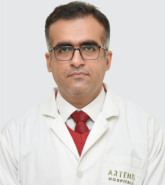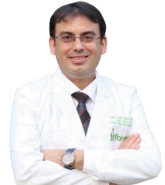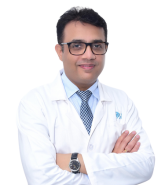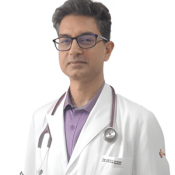
Best Aplastic Anaemia Treatment Doctors in India

Dr. Rahul Bhargava

Dr. Gaurav Dixit

Dr. Vikas Dua

Dr. TPR Bharadwaj

Dr. Satya Prakash Yadav

Dr. Chezhian Subash

Dr. Srikanth M

Dr. Mallikarjun Kalashetty

Dr. Shishir Seth

Dr. Dharma Choudhary

Dr. Gaurav Kharya


Dr. Kishore Kumar S

Dr. Revathi Raj

Dr. Ramaswamy N.V.

Dr. Satyendra Katewa


Dr. Balkrishna Padate
What Patients with Aplastic Anaemia Worry About Most
Aplastic anaemia is frightening because it strikes suddenly. Patients tell us they were healthy one day and bleeding, bruising, or severely tired the next. Families ask: is this leukaemia, will I need a bone marrow transplant, can I avoid transfusions long-term, and will my child be a donor. The fear of infections and bleeding from very low blood counts is real and immediate. Severe and very severe aplastic anaemia are medical emergencies, and the first thirty days after diagnosis are critical for starting treatment. Modern Indian centres handle this volume routinely with intensive care unit support, neutropenic precautions, and twenty-four hour blood bank cover.
How Aplastic Anaemia Is Diagnosed
Diagnosis requires a bone marrow biopsy showing a hypocellular marrow with reduced cell production across all three lineages, with no abnormal cells. The diagnostic workup includes a complete blood count showing pancytopenia, peripheral blood smear, bone marrow aspiration and biopsy with cellularity assessment, cytogenetics to exclude myelodysplastic syndrome, flow cytometry for paroxysmal nocturnal haemoglobinuria clone detection, and viral testing. Younger patients are tested for inherited bone marrow failure syndromes (chromosome breakage testing for Fanconi anaemia, telomere length for telomeropathies). Severity follows Camitta criteria. Severe and very severe aplastic anaemia need urgent treatment within weeks.
Treatment Options for Aplastic Anaemia in India
The two main curative options are allogeneic bone marrow transplant and immunosuppressive therapy. Allogeneic bone marrow transplant is the first-line option for patients under fifty with a matched sibling donor. Cure rates are around eighty to ninety percent. Matched unrelated donor transplant and haploidentical (half-matched family donor) transplant are options for younger patients without a matched sibling. Immunosuppressive therapy is the first-line option for older patients and those without a matched sibling. It combines anti-thymocyte globulin with cyclosporine and eltrombopag. Response rates have improved significantly with eltrombopag, with around seventy percent achieving response. Centres at Fortis Memorial Research Institute, Medanta, BLK-Max, Apollo, and Tata Memorial run high-volume aplastic anaemia programmes with full transplant capability.
Recovery, Success Rates, and Follow-Up
Long-term survival after matched sibling transplant in younger patients is around eighty to ninety percent. Response to immunosuppressive therapy is around seventy percent, with five-year survival around seventy-five to eighty percent. Patients who fail first-line treatment can still be salvaged with second-line therapy or alternative donor transplant. Bone marrow transplant requires a hospital stay of around four to six weeks for conditioning and engraftment, followed by ninety to one hundred days of close monitoring. Immunosuppressive therapy with anti-thymocyte globulin requires hospital admission for about five to seven days, then outpatient cyclosporine and eltrombopag for at least six to twelve months.
How to Choose the Right Doctor
Look for a hemato-oncologist with at least ten years of haematology focus, working at a centre with allogeneic bone marrow transplant capability, twenty-four hour blood bank cover, high-efficiency particulate air filtered isolation rooms, and access to anti-thymocyte globulin and eltrombopag. Questions to ask: how many cases the doctor treats yearly, the time from diagnosis to starting treatment, whether haploidentical or matched unrelated donor transplant is offered when no sibling donor is available, and the centre’s experience with eltrombopag combined with immunosuppression. Centres at Fortis Memorial Research Institute, Medanta, BLK-Max, Apollo, Tata Memorial, and Manipal have established aplastic anaemia programmes.
Support for International Patients
Treatment in India is more affordable than equivalent care in the United Kingdom, United States, Middle East, or Southeast Asia. Final pricing depends on whether the case goes to immunosuppressive therapy or transplant, the donor type, and length of hospital stay. Cancer Rounds arranges the medical visa invitation letter (often expedited given urgency), accommodation, multilingual support in eleven plus languages, and full coordination through treatment. Patients from Nigeria, Bangladesh, Oman, Kuwait, Qatar, Kenya, Uganda, Tanzania, Ghana, Ethiopia, Cameroon, Mauritius, Mozambique, Senegal, Zimbabwe, Zambia, Guinea, Liberia, Madagascar, South Sudan, Qatar, Chad, Sierra Leone, Congo, Iraq & Uzbekistan, and other countries travel to India for aplastic anaemia treatment every year.
Frequently Asked Questions
Is aplastic anaemia curable?
Yes, in many cases. Allogeneic bone marrow transplant from a matched sibling cures around eighty to ninety percent of younger patients. Immunosuppressive therapy gives long-term remission in around seventy percent of patients.
How urgent is treatment?
Severe and very severe aplastic anaemia are medical emergencies. Treatment should ideally start within thirty days of diagnosis. The delay from diagnosis to treatment is one of the strongest predictors of outcome.
Bone marrow transplant or immunosuppression?
For patients under fifty with a matched sibling donor, transplant is the first-line option because cure rates are higher. For older patients or those without a matched sibling, immunosuppressive therapy is first-line. Haploidentical transplant is increasingly an option for younger patients without a sibling donor.
What is eltrombopag and why is it added?
Eltrombopag is an oral thrombopoietin receptor agonist that stimulates platelet production and supports bone marrow recovery. Adding eltrombopag to standard immunosuppressive therapy has improved response rates significantly.
What is the risk of progression to leukaemia?
Around ten to fifteen percent of patients treated with immunosuppression alone develop clonal evolution to myelodysplastic syndrome or acute myeloid leukaemia over ten to fifteen years. Bone marrow transplant eliminates this risk.
Can my child be a bone marrow donor?
Children are only half-matched, so they are not used as matched sibling donors for parents. However, a parent can be a haploidentical donor for a child, and an adult sibling who is fully matched can be a matched sibling donor.