



Best Migraine Treatment Doctors in India


Dr. Sudhir Kumar

Dr. Sushil Tandel

Dr. Pranathi Gutta

Dr. A.K. Roy


Dr. Vikram Kamath


Dr. Ramesh Patankar


Dr. Pawan Ojha

Dr. P R Krishnan


Dr. Rajesh Benny

Dr. Laxmidhar Parhi


Dr. Dhanashri Chonkar

Dr. Tridib Chowdhury
What Patients with Migraine Worry About Most
Migraine wrecks work, sleep, and family life on attack days. Patients ask whether the headaches will keep getting more frequent, whether daily medication is safe long term, whether scans will show something dangerous, and whether the new injectable treatments work for the type they have. Fear of a brain tumour sits behind almost every first consultation. A proper migraine workup rules that out quickly and shifts the focus to attack control and prevention. Most patients improve significantly once a trigger diary, a preventive plan, and a rescue plan are in place.
How Migraine Is Diagnosed
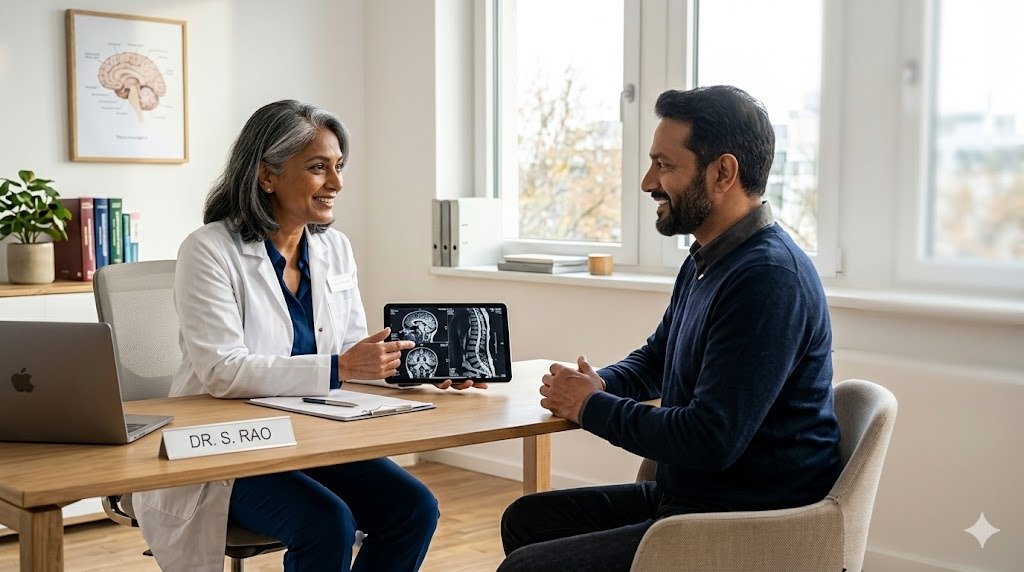
Migraine is a clinical diagnosis. The neurologist asks about attack pattern, duration, aura, triggers, family history, and medication use. Magnetic resonance imaging of the brain with contrast is ordered when red flag features are present: new headache after age fifty, thunderclap onset, neurological deficits, or change in pattern. Magnetic resonance angiography is added if vascular causes are suspected. The headache diary covering four to six weeks is the single most useful investigation, capturing frequency, severity, triggers, and medication response.
Treatment Options for Migraine in India
Treatment splits into acute (rescue) and preventive. Acute options include triptans (sumatriptan, rizatriptan, eletriptan), nonsteroidal anti-inflammatories, antiemetics, and the newer gepants (rimegepant, ubrogepant) for patients who cannot tolerate triptans. Preventive therapy is started when attacks exceed four per month or are disabling. First-line preventives include propranolol, topiramate, flunarizine, and amitriptyline. For chronic migraine (fifteen or more headache days per month), onabotulinumtoxinA injections every twelve weeks and calcitonin gene-related peptide monoclonal antibodies (erenumab, fremanezumab, galcanezumab) are now standard. Centres at All India Institute of Medical Sciences, National Institute of Mental Health and Neurosciences, Fortis Memorial Research Institute, Medanta, and Apollo offer dedicated headache clinics with botulinum toxin and calcitonin gene-related peptide antibody programmes.
Recovery, Success Rates, and Follow-Up
Around sixty to seventy percent of patients on a well-chosen preventive see attack frequency drop by fifty percent or more within three months. Calcitonin gene-related peptide antibodies work in around sixty percent of chronic migraine cases that failed older preventives. Follow-up runs every three months in the first year, then every six months once attacks stabilise. Triggers (sleep loss, dehydration, missed meals, hormonal cycles, screen time) are tracked in the diary and managed alongside medication.
How to Choose the Right Migraine Doctor
Pick a neurologist who runs a structured headache clinic, uses a written headache diary, offers both botulinum toxin and calcitonin gene-related peptide antibody therapy, and gives a clear escalation plan. Ask how many chronic migraine patients are on injectable therapy, what the reassessment interval is, and whether the clinic handles medication overuse headache. Avoid practices that prescribe daily painkillers without a preventive plan, which often worsens the condition.
International Patient Support
Migraine care in India is far cheaper than in the United Kingdom, United Arab Emirates, or East Africa, with same-quality medications and access to the newest biologics. Cancer Rounds arranges the medical visa invitation letter, accommodation near the chosen neurology centre, multilingual support in eleven plus languages, and a single case manager from first enquiry to follow-up. Patients travel regularly from Nigeria, Bangladesh, Kenya, Ethiopia, Iraq, Oman, and the United Arab Emirates for botulinum toxin and calcitonin gene-related peptide antibody therapy.
Frequently Asked Questions
Is migraine curable?
Migraine is not cured but is well controlled in most patients. The goal is to reduce attack frequency by at least fifty percent and shorten each attack with rescue medication. Many patients stop needing daily preventives after a few good years.
Do I need a brain scan?
Most patients with classic migraine do not need a scan. Magnetic resonance imaging is ordered only when red flags appear, such as new headache after fifty, thunderclap onset, or neurological deficits. Your neurologist decides based on the pattern.
Are calcitonin gene-related peptide injections safe long term?
Three plus years of real-world data show calcitonin gene-related peptide antibodies are well tolerated, with constipation and injection-site reactions as the main side effects. They are now first-line for chronic migraine that did not respond to older preventives.
Can painkillers make migraine worse?
Yes. Taking acute painkillers more than ten to fifteen days per month causes medication overuse headache, which feels like worsening migraine. The fix is to start a preventive and slowly taper the overused drug under medical supervision.
How long does botulinum toxin therapy take to work?
Most patients feel benefit four to six weeks after the first session. Full effect comes after the second cycle at twelve weeks. The standard protocol gives one hundred fifty-five units across thirty-one sites every twelve weeks.
Does migraine get better with menopause?
Many women see migraine improve after menopause because hormonal triggers settle. Some get worse during perimenopause first. Your neurologist may adjust preventives during this transition.