
Germany offers advanced bone marrow transplantation (BMT) with autologous and allogeneic stem cell transplants, supported by JACIE-accredited centers, the DKMS donor registry, and technologies such as HLA typing, NGS, MRD monitoring, and CAR-T therapy. Treatment costs typically range from USD 150,000–330,000 (€130,000–285,000), depending on the transplant type and treatment complexity.
Reply in 4 hours · Plan and quote in 2 days · 100% confidential
Germany is a leading destination for bone marrow transplantation (BMT), offering autologous and allogeneic stem cell transplants supported by high-resolution HLA matching, Next-Generation Sequencing (NGS), CAR-T cell therapy (for eligible patients), and MRD-based relapse monitoring. Backed by JACIE-accredited transplant centers and one of the world’s largest stem cell donor registries (DKMS), Germany provides personalized treatment for leukemia, lymphoma, multiple myeloma, aplastic anemia, and other blood disorders. Bone marrow transplant costs typically range from USD 150,000 to USD 330,000 (€130,000–285,000), depending on the transplant type and treatment complexity.
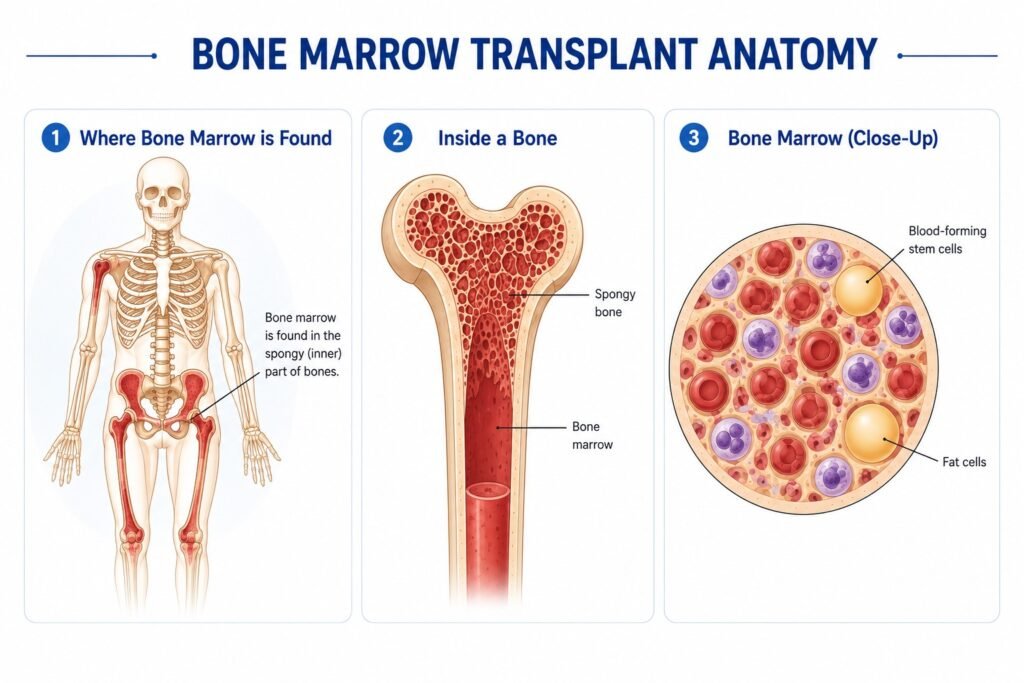
Bone marrow transplant (BMT), also known as a stem cell transplant or hematopoietic stem cell transplantation (HSCT), is a special medical procedure that replaces damaged or diseased blood-forming stem cells with healthy ones.
These stem cells can be collected either from the patient’s own body (autologous transplant) or from a compatible donor (allogeneic transplant). Once transplanted, the healthy stem cells travel to the bone marrow, where they begin producing new blood cells and help restore normal bone marrow function.
Hematopoietic stem cell transplantation (HSCT) has become a standard treatment for many blood cancers and non-malignant blood disorders, with more than 50,000 transplants performed worldwide each year.
In Germany, a bone marrow transplant is commonly referred to as Knochenmarktransplantation (KMT), while the broader and more commonly used medical term is hämatopoetische Stammzelltransplantation (HSZT), meaning hematopoietic stem cell transplantation.
A bone marrow transplant is recommended when the bone marrow can no longer produce healthy blood cells or when high-dose chemotherapy/radiation is required to treat blood cancers and certain blood disorders.
It may also be considered if treatments such as chemotherapy, immunotherapy, or targeted therapy have not been effective or if there is a high risk of the disease returning. The decision to proceed with a BMT relies on various factors, discussed further below.
A bone marrow transplant is primarily performed by specialists in the Department of Hematology and Hemato-Oncology. It may be recommended for the following conditions:
Blood cancers
Bone marrow disorders
Inherited blood disorders
Primary immunodeficiency disorders
Inherited metabolic disorders
According to a recent study published in Transplantation and Cellular Therapy, autologous bone marrow transplants generally cost less than allogeneic transplants because they do not require donor matching. The total cost also depends on factors such as the patient’s condition, how complex the course of treatment, how long is the hospital stay, and what all post-transplant care.
Stem Cell Transplant can be performed using bone marrow or peripheral blood stem cells (PBSCs). These healthy stem cells help restore the body’s ability to produce normal blood cells after high-dose chemotherapy and/or radiation therapy.
The type of transplant used depends on what the patient’s diagnosis is, at what stage the disease is at, age, overall well-being, and the availability of a suitable donor.
According to the American Society for Transplantation and Cellular Therapy (ASTCT), more than 90% of hematopoietic stem cell transplants worldwide now use peripheral blood stem cells, while bone marrow and umbilical cord blood are used in selected situations based on the patient’s condition and treatment goals.
The two main types of bone marrow transplants are:
1. Autologous Bone Marrow Transplant
An autologous transplant uses the patient’s own healthy stem cells.
This approach is commonly used for multiple myeloma, Hodgkin lymphoma, and non-Hodgkin lymphoma, and because the patient’s own cells are used, there is no risk of graft-versus-host disease (GVHD).
2. Allogeneic Bone Marrow Transplant
In this type of transplant, an allogeneic transplant uses healthy stem cells from a compatible donor, such as sibling, another family member, or an unrelated volunteer.To reduce the risk of rejection, the donor is carefully matched to the patient using specific genetic markers. A close human leukocyte antigen (HLA) match helps improve engraftment and reduce complications. Although there is a high risk of GVHD (35% to 80% depending on the donor match) because the new immune system comes from a donor and views the host body as foreign.
This type of transplant is commonly recommended for leukemia, myelodysplastic syndromes (MDS), aplastic anemia, and certain inherited blood or immune disorders.
While BMT is a complex procedure, careful donor matching, infection prevention, and close monitoring have significantly improved safety and outcomes.
Some of the possible risks and complications include:
Advances in HLA donor matching, infection prevention, supportive care, and continuous post-transplant monitoring have significantly improved the safety and success of bone marrow transplants. German transplant centers follow internationally recognized protocols to help reduce complications and support long-term recovery.
Germany has one of Europe’s largest hematopoietic stem cell transplantation (HSCT) programs, supported by specialized transplant centers, internationally recognized treatment standards, and one of the world’s largest stem cell donor registries through DKMS. More than 3,000 patients undergo allogeneic hematopoietic cell transplantation (HCT) in Germany each year, reflecting the country’s extensive experience in treating complex blood disorders.
Several German transplant centers are JACIE-accredited (Joint Accreditation Committee ISCT-Europe & EBMT), an internationally recognized quality standard that evaluates transplant programs based on patient care, laboratory practices, staff expertise, and safety procedures. JACIE accreditation helps ensure that centers adhere to rigorous quality and clinical standards throughout the transplant process.
German transplant centers possess specialized bone marrow transplant units that feature HEPA-filtered rooms, high-tech laboratories for cell processing, and an interdisciplinary team. The patients undergo monitoring for infections, blood products transfusions, nutrition management, and rehabilitation therapies through the course of their treatment till the recovery process.
Phase 1: Before Traveling to Germany
Phase 2: Arrival and Pre-Transplant Evaluation (1–5 Days)
Phase 3: Conditioning Therapy (5–10 Days)
Phase 4: Stem Cell Transplantation (Day 0)
Phase 5: Engraftment and Hospital Recovery (2–4 Weeks)
Phase 6: Discharge and Follow-Up
The cost of a stem cell transplant in Germany typically ranges from USD 150,000 to USD 330,000, depending on the type of transplant, donor requirements, hospital, and the patient’s medical condition. Cities such as Berlin and Heidelberg are among the most popular destinations for bone marrow transplantation due to their renowned university hospitals and dedicated transplant centers. Hamburg may have comparatively higher treatment costs, often 15–20% more than some other cities because of its highly specialized transplant programs and comprehensive supportive care.
| Transplant Type | Estimated Cost |
| Autologous BMT | USD 150,000–250,000 (€130,000–220,000) |
| Allogeneic BMT (Related Donor) | USD 150,000–300,000 (€130,000–260,000) |
| Allogeneic BMT (Unrelated Donor) | USD 160,000–330,000 (€140,000–290,000) |
Most treatment packages include:
| City | Estimated Cost |
| Munich | USD 80,000–270,000 (€70,000–235,000) |
| Berlin | USD 110,000–300,000 (€95,000–260,000) |
| Hamburg | USD 155,000–330,000 (€135,000–290,000) |
| Frankfurt | USD 140,000–350,000 (€120,000–305,000) |
| Heidelberg | USD 150,000–330,000 (€130,000–290,000) |
Note: These are estimated price ranges and may vary depending on the hospital, transplant type (autologous or allogeneic), donor availability, treatment complexity, duration of hospitalization, and supportive care required.
These expenses may not be included in the hospital’s treatment package and can vary depending on the patient’s path of treatment and duration of stay in Germany.
Germany offers a balance between advanced transplant care and cost that comes with the treatment. While a stem cell therapy in Germany typically costs USD 150,000–330,000, private treatment in the United Kingdom generally ranges from USD 180,000–400,000, and treatment in the United States can exceed USD 500,000–1,000,000, depending on the transplant type and complications.
Supported by one of the world’s largest stem cell donor registries through DKMS, Germany combines advanced transplant expertise with extensive donor availability, improving the likelihood of identifying a compatible donor for allogeneic bone marrow transplantation.
Moreover, many medical centers incorporate minimal residual disease (MRD) monitoring, chimerism analysis, and follow-up protocols to detect early signs of relapse and guide timely intervention.
For selected patients with relapsed or refractory blood cancers, Germany offers access to CAR-T cell therapy, which may be used before or after transplantation depending on the disease and clinical indication.
Hospitals follow internationally recognized guidelines and continuously refine conditioning regimens, GVHD prevention strategies, and supportive care protocols to improve patient safety and long-term outcomes.
| Hospital | City | Key Highlights |
| University Hospital Heidelberg | Heidelberg | Renowned for hematology, hemato-oncology, and comprehensive stem cell transplant programs. |
| Charité – Universitätsmedizin Berlin | Berlin | One of Europe’s largest university hospitals with specialized hematopoietic stem cell transplantation services. |
| University Medical Center Hamburg-Eppendorf (UKE) | Hamburg | Offers advanced bone marrow and stem cell transplantation supported by multidisciplinary care. |
| University Hospital Frankfurt am Main | Frankfurt | Experienced transplant center providing autologous and allogeneic stem cell transplantation. |
| Ludwig Maximilian University Hospital (LMU Munich) | Munich | Academic medical center with expertise in hematology, cellular therapies, and bone marrow transplantation. |
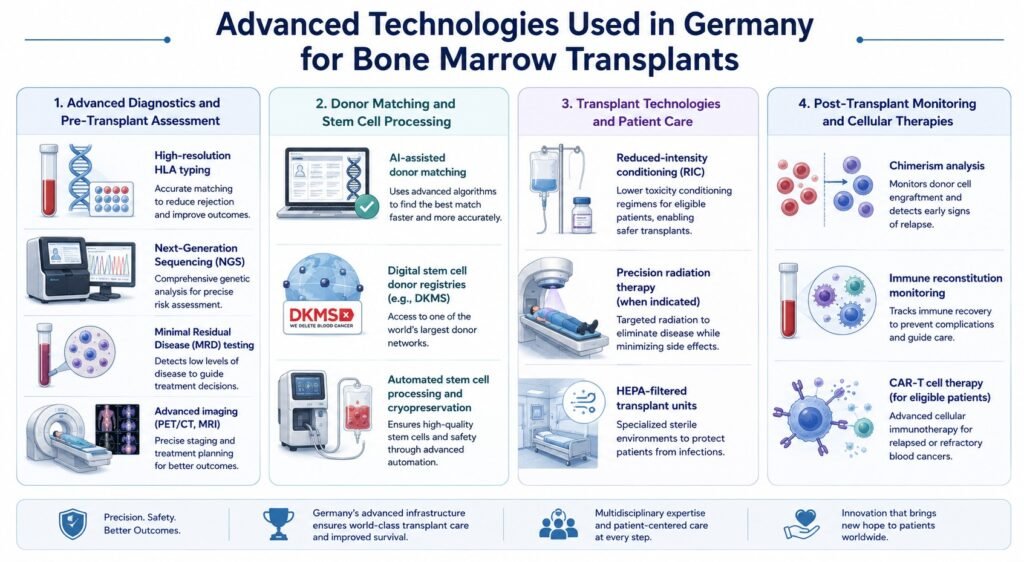
Evolution and discovery in this sector has led to wide accessibility and safer procedures than ever before. With the use of methods such as high-resolution HLA typing, Next-Generation Sequencing (NGS), advanced cell-processing technologies, and digital donor registries.
Studies on current transplant practices have shown that these technologies have expanded donor availability, improved relapse monitoring, and enhanced long-term outcomes for those undergoing hematopoietic stem cell transplantation (HSCT).
Before a bone marrow transplant, German hospitals perform end-to-end diagnostic evaluations to determine a patient’s suitability for treatment and develop a tailored transplant plan. Technologies such as:
These help with observing disease status, identifying compatible donors, and optimizing the treatment planning.
Finding the right donor is critical for the success of an allogeneic transplant. German transplant centers use:
This improves donor selection, preserves stem cell quality, and assists successful transplantation.
These technologies aid in improving patient safety and transplant outcomes
A close monitoring is needed for patients after transplantation, patients are closely monitored to evaluate engraftment and detect complications at an early stage.
Patients travelling from abroad should plan for both medical and logistical needs before heading to Germany for the procedure. It would be more stress-free to know about all the paperwork that will be needed, time of stay, etc.
| Aspect | What International Patients Should Know |
| Medical Documentation | Bring recent medical records, including your diagnosis, blood test results, bone marrow biopsy, imaging reports, pathology reports, treatment history, and current medications. If required, have the documents translated into English or German (where necessary). |
| Medical Visa | Most international patients require a German medical visa. Ensure you have a valid passport, hospital invitation letter, proof of financial means or insurance, and any other documents requested by the German embassy or consulate. |
| Accommodation | Arrange accommodation close to the transplant center before and after treatment. Many hospitals assist patients in finding suitable hotels, apartments, or dedicated patient accommodation. |
| Donor Considerations | For allogeneic transplants, donor identification and HLA matching are usually completed before travel. If an unrelated donor is required, additional coordination with donor registries may be necessary. |
| Duration of Stay | Patients typically stay in Germany for 6–12 weeks or longer, depending on the transplant type, engraftment, and recovery. The transplant team will advise when it is safe to travel home. |
| Caregiver Requirements | Many hospitals recommend traveling with a family member or caregiver to provide practical and emotional support during recovery, particularly after hospital discharge. |
| Follow-Up After Returning Home | Before returning home, discuss your follow-up plan with the transplant team. Ongoing blood tests, medications, and routine monitoring should be coordinated with your local healthcare provider, while any significant concerns should be reported to the German transplant center. |
BMT recovery is contingent upon various factors, such as the type of transplant undergone, as well as the general health and well-being of the patient. Though the restoration of blood counts takes place over the course of several weeks, regaining full immunity levels and going back to one’s regular routine may take months.
| Recovery Phase | What to Expect |
| Week 1-4 | The patients will be kept under close medical supervision as the transplanted stem cells become engrafted. Blood counts will be checked, and supportive therapy will be given for dealing with infections, fatigue, nausea, and other side effects. |
| Month 2–3 | Blood cell counts will get better, and most patients will start feeling stronger. The visits will continue to be frequent to follow the recovery process, medications, and infection or GVHD after an allogeneic transplant. |
| Month 4–6 | Most patients will have an increase in energy levels and immune system functions. As long as the recovery is going well, patients will be able to return to their normal daily activities. |
| Long-Term Recovery | It might take 6-12 months or longer for full immune recovery to occur, especially after an allogeneic transplant. The long-term follow-up will concentrate on relapse, late complications, and general health of the patient. |
| Follow-Up Schedule | Regular blood tests, physical examinations, and, when needed, bone marrow assessments or imaging help monitor engraftment, organ function, and disease status. Follow-up visits become less frequent as recovery progresses. |
| Lifestyle Precautions | Practice good hand hygiene, avoid crowded places during early recovery, eat a food-safe diet, take medications as prescribed, stay physically active as recommended, and attend all scheduled follow-up appointments. |
Sources:
Published By
.webp)
Global Patient Care, Redefined
The CancerRounds Medical Content Team specialises in creating accurate, clear and patient-focused healthcare content. Our content is written by medically trained writers, medically reviewed, and based on reputable medical sources to support informed healthcare decisions.


Get expert guidance instantly
Share a few details and our medical team gets back to you within 4 hours with the next steps.

Tell us what you are facing and our medical team will guide you to the right doctors, hospitals and treatment.
Free Review, No Commitment
Free assessment with no pressure to proceed.
Trusted by 100,000+ Patients
Across 125+ countries worldwide
500+ Top Partner Hospitals
Globally accredited medical facilities
5000+ Expert Specialists
Senior doctors across major specialties.
Making quality healthcare accessible to patients worldwide
Everything you need to know about choosing the right hospital, doctor and treatment plan.