
Reply in 4 hours · Plan and quote in 2 days · 100% confidential
Parkinson’s disease is a progressive neurological disorder that primarily affects movement. It develops when nerve cells in a part of the brain called the substantia nigra become damaged or lost, reducing the production of dopamine, a chemical messenger involved in movement and coordination. As dopamine levels decline, people may develop tremor, slowed movement, muscle stiffness, and problems with balance.
How Does Parkinson’s Disease Affect the Brain? In Parkinson’s disease, dopamine-producing neurons in the substantia nigra progressively degenerate. The resulting reduction in dopamine affects brain circuits responsible for controlling movement.
Abnormal accumulations of a protein called alpha-synuclein, known as Lewy bodies in affected nerve cells, are also associated with the disease.
Parkinson’s disease is one of the most common neurodegenerative disorders, affecting more than 10 million people worldwide. The number of people affected is expected to grow in the coming years, largely because populations are aging and people are living longer.
What Causes Parkinson’s Disease? The exact cause of Parkinson’s disease is not fully understood. Researchers believe that a combination of genetic, environmental, and age-related factors may contribute to the loss of dopamine-producing neurons.
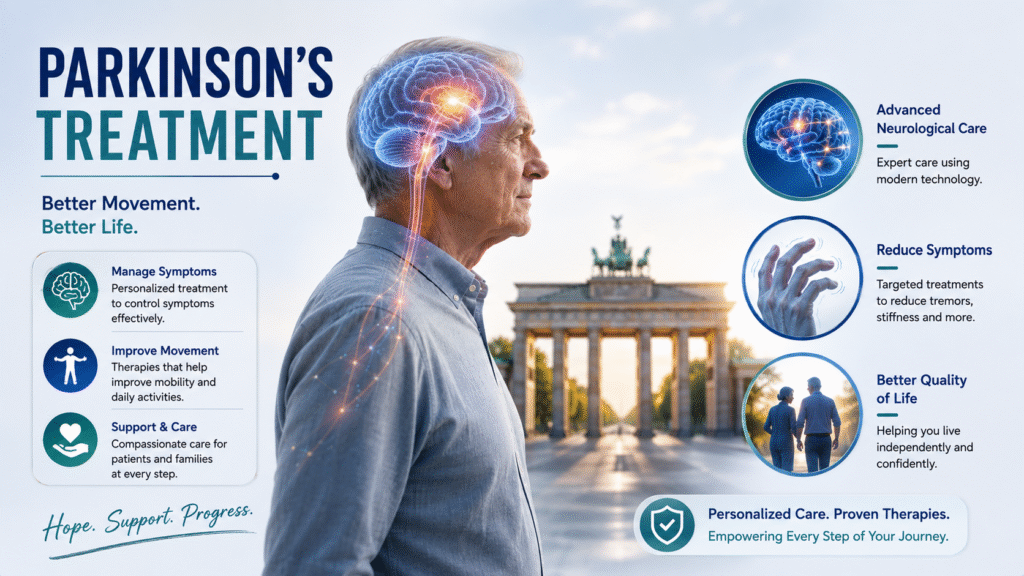
Some non-motor symptoms of Parkinson’s include sleep problems, constipation, depression, anxiety, changes in speech, difficulty swallowing, and changes in thinking or memory. Symptoms and their severity vary from person to person, and the disease does not progress at the same rate in everyone.
The early signs of Parkinson’s can be subtle and may develop gradually. They do not always begin with a noticeable tremor. A neurologist or movement-disorder specialist should evaluate persistent or unexplained symptoms and explain the next steps accordingly.
Common early signs and symptoms include:
Having one or more of these symptoms does not necessarily mean a person has Parkinson’s disease. Several other neurological and medical conditions can cause similar symptoms, including essential tremor, drug-induced parkinsonism (such as from certain antipsychotic medications), stroke, multiple system atrophy, progressive supranuclear palsy, normal pressure hydrocephalus, vitamin B12 deficiency, and thyroid disorders.
There is no single test that can definitively diagnose Parkinson’s disease. The diagnosis primarily relies on a thorough medical history, an evaluation of symptoms, and a neurological examination. Healthcare providers may also utilize additional tests to support the diagnosis or to rule out other potential conditions that could present similar symptoms.
Parkinson’s disease progresses differently for every person. As dopamine-producing neurons in the substantia nigra are gradually lost, dopamine levels fall, and the brain has increasing difficulty controlling movement. Symptoms may begin subtly and later become more noticeable, affecting mobility, balance, independence, and quality of life.
The Hoehn and Yahr scale describes Parkinson’s progression in five stages, from symptoms affecting one side of the body to severe disability. Treatment strategy is adjusted throughout the disease rather than waiting for a patient to reach a particular stage.
Stage 1: Early Parkinson’s Disease
Dopamine-producing neurons in the substantia nigra have already been lost, but the brain can initially compensate for the reduction in dopamine. As dopamine signaling becomes less efficient, the earliest motor symptoms begin to emerge.
How it may manifest:
At stage 1 of Parkinson’s disease, most individuals remain independent in daily activities. The focus is on controlling symptoms and maintaining quality of life through regular exercise, physiotherapy, occupational therapy, and medications like levodopa. It’s important to have any persistent tremor, unexplained slowness, stiffness, or walking changes assessed by a neurology expert to establish a baseline for monitoring progression.
The loss of dopamine-producing neurons continues, reducing the brain’s ability to compensate for impaired dopamine signaling. Motor symptoms become more widespread and begin affecting both sides of the body.
How it may manifest:
Balance is usually preserved, allowing for independence. Medication might require adjustments for better symptom control. Exercise and rehabilitation, including physiotherapy, are crucial for maintaining strength, flexibility, gait, and mobility.
It’s important to establish regular neurological follow-ups to proactively address speech, swallowing, sleep, mood, constipation, and other non-motor symptoms before they worsen.
As neurodegeneration progresses, dopamine deficiency becomes more pronounced. Changes in brain circuits involved in movement, posture, and balance become increasingly difficult to compensate for.
How it may manifest:
A person may still live independently but may need more effort or help with daily activities. Treatment becomes multidisciplinary, focusing on medication optimization and therapies like physiotherapy and fall prevention.
If significant motor fluctuations or dyskinesias occur despite medication, a specialist may discuss advanced therapies.
Take action: Frequent falls or unpredictable medication responses require a specialist review, as waiting can complicate rehabilitation.
Progressive loss of dopaminergic neurons and changes in several brain networks increasingly interfere with voluntary movement and automatic motor functions. Medication may still improve symptoms, but its effects can become less predictable.
How it may manifest:
At this stage, doctors may consider advanced Parkinson’s therapies for appropriately selected patients. Depending on the individual’s symptoms and overall health, options can include:
Advanced treatment is not automatically determined by disease stage. Eligibility depends on factors such as symptom pattern, levodopa response, cognitive status, overall health, and previous treatment response.
Take action:
If medication provides only short periods of benefit, produces troublesome dyskinesias, or symptoms return unpredictably between doses, patients should ask a movement-disorder specialist about advanced treatment options.
At this stage, widespread changes in motor and non-motor brain networks can severely affect mobility and independence. Dopamine replacement can still help some symptoms, but it cannot reverse the underlying neurodegenerative process.
How it may manifest:
The priority shifts toward maintaining comfort, safety, function, and quality of life. Medication can still be optimized, while rehabilitation, nutritional support, swallowing assessment, assistive equipment, caregiver support, and management of non-motor symptoms become increasingly important.
Take action: Regular multidisciplinary care is essential. Swallowing difficulties, recurrent falls, weight loss, confusion, hallucinations, or sudden changes in mobility should be discussed promptly with the treating team.
Germany follows a multidisciplinary approach in Parkinson’s management involving different specialists from different departments, neurologists, movement-disorder specialists, neurosurgeons, physiotherapists, occupational therapists, speech and swallowing therapists, and rehabilitation specialists. This becomes particularly important when patients are being evaluated for DBS or other advanced therapies.
In a way, this would mean that Parkinson’s disease treatment in Germany is tailored according to individual symptoms, disease stage, age, overall health, treatment response, and the effect of symptoms on daily life.
Conventional treatment aims to get hold of the symptoms, maintain mobility, and preserve independence of movement.
Levodopa remains one of the most effective medications for controlling the motor symptoms of Parkinson’s disease. Treatment is adjusted over time as symptoms and medication response change.
Non-drug methods are an equally necessary and important part of Parkinson’s care and may include:
Strategies may also address sleep problems, constipation, depression, anxiety, cognitive changes, pain, and blood-pressure abnormalities.
Advanced therapies may be considered when optimized medication no longer provides consistent symptom control or causes troublesome complications.
DBS is an invasive procedure that involves implanting electrodes into specific areas of the brain and connecting them to a pulse generator. Electrical stimulation can help control selected motor symptoms.
DBS may be considered for appropriately selected patients with:
Patient selection criteria involve assessment of motor symptoms, cognition, psychiatric health, overall medical condition, and expected benefit.
Types of Deep Brain Stimulation (DBS)
The choice of DBS target depends on symptoms, medication response, cognitive and psychiatric health, and individual treatment goals.
Important: DBS does not cure Parkinson’s disease or stop its progression. It is a surgical treatment with potential risks and requires ongoing device programming and follow-up by a specialist team.
For some people with advanced Parkinson’s, continuous delivery of levodopa-based medication can provide more consistent symptom control than intermittent oral doses.
This approach may be considered when patients experience significant “on-off” fluctuations despite optimized oral treatment.
Apomorphine infusion is an advanced treatment for selected people with advanced Parkinson’s disease who experience significant motor fluctuations or “off” periods despite optimized oral medication.
Apomorphine, a dopamine agonist, is delivered continuously through a small pump, usually by subcutaneous infusion. Continuous delivery can help provide more consistent symptom control and reduce time spent in the “off” state.
It may be considered when medication adjustments no longer provide adequate control. Patients require specialist assessment, dose adjustment, and monitoring for side effects such as nausea, low blood pressure, sleepiness, hallucinations, or injection-site reactions.
MR-guided focused ultrasound (MRgFUS) is a non-invasive lesioning technique that can be considered for selected patients, particularly those with disabling tremor. Unlike DBS, it does not involve implanting a brain stimulation device, but it is not suitable for every patient and does not provide the adjustability of DBS.
Stem cell therapy is a core type of regenerative medicine that aims to replace dopamine-producing neurons lost in Parkinson’s disease using stem-cell-derived dopaminergic cells. Researchers are investigating whether these transplanted cells can integrate into the brain and restore dopamine signaling.
It is important to understand that stem cell therapy is not an established standard treatment for Parkinson’s disease in Germany. Overseas patients should know that Access is generally limited to appropriately regulated clinical trials or research programs, and eligibility varies by study. Patients should verify the trial’s status, potential risks, expected outcomes, and costs before traveling.
Germany is recognized as a leading destination for international patients seeking specialized neurological care, particularly for conditions like Parkinson’s disease. The country boasts renowned university hospitals such as Charité – Universitätsmedizin Berlin and LMU Klinikum Munich, alongside other notable facilities in cities like Heidelberg, Hamburg, Hannover, and Freiburg.
The medical devices and pharmaceuticals utilized in Germany are strictly regulated under the European Union framework, with the Federal Institute for Drugs and Medical Devices (BfArM) overseeing their safety and efficacy. Additionally, Germany adheres to evidence-based neurological guidelines set by the German Society for Neurology (DGN).
This combination of advanced therapeutic options, a collaborative care approach, and a commitment to clinical research makes Germany a prime choice for those seeking treatment for Parkinson’s disease.
| Procedures for Parkinson’s | Approximate cost |
| Medical management | €2,000–€8,000 ($2,300–9,300) |
| MR-guided focused ultrasound | €15,000–€30,000 ($17,500–35,000) |
| Deep Brain Stimulation (DBS) | €40,000–€70,000 ($47,000–82,000) |
| Stem cell therapy | €15,000–€50,000+ ($15,000-60,000) |
Note: Costs are approximate and may vary by hospital, treatment complexity, length of stay, medication, device costs, and follow-up.
Stem cell therapy is not an established standard procedure for Parkinson’s disease in Germany. Standard Stem cell therapy can cost around €15,000–€30,000, but Advanced integrated care can go up to €60,000
Insurance coverage for Parkinson’s treatment in Germany depends on the patient’s country of residence, insurance policy, and type of treatment. EU/EEA patients may receive medically necessary care during a temporary stay using the European Health Insurance Card (EHIC), while planned treatment may require prior authorization.
Usually, patients from outside the EU need private or international health insurance or may self-pay. Before traveling, patients should confirm with their healthcare insurance provider whether their policy covers consultations, diagnostics, hospitalization, DBS, or other innovative procedures, medication, rehabilitation, and remote check-up care. Most global and domestic insurance providers exclude regenerative stem cell procedures for neurodegenerative conditions like Parkinson’s disease due to a lack of universally approved standard clinical guidelines outside of strict clinical trials.
It is important to be well-informed before making any decisions, get in touch with hospitals, get more than one opinion, and explore and narrow down your options. Because Parkinson’s disease is a progressive neurological condition, needs can change over time. Choosing a hospital with a dedicated international patients department, movement-disorder expertise, multidisciplinary care, and experience with both conventional and advanced therapies can support long-term management. Overseas patients should also consider check-up arrangements, rehab services, specialist availability, and experience in treating patients from abroad.
| Hospital | City | Parkinson’s-related services |
| Charité – Universitätsmedizin Berlin | Berlin | • Parkinson’s and movement-disorder care • Neurological assessment and medication management • Deep Brain Stimulation (DBS) evaluation |
| LMU Klinikum | Munich | • Parkinson’s diagnosis and management • Movement-disorder specialist care • Advanced therapies, including DBS |
| University Hospital Heidelberg | Heidelberg | • Specialized movement-disorder services • Parkinson’s diagnosis and treatment • Advanced therapy assessment |
| University Medical Center Hamburg-Eppendorf (UKE) | Hamburg | • Parkinson’s and movement-disorder management • Neurological diagnostics and medication optimization • Advanced treatment evaluation |
| Hannover Medical School (MHH) | Hannover | • Specialized Parkinson’s care • Movement-disorder assessment • Evaluation for advanced therapies such as DBS |
Parkinson’s disease is a neurological disorder progressive in nature, and while current methods are effective in managing symptoms, they focus on alleviating rather than reversing the underlying neurodegeneration. It’s important to be aware of the following aspects to have realistic expectations:
Those traveling from other countries need to first seek a neurological assessment in their own country and, upon approval, forward their medical records, scans, medication list, and treatment notes to the German facility. Individualized treatment makes some hospitals ask for further testing before confirming the treatment plan.
The following needs to be done before travel:
Navigating the complexities of Parkinson’s disease treatment is a collaborative journey. By focusing on open communication and personalized approaches, patients can enhance their quality of life while managing their condition in a proper manner.
Looking for Parkinson’s treatment in Germany? CancerRounds can help you navigate and assist you in exploring various treatment alternatives, hospitals, associated costs, and care pathways specifically designed for international patients. Their guidance will help you understand the next steps and connect you to suitable treatment options tailored to your medical needs.
Yes. Germany offers medical management, rehabilitation, infusion therapies, Deep Brain Stimulation (DBS), and other advanced treatments for appropriately selected patients.
No. There is currently no cure, but treatment can control symptoms, improve mobility, and support quality of life.
Approximate costs range from €2,000–€8,000 (2,300–9,300) for medical management and €40,000–€70,000 (47,000–82,000) for DBS. Costs vary by treatment and patient requirements.
Yes. DBS is available at specialized neurological and neurosurgical centers for selected patients with advanced motor symptoms or medication-related complications.
Options may include Deep Brain Stimulation (DBS), levodopa-based infusion, apomorphine infusion, and MR-guided focused ultrasound, depending on individual eligibility.
Yes. Overseas patients can seek diagnosis, medical management, rehabilitation, and advanced Parkinson’s treatments in Germany.
Not always. Requirements vary by hospital and treatment. Patients should provide their medical records and confirm the consultation and admission process with the chosen center.
Not as a standard treatment. Stem cell therapy remains experimental and is generally available only through appropriately regulated clinical trials or research programs.
It depends on the treatment. A specialist consultation may require a short stay, while DBS or other advanced procedures require hospitalization, recovery, programming, and follow-up.
Major centers you can explore Charité – Universitätsmedizin Berlin, LMU Klinikum Munich, University Hospital Heidelberg, University Medical Center Hamburg-Eppendorf, and Hannover Medical School.
Sources:
Published By
.webp)
Global Patient Care, Redefined
The CancerRounds Medical Content Team specialises in creating accurate, clear and patient-focused healthcare content. Our content is written by medically trained writers, medically reviewed, and based on reputable medical sources to support informed healthcare decisions.
Get expert guidance instantly
Share a few details and our medical team gets back to you within 4 hours with the next steps.

Tell us what you are facing and our medical team will guide you to the right doctors, hospitals and treatment.
Free Review, No Commitment
Free assessment with no pressure to proceed.
Trusted by 100,000+ Patients
Across 125+ countries worldwide
500+ Top Partner Hospitals
Globally accredited medical facilities
5000+ Expert Specialists
Senior doctors across major specialties.
Making quality healthcare accessible to patients worldwide
Everything you need to know about choosing the right hospital, doctor and treatment plan.