★★★★★
" So thankful to Cancer Rounds and Dr. Gaurav Dixit. Your care and support helped me heal and regain strength during my lymphoma treatment."
O
Ms. Octavie
Vanuatu

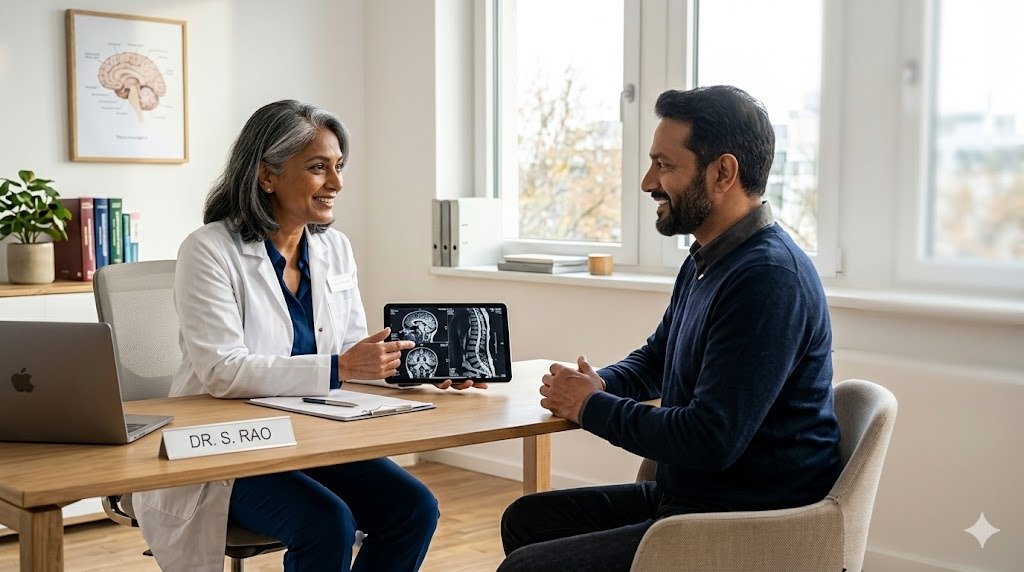
Indian neurosurgeons now operate on brain tumours with the help of technology that didn't exist a decade ago. Awake craniotomy keeps the patient responsive so surgeons can avoid damaging speech and motor areas; the 5-ALA fluorescent dye makes tumour cells visible during the operation; and intraoperative MRI scanning checks the result before closing the wound.
Reply in 4 hours · Plan and quote in 2 days · 100% confidential
A brain tumor is a mass or growth of abnormal cells within the brain. Tumors can either be benign (non-cancerous) or malignant (cancerous), and they can develop in any part of the brain. Depending on their size and location, brain tumors can interfere with brain function, leading to neurological impairments. Symptoms may vary, but they often include headaches, vision problems, seizures, and changes in personality or cognitive abilities.
| Type of Tumor | Characteristics | Examples |
| Primary Brain Tumors | Originates in the brain tissue. | Gliomas, Meningiomas, Pituitary Tumors |
| Secondary (Metastatic) Tumors | Spread from other parts of the body to the brain. | Lung, breast, and skin cancer metastases |
| Benign Tumors | Non-cancerous, do not spread. | Meningioma, Schwannoma |
| Malignant Tumors | Cancerous, can spread to other parts of the brain. | Glioblastoma, Medulloblastoma |
Brain tumors can present in various ways, depending on the type and location. Some common presentations include:
Table 2: Symptoms and Affected Brain Areas
| Symptom | Affected Area |
| Headaches | General, can be localized or diffuse |
| Seizures | Any part of the brain |
| Vision Problems | Occipital lobe or optic nerve |
| Difficulty with Balance | Cerebellum or brainstem |
| Memory and Personality Issues | Temporal lobe, frontal lobe |
Brain tumors can affect any age group, but certain types are more common in specific age ranges.
The prevalence in certain age groups is often linked to genetic mutations, environmental factors, and lifestyle habits. For instance, older adults have a higher risk of secondary brain tumors due to metastasis from other cancers.
Brain Tumor Age Distribution
| Age Group | Common Types of Brain Tumors |
| Children | Medulloblastomas, Gliomas |
| Young Adults (20-40) | Glioblastomas, Pituitary Tumors |
| Older Adults (60+) | Glioblastomas, Brain Metastasis |
India is renowned for its advanced and cost-effective medical care, especially in the field of cancer and neurology. Brain tumor treatments in India encompass conventional therapies as well as cutting-edge molecular treatments. The availability of high-tech equipment and skilled medical professionals makes India an attractive destination for patients worldwide.
Conventional treatments for brain tumors include:
In certain cases, neoadjuvant therapy (treatment before surgery) may be used to shrink the tumor, making surgery more successful. After surgery, adjuvant therapy (additional treatment) such as radiation or chemotherapy may be recommended to prevent recurrence.
Molecular Targeted Treatment
India has embraced molecular targeted therapies, especially in treating tumors with known mutations. These therapies use drugs that specifically target tumor cells while minimizing damage to healthy tissues. Some key targeted drugs include:
Drugs in Molecular Targeted Therapy
| Drug Name | Targeted Mutation | Used For |
| Temozolomide | MGMT Promoter Methylation | Glioblastoma, Anaplastic Astrocytoma |
| Bevacizumab | VEGF | Glioblastoma, Metastatic Tumors |
| Erlotinib | EGFR Mutation | Non-Small Cell Lung Cancer (NSCLC), Gliomas |
The survival rate for brain tumor patients in India has been improving due to advancements in treatment options. For example, the survival rate for glioblastoma, the most aggressive form of brain cancer, has increased due to the availability of advanced surgical techniques and targeted therapies. On average, patients undergoing treatment in India for glioblastoma may experience a 5-year survival rate of approximately 20-30%, which is comparable to global standards.
Reasons for Successful Brain Tumor Treatment in India
| Factor | Description |
| Skilled Professionals | Highly trained specialists in neurosurgery, oncology |
| Advanced Technology | Use of the latest diagnostic and treatment equipment |
| Cost-Effectiveness | Treatments available at a fraction of Western costs |
| Comprehensive Multi-Disciplinary Care | Integrated care approach for better outcomes |
In conclusion, India provides an excellent and evolving landscape for brain tumor treatment. With a combination of advanced treatments, skilled healthcare professionals, and cost-effective care, it is a destination of choice for both domestic and international patients seeking high-quality brain tumor treatment.
Brain tumor treatment can be physically and emotionally challenging. India has developed strong patient support systems to help patients and families navigate their treatment journey:
| Support Service | Description |
| Psychological Counseling | Helping patients and families cope with the emotional impact of brain tumors |
| Rehabilitation Services | Physical, speech, and cognitive therapy to aid recovery post-surgery |
| Palliative Care | End-of-life care aimed at improving quality of life and managing symptoms |
The total cost of brain tumor treatment in India can vary between ₹3 lakhs to ₹15 lakhs, depending on the hospital, type of tumor, location, modality chosen, and the complexity of surgery. Government hospitals (like AIIMS or Tata Memorial) offer highly subsidized care, while private super-specialty hospitals (like Medanta, Apollo, or Fortis) offer premium services with international standards. Insurance coverage scheme (for eligible patients both domestic and international) may significantly reduce the burden.
For personalized cost breakdowns or to discuss treatment planning, feel free to consult with the Cancer Rounds team — a trusted partner for oncology guidance across India.
| Category | Details | Estimated Cost Range (INR) |
| Initial Consultation | Neurologist/Neurosurgeon fees | ₹1,500 – ₹5,000 |
| MRI Brain with Contrast | Primary imaging test for diagnosis | ₹5,000 – ₹15,000 |
| CT Scan (Head) | Supportive imaging for diagnosis/surgical planning | ₹3,000 – ₹8,000 |
| PET-CT Scan | For tumor staging or recurrence evaluation | ₹15,000 – ₹35,000 |
| Biopsy (Stereotactic/Open) | For histopathological confirmation | ₹25,000 – ₹60,000 |
| Surgery (Craniotomy) | Tumor removal by open surgery | ₹2.5 – ₹6.5 lakhs |
| Gamma Knife/Radio Surgery | Non-invasive advanced radiosurgery | ₹3 – ₹6 lakhs |
| Radiation Therapy | External beam radiation (25–30 sessions) | ₹1.2 – ₹3 lakhs |
| Chemotherapy (Cycle-wise) | Drug regimen cost depends on tumor type | ₹10,000 – ₹50,000 per cycle |
| Hospital Stay (7–10 days) | Room charges, nursing care, ICU (if needed) | ₹70,000 – ₹2 lakhs |
| Follow-up & Monitoring | Post-op MRIs, reviews, meds | ₹5,000 – ₹25,000 (yearly) |
A major advantage of seeking treatment in India is the cost-effectiveness. The price of brain tumor surgery, radiation, and chemotherapy in India is significantly lower than in Western countries, making it accessible for international patients.
Table 7: Comparison of Brain Tumor Treatment Costs
| Treatment Type | Cost in India (USD) | Cost in US/Europe (USD) |
| Brain Tumor Surgery | $4,000 – $10,000 | $50,000 – $70,000 |
| Radiation Therapy | $1,000 – $5,000 | $15,000 – $25,000 |
| Chemotherapy (per cycle) | $500 – $3,000 | $5,000 – $10,000 |
Immunotherapy is emerging as a promising treatment for brain tumors, particularly in cases where other treatments are not as effective. In India, several research institutions and hospitals are exploring immunotherapy options, such as checkpoint inhibitors, to enhance the body’s immune response to cancer cells.
Immunotherapy in Brain Tumor Treatment
| Immunotherapy Type | Mechanism of Action | Drugs Used |
| Checkpoint Inhibitors | Block immune checkpoint proteins, boosting immune response | Pembrolizumab, Nivolumab |
| CAR-T Cell Therapy | Modified T cells to target and kill cancer cells | Kymriah, Yescarta |
India is home to several world-class hospitals offering cutting-edge treatment for brain tumors, combining advanced neurosurgical techniques, precision oncology, and compassionate care. Here are some of the leading centers known for their excellence in neuro-oncology:
The Cancer Rounds team plays a pivotal role in guiding patients and their families through the complex and often overwhelming journey of brain tumor treatment in India. With unparalleled expertise in oncology care coordination, their team offers personalized advisory services, meticulously analyzing each patient’s medical profile to align it with the most appropriate and advanced treatment centers across the nation. From navigating premier neuro-oncology institutions like AIIMS Delhi, Tata Memorial, and Medanta (and many on list) to evaluating nuanced factors such as infrastructure, multidisciplinary expertise, success rates, technology platforms, and even financial planning, Cancer Rounds acts as your trusted navigator. Their compassionate and data-driven approach ensures that patients are not only connected to the top hospitals for brain tumor treatment in India but also empowered with clarity, confidence, and timely interventions. Cancer Rounds gives you direct access to top-tier oncologists who otherwise may have been difficult to reach—bringing world-class care right to your fingertips, with empathy and precision at every step.
Cancer Rounds extends dedicated services to make treatment in India seamless for overseas patients:
Brain tumors can affect people of all ages, but they are most commonly diagnosed in children, young adults, and older adults. The specific type of tumor influences age-related susceptibility.
Common symptoms of a brain tumor include headaches, nausea, vision problems, seizures, balance issues, and changes in personality or cognitive function.
A diagnosis typically involves imaging tests such as MRI, CT scans, and PET scans, along with biopsy and molecular analysis of tumor samples.
Treatment options in India include surgery, radiation therapy, chemotherapy, targeted therapy, immunotherapy, and molecular-based treatments.
India has a high success rate for brain tumor treatments, especially due to advancements in neurosurgery, radiation therapy, and the use of molecular and targeted therapies. Success rates can vary, but the survival rate for low-grade tumors is above 90%, while for high-grade tumors, it can be around 60-70%.
Yes, brain tumor surgery in India is considered safe. India boasts highly experienced neurosurgeons and state-of-the-art technology, with low complication rates.
India has advanced radiation therapy facilities, including technologies like Stereotactic Radiosurgery (SRS) and Proton Therapy, offering high precision and minimal side effects.
Recent advancements in India include immunotherapy, precision medicine, AI-based diagnostics, and robotic surgeries. Targeted therapies and molecular profiling are also being used more frequently.
AI is increasingly used in India to aid in early detection, diagnosis, and personalized treatment planning for brain tumor patients, improving the accuracy of imaging and predicting treatment outcomes.
Treatment costs for brain tumors in India are significantly lower than in countries like the U.S. and Europe. For example, surgeries and radiation therapy in India can cost one-tenth of the price in Western countries.
While both public and private hospitals offer high-quality care, private hospitals tend to have more advanced equipment and specialized care, which can result in slightly higher success rates for complex cases.
Yes, India is home to numerous clinical trials focusing on new treatments for brain tumors, including experimental drugs, immunotherapy, and gene therapy.
The success rate of brain tumor surgery in India is on par with developed countries, thanks to state-of-the-art facilities, expert neurosurgeons, and post-operative care.
Low-grade gliomas and meningiomas have the highest survival rates in India, often exceeding 90% for patients who undergo early detection and appropriate treatment.
Molecular treatment involves identifying specific genetic mutations in brain tumors and tailoring treatment to target these mutations. In India, molecular treatments are becoming more common in personalized cancer care.
Genetic testing helps identify mutations in brain tumor cells, which can guide treatment choices and improve survival rates. India is increasingly integrating genetic testing into brain tumor diagnosis and treatment.
Survival rates vary depending on tumor type, location, and stage. For low-grade tumors, patients may live for several years, while for high-grade tumors, survival is often shorter but can be extended with appropriate treatment.
Yes, many international patients travel to India for brain tumor treatment due to the cost-effectiveness, high success rates, and world-class medical facilities available.
The success rate of radiation therapy in India is similar to Western countries, with advanced techniques like SRS offering precise tumor targeting and minimal side effects.
Treatment plans in India are based on a comprehensive evaluation, including tumor type, size, location, and molecular profiling, often involving a multidisciplinary team of specialists.
Patients can manage side effects through supportive care, including medication for pain, nausea, and fatigue, as well as psychological counseling to cope with the emotional impact.
India’s success in brain tumor treatment can be attributed to a combination of highly skilled medical professionals, state-of-the-art technology, cost-effective care, and increasing access to innovative treatments such as immunotherapy and molecular medicine.
Published By
.webp)
Global Patient Care, Redefined
The CancerRounds Medical Content Team specialises in creating accurate, clear and patient-focused healthcare content. Our content is written by medically trained writers, medically reviewed, and based on reputable medical sources to support informed healthcare decisions.



Get expert guidance instantly
Share a few details and our medical team gets back to you within 4 hours with the next steps.
Tell us what you are facing and our medical team will guide you to the right doctors, hospitals and treatment.
Free Review, No Commitment
Free assessment with no pressure to proceed.
Trusted by 100,000+ Patients
Across 125+ countries worldwide
500+ Top Partner Hospitals
Globally accredited medical facilities
5000+ Expert Specialists
Senior doctors across major specialties.
Making quality healthcare accessible to patients worldwide
Everything you need to know about choosing the right hospital, doctor and treatment plan.