
Testicular cancer treatment in Germany starts from €8,000 (approximately USD 9,400) and includes orchiectomy, chemotherapy, radiotherapy, and retroperitoneal lymph node dissection (RPLND). Germany offers evidence-based treatment, multidisciplinary cancer care, and high cure rates, especially when the disease is diagnosed early.
Reply in 4 hours · Plan and quote in 2 days · 100% confidential
A diagnosis of testicular cancer (also called testis cancer) can feel overwhelming, especially since it most commonly affects adolescents and young men between the ages of 20 and 40. The good news is that it is one of the most treatable and curable forms of cancer. Even when the disease has spread beyond the testicle, modern treatment approaches achieve excellent outcomes, with cure rates exceeding 94% in many patients when managed with appropriate therapy.
Why Germany for testicular cancer treatment? Because of its innovations in this area, having multidisciplinary cancer centers, and adherence to the German S3 Clinical Practice Guidelines and European Association of Urology (EAU) recommendations. Advantages involve correct diagnosis, use of innovative technology, along with care that is personalised throughout the course of treatment, provision of fertility preservation services where necessary, and follow-up care. Centers make use of evidence-based protocols and advanced technology in managing patients with localized and metastatic conditions while maintaining a quality-of-life approach. More on this below in detail.
Depending on the cancer type, stage, and individual health needs, testis cancer treatment in Germany may include radical inguinal orchiectomy, active surveillance, chemotherapy, retroperitoneal lymph node dissection (RPLND), radiotherapy for selected seminomas, or a combination of these treatments.
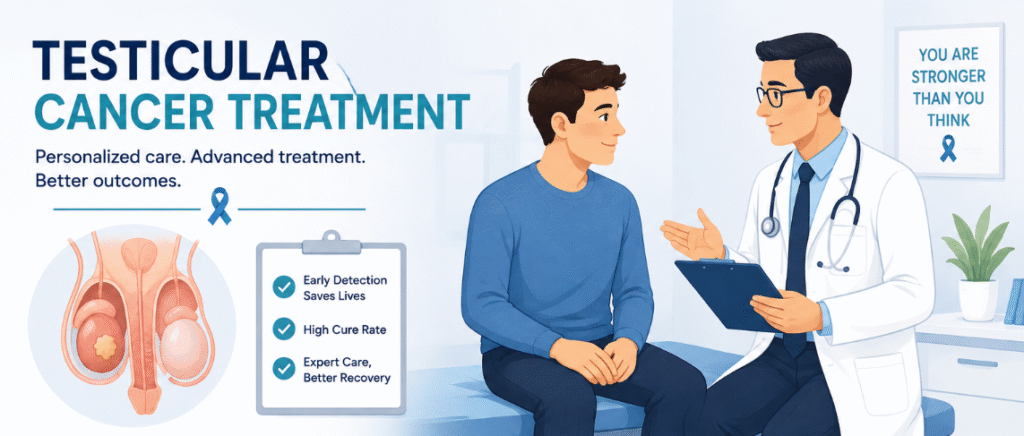
This guide covers everything you need to know about testicular cancer treatment in Germany, including common symptoms, diagnostic tests, available treatment options, advanced technologies, the estimated cost for testicular cancer treatment, recovery timelines, possible side effects, survival rates, and whether patients can lead a normal life after treatment. It also explains the treatment journey for international patients, the benefits of cancer treatment in Germany, and highlights leading hospitals in Germany for testicular cancer, helping patients and their families make informed decisions about their care.
A testicular cancer diagnosis can be emotionally challenging, especially since the disease often affects teenagers and young adults during some of the most active years of life. Questions such as “Is testicular cancer curable?” and “What kind of treatment options are there for testicular cancer?” are common. Fortunately, testicular cancer is among the most curable solid cancers.
Germany has been one of Europe’s leading destinations for cancer treatment in Germany, attracting around 250,000 international medical patients every year across various specialties. Those seeking testicular cancer treatment in Germany for themselves or their family member.
Patients undergoing testis cancer treatment in Germany may have access to:
Specialists evaluate in detail to determine the cancer type and stage(localised, regional, and distant). This typically includes:
Whether a patient has early-stage testis cancer or distant testicular cancer, this comprehensive supportive care has been shown to be one of the key benefits of cancer treatment in Germany for international patients.
Testicular cancer (testis cancer) is a type of cancer that develops in the tissues of one or both testicles, which are part of the male reproductive system responsible for producing sperm and testosterone.
Most testicular cancers begin in germ cells, the cells responsible for sperm production. These are mainly classified into two types: seminoma and non-seminoma germ cell tumors. Even though testicular cancer can spread to nearby lymph nodes or other organs in advanced stages, despite this, it still remains as one of the most curable cancers, with modern treatments achieving cure rates of around 99% for stage I or localised, 95-96% for regional or stage II, and around 75-86% for distant or stage III.
and 5-year survival rates exceeding 95% for many patients.
Many cases are detected when patients notice changes in the testicle and seek medical evaluation. That is why early diagnosis plays an important role in successful treatment outcomes.
A testicular cancer diagnosis does not mean the end of normal life. With effective treatments and excellent survival outcomes, most men recover, return to their daily activities, and continue to pursue personal and professional goals after treatment.
Those who survive testicular cancer can return to daily activities, maintain long-term well-being, and lead a normal life after testicular cancer.
Most testicular cancers develop from germ cells and are mainly classified into two types:
Both types have high cure rates when diagnosed and treated appropriately.
The symptoms of testicular cancer may vary, but common warning signs include:
Not every lump or change in the testicle indicates cancer. Conditions such as cysts, infections, or injuries can also cause similar symptoms. However, any unusual testicular change should be assessed by a healthcare professional.
The exact cause of testicular cancer is not fully understood. Research suggests that a combination of genetic, developmental, and environmental factors may contribute to its development.
Known risk factors include:
In Germany, the diagnosis of testicular cancer (testis cancer) follows a structured approach based on established clinical guidelines, including the German S3 Guidelines and European recommendations.
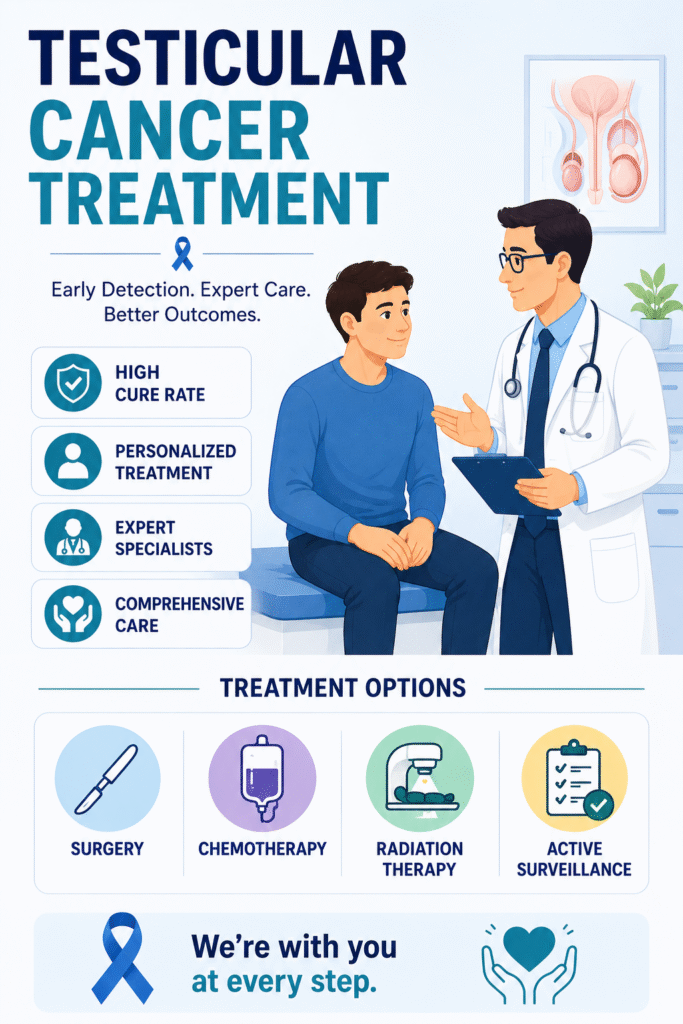
Accurate diagnosis helps doctors assess the cancer type, stage, and the most suitable testicular cancer treatment in Germany.
The diagnostic process usually includes:
After Diagnosis
After confirming testicular cancer, doctors determine the most suitable treatment based on the cancer type, stage, tumor markers, and overall well-being.
Treatment approaches for testicular cancer have advanced significantly over the years, combining precise diagnosis, specialized surgery, modern chemotherapy, and supportive care to achieve high cure rates while minimizing long-term effects. Innovation particularly in medical imaging, minimally invasive and nerve-sparing surgical techniques, robotic-assisted procedures, and personalized treatment planning have improved the accuracy and safety of cancer care.
Surgical Interventions
Radical Inguinal Orchiectomy
Nerve-Sparing Retroperitoneal Lymph Node Dissection (RPLND)
Metastasectomy
Risk-Adapted Chemotherapy (BEP, EP, VIP Regimens)
High-Dose Chemotherapy (HDCT) with Autologous Stem Cell Rescue
Fertility Preservation
Advanced Radiotherapy (IMRT and IGRT)
Why is Germany known for innovative treatments around cancer? Germany has earned a global reputation for delivering high-quality, research-driven cancer care. Moreover, Germany offers a balance of medical excellence and accessibility.
When compared with other private healthcare systems in countries such as the United States, the United Kingdom, Canada, and Australia, those seeking treatment can often access the same modern technologies with shorter waiting times and, in many cases, at a lower overall self-pay cost.
Today, hospitals routinely use precision imaging, molecular diagnostics, multidisciplinary tumor boards, minimally invasive and robotic-assisted surgery, advanced radiotherapy, and personalized treatment planning to enhance outcomes while reducing unnecessary side effects that come with cancer treatment.
In terms of advanced testicular cancer treatment:
Patients may benefit from organ-sparing surgery, nerve-sparing RPLND, frozen section diagnostics, and high-dose chemotherapy with stem cell support for selected recurrent cases. Care is guided by experienced multidisciplinary teams and the German Testicular Cancer Study Group.
Planning treatment for testicular cancer anywhere or in Germany requires assessing not only the cost of the treatment but also additional costs that may be incurred due to travel, such as visa, flight, and accommodation. The estimated cost for testicular cancer treatment in Germany varies heavily on the stage of cancer, the type of treatment required, the hospital, and the duration of care.
Patients with early-stage disease who require surgery alone generally have lower treatment costs than those needing chemotherapy, radiotherapy, or complex lymph node surgery. Germany offers cost-effective than private treatment in countries such as the United States, while maintaining the high benchmark for standards of quality, due to strict protocols around patient safety.
The table below provides an approximate cost estimate for common thyroid cancer treatments in Germany.
| Treatment | Estimated Self-Pay Cost |
| Initial Consultation | €250–€450 ($275–$495) |
| Diagnostic Tests (Blood Tests, Ultrasound, CT/MRI) | €1,800–€2,400 ($1,980–$2,640) |
| PET-CT Scan | €2,300–€2,400 ($2,530–$2,640) |
| Histopathology Examination | €200–€500 ($220–550) |
| Radical Inguinal Orchiectomy | €6,000–€9,500 ($6,600–10,450) |
| Chemotherapy (per cycle) | €3,100–€5,600 ($3,410–6,160) |
| Retroperitoneal Lymph Node Dissection (RPLND) | €11,000–€18,000 ($12,100–19,800) |
| Radiotherapy (course) | From €15,600 (From $17,160) |
| Testicular Prosthesis (Optional) | €2,700–€4,500 ($2,970–4,950) |
Please note: These are estimated self-pay costs for international patients and may vary depending on the treating hospital, cancer stage, treatment complexity, length of hospital stay, and any additional supportive care required.
The table below shows approximate cost range according to cancer stage:
| Cancer Stage | Typical Treatment | Estimated Total Self-Pay Cost |
| Stage I (Localized Testicular Cancer) | Orchiectomy ± surveillance, adjuvant chemotherapy or radiotherapy (selected patients) | €8,000–€18,000 ($8,800–19,800) |
| Stage II–III (Regional or Advanced Testicular Cancer) | Orchiectomy + multi-cycle chemotherapy ± RPLND ± additional imaging and follow-up | €25,000–€60,000+ ($27,500–66,000+) |
Besides the main treatment expenses, overseas patients should also budget for other costs associated with receiving testicular cancer treatment in Germany, including:
Coverage for testicular cancer treatment in Germany depends on your country of residence and insurance policy. Patients from EU/EEA countries may be eligible for certain medically necessary treatments through the European Health Insurance Card (EHIC) or prior authorization, while most non-EU international patients typicallyself-pay for the treatment or use private international health insurance.
Many German hospitals assist patients by providing treatment estimates, insurance documentation, and payment support before treatment begins. Patients are advised to reach out and confirm coverage with both their insurer and the treating hospital in advance.
Germany is widely recognized for its high-quality cancer care system, with university hospitals and certified oncology centers offering structured, multidisciplinary treatment pathways for testicular cancer. For international patients, these centers are particularly attractive due to their coordinated care models, English-speaking support services, and experience in managing patients from abroad.
| Hospital | Highlights |
| University Hospital Frankfurt am Main, Frankfurt | A leading university hospital offering comprehensive care for testicular cancer through experienced urologists, medical oncologists, and radiologists. Patients benefit from advanced diagnostics, multidisciplinary tumor boards, modern surgical techniques, and dedicated international patient services. |
| University Medical Center Hamburg-Eppendorf (UKE), Hamburg | Home to the University Cancer Center Hamburg (UCC), providing coordinated care through multidisciplinary teams. Services include orchiectomy, chemotherapy, fertility preservation, survivorship programs, psycho-oncology support, and assistance for international patients. |
| Hannover Medical School (MHH), Hannover | Features a certified Urological Tumor Center specializing in testicular cancer. Offers comprehensive diagnostics, radical orchiectomy, modern chemotherapy, personalized treatment planning, and regular multidisciplinary tumor board discussions. |
| Beta Clinic, Bonn | Provides advanced urological oncology care with modern diagnostics, minimally invasive and robotic-assisted surgery, individualized treatment planning, and coordinated follow-up through experienced multidisciplinary teams. |
| Solingen Municipal Hospital, Solingen | A German Cancer Society (DKG)-certified interdisciplinary cancer center offering comprehensive diagnostics, surgery, systemic therapies, and supportive care. The hospital also provides dedicated services for international patients, including medical coordination and language assistance. |
Note: The most appropriate hospital depends on the type and stage of testicular cancer, required treatment, physician expertise, and individual patient needs. Patients are encouraged to review treatment options with their healthcare team before selecting a hospital.
Receiving testicular cancer treatment in Germany is a structured process designed to ensure timely diagnosis, personalized treatment, and coordinated follow-up care.
Is Testicular Cancer Curable? It’s very well-known that testicular cancer is one of the most curable cancer types, with 5-year survival rates of 94.6% for many patients.
For many patients, the answer to “Is testicular cancer curable?” is yes. Testicular cancer has some of the highest cure rates among all cancers, especially when detected early.
Because survival rates are high, current approaches focus not only on eliminating cancer but also on reducing long-term side effects, preserving fertility when possible, and supporting quality of life after treatment.
Recovery after testicular cancer treatment varies depending on the type of treatment received, but most patients gradually return to their normal routine within a few weeks. Full recovery, including improved energy levels after chemotherapy or major surgery, may take 2 to 4 months. Regular follow-up is an essential part of care, as it helps monitor recovery and detect any recurrence at an early stage.
| Recovery Timeline | What to Expect |
| Week 1–2 | Focus on rest and wound healing after surgery. Light walking is encouraged, but avoid driving, heavy lifting, and strenuous exercise. Keep the incision clean and dry and wear supportive underwear if needed. |
| Week 2–4 | Most can resume light daily activities and return to work, depending on their recovery and the type of job. Your first follow-up appointment is usually scheduled to assess healing and discuss pathology results or any additional treatment. |
| Month 2–4 | Physical strength and energy gradually improve. Although Patients receiving chemotherapy or radiotherapy may continue recovering from treatment-related side effects while returning to normal routines. |
| Long-Term Follow-Up | Regular check-ups include physical examinations, blood tests for tumor markers (AFP, β-hCG, and LDH), and CT scans when required. Since most recurrences occur within the first two years, close follow-up during this period is especially important. |
Most men are able to lead a normal life after testicular cancer with:
Most international patients can return home once their treating team confirms they are medically fit to travel. German hospitals also offer remote follow-up consultations, allowing patients to continue recovery and long-term surveillance in coordination with their doctor at home.
Before discharge, the hospital provides a detailed medical summary, treatment records, medication plan, and follow-up schedule to share with the patient’s local healthcare provider.
Some Tips for Long-Term Recovery
Recurrence is uncommon after successful treatment, but when it does occur, it is most likely within the first two years. That is why patients recovering should look after these things:
Yes. Testicular cancer is one of the most curable cancers. With early diagnosis and appropriate treatment, cure rates are very high, and many patients with advanced disease can also achieve long-term remission or cure.
Yes. Many German hospitals have dedicated international patient departments that assist with medical reviews, treatment planning, visa documentation, language support, and follow-up care.
Yes, in most cases. Radical inguinal orchiectomy is the standard first step for diagnosing and treating testicular cancer. Many men continue to have normal hormone levels and fertility with one healthy testicle.
Not always. Some patients only require active surveillance after surgery, while others may need chemotherapy, radiotherapy, or additional surgery depending on the cancer type and stage.
Yes. Sperm banking is commonly offered before chemotherapy, radiotherapy, or certain surgeries, especially for patients who wish to have children in the future.
Yes. Most patients return to work, exercise, relationships, and other normal daily activities after recovery. Regular follow-up helps ensure long-term health.
It depends. The total cost varies based on the stage of cancer, treatment required, hospital, and length of stay. Germany often offers advanced cancer care at competitive self-pay prices compared with private treatment in several other countries.
It depends. Some international insurance plans cover treatment fully or partially, while others require prior authorization. Patients should confirm coverage with both their insurer and the treating hospital before traveling.
It depends. Patients undergoing surgery may stay for a few weeks, while those requiring chemotherapy or multiple treatment cycles may need a longer stay. Your treating hospital will provide an individualized treatment timeline.
Yes. Many hospitals in Germany offer remote second-opinion services after reviewing your medical records, pathology reports, and imaging studies, helping you understand your treatment options before making travel plans.
Published By
.webp)
Global Patient Care, Redefined
The CancerRounds Medical Content Team specialises in creating accurate, clear and patient-focused healthcare content. Our content is written by medically trained writers, medically reviewed, and based on reputable medical sources to support informed healthcare decisions.
Get expert guidance instantly
Share a few details and our medical team gets back to you within 4 hours with the next steps.
Tell us what you are facing and our medical team will guide you to the right doctors, hospitals and treatment.
Free Review, No Commitment
Free assessment with no pressure to proceed.
Trusted by 100,000+ Patients
Across 125+ countries worldwide
500+ Top Partner Hospitals
Globally accredited medical facilities
5000+ Expert Specialists
Senior doctors across major specialties.
Making quality healthcare accessible to patients worldwide
Everything you need to know about choosing the right hospital, doctor and treatment plan.