
German colorectal centres are known for surgical precision and tumour-board planning. Surgeons perform laparoscopic or robotic colectomy with complete mesocolic excision (a technique pioneered in Germany), and stage III patients receive six months of FOLFOX or CAPOX chemotherapy. Advanced cases benefit from targeted drugs like bevacizumab or cetuximab, and immunotherapy works exceptionally well in the MSI-high subtype.
Reply in 4 hours · Plan and quote in 2 days · 100% confidential
Colon cancer is often described as a “silent adversary,” emerging subtly before making its presence known. In its early course, symptoms may be deceptively vague—persistent alterations in bowel habits, occult or visible blood in stool, unexplained weight loss, abdominal discomfort, fatigue, or anemia. For women, the presentation can sometimes differ, with bloating, menstrual-like irregularities, or subtle abdominal changes making the diagnosis even more elusive.
Globally, colon cancer ranks among the top three most common malignancies, and in Germany alone, tens of thousands of new cases are diagnosed annually. Early detection has significantly improved outcomes, with local tumor control rates exceeding 85–90% in early-stage disease and disease-free survival (DFS) reaching up to 80% when diagnosed before distant spread.
The origins are multifactorial:

Colon cancer is stratified into stages I–IV, ranging from tumors confined to the bowel wall to advanced metastatic disease involving liver, lungs, or peritoneum. Histologically, the most common type is adenocarcinoma, though rarer forms—such as mucinous or signet-ring variants—often carry a more guarded prognosis.
| Stage / Type | Disease Description | Conventional Treatment | Advanced / Innovative Treatment |
| Stage I | Tumor confined to mucosa & submucosa of colon wall | – Surgical resection (segmental colectomy) – Polypectomy if small & localized | – Laparoscopic/minimally invasive colectomy – Enhanced recovery protocols |
| Stage II | Tumor extends into muscularis propria, no lymph nodes | – Surgical colectomy with lymphadenectomy | – Adjuvant chemotherapy in high-risk patients – Precision pathology to guide therapy |
| Stage III | Tumor spread to regional lymph nodes | – Surgery + adjuvant chemotherapy (FOLFOX, CAPOX) | – Targeted therapy (EGFR/VEGF inhibitors) – Immunotherapy in MSI-high patients |
| Stage IV | Distant metastasis (liver, lungs, peritoneum) | – Systemic chemotherapy – Palliative surgery if obstruction/bleeding | – Cytoreductive surgery + HIPEC (for peritoneal spread) – Liver/lung metastasectomy – Immunotherapy & clinical trials |
| Adenocarcinoma (common type) | Malignant gland-forming tumor | – Surgery + chemotherapy depending on stage | – Targeted therapy + immunotherapy for genetic subtypes |
| Mucinous Adenocarcinoma | Mucin-producing tumor, often advanced at diagnosis | – Surgery + chemotherapy (often less responsive) | – Clinical trial enrollment – Personalized molecular therapy |
| Signet-Ring Cell Carcinoma (rare, aggressive) | Poorly differentiated, diffuse growth | – Surgery + systemic chemotherapy | – Aggressive multimodal therapy – Experimental immunotherapy approaches |
When it comes to colon cancer, Germany stands at the forefront of prevention, early detection, and world-class treatment. The country has built a healthcare ecosystem that doesn’t just focus on survival, but on offering every patient dignity, hope, and a renewed quality of life.
Germany’s nationwide colonoscopy program is one of the most comprehensive in the world. Men are invited to begin at age 50 and women at 55, with the full cost covered by public insurance. This isn’t just a medical test—it’s a shield of protection. By detecting and removing precancerous polyps early, thousands of lives are saved every year. In fact, research reveals that within just a decade of introducing colonoscopy, the incidence of bowel cancer dropped dramatically—by 17–26% in people aged 55 and above. For families, this means more birthdays, more laughter, and more moments together.
The numbers speak volumes about the strength of Germany’s cancer care system. The 5-year survival rate for colorectal cancer averages 64–66%, with women enjoying slightly higher outcomes. But behind these statistics are real human stories—of patients who found their disease early, of survivors who returned to their passions, and of families who walked through the storm together and emerged stronger.
Colon cancer survival depends heavily on when it’s diagnosed. If caught while still localized, nearly 90% of patients live beyond five years—a testament to the power of screening and precise surgery. Yet for advanced, stage 4 disease with distant spread, survival falls sharply, with rates ranging between 5% and 31%. This contrast underlines a vital truth: the earlier the detection, the brighter the outcome.
What truly sets Germany apart is not only its medical excellence but its humanity. Patients are guided by multidisciplinary “cancer rounds” teams who see them not as a diagnosis, but as individuals with fears, families, and dreams. From translators helping international patients to psycho-oncology support easing emotional burdens, German oncology blends science with compassion.
In Germany, colon cancer care is more than treatment—it is partnership, precision, and hope.
For most patients, surgery is the primary weapon against colon cancer. German oncology centers specialize in a wide array of surgical approaches, each carefully tailored to disease stage and patient condition:
With German expertise, local tumor control rates often exceed 85–90% in early stages, reflecting the success of surgical precision.
Chemotherapy remains an essential pillar of colon cancer therapy in Germany, especially in stage III and IV disease. Treatment is customized based on tumor biology and patient fitness, with regimens designed to prevent recurrence or shrink advanced tumors:
These regimens are carefully monitored in German oncology centers, ensuring a balance of efficacy, safety, and quality of life.
3. Radiotherapy: Precision-Driven Tumor Control
Radiation therapy plays a particularly important role in rectal cancer and advanced colon tumors extending beyond the bowel wall. German centers utilize some of the most advanced radiotherapy technologies worldwide:
In Germany, radiotherapy is not just about technology—it is about preserving organ function, reducing recurrence, and enhancing long-term survival.
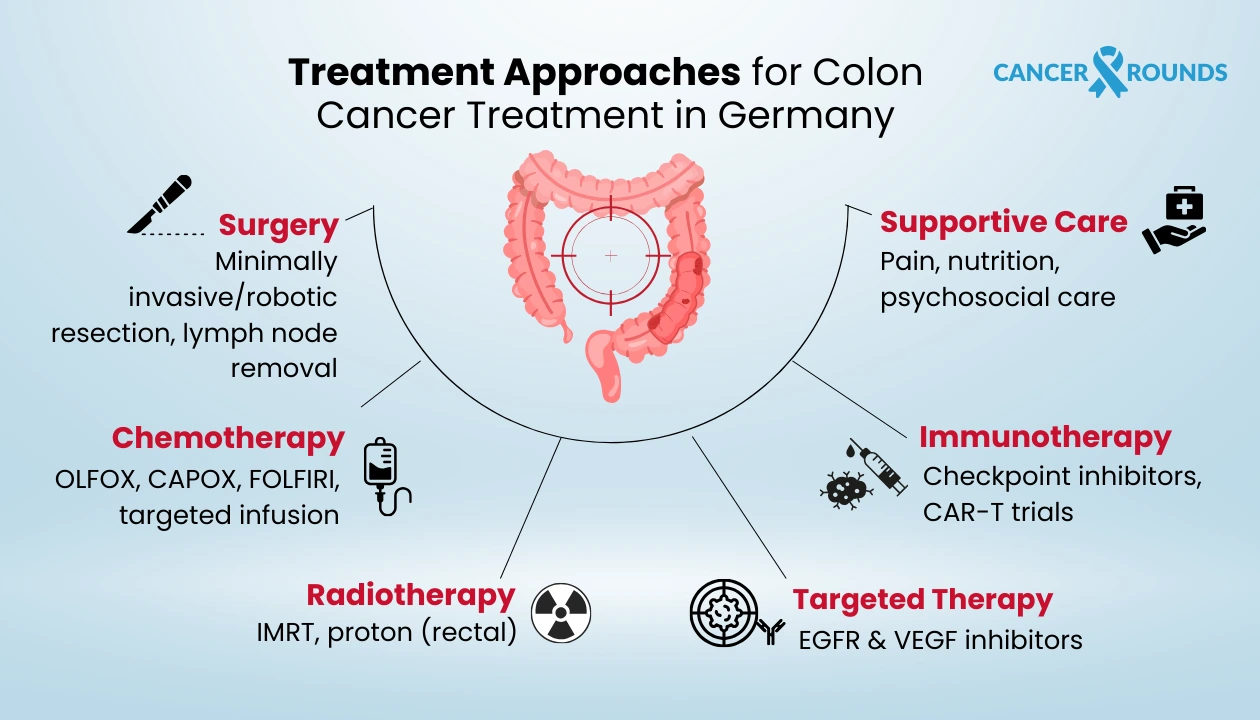
Germany is globally admired for its pioneering role in colon cancer treatment, offering not only conventional methods but also cutting-edge therapies tailored to genetic profiles and individual patient needs. By combining precision oncology, targeted therapies, and immunotherapy innovations, German oncology centers deliver treatment that is both personalized and effective.
Modern colon cancer treatment in Germany goes beyond “one-size-fits-all.” Through targeted therapies and genetic tumor analysis, doctors identify mutations such as VEGF and EGFR pathways, and prescribe targeted agents that block tumor growth and angiogenesis. This precision medicine allows therapy to be more effective while sparing healthy tissues.
One of the most exciting breakthroughs is the dendritic cell vaccine, an advanced form of immunotherapy designed to activate the body’s own immune system:
Cost Range: Typically $22,000 – $42,000 USD, depending on complexity, stage, and whether combined with other treatments.
| Stage | Surgery | Chemotherapy | Radiotherapy | Immunotherapy / Advanced | Approximate Cost (USD) |
| Stage I | Minimally invasive colectomy, polypectomy | Not usually required | Rarely needed | Optional vaccine therapy for prevention of recurrence | $12,000 – $20,000 |
| Stage II | Segmental colectomy with lymph node removal | Adjuvant chemo (FOLFOX, CAPOX) in high-risk cases | Rarely used | Targeted therapy in high-risk patients; optional dendritic vaccine | $18,000 – $28,000 |
| Stage III | Colectomy with extended lymphadenectomy | Standard chemo (FOLFOX, CAPOX) ± targeted therapy | Pre- or post-operative radiotherapy for rectal cancer | Dendritic vaccines + monoclonal antibodies (EGFR/VEGF inhibitors) | $28,000 – $45,000 |
| Stage IV | Cytoreductive surgery; liver/lung metastasectomy; HIPEC for peritoneal spread | Systemic chemo (FOLFIRI, FOLFOX) + targeted agents | Palliative radiotherapy for symptom relief or local control | Advanced immunotherapy (checkpoint inhibitors, dendritic vaccines) + clinical trials | $35,000 – $70,000 |
| Category | Details |
| Common Symptoms | • Persistent changes in bowel habits (diarrhea/constipation) • Blood in stool (bright red or dark) • Abdominal pain, bloating, or cramps • Unexplained weight loss • Fatigue and weakness • Feeling of incomplete evacuation |
| Diagnosis Methods | • Colonoscopy with biopsy (gold standard) • Imaging: CT, MRI, PET-CT for staging • Blood tests: CEA marker, CBC, liver function • Genetic & molecular profiling (KRAS, NRAS, BRAF, MSI status) • Ultrasound for liver metastasis detection |
| Stages / Types | Stages (TNM Classification): • Stage 0: In situ (confined to mucosa) • Stage I: Local invasion into submucosa/muscularis propria • Stage II: Spread through colon wall (no lymph nodes) • Stage III: Regional lymph node involvement • Stage IV: Distant metastasis (liver, lungs) Types: • Adenocarcinoma (most common, ~95%) • Mucinous adenocarcinoma • Signet-ring cell carcinoma • Rare: squamous cell, neuroendocrine tumors |
| Treatment Approaches | • Surgery: Minimally invasive colectomy, laparoscopic/robotic resection, lymph node dissection • Chemotherapy: FOLFOX, CAPOX, FOLFIRI; targeted drug infusion • Radiotherapy: IMRT, proton therapy (esp. rectal cancer) • Targeted Therapy: EGFR inhibitors (cetuximab, panitumumab), VEGF inhibitors (bevacizumab) • Immunotherapy: Checkpoint inhibitors (pembrolizumab, nivolumab), CAR-T trials • Supportive Care: Pain management, nutritional therapy, psychosocial support |
Colon cancer treatment depends on the stage of the disease, overall health, and patient-specific factors. In early stages, surgery remains the most effective option, often involving minimally invasive colectomy or laparoscopic resection with lymph node removal. For advanced colon cancer stages, chemotherapy regimens such as FOLFOX, FOLFIRI, or CAPOX are commonly used to improve the colon cancer survival rate. Targeted therapies like EGFR or VEGF inhibitors and modern immunotherapy drugs, including checkpoint inhibitors, have shown promising results, especially in stage 4 colon cancer survival rate by age groups, where outcomes vary significantly. Radiotherapy, particularly IMRT and proton therapy, is applied in rectal cancer cases to reduce recurrence and enhance results. Alongside these treatments, supportive care such as nutritional therapy, pain management, and counseling plays a crucial role. Since colon cancer symptoms can mimic other digestive disorders, early detection through colon cancer screening such as colonoscopy is essential. Awareness about what causes colon cancer, including lifestyle, genetics, and environmental risk factors, helps in prevention. Recognizing colon cancer symptoms in women, like changes in bowel habits, unexplained fatigue, or blood in stool, is especially important because they are often overlooked. By combining advanced treatment with early diagnosis, the chances of better outcomes and longer survival are greatly improved.
In Germany, colon cancer treatment is not just about removing tumors—it is about healing with science, compassion, and precision medicine. Patients gain access to the latest surgical innovations, world-class chemotherapy regimens, advanced radiotherapy, and pioneering immunotherapies, making Germany a true leader in global cancer care.
For international patients requiring the most advanced colon cancer treatment abroad, Germany stands as a preeminent global destination. Its sterling reputation for specialized gastrointestinal oncology and comprehensive care draws individuals from the UK, US, Canada, Ireland, Saudi Arabia, Holland, the broader Middle East, and beyond. If you’re an international patient navigating complex healthcare systems, Cancer Rounds is your dedicated medical facilitator, cancer care coordinator, and medical tourism expert, providing streamlined access to Germany’s world-class colon cancer care and innovative therapies in leading medical hubs like Heidelberg, Hamburg, Munich, and Cologne.
German hospitals are internationally acclaimed for their sophisticated approach to colon cancer, meticulously integrating cutting-edge diagnostics, advanced surgical techniques, precision adjuvant therapies, and holistic patient support. Patients choose Germany for compelling reasons, establishing it as a top choice for colon cancer medical tourism:
At Cancer Rounds, we deeply appreciate the complexities international patients face – from navigating diverse healthcare systems and securing prompt specialist appointments to overcoming language barriers and logistical hurdles. We serve as your essential liaison, directly connecting you with Germany’s top colon cancer specialists and university hospitals in key medical cities like Heidelberg, Hamburg, Munich, and Cologne. We are leaders in international patient support for cancer care.
If you are from the UK seeking rapid access to innovative colon cancer therapies or require an expert second opinion on complex cases beyond what’s available domestically, Cancer Rounds facilitates direct pathways to renowned German excellence. Similarly, patients from the US desiring advanced European gastrointestinal oncology expertise or Canadians experiencing longer waits for specialized colorectal care can leverage our services for expedited appointments and access to cutting-edge treatments in Germany’s premier clinics. We ensure you receive comprehensive medical review from esteemed overseas specialists.
We understand the specific challenges confronting patients from the Middle East and Saudi Arabia when pursuing colon cancer treatment in Europe. Cancer Rounds meticulously streamlines your journey, arranging swift access to leading German colorectal oncology specialists in cities such as Munich and Hamburg, coordinating fast-track second opinions, and linking you with advanced treatments often unavailable in your home country. We are your dedicated ally in securing high-quality cancer care in Germany without the typical logistical complexities.
Whether you are from Ireland looking for groundbreaking targeted therapies for colon cancer, or from Holland and other international locations seeking world-class colorectal care, Cancer Rounds ensures a seamless and efficient process. We simplify access to advanced clinical trials and personalized treatment planning in Germany’s leading cancer centers, empowering you to focus entirely on your health and recovery.
Cancer Rounds offers meticulous, end-to-end support for all international patients. Our services encompass all logistical intricacies, including medical record translation, visa assistance, travel arrangements, accommodation, and crucial language assistance throughout your medical journey in Germany. We meticulously manage these details so you can concentrate solely on your health, making international medical travel stress-free. Our extensive network guarantees you receive a bespoke treatment strategy, leveraging Germany’s advanced medical capabilities, precisely tailored to your individual needs as an international cancer patient.
Do not let geographical distance or administrative complexities impede your access to the finest colon cancer treatment in Germany. Let Cancer Rounds be your trusted guide to receiving timely, comprehensive, and advanced gastrointestinal care in Germany’s celebrated medical centers. Contact us for Germany cancer treatment cost information and to understand more about how to get treatment in Germany for cancer.
Germany is renowned for its cutting-edge oncology centers, offering advanced diagnostics, robotic-assisted surgeries, precision chemotherapy, modern radiotherapy, and innovative immunotherapies like dendritic cell vaccines.
Key symptoms include blood in stool, unexplained weight loss, abdominal pain, fatigue, and altered bowel habits such as constipation or diarrhea.
Patients undergo colonoscopy, biopsy, CT/MRI scans, PET-CT, and molecular profiling to detect stage, tumor spread, and genetic markers.
In Germany, early-stage colon cancer has 85–90% local tumor control and up to 80% disease-free survival (DFS), emphasizing the importance of timely diagnosis.
German centers provide laparoscopic colectomy, robotic-assisted resection, segmental removal, and lymph node dissection, ensuring minimal scarring and faster recovery.
Protocols like FOLFOX (5-FU, folinic acid, oxaliplatin) and FOLFIRI (5-FU, folinic acid, irinotecan) are widely applied, sometimes with biological agents for advanced disease.
For rectal tumors, German experts employ IMRT, IGRT, and proton therapy, enhancing tumor control while sparing healthy tissues.
Germany leads in dendritic cell vaccines, checkpoint inhibitors (PD-1, CTLA-4 blockers), and CAR-T trials, creating personalized immune-based care.
Immune cells are harvested, trained with tumor antigens, and reinfused to hunt and destroy micrometastases, even those invisible to scans.
German data shows over 90% remission for stage I–III and around 80% remission even in stage IV when dendritic cell therapy is integrated.
Yes, German hospitals have international patient departments, offering translators, visa support, and customized treatment packages.
Germany integrates genetic tumor profiling, precision-targeted drugs, and interdisciplinary tumor boards for each patient.
Minimally invasive colectomies often require 5–7 days, with full recovery in 2–4 weeks depending on patient condition.
Yes, multimodal treatment plans (surgery + chemo + immunotherapy + radiotherapy) are standard to maximize survival.
Absolutely. German oncology centers perform KRAS, NRAS, MSI, and BRAF mutation testing to personalize therapies.
Patients receive structured follow-ups with imaging, colonoscopies, lab tests, and nutritional counseling every 3–6 months.
Germany has one of the highest 5-year survival rates worldwide due to early detection, high-tech therapies, and strong aftercare systems.
Yes, many stage IV patients in Germany receive surgery for metastases, advanced chemo, and dendritic cell vaccines, significantly extending survival and quality of life.
Germany provides a world-class ecosystem for colon cancer management—combining early detection, surgical expertise, precision chemo, advanced radiotherapy, and breakthrough immunotherapies. With success rates among the best in the world and personalized, stage-wise therapies, Germany stands as a global hub for advanced colon cancer care.
Ready to Take the Next Step?
If you’re exploring treatment options in Germany or seeking a free second opinion, our service offers compassionate guidance:
Sources:
Published By
.webp)
Global Patient Care, Redefined
The CancerRounds Medical Content Team specialises in creating accurate, clear and patient-focused healthcare content. Our content is written by medically trained writers, medically reviewed, and based on reputable medical sources to support informed healthcare decisions.


Get expert guidance instantly
Share a few details and our medical team gets back to you within 4 hours with the next steps.
Tell us what you are facing and our medical team will guide you to the right doctors, hospitals and treatment.
Free Review, No Commitment
Free assessment with no pressure to proceed.
Trusted by 100,000+ Patients
Across 125+ countries worldwide
500+ Top Partner Hospitals
Globally accredited medical facilities
5000+ Expert Specialists
Senior doctors across major specialties.
Making quality healthcare accessible to patients worldwide
Everything you need to know about choosing the right hospital, doctor and treatment plan.