
Dendritic cell therapy in Germany is a highly personalized cancer immunotherapy offered at selected centers. Treatment is manufactured under EU Good Manufacturing Practice (EU-GMP) standards and regulated by German and European medicines authorities. Costs typically range from €15,000 to €50,000+ for eligible patients.
Reply in 4 hours · Plan and quote in 2 days · 100% confidential
A cancer diagnosis can bring many questions, especially when exploring newer treatment approaches alongside standard therapies. Dendritic cell therapy is a form of personalized (highly) cancer immunotherapy that aims to help the immune system recognize and attack cancer cells more effectively. It’s being studied for its potential to help the immune system recognize and respond to cancer cells. While it is not suitable for every patient or every type of cancer, it may be considered in selected cases; it is considered an adjunct (add-on) immunotherapy, based on the individual’s biological profile and treatment history.
Patients have been coming to Germany seeking dendritic cell therapy; Germany has also been called the Central hub for medical tourism because of its research-focused medical system. It has also become popular amongst foreign patients from the United States, Canada, Australia, etc., because of Germany’s competitive cost estimates against these healthcare systems. Patients receive a detailed medical assessment to determine whether the therapy is appropriate and, where suitable, it may be offered as part of an individualized treatment plan or within clinical research programs.
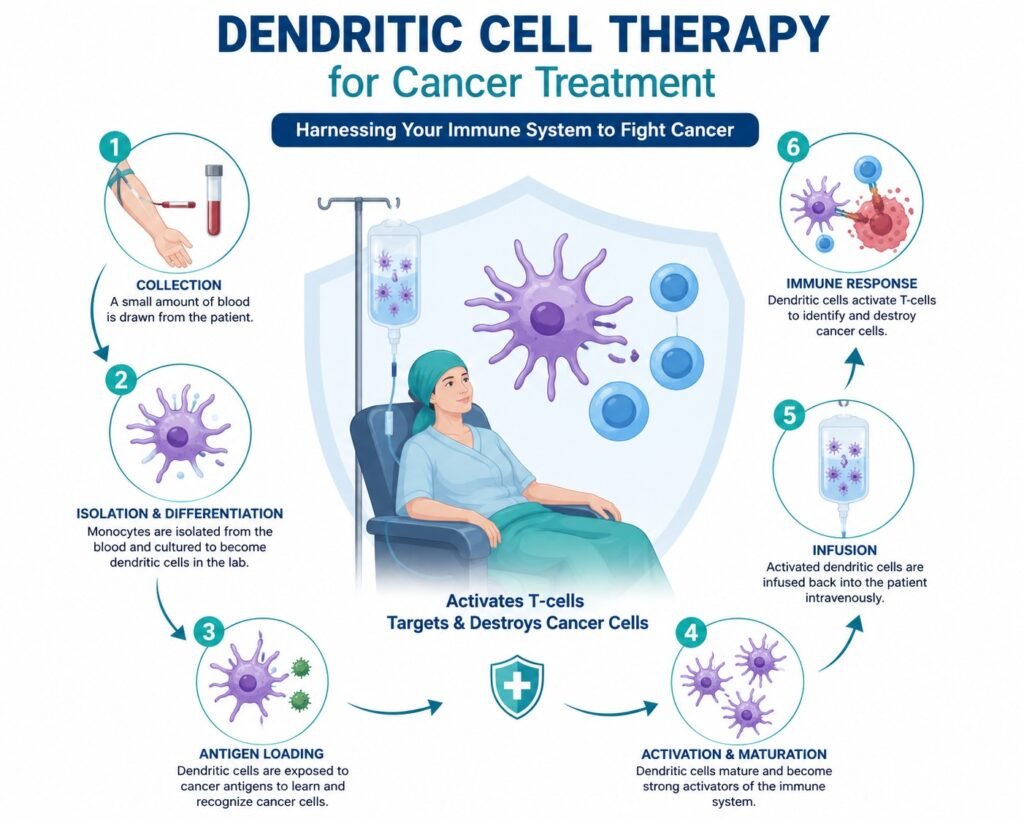
Dendritic cell therapy involves collecting a patient’s immune cells, the steps follow drawing of the blood, cell isolation, lab culturing, antigen loading, and lastly injecting the prepared vaccine back into the patient’s body. Depending on the type and stage of cancer, it may be used alongside treatments such as surgery, chemotherapy, radiation therapy, targeted therapy, or other forms of immunotherapy.
For selected patients with advanced or Stage 4 cancer, dendritic cell therapy may be considered as part of an individualized treatment plan, often alongside established treatments or within clinical trials.
Other current clinical evidence suggests that dendritic cell therapy may help improve progression-free and overall survival in selected patients with certain cancers, particularly when combined with established cancer treatments.
Important Note: Deciding whether this therapy is appropriate depends on the individual’s condition. This includes the type of cancer, stage, and how it may be used alongside treatments such as surgery, chemotherapy, radiation therapy, targeted therapy, or other forms of immunotherapy.
This guide explains everything you need to know about dendritic cell therapy in Germany, including how patients are evaluated, how the treatment is performed, the technologies used, expected costs, recovery, benefits, current clinical evidence, and the treatment journey for international patients. Designed to help patients and their families better understand whether this approach may be appropriate as part of their cancer care.
Germany has become a trusted destination for international patients; annually, hospitals in Germany treat 150,000 to 250,000 foreign patients, of whom 52,000 to 60,000 patients get treated for cancer. Immunotherapy services are available in several major medical hubs, including Heidelberg, Munich, Berlin, Hamburg, Frankfurt, Cologne, Hannover, and Dresden. While dendritic cell therapy is not part of routine cancer care for every patient or cancer type, eligible individuals may be able to access it through specialized treatment programs or clinical trials after a detailed medical evaluation.
One of Germany’s key strengths is its strong focus on cancer research and innovation. Many university hospitals and specialized oncology centers actively participate in national and international clinical trials investigating dendritic cell vaccines for cancers such as glioblastoma, melanoma, prostate cancer, and other solid tumors. Studies continue to evaluate how dendritic cell therapy may improve immune responses and treatment outcomes when used alongside established therapies.
Germany also maintains stringent regulations for the development and administration of cell-based therapies. Patient-derived immune cells are processed in Good Manufacturing Practice (GMP)-certified laboratories, where every stage of production follows strict European quality and safety standards. Before the therapy is administered, the cells undergo multiple quality control procedures.
Depending on the patient’s condition, advanced diagnostic technologies and specialists may also use molecular profiling, next-generation sequencing (NGS), biomarker analysis, etc., to better understand the tumor and determine whether dendritic cell therapy could be an appropriate option.
Dendritic cell therapy is a type of highly personalized cancer immunotherapy that aims to help the body’s immune system recognize and fight cancer cells more effectively. Unlike chemotherapy or radiation therapy, dendritic cell therapy does not directly destroy cancer cells. Instead, it works by training the immune system to identify and respond to them.
So, basically, it uses dendritic cells, which are specialized immune cells responsible for identifying harmful substances and activating T cells, the immune cells that attack abnormal or cancerous cells.
The overall treatment course typically spans 4–12 weeks. Some patients may need to stay in Germany for only part of this period, while visits for follow-up or booster doses may be planned later in coordination with their treating team.
*The exact duration varies depending on the treatment protocol, laboratory preparation time, and the number of vaccine doses recommended.
Dendritic Cell Therapy (DCT) is best suited for patients who are dealing with advanced, recurrent, or difficult-to-treat cancers, such as metastatic breast cancer, glioblastoma (brain tumors), stage 4 pancreatic cancer, ovarian cancer, prostate cancer, or rare aggressive tumors. It’s also a good option for people who:
DCT may be a good option for people who:
In top cancer hospitals across Germany, DCT is being used for both common and rare cancers when other options are limited or have stopped working.
The goal of dendritic cell therapy varies as it heavily relies on the type and stage of cancer. For early-stage cancers, it may be used alongside standard treatments to help strengthen the immune response and reduce the risk of recurrence in selected patients. However, it is important to note that it is not considered as a standalone curative treatment.
For patients dealing with Stage IV or metastatic cancer, in selected patients, clinical studies suggest that it may help delay disease progression, improve quality of life, and, in some cancers, extend progression-free or overall survival. The extent of benefit varies according to the cancer type, tumor biology, previous treatments, and individual response.
Research on dendritic cell immunotherapy has also shown that it can stimulate long-lasting anti-tumor immune responses by activating tumor-specific T cells and supporting immune memory.
How does this help? This may help the immune system continue recognizing cancer cells after treatment, although its long-term impact on remission and recurrence remains an active area of research. As a result, dendritic cell therapy is currently viewed as a promising adjunct to standard cancer care rather than a replacement for established treatments.
Before starting dendritic cell therapy, specialists in Germany conduct a detailed assessment to determine whether the treatment is appropriate. This evaluation usually includes:
The exact treatment schedule varies between hospitals, cancer centers and treatment protocols. However, for most patients, the initial dendritic cell therapy process in Germany is completed over approximately 1–2 weeks, followed by scheduled vaccine doses and follow-up visits.
Note: Dendritic cell therapy is generally well tolerated, and most patients experience only mild side effects such as temporary redness or swelling at the injection site, low-grade fever, fatigue, muscle aches, or flu-like symptoms that resolve within a few days. Serious complications are uncommon but can include stronger immune-related reactions or allergic responses, which is why patients are monitored closely the course.
Germany combines dendritic cell vaccination with modern laboratory techniques and precision diagnostics to develop tailored treatment plans. These modern technologies help specialists to not only identify tumor-specific targets but also prepare high-quality dendritic cell vaccines and monitor a patient’s immune response throughout the whole process.
Note: LANEX-DC® is a proprietary platform rather than a nationally adopted German technology. It’s best to describe it as used at some specialized centers instead of implying it is standard across Germany. This keeps the content medically accurate and balanced.
Why do eligible patients opt for dendritic cell therapy? Because research suggests it may offer several potential benefits when used as part of an individualized cancer treatment plan.
The cost of dendritic cell therapy in Germany depends on various factors that we have touched upon already in the beginning. Since each treatment plan is tailored to the individual patient, the final cost is determined after a detailed medical evaluation.
The treatment is typically administered in multiple cycle sessions, and the number of cycles required can significantly influence the overall cost. Overall, the total approximate cost typically ranges from €15,000 to €50,000 or more, given the complexity of the case and the required components.
| Treatment | Estimated Cost* |
| Initial consultation and eligibility assessment | €300–€1,000 |
| Diagnostic tests and molecular profiling | €1,500–€5,000 |
| Personalized dendritic cell vaccine preparation | €10,000–€25,000 |
| Vaccine administration and follow-up | €3,000–€10,000 |
| Estimated total treatment cost | €15,000–€50,000+ |
*These are approximate estimates and may vary depending on the treatment protocol and healthcare provider.
The treatment package may include:
The final cost may increase if additional services are required, such as:
For most patients coming from abroad for therapy in Germany, dendritic cell therapy is a self-pay treatment, particularly when it is provided as an individualized therapy outside standard insurance coverage. While some private health insurance plans may reimburse part of the treatment costs, coverage depends on the insurer, the patient’s policy, and whether the therapy is considered medically necessary. Patients are encouraged to obtain pre-authorization from their insurance provider and request a detailed cost estimate from the treating hospital before beginning treatment.
Key Takeaway for International Patients: Request a treatment plan and written quotation before travelling, as the total cost depends on the case’s complexity, the number of vaccine doses required, and if any additional diagnostic or supportive care services are required.
The hospitals and centers listed below are provided for informational purposes only and do not represent a ranking or endorsement. The availability of dendritic cell therapy depends on the patient’s diagnosis, eligibility, and the hospital’s treatment protocols or clinical research programs.
| Hospital | City | Relevant Expertise |
|---|---|---|
| Hannover Medical School (MHH) – Institute of Immunology | Hannover | Conducts research on dendritic cells, T-cell activation, vaccine development, and immune therapies. Uses advanced technologies such as single-cell sequencing, T-cell receptor sequencing, spectral flow cytometry, and 2-photon microscopy to support translational immunology research. |
| Immuno-Oncology Center Cologne (IOZK) | Cologne | Specializes in individualized cancer immunotherapy, including IO-VAC®, an autologous dendritic cell vaccine. Offers individualized multimodal immunotherapy (IMI) combining dendritic cell vaccination with oncolytic virotherapy and hyperthermia for selected patients. |
| University Hospital Cologne | Cologne | Home to the Translational Immune Oncology research group, which develops clinical-grade engineered dendritic cells and CAR-T cells for leukemia, lymphoma, and other hematologic malignancies, supporting the translation of laboratory research into future clinical applications. |
| Beta Klinik Bonn | Bonn | Provides personalized neuro-oncology care for patients with brain tumors, including access to immunotherapy-based treatment approaches and personalized cancer vaccines where clinically appropriate, alongside radiation therapy and chemotherapy. |
Patients interested in dendritic cell therapy should contact the hospital’s international patient office or oncology department to confirm treatment availability, determine whether clinical trial participation is possible, and understand the eligibility criteria based on their cancer type and medical history.
The treatment journey for patients receiving dendritic cell therapy in Germany is well planned. This is so that international patients have an experience before, during, and after they receive dendritic cell therapy in Germany. While the exact timeline varies depending on the treatment center and individual case, the process generally includes the following steps:
| Step | What Happens? |
| 1. Initial Inquiry | Share your medical records, pathology reports, imaging scans, and treatment history with the hospital’s international patient office for a preliminary review. |
| 2. Specialist Review & Treatment Plan | A multidisciplinary team evaluates your case, determines whether you are eligible for dendritic cell therapy, and provides a personalized treatment plan with an estimated cost. |
| 3. Travel Planning | Once the treatment plan is confirmed, the hospital assists with appointment scheduling, visa invitation letters (if required), accommodation guidance, and interpreter services. |
| 4. Arrival in Germany | Meet your oncology team, complete any remaining consultations, blood tests, imaging, or additional investigations before treatment begins. |
| 5. Cell Collection | A blood sample or immune cells are collected for the preparation of the personalized dendritic cell vaccine. |
| 6. Laboratory Preparation | The vaccine is manufactured in an EU-GMP-certified laboratory, where dendritic cells are processed, exposed to tumor-specific antigens, and undergo quality testing. This typically takes about 5–7 days. |
| 7. Vaccine Administration | The dendritic cell vaccine is administered, usually as an outpatient injection. Patients are monitored for a short period before returning to their accommodation. |
| 8. Follow-Up Doses & Monitoring | Depending on the treatment protocol, additional vaccine doses may be scheduled over the following weeks, along with blood tests, imaging, and clinical assessments to monitor the response. |
| 9. Return Home & Long-Term Follow-Up | Before travelling home, patients receive a medical summary, follow-up recommendations, and guidance for ongoing care. Many hospitals continue remote follow-up by coordinating with the patient’s local healthcare provider when appropriate. |
Most hospitals in Germany have dedicated International Patient Offices that support overseas patients throughout the process, usually by
This approach helps patients focus on their care while ensuring continuity before, during, and after their stay in Germany.
Current clinical evidence suggests that dendritic cell therapy is a promising form of personalized cancer immunotherapy, particularly when used alongside standard cancer treatments. Minding the fact that it is not yet a routine treatment for all cancers, findings from clinical trials, retrospective studies, and systematic reviews indicate that it may benefit selected patients who match the criteria for getting it by enhancing anti-tumor immune responses and improving certain clinical outcomes.
Some notable findings include:
Even though these findings are encouraging, dendritic cell therapy remains an evolving area of cancer immunotherapy. Again, the treatment’s results or outcomes rely on what kind of cancer types are being dealt with, the stage (early, localised, metastatic), tumor biology, previous treatments done, and individual patient characteristics.
So, the therapy is often offered as part of individualized treatment programs or clinical trials while further evidence continues to emerge.
Recovery after dendritic cell therapy is generally quicker than after surgery or intensive chemotherapy because the treatment works by stimulating the immune system rather than directly destroying cancer cells.
Most patients can return to their usual daily activities within 24–48 hours after each vaccine session, although mild side effects may last for a few days.
| Recovery Stage | What Patients Can Expect |
| First 24–48 hours | Mild fatigue, low-grade fever, flu-like symptoms, or injection-site discomfort may occur and usually resolve without major intervention. |
| First 1–2 weeks | Patients continue normal daily activities while attending scheduled follow-up visits and receiving additional vaccine doses if recommended. |
| 1–3 months | Doctors monitor the immune response and treatment effectiveness using blood tests, imaging scans, and clinical assessments. Some patients may continue maintenance or booster doses depending on the treatment protocol. |
| Long-term follow-up | Regular follow-up appointments help assess disease status, manage any recurrence, and determine whether additional cancer treatment is required. |
After treatment, patients typically undergo:
“What happens after I leave Germany after my treatment?” This question might come up if you’re coming as an overseas patient to Germany for dendritic cell treatment.
So, accordingly, note that before returning home, your treating team in Germany will provide a detailed medical summary, follow-up schedule, and recommendations for ongoing care. Patients are encouraged to share these records with their local oncologist to ensure continuity of treatment. In case any additional vaccine doses, imaging, or follow-up consultations are required, many German hospitals can coordinate remote reviews or help plan future visits based on the patient’s recovery and treatment response.
Need help exploring dendritic cell therapy in Germany? The CancerRounds team can help you connect with experienced specialists and help you understand your treatment options, review estimated costs, and guide you through every step of your medical journey in Germany.
Cancer Round Services act as a trusted bridge between international patients and top German immuno-oncology centers. Their role includes:
Yes. Dendritic cell therapy is available at selected specialized centers in Germany. Depending on the cancer type and treatment protocol, it may be offered as an individualized therapy or through clinical trials following a specialist evaluation.
It depends. Eligibility is based on factors such as the type and stage of cancer, previous treatments, tumor characteristics, overall health, and whether your medical team believes you are likely to benefit from the therapy.
Yes. Many German hospitals have dedicated international patient offices that assist with medical record reviews, treatment planning, visa support, interpreter services, accommodation guidance, and follow-up coordination.
It depends. The total cost generally ranges from €15,000 to €50,000 or more, depending on the treatment protocol, laboratory procedures, number of vaccine doses, and any additional diagnostic tests or supportive care required.
Most international patients pay for dendritic cell therapy themselves. This is often termed self-pay or private-pay. Some private insurance providers may reimburse part of the cost if the treatment is covered under the patient’s policy, so it is advisable to check with your insurer before travelling.
Most patients remain in Germany for about 1–2 weeks for the initial consultation, cell collection, laboratory preparation, and first vaccine administration. Additional treatment sessions or follow-up visits may be scheduled over the following weeks, depending on the treatment plan.
Yes, in selected patients. Dendritic cell therapy may be considered alongside standard treatments for certain patients with advanced or metastatic cancer. Its goal is to support the immune system and potentially improve disease control, but suitability varies by cancer type and individual circumstances.
No. Dendritic cell therapy is not considered a standalone cure for cancer. It is used to stimulate the immune system and is often combined with other cancer treatments. Treatment outcomes differ from one patient to another.
Yes, mild side effects are possible. The most common side effects include temporary fatigue, low-grade fever, redness or swelling at the injection site, muscle aches, and flu-like symptoms. Serious treatment-related complications are uncommon.
Yes. Before you leave Germany, your treating team will provide a medical summary and follow-up recommendations. Many hospitals also coordinate with your local oncologist to support ongoing monitoring and future treatment decisions if needed.
German immunotherapy centers have reported positive outcomes using DCT for:
It is also used as a recurrence-prevention strategy post-surgery or chemotherapy in certain cancers.
Published By
.webp)
Global Patient Care, Redefined
The CancerRounds Medical Content Team specialises in creating accurate, clear and patient-focused healthcare content. Our content is written by medically trained writers, medically reviewed, and based on reputable medical sources to support informed healthcare decisions.
Get expert guidance instantly
Share a few details and our medical team gets back to you within 4 hours with the next steps.

Tell us what you are facing and our medical team will guide you to the right doctors, hospitals and treatment.
Free Review, No Commitment
Free assessment with no pressure to proceed.
Trusted by 100,000+ Patients
Across 125+ countries worldwide
500+ Top Partner Hospitals
Globally accredited medical facilities
5000+ Expert Specialists
Senior doctors across major specialties.
Making quality healthcare accessible to patients worldwide
Everything you need to know about choosing the right hospital, doctor and treatment plan.


