
Germany offers thyroid cancer treatment, including surgery, radioactive iodine (RAI) therapy, targeted treatments for eligible patients, and long-term follow-up care. According to the American Cancer Society, "the 5-year relative survival rate for localized papillary and follicular thyroid cancers exceeds 99%", making early diagnosis and timely treatment especially important.
Reply in 4 hours · Plan and quote in 2 days · 100% confidential
A thyroid cancer diagnosis can feel overwhelming, but advances in medical care have made many forms of this disease highly treatable, especially when detected early. Germany has established itself as a preferred destination for international patients seeking thyroid cancer treatment because of its well-organized healthcare system and coordinated approach to cancer care. Organizations such as the Deutsche Krebsgesellschaft (German Cancer Society) support evidence-based practices that contribute to high standards of thyroid cancer diagnosis, treatment, and follow-up. 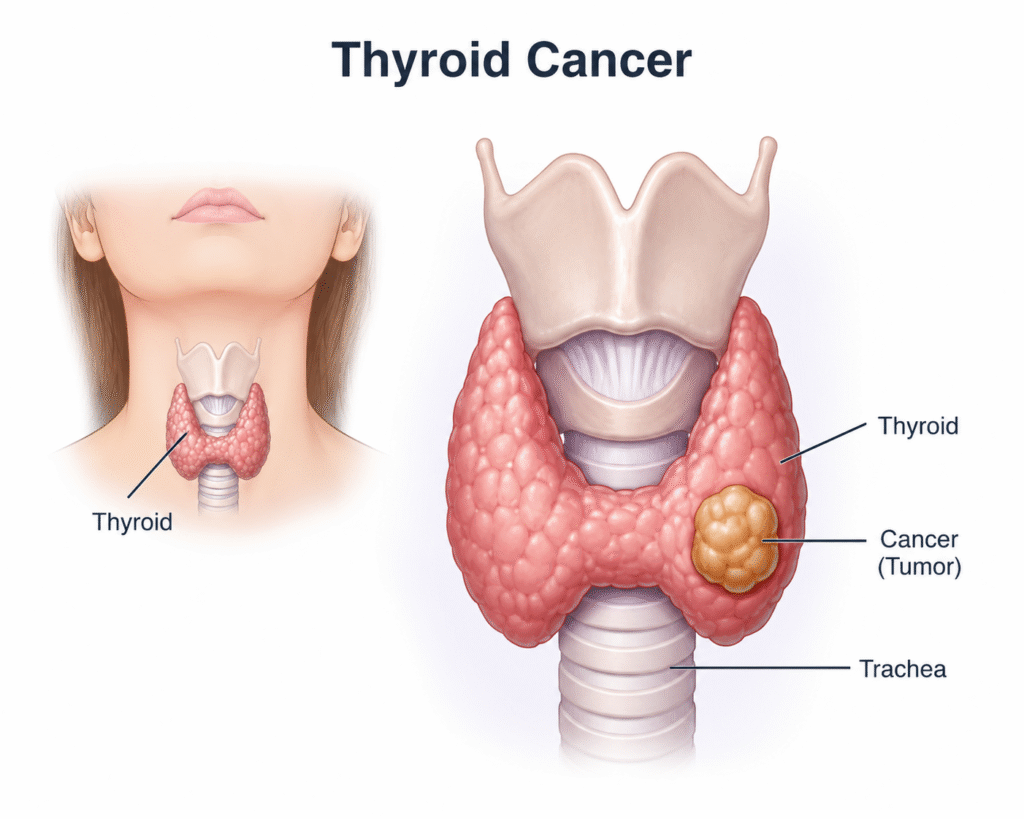
Patients benefit from thorough diagnostic evaluations, access to a range of treatment options, and ongoing follow-up, allowing care to be planned around their specific diagnosis and treatment goals.
Depending on the diagnosis, treatment may include thyroid surgery, radioactive iodine (RAI) therapy, thyroid hormone therapy, external beam radiation therapy, targeted therapy, or other specialized approaches tailored to the individual’s condition.
This guide explains everything you need to know about cancer treatment in Germany for thyroid cancer, including how the condition is diagnosed, available treatment options, advanced technologies, expected costs, recovery, and survival rates. It also outlines the treatment journey for international patients, helping individuals and their families make informed decisions while exploring care in Germany.
Choosing where to receive thyroid cancer treatment is an important decision and many international patients consider Germany because of its advanced healthcare system, access to technical treatments, and tailored methods of cancer care. From the initial diagnosis to long-term follow-up, treatment is planned around each patient’s specific type of thyroid cancer, stage of the disease, and overall health.
It is important to note that every person’s experience with thyroid cancer is different.
This collaborative approach helps ensure that every aspect of the diagnosis is carefully considered before treatment begins.
Before treatment begins, a detailed evaluation helps determine the type and stage of thyroid cancer. Depending on the individual’s condition
These tests provide important information that helps the medical team choose the most suitable treatment approach.
Thyroid cancer begins in the thyroid gland, a small butterfly-shaped gland located at the base of the neck. This gland produces hormones that regulate metabolism, heart rate, body temperature, and energy levels. When abnormal cells grow uncontrollably, they can form a tumor that may require specialized treatment.
The four main types of thyroid cancer include:
In its early stages, thyroid cancer symptoms may not be noticeable. As the disease progresses, some people may experience:
These symptoms are not always caused by thyroid cancer, but they should be evaluated by a healthcare professional to determine the underlying cause.
Early diagnosis plays an important role in selecting the most appropriate treatment. The type of thyroid cancer, its stage, and whether it has spread beyond the thyroid gland all help guide the treatment plan. The next section explains the diagnostic tests commonly used before starting medical treatment in Germany.
Before recommending a treatment plan, specialists carry out a detailed evaluation to determine the type of thyroid cancer, its stage, and whether it has spread beyond the thyroid gland. A thorough diagnosis helps ensure that each person receives the most appropriate care based on their individual condition.
The diagnostic process may include one or more of the following tests:
The evaluation begins with a review of your medical history, symptoms, and family history of thyroid disease or cancer. A physical examination is also performed to check for lumps or enlarged lymph nodes in the neck.
Ultrasound is one of the primary imaging tests used to examine the thyroid gland. It helps identify suspicious thyroid nodules (lumps in the thyroid gland), assess their size and characteristics, and evaluate nearby lymph nodes.
If a thyroid lump appears suspicious, an ultrasound-guided fine-needle aspiration (FNA) biopsy may be recommended. During this minimally invasive procedure, a small sample of cells is collected from the lump and examined under a microscope to determine whether cancer is present.
Blood tests help assess thyroid function and may include measurements of thyroid-stimulating hormone (TSH) and other hormone levels. In certain cases, additional tests, such as calcitonin or carcinoembryonic antigen (CEA), may be used to evaluate medullary thyroid cancer.
If there is concern that the cancer has spread or recurred, imaging studies such as CT scans, MRI, PET/CT, or radioactive iodine scans may be recommended. These tests provide detailed information about the extent of the disease and help guide treatment planning.
For selected patients, molecular or genetic testing may be performed on biopsy samples. Identifying specific genetic changes, such as BRAF, RET, or NTRK alterations, can help refine the diagnosis and determine whether targeted therapy may be an appropriate treatment option.
Once all test results are available, specialists review the findings to confirm the type and stage of thyroid cancer. Based on this evaluation, a customised treatment plan is developed, which may include surgery, radioactive iodine therapy, thyroid hormone therapy, radiation therapy, targeted therapy, or a combination of these approaches.
The treatment regimen for thyroid cancer is tailored to each individual and depends on several factors, including the type, stage, size of the tumor, whether it has spread, and the patient’s overall health.
Surgery is the primary treatment for most thyroid cancers. The goal is to remove the cancer while preserving as much healthy tissue as possible.
Depending on the extent of the disease, surgery may involve:
The type of surgery recommended depends on the characteristics of the cancer and the individual’s overall condition.
Radioactive iodine (RAI) therapy: Radioactive iodine therapy is commonly used after surgery for selected patients with differentiated thyroid cancer, particularly papillary (approximately 85%) and follicular (10–15%) thyroid cancers. According to the National Cancer Institute, RAI helps eliminate remaining thyroid tissue or microscopic cancer cells and may reduce the risk of recurrence in eligible patients.
How does it work? Because thyroid cells naturally absorb iodine, radioactive iodine can destroy any remaining thyroid tissue or cancer cells that were not removed during surgery.
Note : Not everyone with thyroid cancer requires this treatment, and the decision is based on the individual’s risk of recurrence and overall treatment goals.
After part or all of the thyroid gland is removed, many people need thyroid hormone replacement medication to maintain normal hormone levels.
In some other cases, thyroid hormone therapy is also used to suppress thyroid-stimulating hormone (TSH), which may help reduce the risk of cancer recurrence in selected patients.
External beam radiation therapy uses high-energy X-rays to destroy cancer cells. It is not routinely used for all thyroid cancers but may be recommended when:
Treatment is carefully planned to target the cancer while minimizing exposure to surrounding healthy tissues.
Some advanced or metastatic thyroid cancers contain specific genetic changes that can be treated with targeted medicines.
Before starting treatment, molecular testing may be performed to identify genetic alterations such as RET, BRAF, or NTRK. If these changes are present, targeted therapy may help slow cancer growth while reducing damage to healthy cells.
Chemotherapy is not commonly used for most thyroid cancers. However, it may be considered in selected cases, particularly for aggressive cancers such as anaplastic thyroid cancer or when other treatment options are not suitable.
Immunotherapy helps the body’s immune system recognize and attack cancer cells. Although it is not a standard treatment for most thyroid cancers, it may be considered for selected patients with advanced disease, particularly through clinical trials or specific treatment plans based on individual circumstances.
Not every thyroid cancer requires immediate treatment. For some people with very small, low-risk papillary thyroid cancers, doctors may recommend active surveillance instead of surgery.
This approach involves regular monitoring with physical examinations, ultrasound scans, and other follow-up tests to check for any signs of cancer growth. If the cancer shows signs of progression, treatment can be started at the appropriate time.
The most suitable treatment approach is determined after a thorough evaluation of the cancer and overall health. Once a customised treatment plan is developed, ongoing monitoring and follow-up play an important role in rehabilitation and reducing the risk of recurrence.
New technologies in medicine have changed the diagnosis and treatment of thyroid cancer. Specialists now use modern diagnostic equipment and precision treatments to diagnose the disease and tailor their therapy according to the specific patient. This is how things work in Germany.
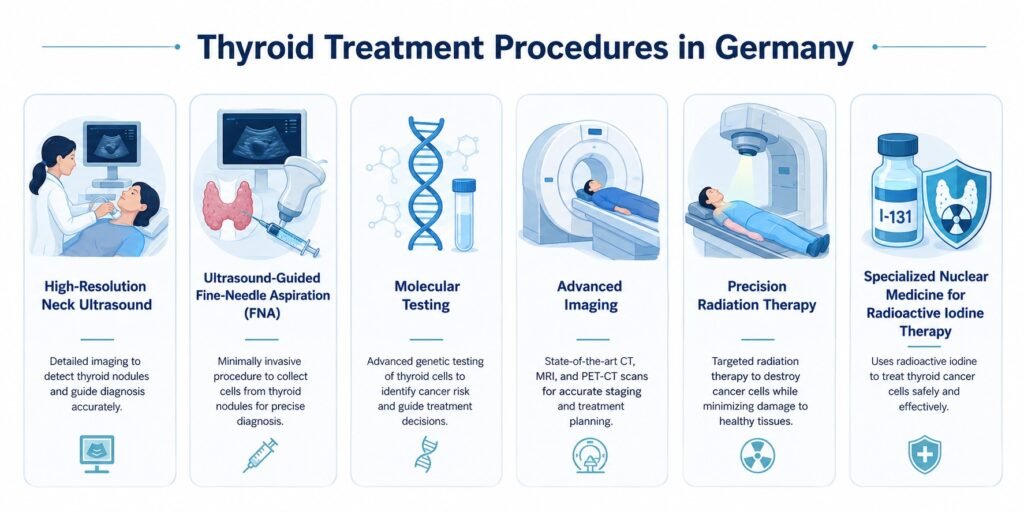
Some of the advanced technologies used in Germany for thyroid cancer care include:
High-resolution ultrasound is one of the most important imaging tools for evaluating the thyroid gland. It helps identify thyroid nodules (lumps), assess nearby lymph nodes, and guide biopsy procedures with greater accuracy.
Because it is non-invasive and does not use radiation, ultrasound is often the first step in evaluating thyroid abnormalities.
When a thyroid lump appears suspicious, an ultrasound-guided FNA biopsy allows specialists to collect a small sample of cells using a thin needle.
Real-time ultrasound guidance improves precision, helping ensure that the sample is taken from the correct area while making the procedure minimally invasive.
For selected patients, molecular testing may be recommended to look for specific genetic changes in thyroid cancer cells, such as BRAF, RET, or NTRK alterations.
These results can provide additional information about the cancer and help determine whether targeted therapy may be a suitable treatment option.
For when additional evaluation is needed, imaging techniques such as CT scans, MRI, PET/CT, or radioactive iodine (RAI) scans help determine whether the cancer has spread or returned after treatment. These detailed images support accurate staging and help guide treatment decisions.
For patients who require external beam radiation therapy, modern image-guided planning techniques help deliver radiation more precisely to the tumor while reducing exposure to nearby healthy tissues.
This approach aims to improve treatment accuracy and minimize side effects.
Radioactive iodine (RAI) therapy plays an important role in the treatment of selected patients with differentiated thyroid cancer after surgery.
In Germany, specialized nuclear medicine departments carefully plan and deliver RAI therapy to target any remaining thyroid tissue or cancer cells while ensuring close monitoring throughout the treatment process. This approach is supported by evidence-based recommendations, including the German S3 Guidelines for Thyroid Carcinoma.
What makes Germany’s healthcare system different? Choosing where to receive thyroid cancer treatment is an important decision. Germany offers a combination of advanced medical expertise, modern treatment techniques and coordinated care that supports patients throughout time of treatment and post-that as well.
How do these differences benefit the patient during treatment and recovery?
For these reasons, Germany continues to be a trusted destination for people seeking specialized thyroid cancer treatment.
Planning treatment in another country often begins with understanding the expected costs. Since thyroid cancer treatment is tailored to each person’s diagnosis, there isn’t a single fixed price. The overall cost depends on the type of treatment required, whether surgery alone is sufficient or additional therapies are needed, the complexity of the procedure, and the length of treatment and recovery.
The table below provides an approximate cost estimate for common thyroid cancer treatments in Germany.
| Treatment | Estimated Cost (EUR) |
| Initial consultation and diagnostic evaluation | €500 – €2,000 |
| Thyroid surgery (Lobectomy or Total Thyroidectomy) | €8,000 – €18,000 |
| Radioactive Iodine (RAI) Therapy | €3,000 – €8,000 |
| External Beam Radiation Therapy | €8,000 – €20,000 |
| Targeted Therapy | Varies depending on the medication and treatment duration |
| Follow-up consultations and monitoring | €200 – €600 per visit |
The total cost of treatment comes down to:
Planning treatment abroad involves more than comparing costs. Consider factors such as shorter waiting times, clear treatment pathways, coordinated care, and the availability of specialized therapies that may not be easily accessible in their home country. Understanding the expected costs in advance can help patients prepare financially and make informed decisions before traveling.
Germany is home to several university medical centers with expertise in diagnosing and treating thyroid cancer. Located in cities such as Berlin, Heidelberg, Munich, and Freiburg, these hospitals offer comprehensive services, including thyroid surgery, radioactive iodine (RAI) therapy, nuclear medicine, radiation therapy, and long-term follow-up care. The hospitals listed below are provided for informational purposes only and do not represent a ranking or endorsement.
| Hospital | Location | Thyroid Cancer Care Services |
| Charité – Universitätsmedizin Berlin | Berlin | Diagnosis, thyroid surgery, radioactive iodine (RAI) therapy, nuclear medicine, radiation oncology, and follow-up care for thyroid cancer. |
| Heidelberg University Hospital | Heidelberg | Comprehensive thyroid cancer diagnosis, endocrine surgery, radioactive iodine therapy, targeted treatments for eligible patients, and long-term follow-up care. |
| Ludwig Maximilian University Hospital (LMU Hospital) | Munich | Diagnostic evaluation, thyroid surgery, nuclear medicine services, radiation therapy, and multidisciplinary thyroid cancer management. |
| Freiburg University Hospital | Freiburg | Thyroid cancer diagnosis, surgical treatment, radioactive iodine therapy, advanced imaging, and ongoing follow-up and survivorship care. |
Traveling to another country for cancer treatment can feel overwhelming, especially when you’re also coping with a new diagnosis. Understanding each step of the process can help you prepare with greater confidence and know what to expect before, during, and after your treatment.
The journey usually begins with submitting your medical reports, imaging scans, biopsy results, and any previous treatment records. These documents allow specialists to review your diagnosis before recommending the next steps.
Your medical records are carefully reviewed to confirm the diagnosis and determine whether additional tests are needed after arriving in Germany. Based on this assessment, a preliminary treatment plan and estimated treatment duration may be discussed.
Once the treatment plan is confirmed, arrangements can be made for travel, accommodation, visa documentation (if required), and appointment scheduling. Planning these details in advance helps make the treatment journey smoother.
After arriving in Germany, additional evaluations may be performed if required. Depending on the diagnosis, treatment may include surgery, radioactive iodine (RAI) therapy, thyroid hormone therapy, radiation therapy, targeted therapy, or a combination of these approaches.
Following treatment, regular follow-up appointments help monitor rehab and assess the effectiveness of the treatment. Before returning home, patients are typically provided with a follow-up plan, medication guidance, and recommendations for ongoing monitoring with their healthcare provider.
These steps can help make your treatment journey in Germany more organized and less stressful.
The outlook for thyroid cancer depends on several factors, including the type of cancer, the stage at diagnosis, the person’s age, and how well the cancer responds to treatment. In general, thyroid cancer has one of the most favorable prognoses among many cancers, particularly when diagnosed and treated early.
| Stage of Thyroid Cancer | What It Means | 5-Year Relative Survival Rate* |
| Localized | The cancer is confined to the thyroid gland and has not spread outside it. | More than 99% |
| Regional | The cancer has spread to nearby lymph nodes or surrounding tissues. | More than 99% |
| Distant | The cancer has spread to distant organs, such as the lungs or bones. | Around 74% |
*Source: American Cancer Society. Thyroid Cancer Survival Rates (SEER 2015–2021 data).
According to the American Cancer Society, “The 5-year relative survival rate for localized papillary and follicular thyroid cancers exceeds 99%”, highlighting the importance of early diagnosis and timely treatment. Nonetheless, survival statistics are based on large groups of people and should not be used to predict an individual’s outcome. Your healthcare team can provide the most accurate information based on your specific diagnosis and treatment plan.
Note: These survival rates are estimates based on large groups of people with papillary and follicular thyroid cancers. Individual outcomes can vary depending on the type of thyroid cancer, age, overall health, response to treatment, and other clinical factors.
Recovery doesn’t end when treatment is completed it continues through regular check-ups, ongoing monitoring, and, for many patients, lifelong thyroid hormone management. Whether you’ve had surgery, radioactive iodine therapy, or another treatment, follow-up care helps ensure you’re healing well, adjusting to treatment, and staying on track for long-term health.
After treatment, the healthcare team may recommend:
Tips for a Smooth Rehabilitation
After feeling overwhelmed with the thyroid cancer diagnosis giving time for evaluation and the right treatment approach aids many patients achieve positive outcomes. Germany offers a comprehensive range of treatment options, from surgery and radioactive iodine therapy to targeted treatments for selected cases, supported by thorough diagnosis and long-term follow-up care.
Every thyroid cancer journey is unique, and the right treatment approach depends on your individual diagnosis and healthcare needs. Taking the time to discuss your options, ask questions, and seek expert guidance can help you move forward with greater clarity and peace of mind.
Germany is known for its structured approach to thyroid cancer care, offering comprehensive diagnosis, surgery, radioactive iodine (RAI) therapy, targeted treatments for eligible patients, and long-term follow-up. Treatment plans are tailored to the type and stage of thyroid cancer and the individual’s overall health.
The duration of your stay depends on the treatment recommended. Some patients may only need a short stay for surgery and initial recovery, while others requiring radioactive iodine therapy or additional treatments may need to remain longer. Your treatment team will provide an estimated timeline after reviewing your medical records.
Yes. In many cases, patients can submit their medical reports, biopsy results, imaging scans, and other relevant records for review. Based on this information, a preliminary treatment plan and cost estimate may be provided before travel.
If the entire thyroid gland is removed (total thyroidectomy), lifelong thyroid hormone replacement therapy is usually required. If only part of the thyroid is removed, the need for medication depends on how well the remaining thyroid gland functions.
No. Radioactive iodine therapy is recommended only for selected patients, particularly those with certain types of differentiated thyroid cancer and an increased risk of recurrence. Your healthcare team will determine whether it is appropriate for your condition.
Although many patients have excellent outcomes, thyroid cancer can recur in some cases. Regular follow-up appointments, blood tests, and imaging when needed help detect any recurrence early and guide further treatment if required.
Patients are generally advised to carry their medical records, pathology reports, biopsy results, imaging scans, current medication list, passport, visa documents (if required), and any previous treatment details. Having complete documentation helps the medical team assess your condition efficiently.
A personalized cost estimate is usually prepared after specialists review your medical records and recommend a treatment plan. The final cost depends on the type of treatment, additional tests, hospital stay, and follow-up care required.
Sources :
Published By
.webp)
Global Patient Care, Redefined
The CancerRounds Medical Content Team specialises in creating accurate, clear and patient-focused healthcare content. Our content is written by medically trained writers, medically reviewed, and based on reputable medical sources to support informed healthcare decisions.
Get expert guidance instantly
Share a few details and our medical team gets back to you within 4 hours with the next steps.

Tell us what you are facing and our medical team will guide you to the right doctors, hospitals and treatment.
Free Review, No Commitment
Free assessment with no pressure to proceed.
Trusted by 100,000+ Patients
Across 125+ countries worldwide
500+ Top Partner Hospitals
Globally accredited medical facilities
5000+ Expert Specialists
Senior doctors across major specialties.
Making quality healthcare accessible to patients worldwide
Everything you need to know about choosing the right hospital, doctor and treatment plan.