





★★★★★
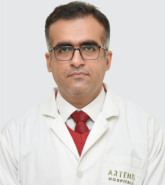
" So thankful to Cancer Rounds and Dr. Gaurav Dixit. Your care and support helped me heal and regain strength during my lymphoma treatment."
O
Ms. Octavie
Vanuatu

Acute myeloid leukaemia (AML) progresses quickly, so treatment in India begins almost immediately after diagnosis. The standard "7+3" induction combines cytarabine for 7 days with daunorubicin for 3 days; FLT3-mutated cases add midostaurin; and older or unfit patients receive gentler venetoclax with azacitidine. Bone marrow transplant follows for intermediate- and high-risk patients.
Reply in 4 hours · Plan and quote in 2 days · 100% confidential
Acute Myeloid Leukemia (AML) is not a single disease as it affects blood and bone marrow. Acute myeloid leukemia is aggressive cancer in which cells overgrow. It is a complex condition that requires quick treatment after diagnosis. AML generally develops in a week and gets hazardous over time. Leukemia’s is produced in myeloid inside the bone marrow, which is red blood cells, platelets and all RBCs except lymphocytes. Acute Myeloid Leukemia Treatment is essential in the early stage to give extended life to the patient.
AML is a result of the uncontrolled production of immature RBCs called a leukemic blast. These cells pack the bone marrow and stop the production of healthy blood cells. It is also leaked in the central bloodstream which is circulated to the other parts of the body.
Due to their immaturity, they are unable to fight with infection and unable to perform correctly.
Common signs and symptoms in the early stage of acute myeloid leukemia may include flu or other common infectious diseases. Acute Myeloid Leukemia Treatment is not given in the earlier stage; it may become severe as bleeding from the different parts of the body.
Signs and symptoms may vary as per the type of blood cell and bone marrow affected.
In the initial stage of Acute Myeloid Leukemia Treatment are aims to kill the leukemia cells in your bloodstream and bone marrow. In the first phase, focus on killing the remaining leukemia cells. The clinician will decide further treatment according to the diagnosis result and the stage of the disease. These four methods are used in Acute Myeloid Leukemia Treatment-
Chemotherapy– A high dose of chemo is introduced to kill the tumor cell in your bone marrow and bloodstream. In most cases, a combination of drugs is given to the patient in the guidance of the doctor at the nursing center. The whole Acute Myeloid Leukemia Treatment process is done in a controlled environment in the monitoring of the doctor.
Radiation cancer therapy– In radiation Acute Myeloid Leukemia Treatment process high- frequency x-rays are used to destroy the tumor cell or stop its division.Two types of radiation therapies are used in radiation Acute Myeloid Leukemia Treatment.
Stem cell transplant in the combination of chemotherapy– Acute myeloid leukemia treatment is given to destroy tumor cells as some healthy cells are also eliminated due to high doses. Stem cell treatment is given to replace the infected cell with new blood-forming cells. The immature stem cells are retrieved from the patient’s body or donor body and induced in the patient after chemotherapy.
Some other anticancer drugs are also used to stop the highly dividing leukemia cells a Acute Myeloid Leukemia Treatment.
After getting Acute Myeloid Leukemia Treatment, the affected blood has been repaired or replaced by various methods. The chances of survival depend on numerous factors like the patient’s age, body’s response, and pre-medical history.
Leukemia is either acute, where most of the blood components are severely affected and lost the ability to produce a standard or chronic condition where few blood cells are not working correctly or reduced the rate of degeneration.
The cost of Acute Myeloid Leukemia (AML) treatment in India varies depending on the hospital, treatment stage, and whether advanced procedures like bone marrow transplant are required. On average, chemotherapy-based treatment cost of Acute Myeloid Leukemia (AML) starts from around ₹3,00,000–4,00,000 (USD 4,800) and can go up to ₹15,00,000–20,00,000 (USD 20,000–25,000) for a full treatment course including induction and consolidation therapy. If advanced targeted drugs or prolonged hospital stays are needed, costs may rise further, sometimes reaching ₹30,00,000 (USD 35,000–40,000). Diagnostics such as bone marrow biopsy and genetic testing usually cost between ₹50,000–1,00,000, while chemotherapy cycles range from ₹1,50,000–5,00,000. Targeted therapies, such as FLT3 or IDH inhibitors, add another ₹2,00,000–10,00,000 depending on the duration. For patients needing a bone marrow transplant (BMT), the expenses are higher: an autologous transplant typically costs ₹10,00,000–15,00,000, while an allogeneic transplant may range from ₹15,00,000–30,00,000. Treatment in metro cities like Delhi, Mumbai, and Bangalore often costs more compared to tier-2 cities, though public hospitals and private hospitals such. Overall, India remains significantly more affordable than Western countries, with costs being 70–90% lower, while still offering access to advanced therapies and specialized leukemia care.
Published By
.webp)
Global Patient Care, Redefined
The CancerRounds Medical Content Team specialises in creating accurate, clear and patient-focused healthcare content. Our content is written by medically trained writers, medically reviewed, and based on reputable medical sources to support informed healthcare decisions.
Get expert guidance instantly
Share a few details and our medical team gets back to you within 4 hours with the next steps.
Tell us what you are facing and our medical team will guide you to the right doctors, hospitals and treatment.
Free Review, No Commitment
Free assessment with no pressure to proceed.
Trusted by 100,000+ Patients
Across 125+ countries worldwide
500+ Top Partner Hospitals
Globally accredited medical facilities
5000+ Expert Specialists
Senior doctors across major specialties.
Making quality healthcare accessible to patients worldwide
Everything you need to know about choosing the right hospital, doctor and treatment plan.