
At stage 4, the focus of cancer care in Germany shifts from cure to control — extending life, easing symptoms, and protecting quality of life. Treatment typically combines chemotherapy chosen by tumour type, immune checkpoint inhibitors like pembrolizumab or nivolumab, targeted medicines based on gene testing, and interventional procedures like TACE for cancer that has spread to the liver.
Reply in 4 hours · Plan and quote in 2 days · 100% confidential
Stage 4 cancer, also known as metastatic cancer, is the most advanced stage of cancer. In this stage, cancer cells have spread from their original site (the primary tumor) to distant organs or parts of the body. This spread can occur through the blood, lymphatic system, or direct extension to nearby tissues. The extent and location of the metastasis significantly affect the treatment options and prognosis. Many international patients consider advanced Stage 4 cancer treatment in Germany due to its multidisciplinary cancer centers, cutting-edge technologies, and personalized treatment plans. German hospitals offer comprehensive therapies including targeted therapy, immunotherapy, and minimally invasive surgeries, making Germany a top destination for stage 4 cancer treatment.
At stage 4, the focus shifts from curative treatment to palliative care and life extension. Treatments may include chemotherapy, immunotherapy, targeted therapy, radiation therapy, and surgical interventions, depending on the type and location of cancer. The approach is highly individualised, taking into account factors such as the patient’s overall health, age, and preferences.
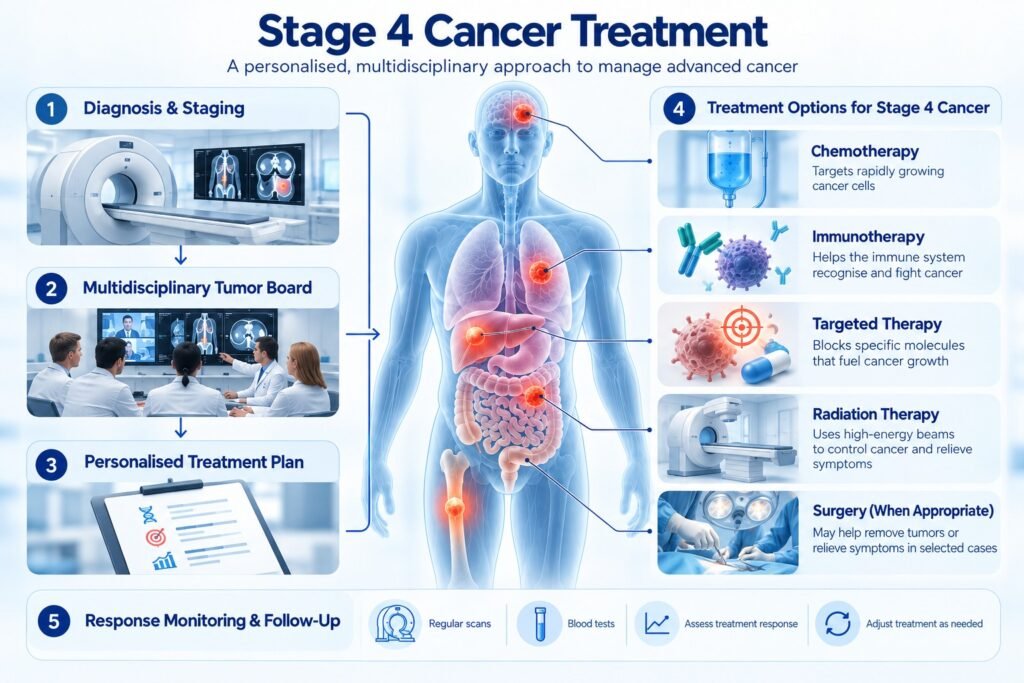
The prognosis for stage 4 cancer varies significantly between cancer types and individual cases. While some stage 4 cancers may be controlled for months or even years with treatment, others may progress rapidly. The focus is on managing the disease and maintaining quality of life.
Overall, stage 4 cancer is a critical stage requiring a comprehensive, multidisciplinary treatment approach to manage symptoms, extend life, and improve the patient’s quality of life.
Germany is one of the global leaders in cancer treatment, offering advanced care through highly reputable hospitals that combine cutting-edge technologies and innovative therapies. Below is a breakdown of the main types of stage 4 cancer, the available treatment options, and the hospitals in Germany providing these treatments:
| Cancer Type | Treatment Options | Hospitals in Germany Offering Treatment |
| Lung Cancer | Chemotherapy, Immunotherapy, Targeted Therapy, Radiotherapy, Surgery (if feasible) | Helios Hospital Berlin-Buch, Charité University Hospital Berlin, University Hospital Heidelberg |
| Breast Cancer | Chemotherapy, Hormonal Therapy, Targeted Therapy, Immunotherapy, Surgery | University Hospital Heidelberg, University Hospital of Ludwig Maximilian University of Munich |
| Colorectal Cancer | Chemotherapy, Targeted Therapy, Immunotherapy, Radiotherapy, Surgery | University Hospital Frankfurt am Main, Helios Hospital Berlin-Buch, Charité University Hospital Berlin |
| Pancreatic Cancer | Chemotherapy, Targeted Therapy, Radiotherapy, Palliative Care | University Hospital Heidelberg, University Hospital of Ludwig Maximilian University of Munich |
| Gastric Cancer | Chemotherapy, Immunotherapy, Targeted Therapy, Radiotherapy, Surgery | Charité University Hospital Berlin, University Hospital Frankfurt am Main |
| Esophageal Cancer | Chemotherapy, Immunotherapy, Targeted Therapy, Surgery, Radiotherapy | University Hospital Frankfurt am Main, Helios Hospital Berlin-Buch |
| Hematologic Cancers | Chemotherapy, Stem Cell Transplant, Immunotherapy, Targeted Therapy | University Hospital Frankfurt am Main, University Hospital Heidelberg |
| Prostate Cancer | Hormonal Therapy, Chemotherapy, Immunotherapy, Targeted Therapy, Radiotherapy | University Hospital of Ludwig Maximilian University of Munich, Charité University Hospital Berlin |
| Ovarian Cancer | Chemotherapy, Immunotherapy, Targeted Therapy, Surgery | University Hospital Heidelberg, University Hospital Frankfurt am Main |
| Head and Neck Cancers | Chemotherapy, Surgery, Radiotherapy, Immunotherapy, Targeted Therapy | University Hospital of Ludwig Maximilian University of Munich, Charité University Hospital Berlin |
| Liver Cancer | Surgery, Chemotherapy, Immunotherapy, Targeted Therapy, Radiofrequency Ablation | Helios Hospital Berlin-Buch, University Hospital Heidelberg |
| Soft Tissue Sarcomas | Surgery, Chemotherapy, Radiotherapy, Targeted Therapy | University Hospital Heidelberg, University Hospital Frankfurt am Main |
Germany’s commitment to advanced cancer care, supported by top-tier medical facilities and technologies, makes it a leading destination for those seeking treatment for stage 4 cancers.
The list of top hospitals for cancer treatment in Germany are:
1. Helios Hospital Berlin-Buch
2. Charité University Hospital Berlin
3. University Hospital Frankfurt am Main
4. University Hospital of Ludwig Maximilian University of Munich
5. University Hospital Heidelberg
Germany is home to leading cancer centers like Charité University Hospital, University Hospital Heidelberg, and University Medical Center Hamburg-Eppendorf, all renowned for their innovative cancer treatments.
Renowned cancer specialists in Germany include:
Germany’s cancer care is not only technologically advanced but also holistic—focusing on both survival and quality of life. Patients benefit from multidisciplinary teams, personalized treatment plans, and access to the latest medical innovations.
If you need assistance in selecting a specialist based on a specific type of cancer or require information on treatment options and hospital facilities, feel free to ask!
Germany’s medical expertise provides specialized care options for advanced cancer cases, including:
In addition to advanced treatments, German hospitals offer comprehensive post-treatment care, focusing on rehabilitation, symptom management, and regular follow-ups to monitor for potential recurrences.
Germany stands at the forefront of pioneering cancer therapies, offering patients access to a spectrum of world-class, advanced treatments. These therapies harness cutting-edge technologies and innovative mechanisms to target and destroy cancer cells with precision, while minimizing damage to surrounding healthy tissues. From the fusion of surgery and chemotherapy in Hyperthermic Intraperitoneal Chemotherapy (HIPEC), to the revolutionary CAR T-Cell Therapy, these treatments represent the apex of modern medical science. As cancer becomes an ever-more complex disease, the options available today bring hope and the potential for significantly improved survival rates. The therapies not only aim to treat the cancer but also enhance the patient’s overall well-being, providing avenues for longer, more fulfilling lives. Let’s explore these state-of-the-art treatments, their mechanisms, and the benefits they offer to cancer patients, ensuring a better future for those battling this formidable illness.
| Treatment | Mechanism of Action (MOA) | Drugs Involved | Company Offering Treatment | Success Rate | Indications | Complications |
| Hyperthermic Intraperitoneal Chemotherapy (HIPEC) | Combines Cytoreductive Surgery (CRS) and heated chemotherapy delivered directly into the abdominal cavity to destroy cancer cells. Heat enhances the effectiveness of chemotherapy. | Cytotoxic agents (e.g., Mitomycin C, Oxaliplatin, Doxorubicin) | German hospitals with specialized centers | Survival rates for colorectal cancer: 50-60% (5 years) | Colorectal, ovarian, appendiceal, gastric cancer, mesothelioma, peritoneal carcinomatosis | Severe side effects such as bowel perforation, infection, blood clots, kidney damage, and liver toxicity. |
| Dendritic Cell Therapy (DCT) | Utilizes the patient’s dendritic cells, modified in the lab to enhance their ability to recognize and attack cancer cells, stimulating the immune system. | Dendritic cell vaccines, GM-CSF, interleukins | Various cancer centers in Germany | 30-40% improvement in glioblastoma & lung cancer | Glioblastoma, melanoma, prostate cancer, lung cancer, breast cancer, pancreatic cancer, colon cancer | Mild to moderate side effects including fever, chills, fatigue, pain at injection site, and flu-like symptoms. In rare cases, autoimmunity may develop. |
| CAR T-Cell Therapy | Genetically engineered T-cells are infused into the body to target and destroy cancer cells by recognizing specific markers on the cancer cell surface (e.g., CD19). | Kymriah (Novartis), Yescarta (Gilead), Breyanzi (BMS) | Novartis, Gilead, Bristol-Myers Squibb | Response rates for relapsed/refractory B-cell lymphoma: 50-60% | Blood cancers: Leukemia, lymphoma, particularly B-cell cancers | Cytokine release syndrome (CRS), neurological toxicity, infections, and low blood cell counts. |
| Transarterial Chemoembolization (TACE) | Delivers chemotherapy directly to the tumor via a catheter inserted into the artery supplying the tumor, blocking the blood supply and trapping the drug at the tumor site. | Doxorubicin, Mitomycin C, Lipiodol, Epirubicin | Prof. Dr. med. Thomas J. Vogl, German centers | Survival rate: 30% improvement in overall survival | Hepatocellular carcinoma (liver cancer), metastatic liver cancer | Pain, bleeding, infection, liver failure, and in some cases, bowel perforation. |
| Lu-177 PSMA Therapy (Pluvicto) | Delivers radiation directly to prostate cancer cells by attaching Lutetium-177 to a molecule that binds to PSMA, a protein found on prostate cancer cells. | Lutetium-177 PSMA, Pluvicto (Novartis) | Novartis | Survival improvement by up to 30% in metastatic prostate cancer | Metastatic prostate cancer resistant to conventional treatments | Fatigue, nausea, low blood counts, and kidney toxicity. |
| Biological Immunotherapy | Stimulates the body’s immune system to target and destroy cancer cells using natural immune responses and biological agents like cytokines and monoclonal antibodies. | Interleukins, interferons, vaccines (e.g., Bacillus Calmette-Guérin), Curcumin | Various German hospitals and centers | Success rates vary, but improvements in quality of life observed in over 83% of patients | Breast cancer, lung cancer, liver cancer, colon cancer, melanoma, advanced cancers | Flu-like symptoms, nausea, fatigue, immune-related side effects like autoimmune reactions, and local injection site reactions. |
| Chemotherapy | Uses drugs to kill cancer cells or stop their growth by interfering with cell division or DNA replication. | Doxorubicin, Paclitaxel, Carboplatin, Cisplatin | Various pharmaceutical companies | Success rates depend on cancer type; often 30-40% for advanced stages | Broad indication for various cancer types, including breast, lung, ovarian, colorectal | Hair loss, nausea, vomiting, immunosuppression, infections, fatigue, anemia, and potential organ toxicity (liver, kidney). |
| Radiotherapy | Uses high-energy radiation to kill or damage cancer cells by damaging their DNA, which prevents their growth and division. | X-rays, Gamma rays, Proton therapy | Varian, Elekta, Siemens | Success rates vary depending on cancer type and stage | Brain tumors, head and neck cancer, lung cancer, prostate cancer, breast cancer | Skin irritation, fatigue, hair loss, nausea, and risk of secondary cancers due to radiation exposure. |
| Targeted Therapy | Targets specific molecules involved in cancer cell growth and survival, such as mutations or overactive proteins. | Imatinib, Erlotinib, Bevacizumab, Trastuzumab | Novartis, Roche, AstraZeneca | Response rates vary from 30-80%, depending on cancer type | HER2-positive breast cancer, colorectal cancer, non-small cell lung cancer, leukemia | Skin reactions, diarrhea, liver damage, high blood pressure, and cardiac issues. |
Germany offers a balance of high-quality treatment and affordability for stage 4 cancer care. While prices vary by treatment, approximate costs include:
| Cancer Type | Procedure | Success Rate | Comments |
| Lung Cancer | Targeted Therapy, Immunotherapy, Chemotherapy | 20-30% (5 years survival) | Immunotherapies like pembrolizumab show better outcomes for non-small cell lung cancer. |
| Colorectal Cancer | Surgery, Chemotherapy, HIPEC, Targeted Therapy | 25-40% (5 years survival) | HIPEC after cytoreductive surgery has shown promising results in peritoneal metastasis. |
| Breast Cancer | Surgery, Radiation Therapy, Chemotherapy, Immunotherapy | 30-45% (5 years survival) | HER2-targeted therapies such as trastuzumab increase survival for HER2-positive patients. |
| Pancreatic Cancer | Surgery, Chemotherapy, Immunotherapy | 5-10% (5 years survival) | Palliative treatments are often used due to late diagnosis, but targeted therapies can improve prognosis. |
| Ovarian Cancer | Surgery, Chemotherapy, Immunotherapy | 40-50% (5 years survival) | Maintenance therapy with PARP inhibitors improves survival in recurrent ovarian cancer. |
| Prostate Cancer | Surgery, Radiation Therapy, Hormonal Therapy | 35-55% (5 years survival) | Advanced stages can benefit from androgen deprivation therapy and targeted radiation. |
| Melanoma | Surgery, Immunotherapy, Targeted Therapy | 40-60% (5 years survival) | Immunotherapy, such as nivolumab, has greatly improved outcomes in metastatic melanoma. |
| Esophageal Cancer | Surgery, Chemotherapy, Radiation Therapy | 20-30% (5 years survival) | Chemoradiation is commonly used for palliative care and survival extension. |
| Kidney Cancer | Surgery, Immunotherapy, Targeted Therapy | 30-40% (5 years survival) | Targeted therapies such as tyrosine kinase inhibitors improve survival in advanced stages. |
| Bladder Cancer | Surgery, Chemotherapy, Immunotherapy | 15-25% (5 years survival) | Immune checkpoint inhibitors have recently shown promise in advanced bladder cancer. |
Germany stands at the forefront of oncology innovation, leveraging state-of-the-art therapies to redefine survival outcomes for stage 4 cancer patients. Through groundbreaking advances such as immunotherapy, precision-targeted treatments, CAR T-cell therapy, hyperthermia-immunotherapy synergy, and localized chemoembolization, German clinics are achieving remarkable success. These sophisticated interventions have elevated survival prospects dramatically, with some modalities boasting up to an 85% two-year survival rate, offering renewed hope where once there was little.
Germany is one of Europe’s leading destinations for advanced cancer care. Each year, around 250,000 international patients travel to Germany for diagnosis and treatment — including many with stage 4 cancers who seek innovative therapies, precision medicine, and access to leading oncology specialists.
The country attracts patients from the United Kingdom, United States, Russia, Romania, France, Bulgaria, the UAE, Saudi Arabia, and Kuwait, among others.
German hospitals are known for multidisciplinary tumor boards, clinical trial access, and personalized treatment planning that often combine standard and experimental therapies.
Every year, hundreds of UK patients choose German oncology centres for advanced stage cancer treatment, especially for access to:
Most UK patients travel directly to major treatment hubs such as Munich, Berlin, Frankfurt, or Heidelberg, where English-speaking international departments assist with scheduling, translation, and follow-up planning and Through CancerRounds, an international medical tourism and patient-assistance platform, UK patients can easily connect with leading oncology hospitals in Germany for personalized treatment planning, second opinions, and end-to-end support.
Patients from the US often come for second opinions, innovative clinical trials, or cost-effective full-course oncology care in Germany’s university hospitals and private cancer centres.
Germany has become a popular destination for American patients seeking European expertise in late-stage or rare cancers.
Leading German centers provide access to:
Many US patients come for personalized second opinions or precision medicine approaches that complement or go beyond standard protocols available locally.
Top cancer hospitals in Heidelberg, Munich, and Berlin regularly treat international patients from the US, offering complete packages including diagnostics, treatment, and follow-up care.
According to German health-tourism data, the top sources of international oncology patients include:
Russia, the UK, the USA, Romania, France, Bulgaria, the UAE, and Saudi Arabia.
These patients are drawn by Germany’s reputation for precision medicine, highly specialized oncology teams, and outcome-focused care.
In Germany, the cancer rounds team is an essential part of the comprehensive approach to treating stage 4 cancer. These interdisciplinary meetings are crucial for determining the most effective treatment plans for patients, especially those with advanced-stage cancers. Here’s how cancer rounds can help in managing stage 4 cancer:
1. Multidisciplinary Collaboration
Cancer rounds bring together a team of experts from various specialties to discuss each case in detail. The team typically includes:
This collaboration ensures that all aspects of the patient’s condition, including the cancer type, stage, genetic markers, and overall health, are considered when determining the best course of treatment.
2. Personalized Treatment Plans
For stage 4 cancer patients, where the disease has spread to distant organs, treatment often focuses on extending life, managing symptoms, and maintaining quality of life. During your treatment with cancer rounds, experts can discuss:
These discussions help tailor the treatment to the patient’s specific needs, maximizing the chances of slowing disease progression or improving symptoms.
3. Innovative Therapies and Clinical Trials
Germany is known for its extensive cancer research, and tumor boards often discuss access to clinical trials or experimental therapies that might be suitable for patients with stage 4 cancer. These could include:
By discussing these options, cancer rounds help patients gain access to cutting-edge treatments that might not be available through standard treatment protocols.
4. Palliative and Supportive Care Integration
Stage 4 cancer often requires an integrated approach that not only focuses on treatment but also on symptom management and quality of life. During your treatment with cancer rounds, palliative care specialists contribute by:
This holistic care approach ensures that the patient’s physical, emotional, and psychological needs are met.
5. Better Decision Making and Reduced Risk of Error
Having multiple specialists involved in the treatment decision process reduces the risk of misdiagnosis or inappropriate treatment. Cancer rounds allow for:
6. Comprehensive Patient Management
In Germany, cancer rounds often lead to the creation of a comprehensive management plan for each patient. This plan includes:
This ensures that no aspect of care is overlooked, and the patient receives a holistic treatment approach.
7. Inclusion of the Patient’s Preferences
Cancer rounds in Germany often include discussions with patients about their preferences, especially in stage 4 cases where treatment may be palliative. By considering the patient’s values and goals of care (such as prioritizing quality of life over aggressive treatments), the team can develop a treatment plan that aligns with the patient’s wishes.
Germany attracts over 52,000 international patients annually seeking state-of-the-art treatments for stage 4 cancer. With cutting-edge diagnostic and therapeutic technologies, the country has become a global hub for the latest cancer care.
German hospitals offer both conventional therapies—such as chemotherapy, radiotherapy, and immunotherapy—as well as revolutionary treatments that may not be available elsewhere. These include innovative options like Hyperthermic Intraperitoneal Chemotherapy (HIPEC), CAR T-cell therapy, Dendritic Cell Therapy (DCT), Transarterial Chemoembolization (TACE), and targeted radiopharmaceutical treatments like Lu-177 PSMA therapy (Pluvicto).
While Stage 4 cancer is often difficult to cure, Germany offers advanced therapies that aim to extend survival and improve quality of life.
Success rates vary by cancer type, but Germany’s outcomes for Stage 4 treatment are among the best due to personalized, high-tech care.
Germany offers chemotherapy, radiation, immunotherapy, targeted therapy, and advanced surgical options tailored to cancer stage and type.
Innovations include CAR T-cell therapy, precision oncology, AI-driven diagnostics, and robotic-assisted surgeries.
Yes, treatments are customized based on the patient’s genetic makeup, cancer biomarkers, and overall health profile.
Treatment duration depends on cancer type and response, typically lasting several weeks to months, with possible follow-up care.
Risks include side effects from chemotherapy or radiation, but Germany’s advanced monitoring and supportive care reduce complications.
Absolutely. Germany welcomes international patients with multilingual support, treatment coordinators, and world-class medical care.
Clinical trials are actively conducted, offering access to emerging therapies, especially for advanced or treatment-resistant cancers.
Renowned centers include the German Cancer Research Center (DKFZ), Charité – Universitätsmedizin Berlin, and Heidelberg University Hospital.
Sources:
Published By
.webp)
Global Patient Care, Redefined
The CancerRounds Medical Content Team specialises in creating accurate, clear and patient-focused healthcare content. Our content is written by medically trained writers, medically reviewed, and based on reputable medical sources to support informed healthcare decisions.
Get expert guidance instantly
Share a few details and our medical team gets back to you within 4 hours with the next steps.

Tell us what you are facing and our medical team will guide you to the right doctors, hospitals and treatment.
Free Review, No Commitment
Free assessment with no pressure to proceed.
Trusted by 100,000+ Patients
Across 125+ countries worldwide
500+ Top Partner Hospitals
Globally accredited medical facilities
5000+ Expert Specialists
Senior doctors across major specialties.
Making quality healthcare accessible to patients worldwide
Everything you need to know about choosing the right hospital, doctor and treatment plan.