
Glioblastoma is the most aggressive form of brain cancer, and German centres approach it with the most advanced multi-modal care available. The standard "Stupp protocol" — maximal surgical removal followed by temozolomide chemotherapy and radiation — is now combined with tumour-treating fields (the Optune device worn on the head) and immunotherapy options like dendritic cell vaccines.
Reply in 4 hours · Plan and quote in 2 days · 100% confidential
Glioblastoma (GBM) is one of the most aggressive and challenging brain tumors, known for its rapid growth and complex nature. For patients seeking cutting-edge treatment, Germany has emerged as a global hub, offering world-class medical infrastructure, pioneering therapies, and exceptional survival-focused care.
With advanced diagnostics, highly skilled neurosurgeons, and innovative treatment modalities like proton therapy, immunotherapy, and tumor-treating fields (TTF), Germany ensures hope and holistic care for glioblastoma patients.
Glioblastoma multiforme (GBM) is a Grade IV astrocytoma, a malignant brain tumor that arises from glial cells. It is characterized by rapid cell proliferation, resistance to conventional therapy, and infiltration into healthy brain tissue.
Epidemiology of Glioblastoma
Causes / Risk Factors
Symptoms
Staging (based on spread & tumor resectability):
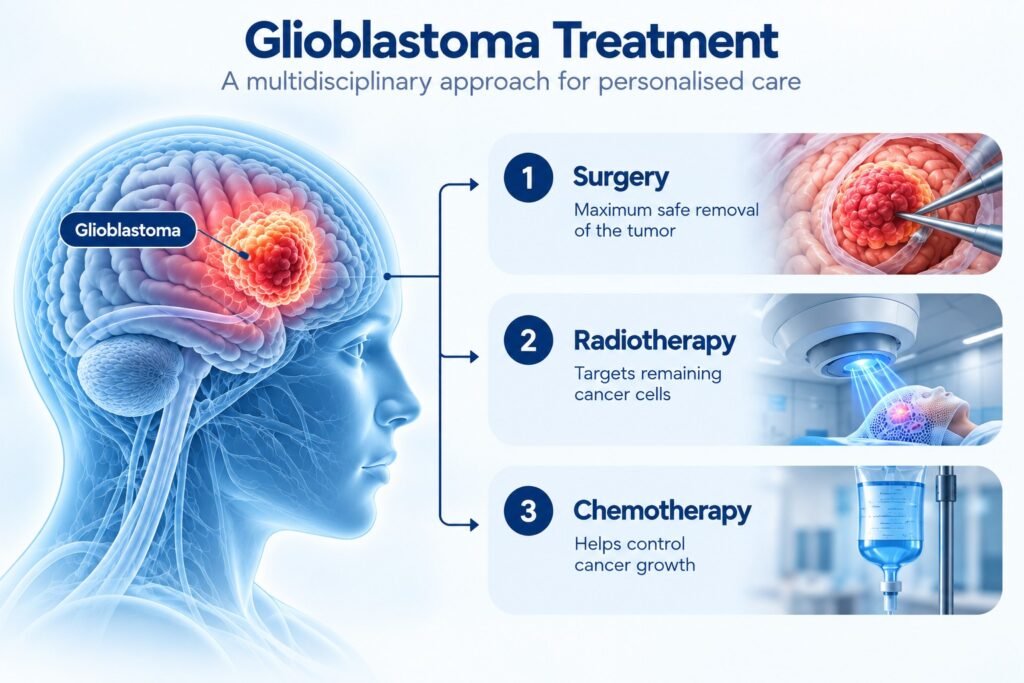
German hospitals are internationally recognized for their advanced medical imaging, precision diagnostics, and multidisciplinary approach to identifying and characterizing glioblastoma. The diagnostic process is typically comprehensive and follows evidence-based international standards to ensure accuracy and effective treatment planning.
The diagnostic journey begins with a detailed neurological examination and medical history. Specialists assess symptoms such as headaches, seizures, cognitive changes, or motor deficits to determine the need for further imaging and tests.
Modern German clinics use state-of-the-art imaging technologies to detect and evaluate brain tumors:
A biopsy is essential for confirming the diagnosis. Neurosurgeons obtain a small tissue sample, which is then analyzed by neuropathologists to determine the tumor type, grade, and specific characteristics.
German oncology centers routinely perform molecular testing to identify genetic mutations and biomarkers such as IDH1/IDH2 status, MGMT promoter methylation, and 1p/19q codeletion. These results are crucial for personalized treatment planning and prognosis.
After all diagnostic results are available, a team of experts—including neurosurgeons, oncologists, radiologists, and pathologists—discusses each case in a tumor board meeting. This ensures a comprehensive, individualized treatment strategy for every patient.
Advanced diagnostic technologies, highly qualified specialists, and adherence to international clinical protocols. Patients benefit from early detection, precise tumor characterization, and a personalized approach to treatment planning.
| Stage | Treatment Approach | Estimated Cost (€) |
| Localized GBM | Surgery + Chemo + Radiotherapy | 35,000 – 55,000 |
| Advanced (Infiltrative) | Surgery + Proton Therapy + Chemo | 60,000 – 90,000 |
| Recurrent GBM | Immunotherapy + TTF + Supportive Care | 45,000 – 80,000 |
| Palliative Care | Symptom Management & Rehabilitation | 15,000 – 25,000 |
Germany offers internationally acclaimed standard-of-care therapies for glioblastoma:
Germany is renowned for pioneering advanced approaches that go beyond traditional methods, offering hope for complex and resistant cases:
| City | Leading Hospitals | Approx. Cost (€) |
| Heidelberg | Heidelberg University Hospital (Neuro-Oncology & Proton Therapy Center) | 60,000 – 100,000 |
| Munich | University Hospital Munich (LMU Klinikum) | 50,000 – 85,000 |
| Berlin | Charité – Universitätsmedizin Berlin | 45,000 – 80,000 |
| Frankfurt | University Hospital Frankfurt | 40,000 – 75,000 |
| Hamburg | University Medical Center Hamburg-Eppendorf (UKE) | 45,000 – 85,000 |
At Cancer Rounds, we act as a bridge between patients and leading German hospitals. Our services include:
🇩🇪 Why is Glioblastoma Treatment Important in Germany?
Cancer Rounds ensures that every glioblastoma patient traveling to Germany experiences world-class treatment, financial clarity, and compassionate care. From diagnosis to recovery, our dedicated team assists at every step.
📞 Get in touch with Cancer Rounds today and begin your journey toward advanced glioblastoma treatment in Germany with confidence.
Q.1 What is glioblastoma?
Glioblastoma, also called glioblastoma multiforme (GBM), is the most aggressive and malignant type of primary brain tumor. It originates from glial cells, spreads rapidly within brain tissue, and is classified as a Grade IV astrocytoma by the WHO.
Q.2 Why is glioblastoma treatment important in Germany?
Germany is a global leader in neuro-oncology, combining state-of-the-art diagnostics, advanced neurosurgery, and innovative therapies like proton therapy, tumor-treating fields, immunotherapy, and gene-based therapies. Patients benefit from multidisciplinary care and strong international patient support services.
Q.3 What causes glioblastoma?
There is no single cause, but several risk factors are associated:
Q.4 What are the common symptoms of glioblastoma?
Symptoms vary depending on tumor location, but often include:
Q.5 How is glioblastoma diagnosed in Germany?
German hospitals use advanced diagnostics, including:
Q.6 What age group is most affected by glioblastoma?
Glioblastoma typically affects adults aged 45–70 years, though it can occur in children and younger adults in rare cases.
Q.7 What types of glioblastoma exist?
Q.8 What stages of glioblastoma are there?
Glioblastoma is classified as Grade IV; however, treatment staging is based on:
Q.9 What are the conventional treatments for glioblastoma?
Q.10 What advanced treatments are available in Germany?
Germany is at the forefront of innovation, offering:
Q.11 How much does glioblastoma diagnosis cost in Germany?
Approximate costs:
Q.12 What is the cost of glioblastoma treatment in Germany?
Stage-wise average costs:
Q.12 Which are the best hospitals for glioblastoma in Germany?
Q.13 Why choose Germany over other countries for treatment?
Germany offers high survival-focused care, transparency in cost, and access to therapies not widely available elsewhere, including clinical trials and experimental approaches.
Q.14 Do German hospitals offer clinical trials for glioblastoma?
Yes. Patients can access trials for CAR-T therapy, novel immunotherapies, gene therapies, and innovative drug combinations.
Q.15 What is the survival rate for glioblastoma in Germany?
Without treatment, survival is ~3–4 months. With advanced German multimodal therapy, patients may live 15–20 months on average, with some achieving long-term survival.
Q.16 What amenities are provided for international patients?
Q.17 Can family members accompany patients during treatment?
Yes, most hospitals provide nearby apartments or guest houses for family members, ensuring emotional support for the patient.
Q.18 How does Cancer Rounds support glioblastoma patients in Germany?
Cancer Rounds provides:
Q.19 How do I start my glioblastoma treatment journey in Germany?
Contact Cancer Rounds with your medical reports. Our team will arrange expert consultations, treatment plans, cost estimates, and travel logistics so you can begin treatment with confidence and clarity.
Sources:
Published By
.webp)
Global Patient Care, Redefined
The CancerRounds Medical Content Team specialises in creating accurate, clear and patient-focused healthcare content. Our content is written by medically trained writers, medically reviewed, and based on reputable medical sources to support informed healthcare decisions.


Get expert guidance instantly
Share a few details and our medical team gets back to you within 4 hours with the next steps.
Tell us what you are facing and our medical team will guide you to the right doctors, hospitals and treatment.
Free Review, No Commitment
Free assessment with no pressure to proceed.
Trusted by 100,000+ Patients
Across 125+ countries worldwide
500+ Top Partner Hospitals
Globally accredited medical facilities
5000+ Expert Specialists
Senior doctors across major specialties.
Making quality healthcare accessible to patients worldwide
Everything you need to know about choosing the right hospital, doctor and treatment plan.