Best GI Cancer Treatment Doctors in India

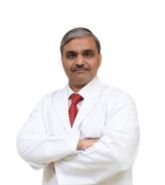
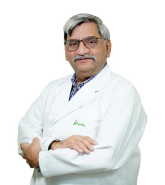
Dr. Vinod Raina

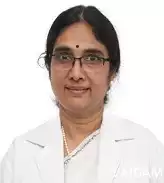
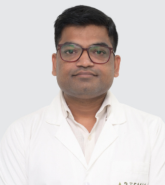
Dr. Vikram Pratap Singh

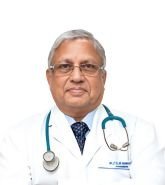
Dr. Kapil Kumar

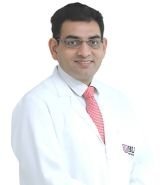
Dr. Niranjan Naik


Prof. Dr. Suresh H. Advani

Dr. Pramod Kumar Julka

Dr. Ranga Rao Rangaraju

Dr. Surender Kumar Dabas

Dr. Harit Chaturvedi

Dr. Jalaj Baxi


Dr. Ishita B. Sen

Dr. Mukesh Patekar

Dr. Anil K Dhar

Dr. Rajat Bajaj

Dr. (Col) V.P. Singh

Dr. Sanjeev Kumar

Dr. Sajal Kakkar
What Patients with Gastrointestinal Cancer Worry About Most
A diagnosis of gastrointestinal cancer covers stomach, small bowel, colon, rectum, and gastrointestinal stromal tumours, and each behaves differently. Patients ask the same questions: is the cancer operable, do I need chemotherapy before or after surgery, will I need a stoma, and what is my five-year survival. The fear of recurrence and the loss of normal eating, digestion, and bowel function is the heaviest concern. Modern Indian centres use minimally invasive and robotic surgery, neoadjuvant chemotherapy and chemoradiation, targeted therapy, and immunotherapy to improve cure rates while preserving quality of life.
How Gastrointestinal Cancer Is Diagnosed
Diagnosis requires tissue confirmation through endoscopy with biopsy (upper endoscopy for gastric and small bowel cancers, colonoscopy for colorectal cancers). Staging uses a computed tomography scan of the chest, abdomen, and pelvis, with endoscopic ultrasound for local staging of gastric and rectal cancer. Magnetic resonance imaging is used for rectal cancer to assess local extent. Positron emission tomography combined with computed tomography is used in selected cases. Tumour markers (carcinoembryonic antigen, cancer antigen 19-9) help baseline and follow-up. Molecular testing includes microsatellite instability, HER2 in gastric cancer, KRAS, NRAS, and BRAF in colorectal cancer, and Kit and PDGFRA in gastrointestinal stromal tumours.
Treatment Options for Gastrointestinal Cancer in India
Surgery is the cornerstone of cure for non-metastatic disease. Laparoscopic and robotic gastrectomy, colectomy, and rectal resection give the same oncological outcomes with faster recovery. Neoadjuvant (pre-surgery) chemotherapy is now standard for locally advanced gastric and rectal cancer. FOLFOX, FOLFIRI, and FLOT regimens are standard chemotherapy backbones. Targeted therapy includes trastuzumab for HER2-positive gastric cancer, bevacizumab and cetuximab for colorectal cancer, and imatinib and sunitinib for gastrointestinal stromal tumours. Immunotherapy (pembrolizumab, nivolumab) is used in microsatellite instability-high tumours and increasingly in other situations. Hyperthermic intraperitoneal chemotherapy is offered at select Indian centres for peritoneal disease. Tata Memorial, Apollo, Medanta, Fortis Memorial Research Institute, and Max have high-volume gastrointestinal oncology programmes.
Recovery, Success Rates, and Follow-Up
Outcomes vary widely by site and stage. Early-stage colorectal cancer has five-year survival above ninety percent. Locally advanced disease sits around sixty to seventy percent, and metastatic disease around fifteen to thirty percent. Gastric cancer outcomes are lower stage-for-stage. Gastrointestinal stromal tumours respond well to imatinib with median survival exceeding five years even in advanced disease. Hospital stay after laparoscopic surgery is typically five to seven days. Chemotherapy is given as outpatient day-care infusions, usually for three to six months. Follow-up runs for at least five years with regular clinical review, tumour markers, and surveillance imaging or endoscopy.
How to Choose the Right Doctor
Look for a surgical oncologist sub-specialising in gastrointestinal oncology, with at least ten years of focused experience and access to laparoscopic and robotic platforms. The multidisciplinary tumour board is critical. Questions to ask: how many operations the surgeon does yearly for the specific cancer, whether the centre uses laparoscopic or robotic surgery as standard, the experience with neoadjuvant chemotherapy and chemoradiation, and whether hyperthermic intraperitoneal chemotherapy is available for peritoneal disease. Centres at Tata Memorial, Apollo, Medanta, Fortis Memorial Research Institute, Max, and BLK-Max have established gastrointestinal oncology programmes with multidisciplinary teams.
Support for International Patients
Treatment in India is significantly more affordable than equivalent care in the United Kingdom, United States, Middle East, or Southeast Asia. Final pricing depends on the cancer site, stage, type of surgery (open versus laparoscopic versus robotic), chemotherapy regimen, and whether targeted therapy or immunotherapy is needed. Cancer Rounds arranges the medical visa invitation letter, airport pickup, accommodation near the treatment hospital, multilingual support in eleven plus languages, and full coordination from first enquiry to safe return home. Patients from Nigeria, Bangladesh, Oman, Kuwait, Qatar, Kenya, Uganda, Tanzania, Ghana, Ethiopia, Cameroon, Mauritius, Mozambique, Senegal, Zimbabwe, Zambia, Guinea, Liberia, Madagascar, South Sudan, Qatar, Chad, Sierra Leone, Congo, Iraq & Uzbekistan, and other countries travel to India for gastrointestinal cancer treatment every year.

Frequently Asked Questions
Is gastrointestinal cancer curable?
Yes, when caught early. Early-stage colorectal and gastric cancers have five-year survival above eighty to ninety percent. Locally advanced disease is curable in around sixty to seventy percent of patients with combined chemotherapy and surgery. Metastatic disease is rarely curable but can be controlled for years.
Will I need a permanent stoma?
Most patients with colorectal cancer do not need a permanent stoma. Temporary stomas are sometimes used after rectal surgery to protect the join and are reversed two to three months later. Permanent colostomy is reserved for very low rectal cancers when sphincter preservation is not possible.
What is the role of robotic surgery?
Robotic surgery offers the same cancer outcomes as laparoscopic surgery with potentially better precision in deep pelvic cancers (rectal) and complex gastric resections. It is increasingly available at major Indian centres.
Do I need chemotherapy before surgery?
Neoadjuvant (pre-surgery) chemotherapy is standard for locally advanced gastric cancer (using the FLOT regimen) and locally advanced rectal cancer (with chemoradiation). It shrinks the tumour, treats microscopic disease, and improves outcomes.
What is targeted therapy?
Targeted therapy uses drugs that block specific molecular pathways. Trastuzumab for HER2-positive gastric cancer, cetuximab and bevacizumab for colorectal cancer, and imatinib for gastrointestinal stromal tumours have transformed treatment outcomes.
When is immunotherapy used?
Immunotherapy (pembrolizumab, nivolumab) is highly effective in microsatellite instability-high tumours, including some colorectal and gastric cancers. It is also used in advanced disease and is being studied earlier in the treatment course.