
Stage 4 (advanced) gallbladder cancer treatment in Germany includes personalized chemotherapy, immunotherapy, targeted therapy, interventional radiology, and supportive care delivered through DKG-certified cancer centers. Self-pay treatment typically starts from €20,000, with dedicated services available for international patients seeking comprehensive cancer care.
Reply in 4 hours · Plan and quote in 2 days · 100% confidential
Gallbladder cancer is one of several cancers that arise in the biliary tract, a group of diseases collectively known as biliary tract cancers (BTCs).
Gallbladder cancer is a rare but aggressive cancer that begins in the tissues of the gallbladder- a small, pear-shaped organ located beneath the liver that stores bile to help digest fats. Most gallbladder cancers develop from the inner lining of the organ, with adenocarcinoma accounting for nearly 90–95% of cases.
What makes gallbladder cancer particularly challenging? In many cases, the disease causes few or no symptoms during its early stages; for this reason, it is often discovered only after it has grown beyond the gallbladder or spread to nearby lymph nodes, the liver, or other parts of the body.
This is why several patients are diagnosed with advanced (stage 4) gallbladder cancer, when treatment requires a comprehensive and individualized approach.
Globally, gallbladder cancer causes an estimated 115,000 new cases and more than 80,000 deaths each year, highlighting its aggressive nature and the importance of timely diagnosis and treatment.
This guide focuses specifically on stage 4 and metastatic gallbladder cancer, helping patients understand available treatments, expected outcomes, recovery, costs, and what international patients should know before seeking care in Germany.
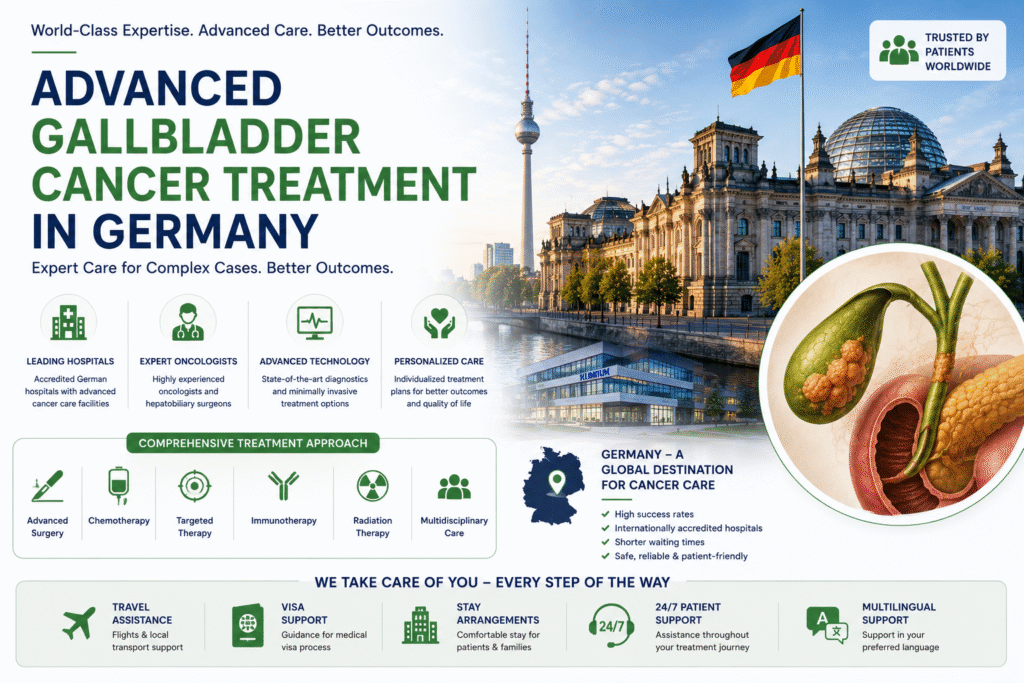
Who is more likely to develop gallbladder cancer? Gallbladder cancer is quite uncommon. However, there are still a few risk factors that could contribute to the development of the cancer. The presence of any of the risk factors does not necessarily predispose an individual to the disease. However, they can contribute to an increased susceptibility to developing it.
People who may have a higher risk include:
Stages of Gallbladder Cancer
How is gallbladder cancer staged? Gallbladder cancer is staged using the TNM (Tumor, Node, Metastasis) staging system developed by the American Joint Committee on Cancer (AJCC). Staging helps doctors determine how far the cancer has spread, whether surgery is possible, and which treatment approach is most appropriate. It also provides valuable information about prognosis.
The stages of gallbladder cancer include:
| Stage | What It Means |
| Stage 0 (Carcinoma in situ) | Abnormal cells are found only in the innermost lining of the gallbladder and have not invaded deeper tissues. |
| Stage I | Cancer is confined to the gallbladder wall and has not spread to nearby lymph nodes or distant organs. Surgery offers the best chance of cure. |
| Stage II | The tumour has grown deeper into the gallbladder wall or surrounding connective tissue but remains localized. Surgery is usually the primary treatment when feasible. |
| Stage III | Cancer has spread to nearby organs, major blood vessels, or regional lymph nodes. Treatment often involves a combination of surgery (in selected patients), chemotherapy, and other therapies. |
| Stage IV (Advanced/Metastatic) | Cancer has spread to distant organs such as the liver, lungs, peritoneum, or distant lymph nodes, or has extensive local spread that makes it unresectable. Treatment primarily focuses on systemic therapies, symptom control, and improving quality of life. |
Advanced gallbladder cancer, also known as stage 4 or metastatic gallbladder cancer, is the most advanced stage of the disease. At this stage, the cancer has spread beyond the gallbladder to distant organs or tissues, such as the liver, distant lymph nodes, the lining of the abdomen (peritoneum), lungs, or bones. In some patients, the tumor may also involve nearby major blood vessels or multiple surrounding organs, making complete surgical removal difficult or impossible.
Unlike earlier stages, where surgery may offer a chance of cure, treatment for stage 4 gallbladder cancer is usually aimed at slowing disease progression, relieving symptoms, improving quality of life, and helping patients live longer.
Why do so many patients receive a late diagnosis? One of the biggest challenges with gallbladder cancer is that it often causes few or no symptoms in its early stages. When symptoms do appear, they can closely resemble common gallbladder conditions such as gallstones or chronic inflammation, making the disease difficult to recognize early.
As a result, many patients are diagnosed only after the cancer has spread outside the gallbladder. Studies suggest that only around 20% of gallbladder cancers are detected at an early, localized stage, while the majority are diagnosed after regional or distant spread, when curative surgery is no longer possible. This is one of the main reasons gallbladder cancer is considered an aggressive cancer with relatively poor outcomes compared with many other gastrointestinal cancers.
Where Does Stage 4 Gallbladder Cancer Commonly Spread? As gallbladder cancer progresses, it may spread through the lymphatic system, bloodstream, or by directly invading nearby tissues. Common sites of spread include:
Although stage 4 gallbladder cancer is rarely curable, treatment options have evolved, moving from surgery and chemotherapy to precision medicine, immunotherapy, and advanced surgical methods. So, those who are seeking treatment may benefit from a combination of chemotherapy, immunotherapy, targeted therapy, precision medicine, palliative procedures, and supportive care.
Many of these advances come from research in advanced biliary tract cancers, including gallbladder cancer, and are now incorporated into treatment recommendations for eligible patients.
The primary goals of treatment are to:
Because gallbladder cancer can develop silently, it is important to seek medical attention if you experience any of the following symptoms that persist or worsen:
As the cancer spreads, symptoms often become more noticeable and may include:
A diagnosis of advanced gallbladder cancer can feel overwhelming, but treatment options continue to evolve. Advances in combination chemotherapy, immunotherapy, targeted therapies, molecular profiling, and supportive care are helping many patients achieve better symptom control and, in some cases, longer survival.
In the next section, we’ll discuss whether stage 4 gallbladder cancer can be cured, what remission means, and what patients can realistically expect from treatment.
In most cases, stage 4 gallbladder cancer is not considered curable because the cancer has already spread beyond the gallbladder to distant organs or tissues. According to guidance from the National Cancer Institute (NCI PDQ), Cancer Research UK, and the American Cancer Society, treatment at this stage is generally aimed at controlling the disease rather than eliminating it completely.
However, “not curable” does not mean “not treatable.” Over the past decade, advances in oncology treatments such as chemotherapy, immunotherapy, targeted therapy, molecular profiling, and supportive care have improved outcomes for many patients. Some people experience significant tumour shrinkage, long periods of disease control, or symptom relief that allows them to maintain a good quality of life for months or even years.
Patients often hear the terms cure and remission, but they do not mean the same thing.
For many people with advanced gallbladder cancer, achieving a durable remission or stable disease is considered a meaningful treatment success.
Because gallbladder cancer is often diagnosed after it has spread, survival rates for stage 4 disease remain lower than for earlier stages. According to data from the American Cancer Society (based on the U.S. SEER database), the 5-year relative survival rate for gallbladder cancer that has spread to distant organs is approximately 3%. In comparison, cancers diagnosed before they spread have substantially better outcomes.
Note: statistics describe outcomes from patients treated over previous years and cannot predict what will happen to an individual. They also do not fully reflect the impact of newer treatments, including immunotherapy, targeted therapies, and precision medicine, which have become increasingly available in recent years.
A diagnosis of stage 4 gallbladder cancer can be overwhelming, but it also marks the beginning of a carefully planned treatment journey. Rather than following a one-size-fits-all approach, specialists evaluate several factors before recommending treatment, including:
Treatment may include systemic therapy, procedures to relieve bile duct blockage or pain, nutritional support, symptom management, and regular imaging to monitor how well the cancer responds.
For international patients seeking advanced gallbladder cancer treatment in Germany, comprehensive cancer centres follow a multidisciplinary team (MDT). Depending on the tumour’s molecular profile and eligibility, patients may also have access to biomarker-guided therapies, immunotherapy, targeted treatments, and clinical trials in accordance with European Medicines Agency (EMA) approvals and the European Society for Medical Oncology (ESMO).
Why do international patients consider Germany for stage 4 gallbladder cancer treatment? Germany is one of Europe’s leading destinations for complex cancer care, attracting 150,000 to 250,000 international patients each year seeking innovative diagnosis, multidisciplinary care, and access to modern oncology therapies. International patients commonly seek advanced cancer treatment in major medical hubs, such as Berlin, Munich, Heidelberg, Frankfurt, and Hamburg
Germany’s cancer care system is built around certified cancer centers, many of which are accredited by the German Cancer Society (DKG).
The country has a highly developed healthcare system, strong research infrastructure offering clinical trials also, and specialized cancer networks that support the treatment of advanced and metastatic gallbladder cancer along with other complex cancers.
Note: For stage 4 gallbladder cancer, treatment decisions are usually made by a multidisciplinary team (MDT) that may include hepatobiliary surgeons, medical oncologists, radiation oncologists, gastroenterologists, radiologists, nuclear medicine specialists, pathologists, and supportive care experts.
Some well-known institutions involved in complex oncology care include, Charité – Universitätsmedizin Berlin, University Hospital Heidelberg (Universitätsklinikum Heidelberg) and LMU Klinikum Munich
Treatment for metastatic gallbladder cancer is personalized based on the location of metastases, tumour characteristics, previous treatments, and the patient’s overall health. Options may include:
When comparing Germany with other healthcare systems such as the United States or the United Kingdom, there are many world-class cancer institutions in the US, but the cost of treatment is quite high for self-pay foreign patients. There are certain criteria that one needs to fulfill in order, which may include longer waiting times, eligibility criteria, and referral pathways to have access to specific treatments through the NHS in the UK. It makes sense to choose Germany because of the presence of specialized cancer facilities along with public and private healthcare services.
Germany combines advanced oncology infrastructure with precision diagnostics, minimally invasive procedures, and access to newer cancer therapies. For patients with stage 4 gallbladder cancer, these technologies help doctors understand the tumour better, select the most suitable treatment, manage symptoms, and provide personalized care. Some modern methods include:
What is it?
Molecular profiling is an advanced form of tumour testing that examines the genetic and molecular characteristics of cancer cells.
How does it work?
A tissue sample from the tumour is analysed to identify specific biomarkers or genetic changes that may influence treatment decisions. These results can help doctors determine whether a patient may benefit from targeted therapies, immunotherapy, or clinical trials.
Note:
Molecular testing is becoming increasingly important in advanced biliary tract cancers, including metastatic gallbladder cancer, as treatment options are moving toward more personalized approaches.
What is it?
Immunotherapy is a cancer treatment that helps the immune system recognize and attack cancer cells.
How does it work?
Immune checkpoint inhibitors, such as PD-1/PD-L1 inhibitors, block signals that cancer cells use to hide from the immune system. This allows immune cells to better identify and destroy tumour cells.
Note:
Immunotherapy may be combined with chemotherapy for selected patients with advanced biliary tract cancers, including gallbladder cancer, depending on tumour characteristics and guideline recommendations.
What is it?
Targeted therapy uses medicines designed to attack specific abnormalities found inside cancer cells.
How does it work?
Unlike traditional chemotherapy, which affects many rapidly dividing cells, targeted therapies focus on specific molecular pathways that help cancer grow and spread.
Note:
Only a subset of patients with advanced gallbladder cancer have targetable genetic changes, making biomarker testing an important step before considering these treatments.
What is it?
Modern imaging technologies help doctors accurately assess the extent of metastatic gallbladder cancer and plan treatment.
How does it work?
Techniques such as contrast-enhanced CT, MRI/MRCP, and PET-CT provide detailed information about tumour size, location, lymph node involvement, and distant metastases.
Note:
Accurate imaging is essential for determining whether surgery, systemic therapy, or local interventions are appropriate.
What is it?
Interventional radiology uses minimally invasive, image-guided techniques to diagnose, treat, or relieve complications caused by advanced cancer.
How does it work?
Using imaging guidance, specialists can perform procedures through small openings rather than major surgery. Examples include:
Note:
These procedures are usually performed to improve symptoms and quality of life rather than cure metastatic gallbladder cancer.
What is it?
Robotic and minimally invasive surgical techniques allow surgeons to perform complex procedures through smaller incisions.
How does it work?
Advanced surgical systems provide enhanced visualization and precise instrument movement, which may support complex hepatobiliary procedures.
Note:
For stage 4 gallbladder cancer, surgery is only considered in carefully selected patients, such as those with limited disease spread or after significant response to systemic therapy.
How are clinical trials and personalized treatments changing advanced gallbladder cancer care? In recent years, treatment for metastatic gallbladder cancer has moved beyond a one-size-fits-all approach. German cancer centers increasingly use precision oncology, where treatment decisions are guided by the tumour’s molecular characteristics, overall health, and previous treatment response.
Personalized Medicine and Molecular-Guided Treatment
What is it?
Personalized medicine uses information about a patient’s tumour biology to select treatments that are more likely to work for their specific cancer.
How does it work?
A tumour sample may undergo molecular profiling to identify genetic changes or biomarkers that could make a patient eligible for certain targeted therapies, immunotherapies, or clinical trials.
Note:
Because gallbladder cancer is part of the broader group of biliary tract cancers, many treatment advances and clinical studies include patients with advanced biliary tract cancers, including metastatic gallbladder cancer.
Clinical Trials for Advanced Gallbladder Cancer
What are clinical trials?
Clinical trials are research studies that evaluate new medicines, treatment combinations, or approaches that may improve outcomes for patients with advanced cancers.
How do they help patients?
Eligible patients may gain access to emerging therapies, including:
Note:
University hospitals and certified cancer centers in Germany participate in national and international oncology research networks. Eligibility for a clinical trial depends on factors such as cancer stage, molecular profile, previous treatments, and overall health.
For patients with stage 4 gallbladder cancer, personalized medicine and clinical trials may provide additional treatment options when standard therapies are not suitable or when doctors are exploring newer approaches alongside established treatments.
Planning treatment in another country often begins with understanding the expected costs. The cost for treating advanced gallbladder cancer in Germany is determined by various considerations such as the severity of the condition, mode of treatment employed, cycles of chemotherapy/immunotherapy needed, length of stay in the hospital, support therapies involved, and if surgery/interventional procedures are recommended.
For patients coming from abroad, the approximate cost ranges are:
| Treatment / Service | Approximate Cost in Germany |
| Initial consultation and treatment planning | €250–€600 (US$290–700) |
| Diagnostic work-up (blood tests, CT/MRI, biopsy, PET-CT if required) | €2,000–€5,500 (US$2,300–6,400) |
| Molecular profiling / biomarker testing | €2,000–€4,500 (US$2,300–5,200) |
| Chemotherapy (per cycle) | €2,500–€5,500 (US$2,900–6,400) |
| Immunotherapy (per cycle, if indicated) | €4,000–€10,000+ (US$4,700–11,700+) |
| Targeted therapy | Varies depending on the medicine and treatment duration |
| Interventional radiology procedures (e.g., biliary stenting or drainage) | €2,500–€8,000 (US$2,900–9,400) |
| Hospital admission (per day) | €500–€1,200 (US$580–1,400) |
| Major hepatobiliary surgery (selected patients only) | €18,000–€40,000 (US$21,000–46,800) |
| Estimated total treatment cost | €20,000–€80,000+ (US$23,000–93,500+), depending on the treatment plan |
Note: The above costs are approximate estimates for self-paying international patients and may vary depending on the hospital, treatment plan, duration of therapy, and individual clinical needs.
The total cost may vary depending on:
Many international patients travel to Germany as self-paying patients, particularly when seeking specialized oncology care or a second opinion. German hospitals generally provide a personalized cost estimate after reviewing the patient’s medical records and treatment requirements.
Patients with private international health insurance may receive partial or full reimbursement depending on their policy, insurer, and whether treatment abroad is covered. Coverage for newer treatments, such as immunotherapy or targeted therapy, may require prior authorization.
Before travelling, international patients should:
In addition to the costs related to the treatment itself, international patients need to plan on having other expenses that do not belong to the costs usually mentioned by hospitals. They include:
Germany is home to numerous university hospitals, comprehensive cancer centers, and German Cancer Society (DKG)-certified oncology centers that provide treatment for advanced and metastatic gallbladder cancer. International patients commonly travel to major medical cities such as Berlin, Heidelberg, Munich, Hamburg, Frankfurt, Cologne, Dresden, and Hannover, where specialized hepatobiliary cancer teams and advanced oncology services are available.
Though there may be variations between hospitals when it comes to research, technology, clinical trials, and even care for foreign patients, standards of oncological practice remain equally high all over Germany. DKG-accredited oncological centers are guided by national and international evidence-based guidelines, attend multidisciplinary tumour boards, and have stringent quality standards in place for diagnostics, therapy, and follow-ups.
Here are some considerations you might need to take into account when choosing a hospital – experience with hepatobiliary tumors, possibilities for precision medicine and diagnostics, interventional radiology and modern systemic treatments, among others.
| Hospital | City | Highlights |
| Charité – Universitätsmedizin Berlin | Berlin | DKG-certified comprehensive cancer care, multidisciplinary hepatobiliary tumour boards, precision oncology, clinical research, and dedicated international patient services. |
| University Hospital Heidelberg (Universitätsklinikum Heidelberg) | Heidelberg | One of Europe’s leading university hospitals with expertise in gastrointestinal cancers, molecular diagnostics, personalized medicine, and access to clinical trials. |
| LMU University Hospital (LMU Klinikum) | Munich | Advanced hepatobiliary surgery, medical oncology, interventional radiology, precision medicine, and comprehensive supportive care. |
| Asklepios Hospital Barmbek | Hamburg | Comprehensive oncology services, multidisciplinary cancer care, advanced diagnostic and imaging facilities, minimally invasive treatment options, and dedicated international patient support. |
| University Hospital Frankfurt | Frankfurt | Expertise in complex gastrointestinal cancers, systemic therapies, molecular testing, and coordinated multidisciplinary treatment planning. |
Note: The hospitals listed above are provided as examples of well-established oncology centers in Germany and do not represent a ranking or endorsement. The most appropriate hospital depends on each patient’s diagnosis, treatment goals, overall health, and the expertise required for their individual case.
Several factors contribute to survival rates, which include the degree of metastasis, the responsiveness to treatment, the overall health of the patient, and the use of new treatments such as immunotherapy and targeted therapy. Although advanced (stage 4) gallbladder cancer remains challenging to treat, outcomes have gradually improved with advances in systemic therapy, precision medicine, and supportive care.
Important Note: It is important to remember that survival statistics are based on large groups of patients treated in previous years. They cannot predict how an individual will respond to treatment, especially as newer therapies continue to improve outcomes for selected patients.
According to the American Cancer Society (SEER data), the approximate 5-year relative survival rates are:
| Stage at Diagnosis | Approximate 5-Year Relative Survival Rate |
| Localized (confined to the gallbladder) | ≈69% |
| Regional (spread to nearby tissues or lymph nodes) | ≈28% |
| Distant / Stage 4 (metastatic disease) | ≈3% |
| All stages combined | ≈22% |
These figures highlight the importance of early diagnosis. However, patients diagnosed with stage 4 gallbladder cancer today may benefit from newer treatment approaches that were not widely available when many of these data were collected.
Gallbladder cancer is diagnosed more frequently in women than in men, largely due to differences in gallstone prevalence. However, once advanced gallbladder cancer develops, prognosis is influenced more by the extent of disease and response to treatment than by gender alone.
Older adults are more commonly diagnosed with gallbladder cancer, and age may affect treatment choices if other medical conditions are present.
Nevertheless, overall fitness, liver function, nutritional status, and performance status are often more important than chronological age when planning treatment and estimating outcomes.
Several factors help doctors estimate prognosis and choose the most appropriate treatment plan, including:
Understand this: Instead of being limited by the statistics of survival of patients, it is recommended to discuss the prognosis of the disease individually with the oncologist. The behaviour of cancer in each patient is different, and treatment is being developed in accordance with the biology of the tumour.
The main goals of recovery are to control symptoms, regain strength, maintain nutrition, manage treatment side effects, and support emotional well-being.
Share your medical reports, biopsy results, pathology slides (if available), imaging scans (CT, MRI, or PET-CT), treatment history, and current medications for an initial review.
A multidisciplinary team (MDT) evaluates the extent of metastatic disease, molecular test results (if available), previous treatments, overall health, and treatment goals to recommend the most appropriate approach.
Based on the medical review, the hospital provides a proposed treatment plan, expected duration of stay, estimated costs, and any additional investigations required after arrival.
The international patient department assists with appointment scheduling, medical visa invitation letters, accommodation recommendations, interpreter services, and travel coordination.
After arrival, additional tests such as blood work, CT/MRI or PET-CT scans, pathology review, or molecular profiling may be performed to confirm the stage and finalize the treatment plan.
Depending on the disease and eligibility, treatment may include chemotherapy, immunotherapy, targeted therapy, interventional radiology procedures, surgery (in selected cases), supportive care, or participation in a clinical trial.
Throughout treatment, patients receive supportive care, including pain management, nutritional counselling, physiotherapy, psychological support, and symptom management to help maintain quality of life.
Before returning home, patients receive a detailed medical summary, follow-up schedule, medication plan, and recommendations for ongoing care. Virtual consultations and coordination with the local oncologist help ensure continuity of treatment after returning to their home country.
At CancerRounds, we make the search for advanced cancer care easier and more transparent. Our team supports patients in exploring treatment options in Germany with trusted medical guidance, hospital coordination, and personalized assistance.
In most cases, no. Stage 4 gallbladder cancer is usually not considered curable because it has spread beyond the gallbladder. However, treatments such as chemotherapy, immunotherapy, targeted therapy, and supportive care can help control the disease, relieve symptoms, and improve quality of life.
Yes. Germany is known for its DKG-certified cancer centers, multidisciplinary care, precision medicine, advanced imaging, and access to modern systemic therapies and clinical trials for eligible patients.
There is no single best treatment for everyone. The most appropriate approach depends on the extent of the disease, molecular profile, overall health, previous treatments, and treatment goals. Many patients receive a combination of chemotherapy, immunotherapy, targeted therapy, or supportive care.
Yes. Most major German hospitals have dedicated international patient departments that assist with medical record review, treatment planning, visa support, interpreter services, and follow-up coordination.
The duration varies depending on the treatment plan. Initial evaluation may take a few days, while chemotherapy, immunotherapy, or other treatments may require several weeks or multiple visits. Your treating hospital will provide an individualized schedule.
Not always. Surgery is only recommended for carefully selected patients. Most people with metastatic gallbladder cancer are treated with systemic therapies and supportive care, although some may undergo procedures to relieve symptoms or manage complications.
It depends on your insurance policy. Some international insurance providers cover part or all of the treatment costs, while many overseas patients choose to self-pay. It is advisable to confirm coverage with your insurer before travelling.
Yes. Before discharge, your German medical team will provide a treatment summary and follow-up recommendations. Ongoing care can often be coordinated with your local oncologist through regular reports and virtual follow-up consultations when appropriate.
Published By
.webp)
Global Patient Care, Redefined
The CancerRounds Medical Content Team specialises in creating accurate, clear and patient-focused healthcare content. Our content is written by medically trained writers, medically reviewed, and based on reputable medical sources to support informed healthcare decisions.


Get expert guidance instantly
Share a few details and our medical team gets back to you within 4 hours with the next steps.

Tell us what you are facing and our medical team will guide you to the right doctors, hospitals and treatment.
Free Review, No Commitment
Free assessment with no pressure to proceed.
Trusted by 100,000+ Patients
Across 125+ countries worldwide
500+ Top Partner Hospitals
Globally accredited medical facilities
5000+ Expert Specialists
Senior doctors across major specialties.
Making quality healthcare accessible to patients worldwide
Everything you need to know about choosing the right hospital, doctor and treatment plan.