Q1: When should I consult an epilepsy specialist instead of a general neurologist?
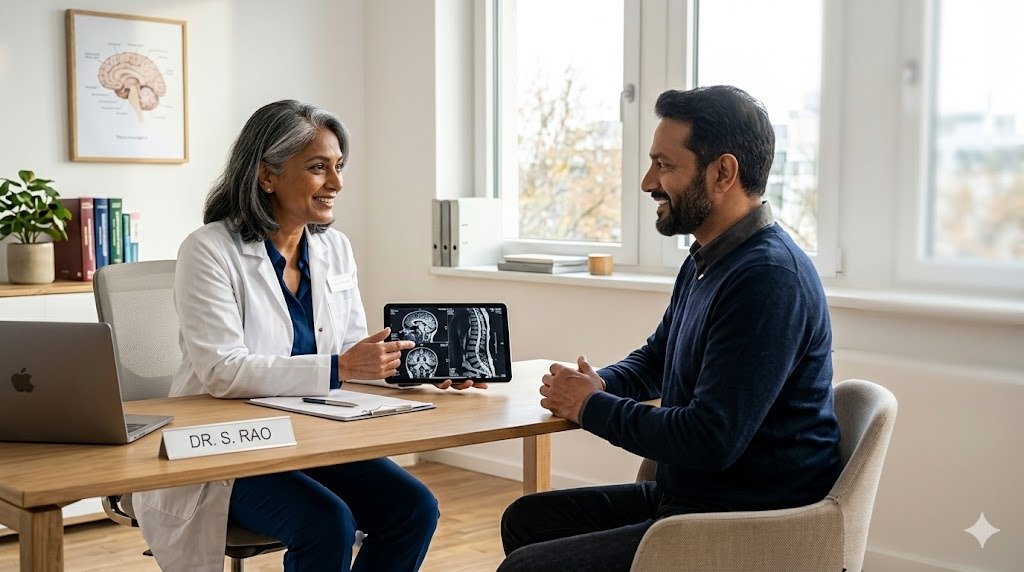
Consult an epilepsy specialist in India (epileptologist) if you experience frequent seizures despite medication, have been diagnosed with drug-resistant epilepsy, are considering epilepsy surgery, have complex seizure types requiring advanced diagnosis, experience significant medication side effects, or if your seizures significantly impact quality of life. Epileptologists have specialized fellowship training beyond neurology specifically in epilepsy management and surgical evaluation.
Q2: What is the success rate of epilepsy surgery in India?
Epilepsy surgery success rates in India are comparable to international standards, with seizure freedom rates of 50-86% in carefully selected candidates. Temporal lobe epilepsy surgery shows the highest success (60-80% seizure freedom), while other focal epilepsies have slightly lower but still significant success rates. The best epilepsy surgeons in India at premier centers achieve outcomes matching or exceeding global benchmarks. Success depends on precise seizure localization, complete resection of epileptogenic zone, and patient selection criteria.
Q3: How long does presurgical evaluation for epilepsy take in India?
Comprehensive presurgical evaluation typically takes 2-4 weeks depending on seizure frequency and required tests. This includes video-EEG monitoring (usually 3-7 days to capture multiple seizures), high-resolution MRI, PET-CT or SPECT scans, neuropsychological testing, and psychiatric evaluation. Some patients may require invasive monitoring (Phase II evaluation) adding additional time. Leading epilepsy centers in India coordinate this efficiently to minimize patient waiting time while ensuring thorough evaluation.
Q4: Are there specialized epilepsy programs for children in India?
Yes, major hospitals like AIIMS Delhi, NIMHANS Bangalore, CMC Vellore, Apollo Hospitals, and Fortis Healthcare have dedicated pediatric epilepsy programs with pediatric neurologists, pediatric neurosurgeons, and child psychologists. These programs treat complex childhood epilepsy syndromes like infantile spasms, Lennox-Gastaut syndrome, and Dravet syndrome. Pediatric epilepsy surgery is performed with excellent outcomes when appropriate, with specialized considerations for developing brains.
Q5: What documentation should I bring for the first consultation with an epilepsy specialist?
Bring comprehensive medical records including detailed seizure history (type, frequency, triggers, duration), list of all tried medications with doses and responses, previous EEG reports and brain imaging (MRI/CT scans – bring actual films or CDs if possible), video recordings of seizures if available, neuropsychological test results if done, family history of epilepsy or neurological conditions, current medications and their side effects, and impact of seizures on daily life, education, or employment. Top epilepsy doctors in India use this information for accurate diagnosis and treatment planning.
Q6: Can I get a second opinion from India’s best epilepsy specialists online?
Yes, most leading epilepsy specialists in India offer telemedicine consultations for second opinions. You can share your medical records, EEG reports, brain imaging, and seizure videos electronically. Virtual consultations help review current diagnosis, evaluate treatment options including surgical candidacy, optimize medication regimens, and determine if in-person evaluation is necessary. Many hospitals facilitate international patient consultations for treatment planning before travel.
Q7: What is the cost of epilepsy surgery in India compared to other countries?
Epilepsy surgery in India costs approximately ₹3-8 lakhs (USD 3,600-9,600) depending on procedure complexity, hospital, and city, compared to USD 100,000-150,000 in the United States and USD 50,000-80,000 in Europe. This includes presurgical evaluation, surgery, hospital stay, and initial follow-up. The significant cost advantage without compromising quality makes India attractive for international patients. Additional costs for extended video-EEG monitoring, advanced imaging, and invasive monitoring are proportionally lower.
Q8: Is epilepsy surgery covered under Indian government health schemes?
Yes, epilepsy surgery is covered under several government schemes. Ayushman Bharat (Pradhan Mantri Jan Arogya Yojana) covers epilepsy surgery for eligible beneficiaries at empaneled government and private hospitals. State health insurance schemes in various states also provide coverage. Government hospitals like AIIMS, NIMHANS, and PGIMER offer highly subsidized epilepsy care to all Indian citizens. Patients should inquire about scheme eligibility and covered procedures at initial consultation.
Q9: How soon can I resume normal activities after epilepsy surgery?
The recovery timeline varies by procedure type. For standard temporal lobectomy or lesionectomy, hospital stay is typically 3-5 days, with return to light activities in 2-3 weeks and full recovery in 6-8 weeks. Driving restrictions vary by region but generally require seizure-free period of 3-6 months post-surgery. Return to work/school depends on occupation and recovery progress, usually 4-8 weeks. Best epilepsy surgeons in India follow enhanced recovery protocols minimizing complications and accelerating rehabilitation. Neurostimulation device implantation has shorter recovery, usually 1-2 weeks.
Q10: What support services are available for epilepsy patients and families in India?
Comprehensive support includes neuropsychological counseling to address emotional impact and cognitive concerns, psychiatric services for depression and anxiety commonly associated with epilepsy, patient education programs teaching seizure first aid, trigger management, and lifestyle modifications, support groups connecting patients and families for peer support and shared experiences, vocational counseling and rehabilitation for employment assistance, school liaison services for children with epilepsy ensuring appropriate educational accommodations, women’s epilepsy programs addressing pregnancy planning and management, seizure alert dogs and assistive devices for enhanced safety, and financial counseling for treatment affordability and scheme enrollment. Leading epilepsy hospitals in India provide holistic care addressing medical, psychological, and social aspects of living with epilepsy.