Stem Cell Therapy in Frankfurt, Germany for International Patients
Stem cell therapy is a cutting-edge medical treatment that uses the body’s own stem cells (or donor cells) to repair or replace damaged tissues. In Frankfurt, Germany – a city renowned for its advanced healthcare – international patients can access a range of these therapies under strict quality standards. This comprehensive guide explains what stem cell therapy is, who might benefit, the treatment process, costs, and why Frankfurt is a top choice. We address practical questions on procedure, recovery, risks, and support for patients traveling from abroad.
Why Choose Frankfurt, Germany for Stem Cell Therapy
Germany’s healthcare system is highly regulated and research-driven. Clinics in Frankfurt typically meet international certifications (e.g. KTQ or ISO standards) and many are JCI-accredited, reflecting advanced treatment protocols, strict quality and safety standards. Frankfurt is a major international hub with excellent connectivity, and its hospitals often have dedicated international patient departments.
German doctors and specialists are usually board-certified and may have global training, ensuring advanced expertise. Patients benefit from state-of-the-art facilities, English-speaking staff, and personalized care plans. In Frankfurt, clinics with specialized regenerative medicine centers focus on stem cell treatments, while university hospitals integrate them into broader care – giving patients multiple high-quality options. Germany’s strong ethical framework and strict regulations—such as the Embryo Protection Act—ensure that all therapies are carried out under approved, safe, and internationally recognized protocols.
What is Stem Cell Therapy
Stem cell therapy uses undifferentiated or partially differnentiated cells with the ability to develop into specialized cell types and support tissue repair. In practice, stem cells may be collected from a patient or donor and delivered through injection or infusion into targeted areas. Stem cell therapy works by using special regenerative cells that support the body’s natural healing process. These cells are delivered to injured or diseased areas to reduce inflammation and promote tissue repair. They mainly help by releasing growth factors and repair signals that improve recovery and function.
The goal is to harness the cells’ regenerative ability to improve function. Common sources include bone marrow or fat tissue (autologous therapy), as well as matched donor-derived cord blood or bone marrow (allogeneic therapy). Established uses include blood and immune system restoration after chemotherapy, while applications in joint, nerve, or spinal repair remain under active research.
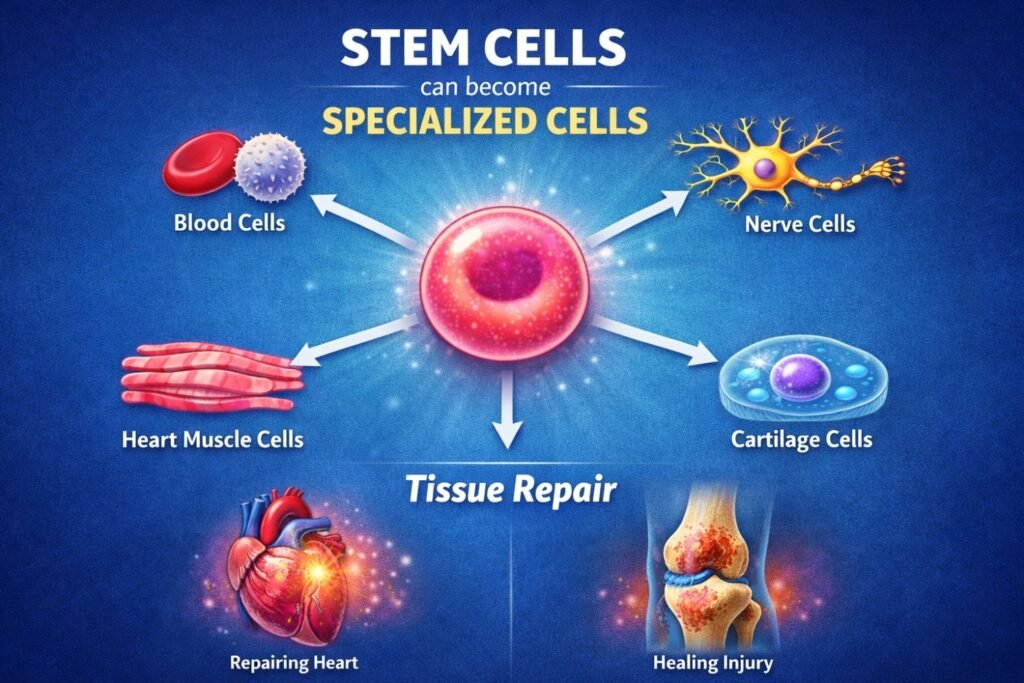
Figure: Stem cells (illustration) can transform into specialized cells to repair tissues.
Autologous Stem Cell Therapy
Uses the patient’s own cells (typically from bone marrow or adipose tissue). This avoids immune rejection because the cells are self-sourced. It’s commonly used for orthopedic injuries (e.g. osteoarthritis) or certain neurological conditions. After collection (usually via a simple procedure under anesthesia), the cells are concentrated and injected back into the patient’s affected area.
Allogeneic Stem Cell Therapy
Uses donor cells (from a matched donor’s bone marrow or cord blood). This is similar to traditional bone marrow transplant. Matching is required to reduce the chances of rejection. It is often used in blood disorders (like leukemia) or immune conditions. In Frankfurt, donor or cord blood programs follow strict screening. Patients may need immunosuppression to accept donor cells.
Mesenchymal Stem Cell Therapy
Mesenchymal Stem Cell (MSC) Therapy is an advanced regenerative medicine approach that utilizes multipotent stromal cells with strong immunomodulatory and anti-inflammatory properties. MSCs are known to secrete bioactive cytokines, growth factors, and extracellular vesicles that support tissue regeneration, enhance angiogenesis, and promote cellular repair rather than directly replacing damaged cells. These cells are commonly sourced from bone marrow, fat tissue, or umbilical cord tissue and are widely studied for their role in musculoskeletal, neurological, and autoimmune disorders and post-injury recovery. In medical centers across Frankfurt, MSC-based treatments are developed within regulated clinical frameworks, emphasizing GMP-grade cell processing, standardized protocols, and patient safety through evidence-based application.
Conditions Treated with Stem Cell Therapy
German clinics have explored stem cell approaches for many conditions, often as complementary treatments. These include:
- Neurological and neurodegenerative disorders: Parkinson’s disease, Alzheimer’s, multiple sclerosis (MS), amyotrophic lateral sclerosis (ALS), stroke, and spinal cord injuries. For instance, stem cells may help form new neurons or support nerve repair after stroke or MS attacks. Treatment for ALS aims to stabilize motor neurons and slow decline.
- Autoimmune diseases: Conditions such as rheumatoid arthritis, systemic lupus erythematosus (SLE), Crohn’s disease, and type 1 diabetes can be targeted with immunomodulatory stem cells. These therapies seek long-term remission by “rebooting” the immune system. In Germany, some patients reach reduced dependence on steroids or other drugs.
- Orthopedic and musculoskeletal injuries: Stem cells are regularly used for joint and bone issues (e.g. osteoarthritis, tendon ruptures, bone fractures). In Frankfurt, clinics inject MSCs into joints to regenerate cartilage and reduce pain. Patients often see faster healing and improved mobility than with standard treatments. These therapies can sometimes delay or avoid joint replacement surgery.
- Cardiac and vascular conditions: Patients with heart damage (e.g. after a heart attack) may receive stem cell infusions to promote new blood vessel formation and heart muscle repair. MSCs or other progenitor cells can help improve heart function in cases of cardiomyopathy or heart failure.
- Blood and immune disorders: Hematopoietic stem cell transplants (bone marrow transplants) are a well-established therapy in Germany for leukemia and lymphoma. Cord blood stem cells are also used worldwide for similar blood diseases. Frankfurt’s blood stem cell banks are part of Germany’s extensive donor network.
- Endocrine/metabolic diseases: Research and some treatments target diabetes complications (neuropathy, retinopathy) by using stem cells to regenerate insulin-producing cells or repair blood vessels.
- Others: Experimental or emerging uses include treating chronic liver/kidney disease, vision/hearing loss, and even erectile dysfunction. For example, some researchers have tested stem cells to improve optic nerve atrophy and noted some vision stabilization. Patients with erectile dysfunction (vascular or neurogenic) have been treated with stem cells to restore blood flow and nerve function. Anti-aging (rejuvenation) protocols have also been offered, aiming to boost skin health and vitality, though these are more cosmetic.
Each case is evaluated individually. German doctors combine stem cell therapy with other treatments (rehabilitation, medication, etc.) for the best outcome.
Doctors For Stem Cell Therapy

Prof. Dr. Elke Jaeger
Hematologist
39+ years of experienceChief
 Nordwest Hospital, Frankfurt - Germany


Dr. med. Gerhard Siebenhüner
Oncologist (Integrative Medicine and Stem Cell Therapy Expert)
40+ years of experienceHOD - Alternative Medicine
Center For Advanced Medicine, Germany - Germany
Need More Recommendations ?

Cost of Stem Cell Therapy in Frankfurt, Germany
The cost of stem cell therapy can vary widely based on the condition treated, type of cells, number of sessions, and chosen hospital. The average stem cell treatment in Germany is around 21,000–23,000 EUR (≈$22,000–$24,000). Specialized procedures may be lower or higher: for example, simple joint stem cell injections can start at a few thousand dollars per joint, while intensive regimens for neurological conditions might reach $25,000–$30,000 USD. The overall stem cell treatment package in Frankfurt starts at about $3,000 USD and goes up to $30,000 USD depending on the therapy.
Factors affecting stem cell therapy cost in Frankfurt, Germany include:
- Treatment complexity: More sessions or advanced cell processing raise costs. Infusions vs. injections have different fees.
- Hospital and doctor’s fees: Tertiary hospitals or renowned specialists may charge more.
- Number of cells and sources: Harvesting bone marrow (with anesthesia) is pricier than a simple fat aspiration. Use of donor cells (requiring matching/testing) can add cost.
- Diagnostic/pre- and post-care: Pre-treatment tests (bloodwork, imaging) and follow-up visits are included in package quotes and add to the overall treatment cost.
- Insurance and financing: Most stem cell therapies (especially non-life-saving ones) are considered experimental and are usually not covered by insurance. International patients must plan for full payment (often up front).
Patients should get a detailed quote in advance. Many clinics offer breakdowns of all included services. Keep in mind that travel, accommodation, and visa costs are extra. Despite the expense, Germany’s strict standards (e.g. ISO-certified clinics) and use of qualified staff justify the pricing for many seeking top-quality care.
Best Hospitals for Stem Cell Therapy in Frankfurt
Frankfurt hosts both specialized regenerative medicine centers and large university hospitals that offer stem cell treatments. In general, hospitals listed by international patient organizations for Frankfurt meet criteria like ISO-certified quality management and high patient volumes.
The top Stem Cell therapy clinics and centers in Germany offering or supporting advanced stem cell therapy and regenerative medicine includes ANOVA IRM Clinic for Regenerative Medicine (Frankfurt-Offenbach), Clinic of Advanced Biological Medicine (Frankfurt-am-Main), Nordwest Hospital (Krankenhaus Nordwest), Orthopedic Center Munich East (OZMO) Frankfurt, and University Hospital Frankfurt.
Cancer Rounds provides multilingual patient coordinators and tailored programs for patients seeking stem cell therapy treatment at reputable Frankfurt hospitals and centers. When selecting a hospital or clinic, consider its experience with your condition, the credentials of the medical team, and patient reviews.
Treatment Process for International Patients
- Online Consultation: Most Frankfurt clinics or patient coordinators begin with a virtual consultation. You’ll submit your medical records (reports, scans) and describe your condition. A physician reviews your case and advises whether stem cell therapy is appropriate.
- Planning & Visa: If recommended, the clinic prepares a treatment plan and cost estimate. This documentation is crucial for a German medical visa application.
- Arrival & Admission: Upon arriving in Frankfurt, an international patient coordinator will typically meet you. Initial steps include hospital admission paperwork, any last exams (blood tests, EKG, etc.), and a discussion of the procedure. If language is a concern, an interpreter will be available. You will also receive instructions on accommodations and local logistics.
- Procedure Day: Depending on the type of therapy, the procedure often takes place in an outpatient or short-stay setting. For example, a stem cell harvest (e.g. bone marrow aspiration) is done under anesthesia, followed by cell preparation in the lab. Then the stem cell infusion or injection is administered either intravenously or into the target area (joint, spinal fluid, etc.). This might occur on the same day or a day later. Many patients leave the clinic the same day or after a short observation (often 1–2 nights in a hospital or patient facility) whereas some patients require long hospitalisation depending on health condition.
- Follow-up: After treatment, clinics schedule follow-up visits or calls. Patients are monitored for safety and progress. Typically, a nurse or doctor will contact you (or your local physician) weeks and months after therapy. Any needed imaging or lab tests are arranged. In some cases, multiple infusions are planned (e.g. several weekly doses), in which your case coordinator will ensure you return at the proper intervals.
Throughout the process, patient comfort and clarity are priorities. International patient services often include 24/7 support lines. Your home doctor may also stay in touch for combined care. Because stem cell treatment tends to be “off the beaten path,” reputable German centers keep detailed records and usually pair patients with case managers who guide them every step.
Travel & Stay Support in Frankfurt
Germany welcomes about 250,000 medical visitors per year and has systems to assist them. Cancer Rounds, a leading medical tourism platform helps patients with logistics at Frankfurt hospitals:
- Visa Assistance: The team helps you get an invitation or treatment confirmation letter needed for a German medical visa. This letter will outline your diagnosis, proposed treatment plan, expected duration, and cost estimate – exactly the information German embassies require. Many centers also guide patients to specialized visa services or legal advisors if needed.
- Accommodation: Frankfurt has a wide range of lodging near hospitals: from hotels to furnished patient apartments. Your coordinator can book rooms, often close to the hospital to minimize travel time.
- Interpreter Services: For non-German speakers, interpreters (especially in English) are available. This ensures clear communication about consent forms, discharge instructions, and medical discussions.
Additionally, Cancer Rounds teams can help with airport transfers and even city mobility (driving service, wheelchair rental, etc.). If you bring companions (family), they can also get guidance on amenities and local attractions. The emphasis is on making your stay as smooth as possible, so you can focus on treatment.
5 easy Steps to Get Treated in Germany

Share Case Details

Get Expert Opinion and Hospital Quotes

Get Visa Invitation & Hotel Recommendations

Get Received At Airport and Start Your Treatment

Travel Back and Get Followups Through Us
Recovery & Aftercare
Most stem cell therapies have short recovery times compared to major surgery. For example, if you received an intravenous stem cell infusion or a localized joint injection, you may only need to rest a few hours before going home. Some patients stay overnight for monitoring, especially if anesthesia was used for harvesting. In general:
- Hospital Stay: Usually 0–2 days, depending on the procedure. Many patients undergo the treatment on an outpatient basis.
- Post-Treatment Care: You might feel mild soreness or fatigue at the injection site. Any pain or inflammation is managed with standard medications. Clinics advise avoiding strenuous activity for a short period, especially if stem cells were injected into muscles or joints.
- Rehabilitation: Often, stem cell therapy is combined with rehabilitation. For instance, after a spinal injection, physiotherapy may be prescribed to optimize nerve recovery. If treated for arthritis, a guided exercise program helps maximize joint function. Frankfurt centers coordinate these plans with you.
- Follow-Up Visits: You will have scheduled follow-ups (in-person or virtual) to check healing progress. Blood tests, imaging, or functional exams may be done a few weeks to months later. Some patients return to Germany for a follow-up evaluation, but many continue with their local doctors under the German team’s guidance.
Overall, recovery is typically quicker than with invasive surgery. Patients often note improvement starting from a few weeks post-treatment, although full effects (e.g. nerve regeneration) may take several months. Your team will give you a personalized timeline based on your treatment type and health.
FAQs
Q.1 What conditions can stem cell therapy in Frankfurt treat?
A: German specialists have applied stem cells to dozens of disorders, especially neurological (Parkinson’s, MS, stroke), orthopedic (arthritis, bone/tendon injuries), autoimmune (lupus, Crohn’s), and cardiac conditions. It is also used in blood disorders (leukemia) as part of transplant protocols. Each case is unique, so candidates are evaluated individually.
Q.2 Who is a candidate for stem cell treatment?
A: Generally, candidates are patients with chronic or severe conditions that have not fully responded to conventional therapy. Stem cell therapy is often considered when additional regeneration might help (e.g., severe osteoarthritis not amenable to surgery, or neurological disease with limited options). Healthier patients and those without active infections or cancer tend to have better outcomes. Minors and certain patients (e.g. with bleeding disorders) may require special assessment.
Q.3 Is the procedure painful and what is the recovery like?
A: The most uncomfortable part can be the cell harvest (e.g. bone marrow aspiration), which is done under anesthesia. The actual cell infusion or injection causes minimal pain – similar to a routine IV or injection. Most patients can go home within hours or a couple of days. Mild soreness at injection sites or temporary fatigue is possible. Recovery protocols (rest, physiotherapy) will be given but typically require little downtime.
Q.4 How soon will I see results?
A: Results vary. Some patients notice symptom relief within weeks; for example, reduced joint pain or improved strength may be felt in 2–3 months. Neurological improvements (like muscle function or sensory gains) often take longer, several months up to a year. Your doctor will monitor markers of improvement and schedule follow-ups accordingly.
Q.5 What are the risks?
A: Risks include infection, bleeding, or allergic reactions (rare with autologous cells). German clinics carefully screen patients and use sterilized techniques to minimize complications. All therapies are approved by hospital ethics committees or regulators in Germany.
Q.6 How much will it cost and will insurance cover it?
A: Costs vary by treatment type and center. Rough estimates for stem cell therapy programs range from about $3,000 to $30,000 USD (5,000–25,000 EUR) depending on complexity. Cosmetic or simple orthopedic injections might be on the lower end; neurological or systemic therapies toward the higher end. Currently, most stem cell procedures in Germany are not covered by insurance and are paid out-of-pocket.
Q.7 What support can I expect for traveling to Frankfurt?
A: Medical Tourism platform, like Cancer Rounds typically assists with visa letters, arranging accommodation, and language translation. For example, help schedule embassy appointments and documentation required for a German medical visa. The team also has patient coordinators who offer airport pickup. In short, you won’t navigate the trip alone – dedicated staff handle logistics.
Q.8 Do I have to stay long in Frankfurt for stem cell therapy?
A: It depends on the treatment. Some therapies need a week or more (for multiple infusions and observation), while others are just a day or two. Your doctor will advise. Many patients stay in Frankfurt for up to two weeks to complete all parts of the treatment plan.
Conclusion & Next Steps
Frankfurt, Germany offers international patients access to some of the world’s most advanced stem cell therapy programs, backed by a rigorous healthcare system. Patients benefit from experienced specialists, cutting-edge labs, and comprehensive support from consultation through recovery. If you are considering stem cell therapy in Frankfurt, we encourage you to:
- Book a Free Consultation to discuss your case with our international team.
- Get a Personalized Treatment Plan tailored to your condition and goals.
- Contact our International Patient Team for guidance on travel, accommodation, and costs.
Our specialists are here to answer your questions and help you make an informed decision about your care.
You May Be Also Interested In
All Treatment Pages
Our Impact
CancerRounds is making quality cancer care accessible to more people every day.


Why Choose India for Cancer Treatment?

World-Class Care
Skilled oncologists provide top-tier medical services

Affordable Treatment
Costs are significantly lower than in Western countries.

Comprehensive Packages
Hospitals offer all-inclusive plans covering surgery, stay, and aftercare.

Easy Accessibility
Well-connected airports and international flight routes.

Proven Success
High patient satisfaction and positive treatment outcomes
Thank You!
Your form has been submitted successfully.