Cancer Treatment in India
Cancer care in India has matured into a technologically advanced, multidisciplinary, and internationally acclaimed healthcare framework. The system provides a seamless continuum of oncologic services, ranging from early and precise diagnosis to individualized risk assessment, precision-guided treatment strategies, advanced therapeutic modalities, and structured survivorship care. Supported by comprehensive cancer centers, globally trained specialists, cutting-edge infrastructure, and strict adherence to international clinical standards, India has emerged as a premier hub for comprehensive cancer management.
Treatment delivery is grounded in a patient-focused, evidence-driven philosophy, with clinical decisions customized according to tumor biology, disease stage, molecular characteristics, functional status, comorbid conditions, and clearly defined therapeutic objectives. Multidisciplinary tumor boards ensure the integrated application of surgical, medical, radiation, and systemic therapies, achieving outcomes aligned with global benchmarks. Specialized care facilitation platforms such as Cancer Rounds further optimize the care pathway by enabling expert collaboration, coordinated multidisciplinary evaluations, streamlined specialist access, and logistical support, thereby enhancing the delivery of complex, high-precision oncologic care.
If you or a loved one is facing cancer and need clarity, reassurance, or a second opinion, consulting the Cancer Rounds team can help you make informed decisions with confidence—guided by experienced oncologists and personalized care coordination at every step.
Best Treatment for Cancer in India
The treatment for cancer in India is determined through a patient-centric, precision-driven, and scientifically validated approach, ensuring that every therapeutic decision is aligned with international oncologic standards while remaining individualized to each patient. Leading cancer centers in India integrate clinical staging, detailed histopathological evaluation, advanced molecular and genetic diagnostics, and patient-specific factors such as age, performance status, comorbidities, and treatment goals to design highly personalized cancer treatment plans.
Indian oncology institutions strictly adhere to globally recognized treatment protocols, including evidence-based guidelines followed across advanced cancer centers worldwide. At the same time, treatment strategies are customized to reflect the tumor’s biological behavior, molecular signature, disease extent, and predicted treatment responsiveness, thereby optimizing therapeutic efficacy and minimizing unnecessary toxicity.
Multimodal Cancer Treatment Approach in India
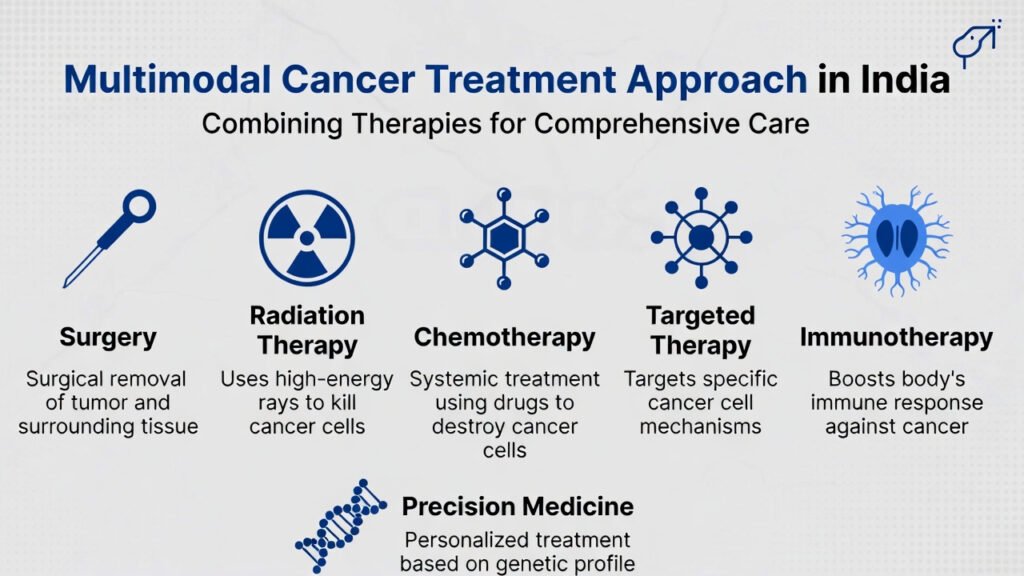
Cancer management in India typically follows a multimodal treatment strategy, wherein two or more therapeutic modalities are combined in a carefully planned sequence to maximize disease control and survival outcomes. This integrated approach allows oncologists to target cancer cells through complementary mechanisms while preserving organ function and quality of life.
The comprehensive spectrum of cancer treatment options available in India includes:
- Surgery – Surgical oncology in India encompasses minimally invasive procedures, robotic-assisted surgeries, and complex organ-preserving resections. Surgery often serves as the cornerstone of treatment for early-stage and localized cancers, with a focus on complete tumor removal while minimizing functional impairment.
- Chemotherapy – Chemotherapy treatment in India includes conventional cytotoxic agents, dose-dense protocols, and neoadjuvant or adjuvant regimens. Chemotherapy is utilized to eradicate microscopic disease, shrink tumors before surgery, or control advanced and metastatic cancers.
- Radiation Therapy – Radiation therapy in India employs advanced technologies such as IMRT, IGRT, VMAT, stereotactic radiosurgery, and proton therapy. These precision techniques deliver high-dose radiation to tumors while sparing surrounding healthy tissues, significantly reducing treatment-related side effects.
- Targeted Therapy – Targeted therapy for cancer in India is guided by molecular diagnostics that identify actionable genetic mutations and signaling pathways. These therapies selectively inhibit cancer-specific mechanisms, improving treatment outcomes while reducing systemic toxicity.
- Immunotherapy – Immunotherapy for cancer in India has transformed the management of several advanced malignancies by harnessing the body’s immune system to recognize and destroy cancer cells. Checkpoint inhibitors and immune-modulating agents are increasingly used across solid tumors and hematological cancers.
- Hormonal Therapy – Hormonal therapy plays a critical role in hormone-dependent cancers such as breast, prostate, and gynecological malignancies. Indian oncology centers offer long-term endocrine treatment strategies with careful monitoring to prevent recurrence.
- Supportive and Palliative Care – Supportive and palliative care in India focuses on symptom control, pain management, nutritional support, psychosocial counseling, and rehabilitation. These services are integrated at every stage of cancer treatment to enhance patient comfort, dignity, and overall well-being.
Multidisciplinary Tumor Board–Driven Care
All cancer treatments in India are coordinated through multidisciplinary tumor boards, comprising medical oncologists, surgical oncologists, radiation oncologists, radiologists, pathologists, molecular biologists, and palliative care specialists. This collaborative framework ensures optimal treatment sequencing, evidence-based decision-making, reduced treatment delays, and improved clinical outcomes across all cancer types.
Role of Cancer Rounds in Cancer Treatment in India
Cancer Rounds plays a pivotal role in facilitating access to the best cancer treatment in India by acting as a comprehensive cancer care coordination platform. Cancer Rounds assists patients by:
- Enabling multidisciplinary expert tumor board discussions
- Connecting patients with leading cancer doctors and specialized oncology centers in India
- Assisting in treatment planning, second opinions, and personalized therapy selection
- Streamlining appointments, diagnostics, and treatment timelines
- Supporting international patients and caregivers with end-to-end coordination
By bridging the gap between patients and India’s advanced oncology ecosystem, Cancer Rounds ensures that individuals receive timely, evidence-based, and precision-oriented cancer treatment aligned with global standards of care.
Cancer Therapy in India
Cancer therapy in India is comprehensive and encompasses both curative and palliative treatment strategies. Depending on cancer type, stage, and molecular characteristics, therapy may involve a single modality or a combination of treatments delivered sequentially or concurrently.
Key Goals of Cancer Therapy in India
The primary objectives of cancer therapy in India are centered on delivering effective, evidence-based, and patient-focused oncologic care, while maximizing survival outcomes and preserving quality of life. Modern cancer treatment strategies in India are designed to address both the biological complexity of malignancies and the holistic needs of patients across all disease stages.
- Complete Tumor Eradication Where Feasible
The foremost goal of cancer treatment is the complete elimination of malignant cells, particularly in early-stage and localized cancers. Through advanced surgical techniques, precision radiation therapy, and optimized systemic therapies, Indian oncology centers strive for curative outcomes by achieving total tumor clearance with minimal damage to surrounding healthy tissues. - Long-Term Disease Control and Sustained Remission
In cases where complete eradication is not immediately achievable, cancer therapy in India focuses on long-term disease control, aiming to suppress tumor progression and maintain durable remission. This approach is particularly critical in advanced, recurrent, or metastatic cancers, where modern chemotherapy, targeted therapy, immunotherapy, and hormonal therapy play a central role in extending survival and stabilizing disease. - Prevention of Local or Distant Recurrence
Preventing cancer recurrence remains a key therapeutic objective. Indian cancer centers implement adjuvant and maintenance treatment strategies, guided by molecular profiling and risk assessment, to reduce the likelihood of local relapse or distant metastasis. Continuous surveillance protocols and personalized follow-up plans further support early detection and intervention. - Symptom Relief and Quality-of-Life Improvement
Enhancing patient comfort and overall well-being is an integral component of cancer care in India. Comprehensive supportive and palliative care services focus on effective pain management, symptom control, nutritional optimization, psychological support, and rehabilitation. These measures ensure that patients experience improved functional outcomes and maintain dignity and quality of life throughout the cancer treatment journey.
Surgical Oncology in India
Surgical oncology is a primary and often curative modality for solid tumors, especially in early-stage malignancies. Surgical cancer care in India has advanced substantially with the widespread adoption of minimally invasive, laparoscopic, and robotic techniques, reducing postoperative morbidity while preserving oncologic safety.
Types of Cancer Surgeries
- Diagnostic surgeries (biopsies, sentinel lymph node sampling)
- Curative surgeries (complete tumor excision with clear margins)
- Debulking surgeries (tumor burden reduction in advanced disease)
- Reconstructive surgeries (post-oncologic functional and cosmetic restoration)
- Palliative surgeries (symptom relief and complication management)
Cancers Commonly Treated by Surgery
- Breast cancer
- Gastrointestinal cancers (stomach, colon, rectum)
- Head and neck cancers
- Gynecological cancers
- Thyroid, kidney, liver, and pancreatic cancers
Indian surgical oncologists routinely perform organ-preserving procedures, nerve-sparing surgeries, and oncoplastic reconstructions, ensuring both disease control and quality of life.
Related Doctors

Dr. Rahul Bhargava
Hemato-Oncologist, Stem Cell and BMT Specialist
20+ years of experiencePrincipal Director & Chief
 Fortis Hospital Gurgaon - India
Fortis Hospital Noida – Leading Cancer Care Hospital in Delhi NCR - India


Dr. Vinod Raina
Medical Oncology, Hematology, Bone Marrow & Stem Cell Transplant
40+ years of experienceChairperson, OncoSciences; Executive Director & Head, Medical Oncology & Hematology
Fortis Hospital Gurgaon - India

Dr. Murugan N
Hepato-Pancreato-Biliary Surgeon, Liver Transplant Surgeon
18+ years of experienceSenior Consultant Hepatologist & Transplant Physician
Apollo Hospitals, Greams Road, Chennai - India

Dr. TPR Bharadwaj
Hematologist
52+ years of experienceConsultant
Apollo Hospitals, Greams Road, Chennai - India

Dr. Satya Prakash Yadav
Pediatric Hematologist
31+ years of experienceDirector
Medanta – The Medicity Hospital, Gurugram - India
Need More Recommendations ?

Chemotherapy Treatment in India
Chemotherapy remains a cornerstone of systemic cancer therapy in India and is widely used for both solid tumors and hematological malignancies. It involves the administration of cytotoxic or cytostatic drugs that target rapidly dividing cancer cells.
Roles of Chemotherapy
- Neoadjuvant chemotherapy – to shrink tumors before surgery
- Adjuvant chemotherapy – to eliminate microscopic residual disease
- Definitive chemotherapy – when surgery is not feasible
- Palliative chemotherapy – for symptom control and disease stabilization
Delivery Methods
- Intravenous infusions
- Oral chemotherapy agents
- Regional chemotherapy (intraperitoneal, intrathecal)
Indian cancer centers offer standard international chemotherapy protocols, including combination regimens, dose-dense schedules, and maintenance therapy. The availability of high-quality generic oncology drugs significantly improves affordability without compromising treatment efficacy.
Radiation Therapy in India
Radiation therapy in India plays a critical role in the management of many cancers. It uses high-energy radiation to damage cancer cell DNA, leading to tumor control or eradication.
Types of Radiation Therapy Available
- External Beam Radiation Therapy (EBRT)
- 3D Conformal Radiation Therapy (3D-CRT)
- Intensity-Modulated Radiation Therapy (IMRT)
- Image-Guided Radiation Therapy (IGRT)
- Stereotactic Radiosurgery (SRS) and Stereotactic Body Radiation Therapy (SBRT)
- Brachytherapy (internal radiation)
Clinical Applications
Radiation therapy is extensively used in:
- Head and neck cancers
- Breast cancer
- Cervical and prostate cancers
- Brain tumors
- Lung and esophageal cancers
Radiotherapy in India is delivered with a strong emphasis on maximal tumor targeting and minimal normal tissue exposure, ensuring both safety and effectiveness.
Targeted Therapy for Cancer in India
Targeted therapy represents a major advancement in cancer treatment, focusing on specific molecular pathways and genetic alterations responsible for tumor growth and progression.
Mechanism of Action
Targeted therapies inhibit:
- Growth factor receptors
- Angiogenesis pathways
- Signal transduction proteins
- Tumor-specific enzymes
Cancers Commonly Treated
- Breast cancer (HER2-positive)
- Lung cancer (EGFR, ALK, ROS1 mutations)
- Colorectal cancer
- Kidney cancer
- Gastrointestinal stromal tumors
Indian oncology centers increasingly integrate molecular profiling and biomarker testing into routine care, enabling personalized and precision-driven treatment.
Immunotherapy for Cancer in India
Immunotherapy has transformed modern oncology by enhancing the body’s immune response against cancer cells. India offers access to a wide range of modern immunotherapeutic agents under expert supervision.
Major Types of Immunotherapy
- Immune checkpoint inhibitors
- Monoclonal antibodies
- Cancer vaccines
- Adoptive cell therapies
Clinical Indications
Immunotherapy is widely used in:
- Lung cancer
- Melanoma
- Kidney cancer
- Head and neck cancers
- Certain lymphomas and blood cancers
Patients are carefully selected based on biomarkers such as PD-L1 expression and tumor mutational burden, optimizing benefit while managing immune-related adverse effects.
Hormonal Therapy in India
Hormonal therapy is used for hormone-driven cancers and is typically administered over long durations with a favorable safety profile.
Common Indications
- Breast cancer (estrogen/progesterone receptor positive)
- Prostate cancer
- Endometrial cancer
Treatment Strategies
- Hormone suppression
- Hormone receptor blockade
- Surgical or medical castration in prostate cancer
Hormonal therapy is often combined with surgery, radiation, or targeted therapy for comprehensive disease control.
Bone Marrow and Stem Cell Transplantation in India
Stem cell transplantation is a potentially curative therapy for several hematological disorders. India has well-established transplant centers with advanced isolation units and strict infection control protocols.
Types of Transplants
- Autologous transplant
- Allogeneic transplant
- Matched sibling or unrelated donor transplant
- Haploidentical transplant
Conditions Treated
- Leukemia
- Lymphoma
- Multiple myeloma
- Aplastic anemia
Indian transplant centers follow internationally accepted conditioning and post-transplant care standards, achieving outcomes comparable to leading global institutions.
Precision Oncology and Genomic Medicine in India
Precision oncology focuses on tailoring cancer treatment based on genetic and molecular tumor profiling.
Key Components
- Next-generation sequencing (NGS)
- Biomarker-driven therapy selection
- Liquid biopsy
- Personalized treatment planning
This approach is increasingly used in advanced, recurrent, and treatment-resistant cancers, enabling highly individualized care.
Palliative and Supportive Cancer Care in India
Palliative care is an essential component of comprehensive cancer treatment, addressing physical, emotional, and psychosocial needs.
Supportive Services Include
- Pain and symptom control
- Nutritional support
- Psychological counseling
- End-of-life care
- Rehabilitation and survivorship programs
Indian cancer centers emphasize early integration of palliative care, ensuring holistic patient management alongside active oncologic treatment.
Multidisciplinary Cancer Care Model in India
Cancer treatment in India is delivered through tumor board–driven decision-making, involving:
- Medical oncologists
- Surgical oncologists
- Radiation oncologists
- Pathologists
- Radiologists
- Genetic counselors
This collaborative approach ensures optimal therapy sequencing, precision treatment selection, and improved clinical outcomes.
Cancer Treatment Cost in India
Cancer treatment cost in India is significantly lower than in many developed countries while maintaining high clinical standards.
Key Cost Components
- Chemotherapy cost in India varies per cycle and protocol
- Radiation therapy cost in India depends on technology and duration
- Immunotherapy cost in India is influenced by drug type and number of cycles
- Targeted therapy cost in India varies based on molecular agent and treatment length
The availability of generic drugs, public healthcare schemes, and charitable institutions makes cancer treatment accessible to a wide population.
Estimated Cancer Treatment Costs in India (INR & USD)
| Treatment Type | Estimated Cost in India (INR) | Approximate Cost (USD) |
| Chemotherapy (per cycle) | ₹15,000 – ₹1,20,000 | $180 – $1,450 |
| Radiation Therapy (full course) | ₹1,50,000 – ₹4,50,000 | $1,800 – $5,400 |
| IMRT / IGRT / VMAT | ₹2,50,000 – ₹6,00,000 | $3,000 – $7,200 |
| Stereotactic Radiation (SRS/SBRT) | ₹3,00,000 – ₹8,00,000 | $3,600 – $9,600 |
| Immunotherapy (per cycle) | ₹80,000 – ₹3,50,000 | $950 – $4,200 |
| Targeted Therapy (monthly) | ₹60,000 – ₹2,50,000 | $720 – $3,000 |
| Hormonal Therapy (monthly) | ₹3,000 – ₹15,000 | $40 – $180 |
| Cancer Surgery (average) | ₹1,50,000 – ₹6,00,000 | $1,800 – $7,200 |
| Bone Marrow Transplant | ₹8,00,000 – ₹25,00,000 | $9,600 – $30,000 |
Note: Costs are indicative and may vary depending on hospital choice, cancer complexity, and patient-specific treatment requirements.
5 easy Steps to Get Treated in India

Share Case Details

Get Expert Opinion and Hospital Quotes

Get Visa Invitation & Hotel Recommendations

Get Received At Airport and Start Your Treatment

Travel Back and Get Followups Through Us
Why Cancer Treatment Is More Affordable in India
The affordability of cancer treatment in India is supported by multiple systemic advantages, including:
- Availability of high-quality generic anticancer drugs
- Government-supported healthcare schemes and insurance coverage
- Charitable trusts and subsidized cancer treatment programs
- Lower infrastructure and operational costs
- High patient volumes leading to optimized treatment efficiencies
These factors collectively ensure that advanced cancer therapy in India remains accessible to a broad population, including international patients seeking high-quality yet affordable oncology care.
Best Cancer Hospitals in India
India has developed a vast and highly advanced oncology infrastructure, comprising dedicated comprehensive cancer hospitals and specialized oncology departments within multispecialty institutions. These centers are equipped with state-of-the-art diagnostic imaging, molecular pathology laboratories, advanced radiation therapy platforms, modern surgical suites, and integrated supportive care services.
The country is home to some of the best cancer doctors in India, including medical oncologists, surgical oncologists, radiation oncologists, hemato-oncologists, and pediatric oncologists. Many of these specialists have received international training, fellowship exposure, and global research experience, and actively follow internationally accepted cancer treatment protocols. Their collective expertise enables India to deliver precision-based, multidisciplinary, and outcome-driven cancer care across all malignancies.
Cancer treatment in India is delivered through tumor board–driven care models, ensuring collaborative decision-making, accurate staging, optimal treatment sequencing, and reduced delays in therapy initiation.
Leading Cancer Hospitals in India
| Cancer Hospital | Location | Key Specialties & Strengths |
| Tata Memorial Hospital | Mumbai | Comprehensive cancer care, advanced research, high-volume oncology, national referral center |
| All India Institute of Medical Sciences (AIIMS) | New Delhi | Multidisciplinary oncology, advanced diagnostics, complex cancer management |
| Apollo Cancer Centres | Multiple cities | Precision oncology, robotic surgery, advanced radiation therapy |
| Fortis Cancer Institute | Multiple cities | Organ-specific cancer care, integrated oncology services |
| Max Institute of Cancer Care | Delhi NCR | High-end radiation oncology, medical and surgical oncology |
| HCG Cancer Centre | Multiple cities | Focused cancer care, molecular oncology, advanced radiation technologies |
| Rajiv Gandhi Cancer Institute & Research Centre | New Delhi | Comprehensive oncology, bone marrow transplant programs |
| Adyar Cancer Institute | Chennai | Cancer research, prevention, and advanced treatment |
| Narayana Health Oncology | Multiple cities | Cost-effective advanced cancer care, complex surgeries |
| Kidwai Memorial Institute of Oncology | Bengaluru | Regional cancer referral center, multidisciplinary treatment |
Cancer Treatment in India for International Patients and Foreigners
Cancer treatment in India for international patients and foreigners is supported by structured medical travel services by the team of cancer rounds, including:
- Pre-treatment online consultations
- Visa and travel assistance
- Dedicated international patient coordinators
- Language support and accommodation services
- Post-treatment follow-up planning
International patients receive the same ethical, clinical, and safety standards as domestic patients.
Success Rate of Cancer Treatment in India
The success rate of cancer treatment in India depends on:
- Cancer type and stage at diagnosis
- Timely initiation of treatment
- Integration of multimodal therapy
- Patient compliance and follow-up
Early-stage cancers such as breast, prostate, colorectal, and certain blood cancers demonstrate survival outcomes comparable to leading global centers.
Cancer Types Treated in India
Cancer treatment in India comprehensively spans all major organ systems and oncologic specialties, delivered through a coordinated, multidisciplinary, and evidence-based framework. The full spectrum of cancers extensively treated in India includes:
- Head and Neck Cancers: Oral cavity, oropharyngeal, laryngeal, hypopharyngeal, salivary gland, thyroid, and sinonasal cancers managed through organ-preserving surgery, advanced radiotherapy (IMRT, IGRT, VMAT), chemotherapy, targeted therapy, immunotherapy, and functional rehabilitation.
- Thoracic Cancers: Lung, mediastinal, and chest wall tumors treated with minimally invasive and robotic surgery, stereotactic body radiotherapy (SBRT), concurrent chemoradiation, immunotherapy, and molecularly targeted agents.
- Breast Cancers: Early to advanced breast cancers managed with oncoplastic and reconstructive surgery, sentinel node techniques, chemotherapy, hormonal therapy, targeted therapy, immunotherapy, and precision radiotherapy.
- Gastrointestinal Cancers: Esophageal, gastric, hepatobiliary, pancreatic, small bowel, colorectal, and anal cancers treated with multimodality protocols including complex gastrointestinal surgery, systemic therapy, immunotherapy, and image-guided radiation.
- Gynecological Cancers: Cervical, ovarian, uterine, vaginal, and vulvar malignancies addressed through fertility-preserving and radical surgeries, chemotherapy, targeted agents, immunotherapy, advanced external beam radiotherapy, and brachytherapy.
- Genitourinary Cancers: Prostate, bladder, kidney, ureteric, testicular, and penile cancers treated with robotic-assisted surgery, brachytherapy, hormonal therapy, chemotherapy, immunotherapy, and precision radiation techniques.
- Hematological Malignancies: Leukemias, lymphomas, multiple myeloma, and myelodysplastic disorders managed with risk-adapted chemotherapy, immunotherapy, targeted agents, CAR-T therapy, and autologous or allogeneic stem cell transplantation.
- Central Nervous System Tumors: Primary and metastatic brain and spinal tumors treated through neuro-oncology surgery, stereotactic radiosurgery, fractionated radiotherapy, chemotherapy, and molecularly guided therapies.
- Pediatric Cancers: Leukemias, lymphomas, brain tumors, sarcomas, and embryonal tumors treated using pediatric-specific protocols, precision radiotherapy, stem cell transplantation, and long-term survivorship care.
- Sarcomas and Bone Tumors: Soft tissue and bone sarcomas managed through limb-salvage surgery, chemotherapy, advanced radiotherapy, and targeted therapies.
- Skin Cancers and Melanoma: Non-melanoma skin cancers and melanoma treated with surgery, immunotherapy, targeted therapy, and radiation when indicated.
- Endocrine and Neuroendocrine Tumors: Thyroid, adrenal, parathyroid, and neuroendocrine tumors managed using surgery, radionuclide therapy, targeted therapy, and precision radiation.
- Rare and Complex Cancers: Management of rare, refractory, and relapsed malignancies through personalized medicine, molecular profiling, clinical trials, and advanced multimodal treatment strategies.
Across all branches of oncology, cancer care in India is delivered through integrated tumor board–driven decision-making, advanced technology, and adherence to international clinical guidelines, ensuring comprehensive, high-precision, and globally benchmarked cancer treatment across every organ system.
Why Choose Cancer Rounds for Cancer Treatment in India?
Choosing the right cancer care partner is as important as choosing the right hospital or doctor. Cancer Rounds stands with patients and families at every step of their cancer journey—offering guidance, clarity, and compassionate support.
Patient-First & Transparent Approach
- Personalized assistance tailored to each patient’s diagnosis and stage
- Honest guidance without bias toward any single hospital
- Clear communication to help patients make informed decisions
Access to India’s Top Cancer Hospitals
- Collaborations with leading NABH & JCI-accredited hospitals
- Options across metro cities like Delhi NCR, Mumbai, Chennai, Bengaluru, and Hyderabad
- Choice of the best hospital based on medical need, not commission
Expert Oncology Network
- Coordination with highly experienced:
- Medical Oncologists
- Surgical Oncologists
- Radiation Oncologists
- Sub-specialists (Neuro, GI, Breast, Pediatric, Hemato-oncology)
- Multidisciplinary treatment planning for complex cases
Cost-Effective Cancer Treatment
- Treatment plans at 30–50% lower cost compared to many countries
- Detailed cost estimates before treatment begins
- Assistance in choosing the best treatment within the patient’s budget
Dedicated Support for International & Indian Patients
- End-to-end assistance including:
- Medical visa support
- Travel and accommodation guidance
- Language interpretation services
- Smooth coordination for patients coming from abroad
End-to-End Care Coordination
- Medical reports review and second opinions
- Appointment scheduling and priority consultations
- Treatment planning, follow-ups, and post-treatment care guidance
Compassion Beyond Treatment
- Emotional support for patients and families
- Dedicated care managers available throughout the journey
- Focus on dignity, comfort, and mental well-being
Ethical & Trust-Driven
- No misleading claims or hidden charges
- Recommendation based purely on clinical outcomes and patient benefit
- Trusted by patients seeking reliable cancer care in India
Cancer treatment in India represents a harmonious integration of clinical expertise, advanced technology, affordability, and patient-centered care. With comprehensive treatment options, skilled oncologists, precision medicine capabilities, and globally comparable outcomes, India stands as a trusted and leading destination for high-quality cancer care for both domestic and international patients.
You May Be Also Interested In
All Treatment Pages
Related Patient Stories

 See Video
Thank you Cancer Rounds and Dr. Deepak Jha for your support and care during my breast cancer journey. I'm healing with hope because of you.

Our son had relapsed leukemia. Thanks to Cancer Rounds & Fortis, he got the right treatment and a second chance at life. Forever thankful.
India gave me hope and healing. With Cancer Rounds by my side, I overcame CLL through a bone marrow transplant. Forever grateful for this journey.
Related Blogs
 Best Oncologist in Tata Memorial Hospital, MumbaiHow to Choose a Radiation Oncologist: What to Look ForBone Marrow Transplant for Sickle Cell Disease: A Guide to Cure and HopeCRISPR Gene Editing: Revolutionising Cancer ImmunotherapyHow CAR T-Cell Therapy Lights the Way in Modern Cancer Treatment?Blood Cancer Treatments in India: Hope Amidst ChallengesIs blood cancer curable? Everything You Need to Know About SBRTHow to recover after bone marrow transplant?Chemotherapy As A Cure For Liver Cancer Treatment
Our Impact
CancerRounds is making quality cancer care accessible to more people every day.


Why Choose India for Cancer Treatment?

World-Class Care
Skilled oncologists provide top-tier medical services

Affordable Treatment
Costs are significantly lower than in Western countries.

Comprehensive Packages
Hospitals offer all-inclusive plans covering surgery, stay, and aftercare.

Easy Accessibility
Well-connected airports and international flight routes.

Proven Success
High patient satisfaction and positive treatment outcomes
Thank You!
Your form has been submitted successfully.