When faced with a diagnosis of blood cancer, one of the most common and pressing questions is whether blood cancer is curable. The answer is complex and depends on several factors, such as the specific type of leukemia or blood cancer, the stage at which it is diagnosed, and the individual patient’s overall health and response to treatment. In recent years, medical advancements have significantly improved the prognosis for many blood cancer patients, with certain types now considered highly treatable or even curable. This article explores the curability of blood cancer by examining the progress made in research and treatment, outlining the different types of leukemia, and discussing the range of treatment options available, including chemotherapy, targeted therapy, immunotherapy, and bone marrow transplantation.
Confused about treatment options?
Get a free second opinion from our oncologists
Understanding blood cancer
To comprehend the curability of blood cancer, it is crucial to understand the nature of the disease. Blood cancer primarily originates in the bone marrow, where blood cells are produced.
Acute lymphoblastic leukemia (ALL), acute myeloid leukemia (AML), chronic lymphocytic leukemia (CLL), and chronic myeloid leukemia (CML) are the four basic kinds of leukemia. Each variety has unique traits and methods of therapy.
Types of blood cancer
Blood cancer can come in four primary forms:
Acute lymphoblastic leukemia (ALL): Children are more likely to experience it, and it happens when the bone marrow makes an excessive number of immature lymphocytes, a type of white blood cell.
Acute myeloid leukemia (AML): It is more common in adults and involves the rapid growth of abnormal myeloid cells, which are responsible for producing red blood cells, white blood cells, and platelets.
Chronic lymphocytic leukemia (CLL): It typically affects older adults and progresses slowly, causing the accumulation of abnormal lymphocytes in the blood, bone marrow, and lymph nodes.
Chronic myeloid leukemia (CML): It usually occurs in adults and involves the overproduction of abnormal myeloid cells, similar to AML, but with a more chronic course.
Blood cancer treatment options
The treatment options for blood cancer depend on several factors, including the type and stage of the cancer, the age and overall health of the patient, and individual preferences. Common treatment approaches include:
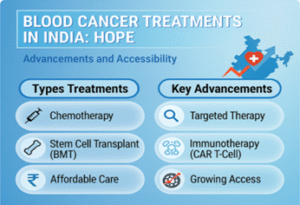
Chemotherapy: the use of medications to either kill or prevent the growth of cancer cells. Chemotherapy may be given orally or intravenously, and it can be used as the primary treatment or in combination with other therapies. Step by step decoding of chemotherapy cost.
Targeted therapy: These drugs specifically target certain molecules or pathways involved in the growth and survival of cancer cells. They tend to have fewer side effects compared to traditional chemotherapy. Here is the detailed vision of targeted therapy cost in India.
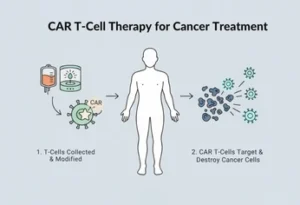
Immunotherapy: This therapy makes use of the immune system to identify and eliminate cancer cells. Examples include monoclonal antibodies, CAR-T cell therapy, and checkpoint inhibitors. Get cost estimation of Immunotherapy cost in India here.
Radiation therapy: High-energy X-rays or other forms of radiation are used to kill cancer cells or shrink tumors. It is often used in combination with other treatments. Estimation of radiation therapy cost in India here.
Stem cell transplantation: This procedure involves replacing damaged or diseased bone marrow with healthy stem cells to allow the production of normal blood cells. It can be autologous (using the patient’s own stem cells) or allogeneic (using stem cells from a donor). Decoding of BMT cost in India here.
Supportive care: This includes managing symptoms, preventing infections, and providing supportive therapies such as blood transfusions or growth factors to boost blood cell production.
Take a free opinion from the best cancer specialist for your treatment. You are just one click away, send us your query.
Symptoms of lymphoma
The symptoms of lymphoma can vary depending on the type and stage of cancer, but common symptoms include:
Swollen lymph nodes: Lymph nodes are small, bean-shaped structures that are located throughout the body. They help to fight infection and disease. When lymphoma develops, the lymph nodes may become swollen or enlarged. This is often one of the first signs of the disease.
Fever: Some people with lymphoma may have a fever.
Fatigue: Many people with lymphoma feel very tired or weak.
Night sweats: Some people may experience sweating at night.
Weight loss: Some people may experience a significant loss of weight.
Itchy skin
Shortness of breath
Chest pain
Cough
Abdominal pain
Diarrhea
These symptoms can also be caused by other medical conditions, so it is important to see a doctor if you are experiencing any of these symptoms.
It’s important to note that many people with lymphoma don’t have any symptoms in the early stages of the disease, and that’s why it’s important to go through regular check-ups.
Blood cancer cure rates and survival rates
Leukemia
A form of blood cancer that affects the white blood cells is called leukemia. The cure rate depends on the patient’s age, health condition, and disease stage. Patients with leukemia can have up to a 90 percent five-year survival rate.
Acute Lymphoblastic Leukemia
White blood cells are affected by the blood malignancy known as acute lymphoblastic leukemia. The cure rate of ALL is approximately 90 percent in children.
Acute Myeloid Leukemia
Acute myeloid leukemia is a type of blood cancer that affects the white blood cells. The cure rate for AML varies depending on the patient’s age. Younger patients have a higher cure rate than older patients.
Lymphoma
It is a type of cancer that affects the lymphatic system. The cure rate for lymphoma depends on the patient’s age, health condition, and disease stage.
Hodgkin Lymphoma
Hodgkin lymphoma is a type of lymphoma that affects the lymphatic system. It has a high cure rate of between 80 percent to 90 percent.
Non-Hodgkin Lymphoma
Non-Hodgkin lymphoma is a type of lymphoma that affects the lymphatic system. The cure rate depends on the patient’s age, health condition, and disease stage.
Myeloma
Myeloma is a blood cancer type that affects the plasma cells. The cure rate for myeloma is lower than other types of blood cancer. The five-year survival rate of myeloma is approximately 50 percent.
What affects blood cancer cure rate?
Stages of Blood Cancer
The stage of blood cancer when it’s diagnosed can have an impact on cure rates. If the cancer is detected early, the chances of a cure are greater. When the cancer is in its advanced stage, however, it becomes challenging to treat.
Age
Age is another factor that can affect the cure rate for blood cancer. Older people tend to have more complications with treatments and may have a weaker immune system, which can hinder the course of treatment.
Health Condition
The overall health of the patient with blood cancer also affects cure rates. Having other underlying health conditions can make it challenging to undergo treatment.
Genetics
Genetics can also impact the cure rate of blood cancer. Some genetic predispositions make the patient more susceptible to developing blood cancer or reduce the effectiveness of treatment.
Treatment Adherence
Following the doctor’s instructions is crucial in achieving a positive outcome for blood cancer treatment. Failure to take medication regularly can hamper the treatment of the disease.
Immune System
The immune system plays a role in blood cancer treatment. When the immune system is compromised, patients may suffer from severe side effects, or the immune system may not react effectively to treatment.
Latest innovations in blood cancer research
Immunotherapy
Immunotherapy is a treatment option that harnesses the power of the immune system to kill cancer cells. It can be used to treat blood cancer patients who have not found any clinical benefit from traditional cancer treatments.
Targeted Therapy
Targeted therapy is an innovative treatment option that targets specific genetic mutations within cancer cells. It avoids healthy cells and can cause fewer side effects.
CAR-T Cell Therapy
CAR-T cell therapy is the latest treatment innovation in blood cancer. It involves engineering the immune system to create T cells that can target cancer cells.
Conclusion
The question “Is blood cancer curable?” encompasses a complex and evolving landscape. While a definitive cure may not be possible for all types and stages of blood cancer, significant strides have been made in recent years.
The advent of targeted therapies, immunotherapies, and stem cell transplantation has revolutionized the treatment of blood cancer, offering patients increased chances of long-term remission and improved survival rates. Advancements in medical research and the development of personalized treatment approaches continue to enhance outcomes for individuals with blood cancer.
Each case is unique, and treatment plans should be tailored to the specific characteristics and needs of the patient. It is essential for patients and their families to consult with healthcare professionals who specialize in oncology to gain a comprehensive understanding of the available treatment options and the potential for curative outcomes.
While the journey towards finding a cure for all types of blood cancer is ongoing, the progress made so far provides hope and optimism for patients and their loved ones. With continued research and innovation, the goal of achieving a cure for blood cancer becomes increasingly attainable, bringing us closer to a future where the answer to the question “Is blood cancer curable?” will be a resounding “yes.”
FAQs:
What is the most common type of blood cancer?
Lymphoma is the most common type of blood cancer.
What are some early symptoms of blood cancer?
Some common symptoms of blood cancer include fatigue, unexplained weight loss, night sweats, fever, and frequent infections.
What are some of the risk factors for blood cancer?
Risk factors for blood cancer include exposure to radiation, chemical exposure, family history, and a weakened immune system.
How can I help someone with blood cancer?
You can offer emotional support like being a listening ear, assisting with errands, help with meals or looking into support groups as the patient navigates their treatment process.
What is the overall survival rate for people with blood cancer?
The survival rate for people with blood cancer varies depending on the type of cancer and the stage at diagnosis. Some people have a very high survival rate while others do not.
Are there natural remedies for blood cancer?
Unfortunately, there are no natural remedies that can cure blood cancer. However, some complementary therapies such as acupuncture and meditation can help manage side effects of blood cancer treatment.
CancerRounds Medical Content Team
The CancerRounds Medical Content Team specialises in creating accurate, clear and patient-focused healthcare content. Our content is written by medically trained writers, medically reviewed, and based on reputable medical sources to support informed healthcare decisions.
✓ Medically reviewed by board-certified oncologists
Share a few details and our medical team gets back to you within 4 hours with the next steps.
✨ YOUR MEDICAL TRAVEL PARTNER
Find the Right Care for Your Condition
Tell us what you are facing and our medical team will guide you to the right doctors, hospitals and treatment.
✅
Free Review, No Commitment
Free assessment with no pressure to proceed.
👥
Trusted by 100,000+ Patients
Across 125+ countries worldwide
🏥
500+ Top Partner Hospitals
Globally accredited medical facilities
👨⚕️
5000+ Expert Specialists
Senior doctors across major specialties.
Our Impact So Far
Making quality healthcare accessible to patients worldwide
5000+
Specialists
500+
Partner Hospitals
100,000+
Patients Served
24/7
Support
What Our Patients Say
★★★★★
"
So thankful to Cancer Rounds and Dr. Gaurav Dixit. Your care and support helped me heal and regain strength during my lymphoma treatment."
O
Ms. Octavie
Vanuatu
★★★★★
"
I’m so grateful to Cancer Rounds and the doctors at Fortis Noida. Your support gave me strength during my cancer treatment."
M
Ms. Musonda Mkandawire
Zambia
★★★★★
"
A heartfelt thank you to Dr. Hari Goyal and Cancer Rounds for helping me fight cancer with strength and dignity."
E
Mr. Edward
Nigeria
★★★★★
"
Deep thanks to Vaidam Health and the wonderful doctors who cared for my mom. You gave us peace and support when we needed it most."
S
Ms. Suman
★★★★★
"
Forever grateful to Cancer Rounds and Dr. Priya Tiwari for supporting me through chemo. Your care means everything."
M
Ms. Meliana
Vanuatu
★★★★★
"
So grateful to Cancer Rounds and Dr. Sudip Raina for helping me through my breast cancer journey. I'm healing, hopeful, and feeling like myself again!"
M
Ms. Mimmie
Namibia
★★★★★
"
Big thanks to Cancer Rounds and Dr. Rahul Bhargava for helping me beat Multiple Myeloma. Feeling stronger and hopeful every day!"
H
Mr. Hukum Singh
India
★★★★★
"
Grateful to Cancer Rounds and Dr. Rahul Bhargava for helping me fight Multiple Myeloma with strength, hope, and the right care."
K
Mr. Kanwaldeep Singh
India
★★★★★
"
I was scared and uncertain, but Cancer Rounds helped me find answers. Thanks to their support and Dr. Arun Behl’s care in India, I found peace of mind—no cancer. Forever grateful for the kindness and clarity I received."
R
Ms. Rufine
Congo
★★★★★
"
Thank you Cancer Rounds and Dr. Deepak Jha for your support and care during my breast cancer journey. I'm healing with hope because of you.
"
L
Ms. Leimala Alfred
Vanuatu
Common Questions About Our Services
Everything you need to know about choosing the right hospital, doctor and treatment plan.
Our platform helps you filter hospitals by department, treatment, disease, and location. You can
review hospital profiles including accreditations, bed capacity, and specializations. Our care
coordinators provide personalized recommendations based on your medical condition and budget.
Yes, all partner hospitals in our network are verified with international accreditations like
JCI,
NABH, and ISO standards, ensuring world-class quality and safety.
We assist with medical visas, airport transfers, accommodation, language support, appointment
coordination, and 24/7 patient assistance for a seamless experience.
No, our service is completely free for patients. We partner with hospitals directly, so you get
expert guidance without any added cost.

.webp)