
German thoracic oncology centres rely on detailed tumour gene testing to choose the right treatment for each patient. Early-stage NSCLC is removed by VATS or robotic lobectomy; stage III gets chemoradiation followed by durvalumab; and advanced disease is treated with immunotherapy combined with chemo, or targeted tablets like osimertinib for EGFR mutations and alectinib for ALK rearrangements.
Reply in 4 hours · Plan and quote in 2 days · 100% confidential
Lung cancer is among the most common and deadliest cancers worldwide, and Germany is no exception. According to the German Cancer Registry (Krebsdaten) and the Global Cancer Observatory, lung cancer continues to represent a significant proportion of new cancer diagnoses as well as cancer-related deaths each year. One of the biggest challenges is that lung cancer is often detected at a late stage, when treatment options are more complex and outcomes less favorable.
Despite this, Germany has emerged as a global leader in lung cancer diagnosis and treatment, offering patients access to early detection programs, precision oncology, cutting-edge therapies, and advanced clinical trials. With world-class hospitals, internationally recognized cancer specialists, and innovative approaches such as immunotherapy, targeted therapy, and personalized medicine, Germany provides hope and improved survival prospects for patients battling lung cancer.
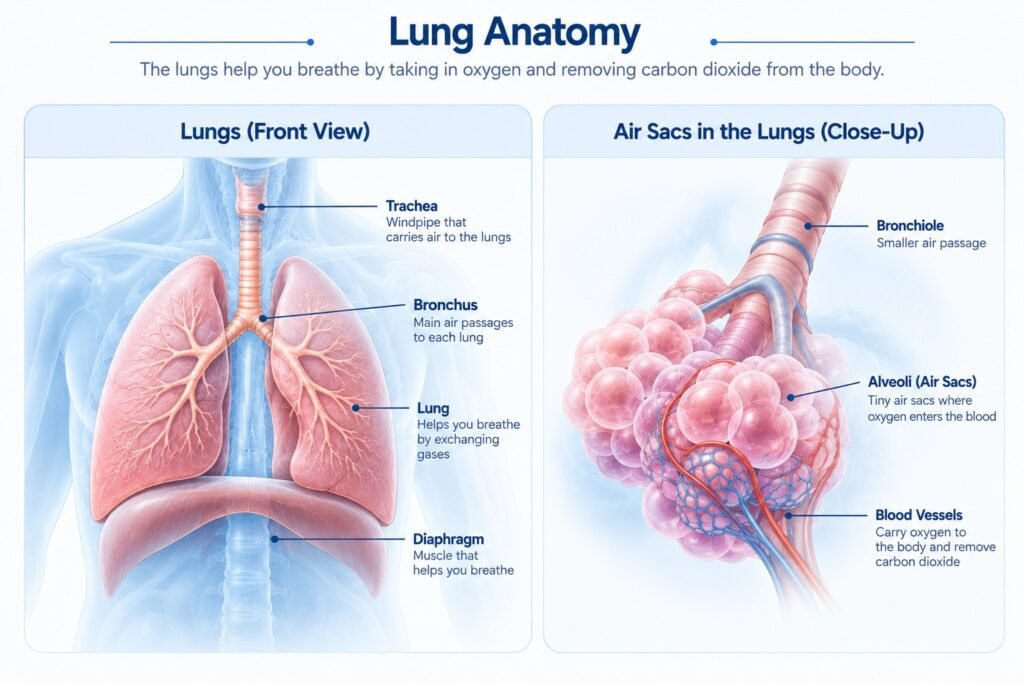
According to the German Centre for Cancer Registry Data (Robert Koch Institute – Krebsdaten), lung cancer remains one of the most serious health burdens in Germany:
These numbers highlight the urgent need for early detection, precision diagnosis, and access to advanced treatment options, which Germany continues to strengthen through national cancer programs, research initiatives, and innovative therapies. Causes and Risk Factors of Lung Cancer in Germany
The primary cause of lung cancer remains smoking, both active and passive. Historically, smoking rates have been higher among men, but in recent decades, smoking prevalence among women has been steadily rising, contributing to increasing lung cancer incidence in women (Krebsdaten).
Other major risk factors include:
Lung cancer is often called a “silent disease” in its early stages, as it may present with few or no symptoms. This makes early detection difficult and contributes to late-stage diagnoses.
Common symptoms that may appear as the disease progresses include:
Because these symptoms are non-specific and may mimic other respiratory conditions, many patients in Germany and worldwide are diagnosed only at advanced stages, when treatment becomes more complex.
The primary cause of lung cancer remains smoking, both active and passive. Historically, smoking rates have been higher among men, but in recent decades, smoking prevalence among women has been steadily rising, contributing to increasing lung cancer incidence in women (Krebsdaten).
Other major risk factors include:
Symptoms and Clinical Presentation
Lung cancer is often called a “silent disease” in its early stages, as it may present with few or no symptoms. This makes early detection difficult and contributes to late-stage diagnoses.
Common symptoms that may appear as the disease progresses include:
Because these symptoms are non-specific and may mimic other respiratory conditions, many patients in Germany and worldwide are diagnosed only at advanced stages, when treatment becomes more complex.
One of the biggest challenges in lung cancer management in Germany is that the disease is frequently diagnosed at an advanced stage. Since early-stage lung cancer often shows no clear symptoms, many patients are only identified once the disease has already progressed.
Distribution of Lung Cancer Stages at Diagnosis (Germany, approximate trends)
These figures demonstrate that the majority of patients in Germany are diagnosed at Stage III or IV, when treatment options become more complex and the focus often shifts toward systemic therapy and palliation.
The stage at which lung cancer is diagnosed is the most powerful predictor of survival:
This sharp decline underlines the importance of early detection programs, low-dose CT screening for high-risk groups, and rapid access to advanced diagnostics in Germany.
Accurate and timely diagnosis is the cornerstone of successful lung cancer treatment. German hospitals follow internationally recognized protocols supported by advanced technologies and nationwide cancer registries.
Imaging and Staging
Histological Confirmation
Molecular and Biomarker Testing
Germany emphasizes precision oncology with routine molecular profiling:
| Modality | Use / When Employed | Key Innovations or German Strengths |
| Surgery | Early stage NSCLC, if tumour is resectable; lobectomy, pneumonectomy; sometimes minimally invasive / VATS, robotic approaches | High surgical volumes; experienced thoracic surgeons; specialized centers. |
| Radiotherapy | For locally advanced disease, or for patients unfit for surgery; techniques like IMRT, SBRT, proton therapy in specialised centers. | Germany has advanced imaging and radiotherapy equipment; high precision and image guidance. |
| Chemotherapy | Standard in many stages; often combined with radiation; also used in metastatic disease. | Germany participates in multicentre trials; standard regimens well established. |
| Targeted therapy | For driver mutations (EGFR, ALK, ROS1, etc.); first-line targeted agents; newer generation TKIs. | Good molecular diagnostics; patients benefit from novel agents; real-world precision medicine program in NSCLC. PMC+1 |
| Immunotherapy | Checkpoint inhibitors (PD-1, PD-L1, sometimes CTLA-4); used alone or combined with chemo; adjuvant settings. | Germany has access to many of these agents; ongoing trials; integration with standard care. |
| Novel / Emerging / Personalized Therapies | Dendritic cell therapies; gene-based treatments; vaccine-type approaches; possibly adoptive cell therapies; personalized immunotherapy. | |
| Palliative & Supportive Care | For symptom control in advanced disease; focus on quality of life, pain relief, respiratory support, psychological care. | Germany tends to integrate palliative care early; multi-disciplinary support. |
Precision and Innovation in Lung Cancer Treatment in Germany
| City | Doctor(s) | Specialty & Strengths |
| Heidelberg | Prof. Helge Bischoff | Expert in lung cancer care, especially non-small cell lung cancer; extensive surgical and medical oncology experience. |
| Essen | Prof. Dr. Christian Reinhardt, Prof. Beate Timmermann, Prof. Martin Stuschke | Specialists in hemato-oncology, radiation oncology, and advanced radiotherapy. |
| Berlin | Oncologists & Thoracic Surgeons at Helios Hospital Berlin-Buch and Charité | Comprehensive lung cancer treatment with international reputation and multidisciplinary expertise. |
| Munich | Physicians at LMU Klinikum & Comprehensive Pneumology Center | Leaders in lung disease research; cutting-edge diagnostics and innovative therapies. |
| Grosshansdorf | Dr. Martin Reck-Deppermann | Recognized worldwide as a top lung cancer expert with vast clinical experience. |
| City | Hospital / Clinic | Key Features |
| Heidelberg | Heidelberg University Hospital & NCT Heidelberg | Certified lung cancer centre; high surgical volumes; forefront of oncology research. |
| Essen | University Medicine Essen & Ruhrlandklinik | Part of West German Lung Cancer Centre; strong in thoracic surgery, pulmonology, and multidisciplinary care. |
| Berlin | Charité – University Medicine Berlin & Helios Berlin-Buch | World-class cancer centres offering comprehensive treatment and excellent international patient services. |
| Munich | LMU Klinikum & Comprehensive Pneumology Center | Research-driven cancer care with integrated diagnostics and advanced therapies. |
| Frankfurt am Main | University Hospital Frankfurt | Known for innovation, clinical trials, and personalized therapy for advanced lung cancers. |
| Karlsruhe | St. Vincentius Hospital Karlsruhe | Certified thoracic surgery department; expertise in early-stage lung cancer surgery and endoscopic methods. |
| Stuttgart | Klinikum Stuttgart | Major oncology hub; excellent referral centre with wide experience in lung cancer management. |
Hospitals, Doctors & Why Germany is a Key Destination
Q.1 What Is Lung Cancer and How Is It Classified?
Lung cancer originates in the lungs and is primarily categorized into two main types:
Q.2 What Are the Main Types of Lung Cancer?
As mentioned, lung cancer is primarily classified into NSCLC and SCLC. NSCLC is further divided into:
SCLC is characterized by rapid growth and early spread to distant sites.
Q.3 What Are the Most Common Causes of Lung Cancer?
The primary risk factors include:
Q.4 Can Lung Cancer Be Prevented or Risk Reduced?
Prevention strategies include:
Q.5 What Are Early Symptoms of Lung Cancer?
Early signs may include:
Q.6 How Is Lung Cancer Diagnosed?
Diagnosis involves:
Q.7 What Molecular Tests Are Done and Why?
Molecular tests detect genetic mutations that can guide treatment decisions, such as:
Q.8 What Are Driver Mutations in Lung Cancer?
Driver mutations are genetic alterations that promote cancer growth. Key mutations include:
Identifying these mutations helps in selecting targeted therapies.
Q.9 What Are First-Line Treatments for Early-Stage Lung Cancer in Germany?
Treatment options include:
Germany’s healthcare system offers advanced treatment modalities and access to clinical trials.
Q.10 What Treatments Are Available for Locally Advanced Lung Cancer?
Treatment may involve:
Germany’s multidisciplinary approach ensures personalized treatment plans.
Q.11 How Does Germany’s Healthcare Support Foreign Patients?
Germany provides:
Q.12 How Does Cost/Insurance Work?
Costs vary based on treatment type and duration. Germany’s public and private insurance systems may cover treatments, with options for international patients to obtain coverage. It’s advisable to consult with healthcare providers for detailed cost estimates.
Q.13 What Is the Role of Palliative Care?
Palliative care focuses on providing relief from symptoms and improving the quality of life for patients with advanced cancer. It includes pain management, psychological support, and assistance with daily activities.
Q.14 What Is the Survival Outlook? By Stage? By Sex? By Treatment Type?
Survival rates vary:
Sex and genetic factors also influence outcomes.
Q.15 Are There Screening Programs in Germany?
Germany offers lung cancer screening for high-risk individuals, such as long-term smokers, through low-dose CT scans. Early detection programs aim to identify cancer at treatable stages.
Q.16 What Innovations Are Coming in Lung Cancer Treatment?
Emerging treatments include:
Germany’s research institutions are at the forefront of these developments.
Q.17 How Is Quality of Life Factored During Advanced Treatment?
Treatment plans in Germany prioritize:
While lung cancer remains a challenging disease, Germany is among the leading countries advancing diagnosis, personalized treatment, and improving survival. Early detection, molecular diagnostics, access to innovative therapies, and multidisciplinary care are key.
For patients (domestic or international), the best outcomes depend on stage at diagnosis, mutation profile, quality of care, and timeliness.
Sources:
Published By
.webp)
Global Patient Care, Redefined
The CancerRounds Medical Content Team specialises in creating accurate, clear and patient-focused healthcare content. Our content is written by medically trained writers, medically reviewed, and based on reputable medical sources to support informed healthcare decisions.
Get expert guidance instantly
Share a few details and our medical team gets back to you within 4 hours with the next steps.

Tell us what you are facing and our medical team will guide you to the right doctors, hospitals and treatment.
Free Review, No Commitment
Free assessment with no pressure to proceed.
Trusted by 100,000+ Patients
Across 125+ countries worldwide
500+ Top Partner Hospitals
Globally accredited medical facilities
5000+ Expert Specialists
Senior doctors across major specialties.
Making quality healthcare accessible to patients worldwide
Everything you need to know about choosing the right hospital, doctor and treatment plan.