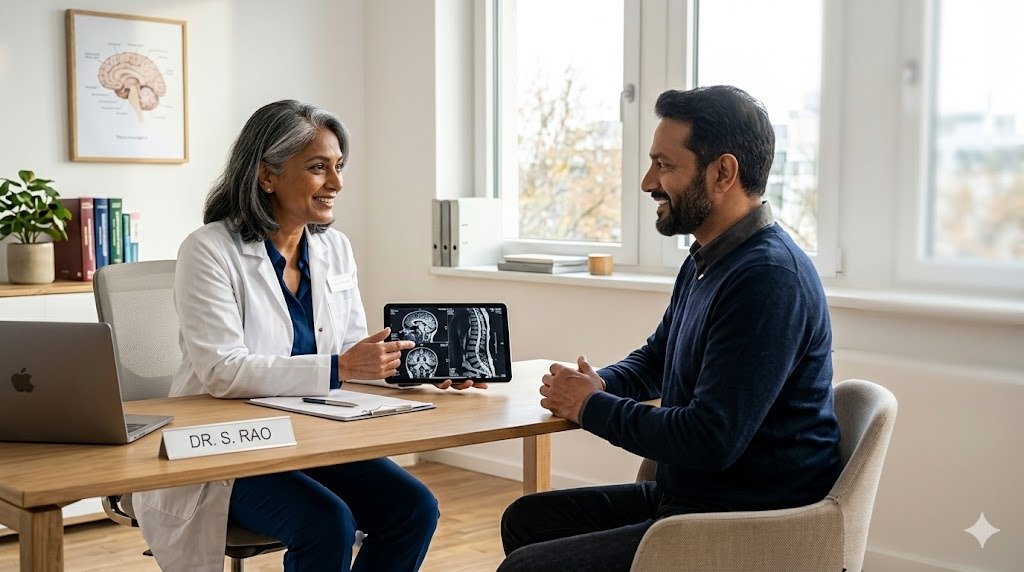
Germany is a leading destination for international cancer patients, with DKG-certified cancer centers, world-class research institutions, and access to advanced cancer treatments such as proton and carbon-ion therapy, CAR-T cell therapy, immunotherapy, and radioligand theranostics.
Language Interpreter Assistance
Accredited Partner Hospitals
End-to-End Care Coordination
Visa and Travel Assistance
5000+
Specialists
500+
Partner Hospitals
125+
Countries Served
Get Your Treatment Plan and Quote
Reply in 4 hours · Plan and quote in 2 days · 100% confidential
A cancer diagnosis changes everything in a single moment. When you start looking for the best care you can find, borders stop mattering and one question takes over: where can I get treatment I can trust? For many patients from the UK, the United States, the Gulf, and Africa, the answer they keep returning to is Germany. Cancer treatment in Germany is known for one thing above all, which is that quality here is measured and checked, not just claimed. That matters when your life depends on it.
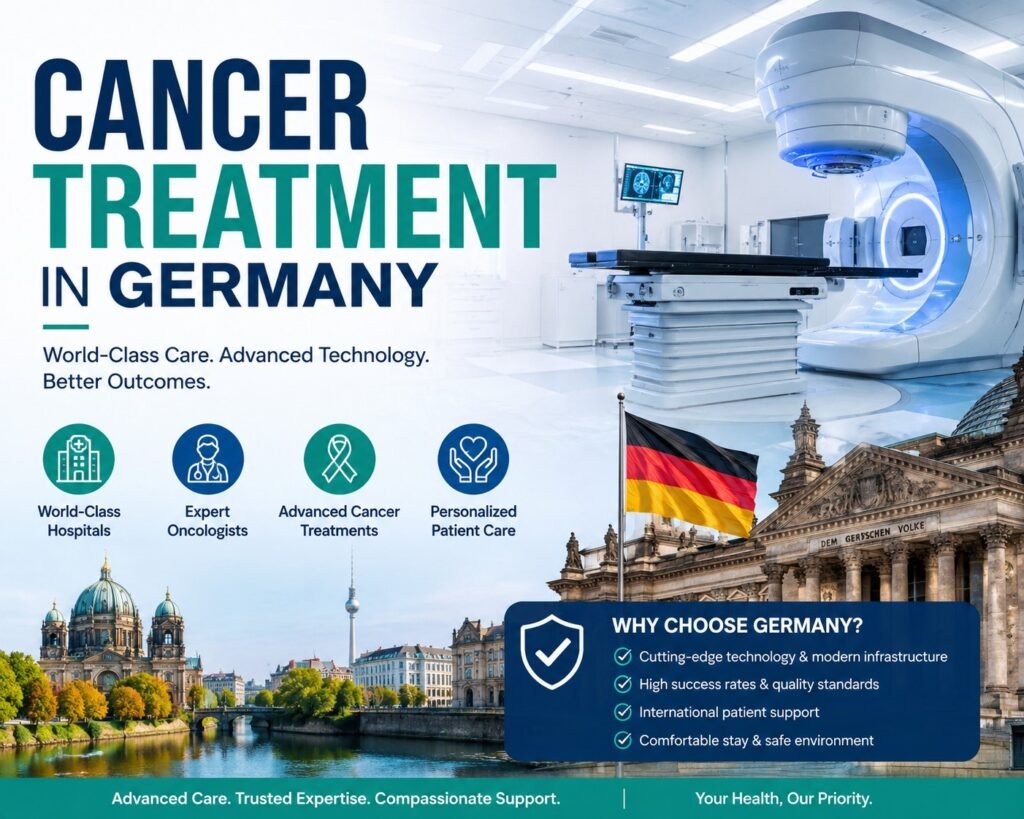
Germany is one of Europe’s strongest destinations for international cancer patients because of a national, audited quality-certification system run by the German Cancer Society (Deutsche Krebsgesellschaft, DKG), leading research bodies (the German Cancer Research Center, DKFZ, and the National Center for Tumor Diseases, NCT), and broad access to advanced treatments including proton and carbon-ion therapy, CAR-T cell therapy, immunotherapy and radioligand theranostics.
Germany treats self-paying international patients every year at hospitals with dedicated teams for exactly this. You don’t have to work it out alone. At Cancer Rounds, we help patients reach certified German centres, arrange a second opinion, plan the visa, and stay supported from the first enquiry to a safe return home. This guide explains what German cancer care actually offers, what it costs, and how to access it.
Why Germany is a leading destination for cancer treatment (evidence-based reasons)
International patients choose Germany because its cancer care is independently certified and closely tied to research. The German Cancer Society runs a national programme, audited by an independent body, that checks hospitals against strict quality standards. This gives patients an objective way to spot a trusted centre instead of relying on marketing.
National certification system. The Deutsche Krebsgesellschaft (German Cancer Society) runs a voluntary cancer-centre certification programme audited by the independent body OnkoZert. It covers roughly 1,700 certified centres across more than 2,000 sites in Germany and a number of partner countries. This gives international patients an objective way to identify credible, quality-audited centres rather than relying on marketing.
A three-tier quality pyramid. Certification is structured in three levels: organ cancer centres (Organkrebszentren, focused on a single tumour type such as breast, bowel, prostate or lung), oncology centres (Onkologische Zentren, covering multiple tumour types under one roof), and Comprehensive Cancer Centers (the top tier, also called Onkologische Spitzenzentren), which are supported by the German Cancer Aid charity (Deutsche Krebshilfe). There are around 14 of these top-tier comprehensive centres.
Outcome evidence. The WiZen study, funded by Germany’s Innovation Fund (Innovationsfonds), found that patients treated in DKG-certified centres had better survival than those treated outside certified centres across several cancers, including colon, rectal, breast and pancreatic cancer. This is the single strongest, most defensible credibility point for the page because it links the certification system to measured outcomes without promising results for any individual.
Research infrastructure. The German Cancer Research Center (Deutsches Krebsforschungszentrum, DKFZ) in Heidelberg is Germany’s largest biomedical research institution and a member of the Helmholtz Association. The National Center for Tumor Diseases (NCT) links research directly to patient care and expanded in 2023 from two sites to six: Heidelberg, Dresden, Berlin, SüdWest (Tübingen, Stuttgart and Ulm), WERA (Würzburg, Erlangen, Regensburg and Augsburg) and West (Essen and Cologne). This research-to-bedside integration is a key reason patients travel to Germany rather than to other European systems.
Advanced and innovative cancer treatments available in Germany
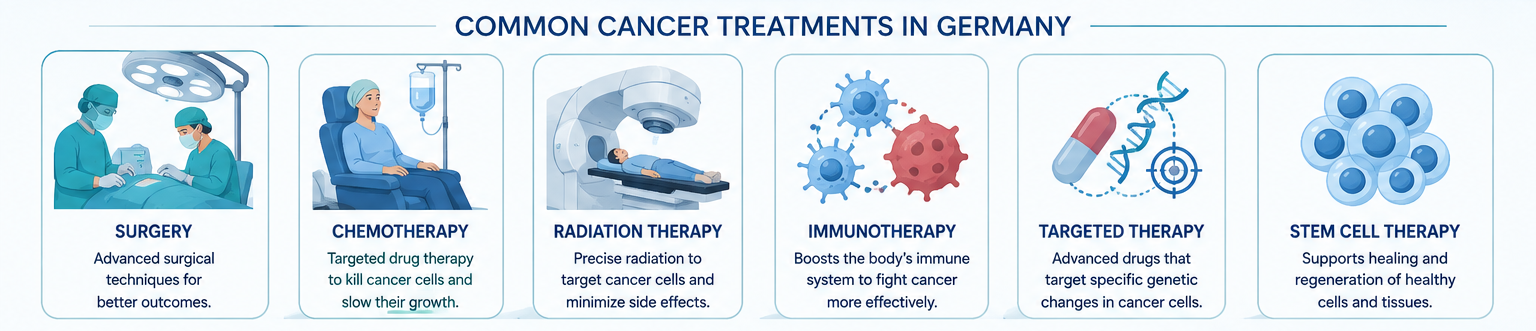
Germany offers most modern cancer treatments in one country, including proton and carbon-ion radiotherapy, CAR-T cell therapy, immunotherapy, targeted drugs, and radioligand treatments. Precision oncology, where a tumour’s genetic profile guides the choice of therapy, is standard at leading centres. Which option fits you depends entirely on your cancer type, stage, and health.
Here’s what some of those treatments mean in plain terms.
Proton and carbon-ion (heavy-ion) therapy. Highly targeted radiation that can spare surrounding healthy tissue, useful for tumours near critical structures and for some paediatric cases. The Heidelberg Ion-Beam Therapy Center (HIT) at Heidelberg University Hospital offers both proton and carbon-ion therapy and treats tumours such as skull-base chordomas and chondrosarcomas. The Marburg Ion-Beam Therapy Center (MIT) also offers proton and carbon-ion therapy. The West German Proton Therapy Centre Essen (WPE) at University Hospital Essen provides proton therapy, including for children. University Proton Therapy Dresden (OncoRay) also offers proton therapy. Ion-beam facilities are relatively rare in Europe, which is a genuine differentiator for Germany.
CAR-T cell therapy. A personalised immunotherapy in which a patient’s own T-cells are collected, re-engineered to recognise cancer, and returned to the body. EU-approved products used in German university hospitals include Kymriah, Yescarta, Tecartus, Abecma, Carvykti and Breyanzi, used for certain lymphomas, acute lymphoblastic leukaemia and multiple myeloma.
Immunotherapy and targeted therapy. Checkpoint inhibitors and targeted drugs matched to tumour biology, widely available and guided by molecular diagnostics.
Precision and personalised oncology. Molecular tumour boards analyse a tumour’s genetic profile to match patients to the most suitable therapy or clinical trial. This is central to how leading German centres work.
Radioligand therapy / theranostics. Pluvicto (lutetium-177 PSMA-617) for PSMA-positive metastatic castration-resistant prostate cancer, and Lutathera (lutetium-177 DOTATATE, a form of PRRT) for neuroendocrine tumours. The centre at Bad Berka is internationally known for PRRT.
Other modalities to describe accessibly. CyberKnife and Gamma Knife (highly focused stereotactic radiosurgery), TomoTherapy (image-guided intensity-modulated radiotherapy), robotic surgery, brachytherapy (internal radiation), hyperthermia (used as an adjunct), and stem cell / bone marrow transplantation for blood cancers.
Leading cancer hospitals and centres that treat international patients
Germany has a deep bench of hospitals that treat international patients, most of them university medical centres with long oncology track records. Here are the lists:
Charité – Universitätsmedizin Berlin. Consistently ranked Germany’s leading hospital and appears in the global top ten of Newsweek’s World’s Best Hospitals 2025. Broad oncology capability.
Heidelberg University Hospital. Home to HIT and closely tied to DKFZ and NCT Heidelberg; strengths across many tumour types and ion-beam therapy.
LMU Klinikum Munich and TUM University Hospital (Klinikum rechts der Isar). Two major Munich university centres with comprehensive oncology.
University Hospital Cologne, University Hospital Frankfurt and University Medical Center Hamburg-Eppendorf (UKE). Established comprehensive oncology programmes.
University Hospital Essen (home to WPE) and the NCT West partnership (Essen and Cologne).
Cancers commonly treated and centres of excellence
German centres cover the full range, reflecting the DKG organ-centre structure: breast, lung, prostate, colorectal, brain and central nervous system tumours, blood cancers (leukaemia and lymphoma), pancreatic, liver, gynaecological cancers and paediatric oncology. The organ-centre certification means a patient can often identify a centre specifically certified for their cancer type. The point for an international patient is choice with proof behind it. You’re not guessing whether a hospital handles enough cases of your cancer to stay sharp. The certification checks exactly that, every year.
Source: DKMS
How do international patients access cancer treatment in Germany?
International patients access German cancer care through a hospital’s international office, which reviews your records, issues a treatment plan and a written cost estimate, and provides the invitation letter used for the visa. Most offer interpreters and help with travel and accommodation. Many patients start with a remote second opinion before deciding to travel. The usual route runs step by step, and a good facilitator keeps it moving. Here are in details:
Diagnosis and second opinion. Many patients begin with a remote second opinion, sending imaging and pathology for review by a German oncologist before deciding to travel.
Treatment planning and cost estimate. The treating clinic issues a written treatment plan and a cost estimate (Kostenvoranschlag), which doubles as the invitation letter for the visa.
Visa. Patients from outside the EU and Schengen area typically need a German national (type D) visa for medical treatment for stays over 90 days, or a Schengen (type C) visa for shorter treatment. Requirements usually include the invitation and cost-estimate letter from the treating clinic, proof of sufficient funds, an advance payment or deposit to the hospital, health insurance and a valid passport. Urgent cases can sometimes be expedited.
Language and logistics support. Major university hospitals run international offices that provide interpreters (commonly English, Arabic and Russian), visa-support documentation, cost estimates, and help with travel and accommodation.
Aftercare and follow-up. Plans should cover follow-up scans, medication continuation and remote review after the patient returns home.
Cancer Rounds help with interpreters, airport pickup, and accommodation near the hospital. After treatment, your plan should cover follow-up scans, ongoing medication, and remote review once you’re back home. That last part matters as much as the treatment itself, and it’s something we make sure isn’t left hanging
Cost of cancer treatment in Germany
The cost of cancer treatment in Germany varies widely by cancer type, stage, and the treatments used, so there’s no single price. Diagnostics and a second opinion may run into a few thousand euros, while advanced therapies such as CAR-T can reach six figures. German self-pay prices are generally well below equivalent private care in the United States and broadly similar to UK private care.
What drives cost: cancer type and stage; whether surgery, radiotherapy and systemic therapy are combined; drug list prices; length of hospital stay; and diagnostics such as PET-CT.
Indicative points. CAR-T therapy carries a very high product list price in the six-figure euro range. Proton and ion-beam therapy courses typically run to tens of thousands of euros. Immunotherapy with checkpoint inhibitors carries high per-dose drug costs.
International comparison framing (useful for UK and US searchers). German private self-pay cancer care is generally substantially lower than equivalent private care in the USA and broadly comparable to UK private care. This is the value message for the page, expressed as a general comparison rather than a fixed saving.
Alternative treatment in Germany
What Germany does offer, alongside standard treatment, is integrative and supportive care aimed at quality of life, such as certain complementary therapies. These should sit beside proven treatment, never replace it, and the evidence for them is mixed.
Integrative oncology exists in Germany, and the country has a strong tradition here. Mistletoe (Viscum album) therapy is widely used in German integrative and anthroposophic oncology, mainly for quality of life and supportive aims. Cochrane reviews have found insufficient evidence for a survival benefit, and major bodies such as the NCCN do not endorse it as an anticancer treatment.
Hyperthermia is offered at some centres as an adjunct alongside standard therapy; the evidence is mixed and it is used in reputable settings in addition to, not instead of, proven treatment.
Cancer Survival Rates and General Oncology Trends in Europe
Here is a collection of key cancer-related statistics across Germany and the wider European landscape, detailing survival rates, disease burden, and regional trends.
1. Specific 5-Year Relative Survival Rates (Germany)
TheZentrum für Krebsregisterdaten (ZfKD) at the Robert Koch Institute tracks 5-year relative survival rates (the percentage of cancer patients who survive at least 5 years after diagnosis, adjusted for deaths from other causes).
Overall Survival (All Cancers Combined):
Women: 65%
Men: 61%
Prostate Cancer: 93%(One of the highest survival rates for solid tumors in Germany).
Breast Cancer (Women): 88%(Driven by extensive population-wide screening programs).
Malignant Melanoma (Skin Cancer):>93%
Testicular Cancer:>97%
Colorectal (Bowel) Cancer:~65%(This is notably higher than the broader European average of ~60%).
2. High-Performers in Europe (The 86%+ Bracket)
When looking at the highest survival rates in Europe:
The Leader (Sweden): Sweden consistently ranks at the top of European cancer survival tables. For example, Sweden’s 5-year survival rate for breast cancer is 89%, and it leads in overall cancer survival alongside Finland, Switzerland, and Germany.
Western/Northern vs. Eastern Europe Gap: There is a distinct geographic survival gradient in Europe. Survival rates in Eastern European countries (e.g., Poland, Bulgaria, Latvia) are often 10% to 15% lower than those in Western and Northern Europe due to differences in healthcare infrastructure, funding, and screening availability.
3. General European Cancer Burden Statistics
Annual New Cases: Approximately 2.7 million people are diagnosed with cancer in the EU every year.
Rising Prevalence: Countries with the highest survival rates (such as Germany, Sweden, and Switzerland) also have the highestprevalenceof cancer survivors. Because therapies are successful, more people are actively living with or recovering from a historical cancer diagnosis.
Declining Mortality vs. Aging Populations: While cancer mortality rates (deaths per 100,000 people) have decreased steadily across Europe since 1995 due to medical advances, thetotal numberof cancer diagnoses is rising. This is primarily because Europe has an aging population, and cancer risk increases with age.
Source: DKMS
Real Stories of Cancer Treatment in Germany
1. Tatyana Peterson: Ovarian Cancer & Complex Metastases
Background: In 2022, Tatyana (a resident of Norway originally from St. Petersburg) was treated for ovarian cancer with peritoneal metastases. Following chemotherapy and surgery, she was cancer-free for two years.
The Challenge: In October 2024, she experienced a recurrence: a large tumor positioned near her liver’s portal vein. Norwegian doctors deemed it inoperable due to the extreme surgical risks, offering only palliative chemotherapy and a terminal prognosis of a few months.
The German Intervention: Tatyana refused the terminal prognosis and sought a second opinion in Germany. Specialists there agreed to take on the risk.
Outcome: She underwent a complex, 7-hour surgery co-led by Dr. Lipp (a specialist in abdominal surgery and HIPEC) and Dr. Oldhafer (a professor specializing in liver surgery). The tumor was successfully removed, illustrating how German surgical oncology often pushes boundaries on cases labeled “inoperable” elsewhere.
2. Aisha Uduman: Diffuse Midline Glioma (DMG)
Background: Aisha, a 30-year-old Canadian woman, was diagnosed in late 2022 with Diffuse Midline Glioma (DMG), a highly aggressive brain cancer with a historically poor prognosis.
The Challenge: Aisha learned about promising experimental drugs called ONC201 and ONC206. At the time, these drugs were not approved or accessible through clinical trials in Canada.
The German Intervention: Aisha traveled to Königstein, Germany, where she was prescribed ONC201 by specialist Dr. Jurgen Arnhold.
Outcome: Following the treatment, an MRI in early 2023 showed that her tumor had shrunk by over 75%. Aisha became a vocal advocate, raising awareness for other patients about seeking treatments abroad when local options are exhausted. While Aisha sadly passed away in February 2024 at the age of 31, her journey highlighted Germany’s early-access pathways for experimental medications.
3. Ron: Glioblastoma Stage IV
Background: Ron, a Canadian patient, was diagnosed with glioblastoma, a highly lethal form of brain cancer. When standard protocols (surgery, chemotherapy, radiation) failed to halt the tumor’s progression at home, he turned to German medical coordinators to find alternative therapies.
The German Intervention: Germany is one of the leading nations offering personalized Dendritic Cell Therapy (a type of immunotherapy where a vaccine is created from the patient’s own blood cells to target tumor antigens) and peptide vaccines.
Outcome: Patients like Ron have utilized these personalized vaccines alongside conventional therapies to extend their survival and improve their quality of life, benefiting from German clinics’ willingness to combine conventional and innovative immunotherapies.
Key Treatments Patients Seek in Germany
Many patient testimonials focus on therapies that are either exclusive to Germany or approved there much faster than in other parts of the world:
HIPEC & PIPAC: Hyperthermic Intraperitoneal Chemotherapy and Pressurized Intraperitoneal Aerosol Chemotherapy are used to treat advanced cancers of the abdominal cavity (like ovarian, gastric, or colorectal cancers that have spread to the peritoneum).
Personalized Immunotherapy: German clinics offer advanced dendritic cell therapy, personalized peptide vaccines, and access to newer checkpoint inhibitors.
Precision Surgery: Use of intraoperative fluorescence-guided imaging (which makes tumor cells glow under specific light) and awake craniotomies to ensure maximum safe resection of brain tumors.
Proton Beam Therapy: Highly targeted radiation therapy that minimizes damage to surrounding healthy tissue, frequently sought for pediatric cancers and tumors near critical structures (e.g., the optic nerve or spinal cord).
Recent breakthroughs and notable advances (2024–2026)
Use these to make the page current and credible, but describe them with appropriate hedging and never as approved cures.
BioNTech mRNA cancer vaccines. BioNTech, based in Mainz, is developing individualised mRNA cancer vaccines. Its candidate autogene cevumeran (BNT122) has been tested in pancreatic cancer, with early-phase results reported in the journal Nature in 2023 showing immune responses in some patients, and it is being studied in colorectal cancer. These remain trial-stage and are not approved treatments.
Research-to-clinic pipeline. The 2023 expansion of the NCT to six sites is itself a recent, verifiable development worth referencing as evidence of Germany scaling up cancer care and trials.
Frequently Asked Questions
Q.1 Is Germany good for cancer treatment?
Germany has a large network of independently certified cancer centres and strong links between research and patient care. A major German study, the WiZen study, found better survival for patients treated at certified centres across several cancers. Outcomes still depend on your own diagnosis and stage, so no result can be promised.
Q.2 Can International patients get cancer treatment in Germany?
Yes. Germany treats self-paying international patients, and most major hospitals have international offices that review your records, issue cost estimates, and support your visa and travel. Many patients begin with a remote second opinion before deciding to travel.
Q.3 Do I need a Medical visa for cancer treatment in Germany?
Patients from outside the EU and Schengen area usually need a German national visa for longer medical treatment, or a shorter Schengen visa for brief treatment. You’ll typically need an invitation and cost-estimate letter from the clinic, proof of funds, and health insurance. Confirm current rules with the relevant German mission before travelling.
Q.4 How do I get a second opinion from a German oncologist?
Send your scans and pathology reports for remote review by a German oncologist. Many centres and facilitators offer this before you travel, so you can understand your options and likely costs first. It’s often the safest, lowest-cost way to start.
Q.5 What advanced cancer treatments are available in Germany?
Advanced cancer treatments are available in Germany including proton and carbon-ion therapy, CAR-T cell therapy, immunotherapy, targeted drugs, radioligand therapy, and precision oncology guided by a tumour’s genetics. It also performs bone marrow and stem cell transplants for blood cancers. The right option depends on your cancer type, stage, and overall health.
Q.6 How much does cancer treatment in Germany cost?
Cancer treatment Cost in Germany vary widely by cancer type, stage, and treatment. Diagnostics and a second opinion may cost a few thousand euros, while advanced therapies such as CAR-T can reach six figures. German self-pay prices are generally lower than US private care and broadly similar to UK private care. Always ask the treating centre for a written estimate.
Elmadani M, Mokaya PO, Omer AAA, et al. Cancer burden in Europe: a systematic analysis of the GLOBOCAN database (2022). BMC Cancer. 2025;25:447. doi.org/10.1186/s12885-025-13862-1
Auer TA, Sofue K, Ueshima E, et al. Transarterial chemoembolisation in hepatocellular carcinoma: a binational Japanese-German study. J Hepatocell Carcinoma. 2022;9:695-705. doi.org/10.2147/JHC.S359705
Volchenkov R, Sprater F, Vogelsang P, Appel S. The 2011 Nobel Prize in physiology or medicine. Scand J Immunol. 2012;75(1):1-4. doi.org/10.1111/j.1365-3083.2011.02663.x
Vashist Y, Aigner K, Dam M, Gailhofer S, Aigner KR. Regional chemotherapy as a second-line approach in metastatic oesophageal cancer. Curr Oncol. 2022;29(7):4868-4878. doi.org/10.3390/curroncol29070386
Galati D, Zanotta S. Dendritic cell and cancer therapy. Int J Mol Sci. 2023;24(4):4253. doi.org/10.3390/ijms24044253
Valle SJ, Alzahrani NA, Liauw W, et al. Hyperthermic intraperitoneal chemotherapy (HIPEC): methodology, drugs and bidirectional chemotherapy. Indian J Surg Oncol. 2016;7(2):152-159. doi.org/10.1007/s13193-016-0498-0
Condello M, D’Avack G, Spugnini EP, Meschini S. Electrochemotherapy for drug-resistant solid tumours. Cancers (Basel). 2022;14(17):4341. doi.org/10.3390/cancers14174341
Sahu M, Suryawanshi H. Immunotherapy: the future of cancer treatment. J Oral Maxillofac Pathol. 2021;25(2):371. doi.org/10.4103/0973-029X.325257
Yi GY, Kim MJ, Kim HI, et al. Hyperthermia treatment as an anti-cancer strategy. Antioxidants. 2022;11(4):625. doi.org/10.3390/antiox11040625
Published By
CancerRounds Medical Content Team
Global Patient Care, Redefined
The CancerRounds Medical Content Team specialises in creating accurate, clear and patient-focused healthcare content. Our content is written by medically trained writers, medically reviewed, and based on reputable medical sources to support informed healthcare decisions.
Share a few details and our medical team gets back to you within 4 hours with the next steps.
✨ YOUR MEDICAL TRAVEL PARTNER
Find the Right Care for Your Condition
Tell us what you are facing and our medical team will guide you to the right doctors, hospitals and treatment.
✅
Free Review, No Commitment
Free assessment with no pressure to proceed.
👥
Trusted by 100,000+ Patients
Across 125+ countries worldwide
🏥
500+ Top Partner Hospitals
Globally accredited medical facilities
👨⚕️
5000+ Expert Specialists
Senior doctors across major specialties.
Our Impact So Far
Making quality healthcare accessible to patients worldwide
5000+
Specialists
500+
Partner Hospitals
100,000+
Patients Served
24/7
Support
Common Questions About Our Services
Everything you need to know about choosing the right hospital, doctor and treatment plan.
Our platform helps you filter hospitals by department, treatment, disease, and location. You can
review hospital profiles including accreditations, bed capacity, and specializations. Our care
coordinators provide personalized recommendations based on your medical condition and budget.
Yes, all partner hospitals in our network are verified with international accreditations like
JCI,
NABH, and ISO standards, ensuring world-class quality and safety.
We assist with medical visas, airport transfers, accommodation, language support, appointment
coordination, and 24/7 patient assistance for a seamless experience.
No, our service is completely free for patients. We partner with hospitals directly, so you get
expert guidance without any added cost.

.webp)