
Yes, The good news is that colon cancer, also known as colorectal or bowel cancer, is often curable, especially when it is detected early. It is one of the most common cancers worldwide. According to recent global estimates, colorectal cancer is the third most commonly diagnosed cancer and the second leading cause of cancer-related deaths, accounting for nearly 2 million new cases and around 900,000 deaths each year. Despite these numbers, advances in colon cancer screening, early diagnosis, and treatment have substantially improved outcomes for many people.
So, if the cancer is found before it has spread beyond the colon, surgery can often removes the tumor completely, and some people may not require additional treatment. In other cases, chemotherapy may be recommended after surgery to reduce the risk of the cancer returning.
Alternatively, If colon cancer is diagnosed at a more advanced stage, rehabilitation may be more challenging. However, advances in treatment including surgery, chemotherapy, targeted therapy, immunotherapy, and, in some cases, radiation therapy can help control the disease, relieve symptoms, and extend survival. Some people with advanced colon cancer may also achieve long-term remission or benefit from treatments that improve their quality of life up to a good amount of degree.
Confused about treatment options?
Get a free second opinion from our oncologists
Before discussing treatment options, it is crucial to note that the terms “cure” and “remission” are often used when discussing cancer, but they have different meanings.
A cure means there are no signs of cancer after treatment, and it is not expected to return, although regular follow-up is still important.
Remission on the other hand means the cancer has responded to treatment, and its signs and symptoms have partially or completely disappeared.
Understanding the difference between these terms can help you have more informed conversations with your healthcare team and better understand what to expect from the treatment.
Although many people are successfully treated for colon cancer, the likelihood of a long-term outlook varies from person to person. As stated by the National Cancer Institute (NCI) and the American Cancer Society (ACS), there are several things that affect an individual’s chances of being cured from colorectal cancer, which include the stage of the cancer, the characteristics of the cancer, general health of the patient, and response to the treatment.
Colon cancer diagnosed at Stage 0, Stage I, or many Stage II cases are generally associated with the highest likelihood of successful treatment because the cancer is still confined to the colon. But, if the cancer spreads to nearby lymph nodes (Stage III) or distant organs (Stage IV), treatment becomes more complex. Even so, advances in treatment have improved outcomes, and some people with advanced disease may still achieve long-term remission or, in selected cases, a cure.
The treatment decisions and outcomes are mainly decided by the size, location and other biological features of the tumor. Certain genetic or molecular changes within the cancer cells may also help determine whether targeted therapies or immunotherapy are appropriate.
A person’s age, general health, and any underlying medical conditions (if any) can affect how well they tolerate treatment and recover after surgery or other therapies. Good overall health may allow for a wider range of treatment options.
Please note that every person’s cancer responds differently. Some tumors respond very well to treatments such as chemotherapy, targeted therapy, or immunotherapy, which can provide a better outlook on the possibility of a successful disease control (remission) and, in some cases, a cure.
Early detection gives doctors the best opportunity to treat colon cancer successfully. Routine colon cancer screening and prompt evaluation of symptoms can lead to earlier diagnosis, when disease control is often more effective.
Curing Colon Cancer at Different Stages (0-IV)
As discussed earlier, the stage at which colorectal cancer is diagnosed is one of the most important factors influencing the chances of a cure. Generally, the earlier the cancer is detected, the more likely it is to be treated successfully. However, advances in cancer care treatments have also shown improved outcomes for people with more advanced stages of the disease.
What each stage means can help you understand the goals of treatment whether the focus is on achieving a cure, reducing the risk of recurrence, or controlling the disease while maintaining a good quality of life.
Here’s what the likelihood of a cure and treatment typically look like at each stage.
| Stage | Can It Be Cured? | Treatment Goal |
| Stage 0 | Very high chance of cure | Removing the abnormal tissue before it becomes invasive. |
| Stage I | Often curable | Surgery is usually the primary treatment and may be enough to cure the cancer. |
| Stage II | Many cases are curable | Surgery is the main treatment, alongside chemotherapy recommended for some people based on their risk factors. |
| Stage III | Potentially curable | Surgery followed by chemotherapy aims to eliminate the cancer and reduce the risk of recurrence. |
| Stage IV | A cure is less common but possible in selected cases | Treatment focuses on removing or controlling the cancer, extending survival, and improving quality of life. Some people may achieve long-term remission or, in select cases, a cure if all cancer can be removed. |
Colon cancer treatment is guided by several things, which have been mentioned above, namely, the stage of the cancer, where the cancer is located in the colon, if the cancer has metastasized, meaning, cancer that has spread to a different part of the body from where it originated, and the general well-being of the patient. In most instances, a combination of different treatments is employed in an effort to either eliminate the cancer, minimize the probability of recurrence, or contain the cancer from spreading.
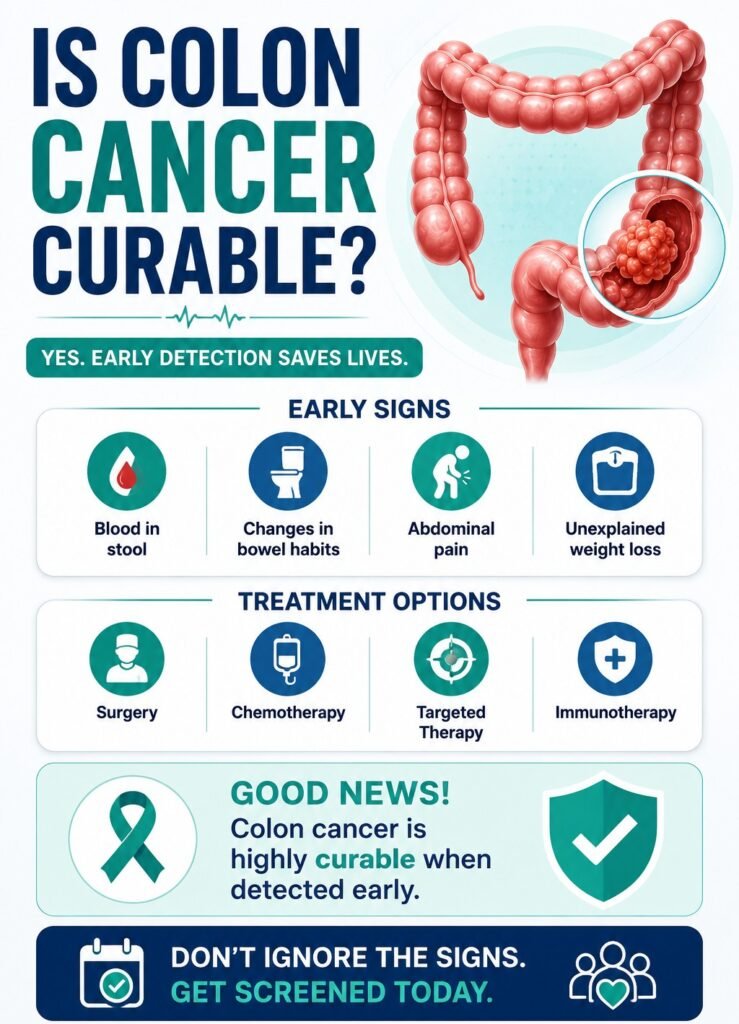
Let’s look at the treatment options :
For most early-stage colon cancers (Stages 0–III), surgery is the primary treatment. The goal of surgery is to remove the tumor along with a small section of surrounding healthy tissue and nearby lymph nodes.When the cancer is found early, surgery alone may be enough to achieve a cure.
Chemotherapy uses medicines to destroy cancer cells. It may be recommended after surgery for some Stage II cancers and most Stage III cancers to reduce the risk of recurrence. In Stage IV disease, chemotherapy may help shrink tumors, control symptoms, and extend survival.
Targeted therapy focuses on specific changes in cancer cells that help them grow. These medicines are mainly used for advanced or metastatic colon cancer and are often combined with chemotherapy to increase treatment effectiveness.
Immunotherapy helps the body’s immune system recognize and attack cancer cells. It is particularly useful for certain colon cancers with specific genetic features, such as MSI-H or dMMR tumors, and is most often used in advanced stages.
Radiation therapy uses high-energy rays to destroy cancer cells. Unlike rectal cancer, it is not commonly used for colon cancer, but it may be recommended in certain situations, such as when cancer has spread or to help relieve symptoms.
To sum it up, for many people with colon cancer, surgery remains the foundation of treatment for cancer patients. Along with additional therapies such as chemotherapy, targeted therapy, or immunotherapy may be added depending on the stage and characteristics of the cancer.
And if we discuss managing side effects, not everyone experiences the same side effects, and many can be prevented or managed with medications, supportive care, and close communication with your healthcare team. Let your doctor know about any new or worsening symptoms during treatment.
The Survival Rate For Colon Cancer
While survival rates can help you understand the outlook for colon or colorectal cancer, they are estimates based on large groups of people and cannot predict an individual’s outcome.
Survival depends on several factors, including the stage of the cancer at the time of diagnosis, the person’s overall health, for example, any underlying disease may change the course of action for treatment and how well the cancer responds to treatment. Thanks to advances in screening and treatments, many people are living longer after a colon cancer diagnosis.
| Stage of Colon Cancer | 5-Year Relative Survival Rate* |
|---|---|
| Localized (Cancer is confined to the colon) | 91% |
| Regional (Cancer has spread to nearby tissues or lymph nodes) | 74% |
| Distant (Cancer has spread to distant organs) | 13% |
Source: American Cancer Society (based on SEER data).
As we’ve discussed, the earlier colon cancer is diagnosed, the greater the odds of successful treatment and a cure. However, early colon cancer can develop without any symptoms at all, and this is why screening is important in the detection process. Screening is used to find out whether there are any precancerous polyps that need removal before they develop into cancer, or whether there is already cancer present.
Although regular screening is recommended for those coming under average risk, those with a family history of colorectal cancer, certain genetic conditions, or other risk factors may need to start earlier. Your doctor can recommend the most appropriate screening schedule based on your individual risk.
Coming on to individual risk factors, it is important to note some warning signs that should not be ignored.
Seek medical advice if you experience any of the following symptoms, especially if they persist:
Again, prompt diagnosis of colon cancer not only increases the chances of a full recovery but can also help prevent cancer by identifying and removing precancerous polyps before they become cancerous.
Completing colon cancer treatment is an important milestone. While recovery looks different for everyone, many people gradually return to their near normal daily routine and patients will likely have to go for regular follow-up visits.
After treatment, the focus shifts to regaining strength, monitoring for recurrence, and maintaining overall health. Lastly, regular follow-up care along with healthy lifestyle habits play an important role in maintaining long-term well-being and watching out for any signs of recurrence as soon as possible.
Follow-up appointments not only help your doctor monitor your recovery but also check for any signs that the cancer has returned. Depending on your individual treatment plan, these visits may include physical examinations, blood tests, imaging scans, and periodic colonoscopies.
Adopting healthy habits can support your recovery and overall well-being. Consider:
Life after colon cancer can bring a mix of emotions, from relief to anxiety about recurrence. Staying connected with your loved ones, joining a support group, or speaking with a mental health professional can help you navigate life after treatment with greater confidence.
Many people live long and fulfilling lives after colon cancer treatment. Again, regular follow-up care, healthy lifestyle choices, and emotional support can help you recover, maintain your well-being, and address any concerns promptly.
Colon cancer is often curable, especially when diagnosed early. Advances in screening, surgery, chemotherapy, targeted therapy, and immunotherapy have helped and improved outcomes across all stages of the disease. While every person’s journey is unique, early detection, timely treatment, and regular follow-up remain the key to achieving the best possible results. If you notice persistent symptoms or have risk factors for colon cancer, speak with your doctor about screening and the next steps.
Yes. Although many people are successfully treated for colon or colorectal cancer, there is still a possibility that the cancer may return (recur). The risk of recurrence depends on factors such as the stage of the cancer, the treatment received, and individual health. Regular follow-up appointments and screening tests help detect recurrence early on, when it may be easier to treat.
Stage IV colon cancer is more challenging to cure because it has spread to distant organs. However, in some cases, particularly when the spread is limited and all visible cancer can be removed with surgery, a cure may still be possible. For many people, treatment focuses on controlling the disease, improving quality of life, and extending survival.
Surgery is the primary treatment for most early-stage colon cancers and offers the best chance of a cure. However, if surgery isn’t possible or the cancer is advanced, treatments such as chemotherapy, targeted therapy, or immunotherapy may help control the disease. Your doctor will recommend the most appropriate treatment plan based on your diagnosis.
It is recommended that people at average risk begin regular colon cancer screening at age 45. Those with a family history of colorectal cancer, certain inherited conditions, or other risk factors may need to start screening earlier. Speak with your doctor about the screening schedule that’s right for you.
While no lifestyle change can guarantee that colon cancer won’t return, healthy habits may support recovery and overall well-being. Eating a balanced diet, staying physically active, maintaining a healthy weight, avoiding tobacco, limiting alcohol, and attending regular follow-up appointments are all important steps after treatment.
The length of treatment depends on the stage of the cancer and the therapies used. Surgery may require several weeks of recovery, while chemotherapy is often given over several months. Your doctor will explain the expected timeline based on your personalized treatment plan.
Being prepared can help you better understand your diagnosis and treatment options. Consider asking:
.webp)
Get expert guidance instantly
Tell us about your condition and we will help you find the right care.
Get expert guidance instantly
Share a few details and our medical team gets back to you within 4 hours with the next steps.

Tell us what you are facing and our medical team will guide you to the right doctors, hospitals and treatment.
Free Review, No Commitment
Free assessment with no pressure to proceed.
Trusted by 100,000+ Patients
Across 125+ countries worldwide
500+ Top Partner Hospitals
Globally accredited medical facilities
5000+ Expert Specialists
Senior doctors across major specialties.
Making quality healthcare accessible to patients worldwide
Everything you need to know about choosing the right hospital, doctor and treatment plan.