
Mouth Cancer
Symptoms of Oral Cancer
What is oral cancer?
Oral cancer which is also known as mouth cancer is a broad term to suggest cancer inside the mouth. It may include the tongue, roof and floor of the mouth, lips, cheeks, tonsils, sinuses and back of the throat. If it does not get diagnosed or treated early, it could be life-threatening.
The most common symptoms of oral cancer are sores, white patches and bleeding. It typically looks like any other mouth problem but the only difference between a normal mouth problem and oral cancer is that the cancerous issues do not go away. If a patient with oral cancer does not get treated at the right moment, cancer can spread to the whole mouth and other surrounding organs as well.
There are several methods to treat oral cancer which include surgery, radiation therapy, chemotherapy etc. Normally, surgery is the commonly used method to treat oral cancer as it involves the removal of the affected part of the mouth. But the treatment of oral cancer can be effective if the cancer is diagnosed at an early stage.
Some of the common symptoms of oral cancer can help anyone to detect any potential cancer. Continue reading to know more about the symptoms of oral cancer.
How common is oral cancer?
Oral cancer is a serious issue which affects people all over the world. In India, around 80,000 new cases of oral cancer and around 50,000 deaths due to oral cancer are reported annually. Both men and women are affected by oral cancer, but men are more prone.
What are the common side effects of oral cancer?
There are few common symptoms of oral cancer, but these symptoms can be misunderstood by other medical oral issues. The symptoms of oral cancer are listed below:
- Sore on the lips and inside of the mouth: Sore on the lips or inside of the mouth including the roof and the floor can cause some minor irritation. This can usually occur due to stress, nutritional changes, hormonal changes etc. But if this sore persists even after a week, then this could be a sign of mouth cancer.
- White patches in the mouth: Having white patches inside the mouth is the most common symptom of oral cancer. It is also an early sign of mouth cancer that helps to diagnose oral cancer at an early stage.
- Rough spots: Odd rough patches may occur inside the mouth as a sign of mouth cancer. It is usually white or greyish.
- Mouth pain: Mouth pain usually occurs due to the growth of a tumour that causes pain in the mouth and jaw. It is a common sign of mouth cancer.
- Ear pain: Normally, ear pain occurs when cancer starts at the back of the throat. Ear pain is a secondary symptom of oral cancer.
- Difficulty in swallowing: Due to a tumour in the mouth, apatient often has trouble chewing, swallowing, or moving the jaw as it is a symptom of oral cancer.
- Chronic bad breath: The main cause of bad breath in oral cancer is a high concentration of polyamines in the cancerous cells. It normally occurs when the cancer is in an advanced stage.
- Weight loss: Unintentional weight loss is a common sign of any type of cancer. Almost all types of cancer lead to weight loss although there is no change in diet.
- Numbness: Numbness or pain that occurs in the mouth or in the area of the neck that persists without any known cause, might be a potential mouth cancer symptom.
- Growth of lump: Growth of a lump in the oral cavity or the neck with enlarged lymph nodes is a symptom of oral cancer. These symptoms of oral cancer may vary from patient to patient and according to the severity of mouth cancer.
Doctors For Mouth Cancer
Select city:



Surgical Oncology, Thoracic, Robotic, Head & Neck, and Breast Cancer
38+ years of experience


Show More
Early self-diagnose
If detected early, it decreases the chance of oral cancer being life-threatening. Anyone can detect some of the minor changes in the mouth that have the potential to become cancer. A person can do a self-examination of the mouth, throat and neck for any signs of mouth cancer. To self-examine follow the given points:
- Feel the areas of the mouth such as the lips, gums, tongue, cheeks, roof and floor of the mouth.
- Use a bright light and mirror to examine the mouth.
- Open your mouth wide to look at the back of the mouth.
- Feel the neck region and are under your jaws to observe any enlarged lymph nodes.
- Place your tongue back and look for any changes in the floor of the mouth.
If you notice any sore, white patches or any unwanted complications, consult your doctor.
Diagnosis of oral cancer
If the doctor doubts that the changes in the mouth could be cancer, they will ask the patient to go under a diagnostic test.
These diagnostic tests help the doctor to identify the position of cancer or severity of cancer. Any diagnosis is a must to plan an accurate treatment plan. Some of the common types of diagnostic tests are:
- Physical examination – The doctor may look inside the mouth and might feel the mouth to check for potential signs of mouth cancer.
- Biopsy – The doctor may use a brush or needle to collect a sample of the tumour based on the area that has been affected. This sample will be sent to the laboratory to examine the tissue sample and check whether they are cancerous cells or not. This is the most reliable method to diagnose any type of cancer.
- Laryngoscopy or Pharyngoscopy – The doctor uses a small mirror to look around the back of the throat and the larynx. This procedure might require an endoscope (a thin tube with a light and lens) to look inside the throat which cannot be seen easily with a mirror.
Depending on the area that has been affected by mouth cancer, diagnostic tests may vary.
Stages of oral cancer
Diagnostic tests give necessary information about the cancer. The doctor then stages the cancer according to the size of tumour and how much the cancer has spread.
To identify the growth cancer, staging is important. The oral cancer has been staged in the following manner:
- Stage 0 – The cancer cells are present in the lining of the lips and mouth. These cells have the potential to be cancerous.
- Stage 1 – The cancer cells have started to grow but the size of the tumour is less than 2 centimetres.
- Stage 2 – The tumour has increased in size and is in the range of 2 to 4 centimetres.
- Stage 3 – The tumour has increased and spread to the nearby lymph nodes.
- Stage 4 – This is the advanced stage of oral cancer in which the cancer has spread to nearby tissues, lymph nodes and even distant organs such as lungs and bones.
When to see a doctor?
If you observe any changes in the mouth including white patches and sores that persist for more than a week, then immediately contact a doctor. Your doctor may ask you to take diagnostic tests for the same as mentioned above, to be certain of your condition.
5 easy Steps to Get Treated in India

Share Case Details

Get Expert Opinion and Hospital Quotes

Get Visa Invitation & Hotel Recommendations

Get Received At Airport and Start Your Treatment

Travel Back and Get Followups Through Us
 Chat on WhatsApp
Conclusion
If diagnosed early, the overall 5-year survival rate of a patient ranges around 85% to 90%. It implies that early diagnosis of mouth cancer can offer a 90 percent chance of survival for more than 5 years after diagnosis. Even if cancer has spread to nearby organs and lymph nodes, there is still a 65% chance of 5-year survival for that patient. Nowadays, as science has developed many techniques to treat cancer, the treatment of oral cancer is very much possible. Some of the ways to treat cancer are chemotherapy, radiation therapy or removal of cancer cells by surgery.
If you notice any of the symptoms mentioned above that persist, then consult a doctor. Con
You May Be Also Interested In
Best Mouth Cancer Treatment Doctors in Mumbai, IndiaBest Mouth Cancer Treatment Doctors in Chennai, IndiaBest Mouth Cancer Treatment Doctors in Hyderabad, IndiaBest Mouth Cancer Treatment Doctors in Noida, IndiaBest Mouth Cancer Treatment Doctors in Gurgaon, IndiaBest Oncologist in IndiaTop Mouth Cancer Doctors in IndiaStage 4 Cancer Treatment Cost in IndiaHead and Neck Cancer Treatment CostCancer Treatment Cost in IndiaMouth or Oral Cancer Treatment Cost In IndiaHead and Neck Cancer Treatment in IndiaMouth Cancer Treatment in IndiaThyroid Cancer Treatment in India: Cost, Options & Complete GuideThroat Cancer Treatment in India
All Symptoms Pages
Related Patient Stories

My wife had oral cancer. With Cancer Rounds’ help, we came to BLK Hospital. Thanks to Dr. Kapil Kumar, she's feeling better now.
Explore More Insights
View All →
May 22, 2025
Head and Neck Cancer
What is Head and Neck Cancer? Head and neck cancer refer to a group of cancers that develop in areas…
May 12, 2025
Mouth Cancer
What is Mouth Cancer? Understanding Mouth Cancer: A Medical Perspective Mouth cancer develops when abnormal cells in the oral cavity grow…
November 19, 2025
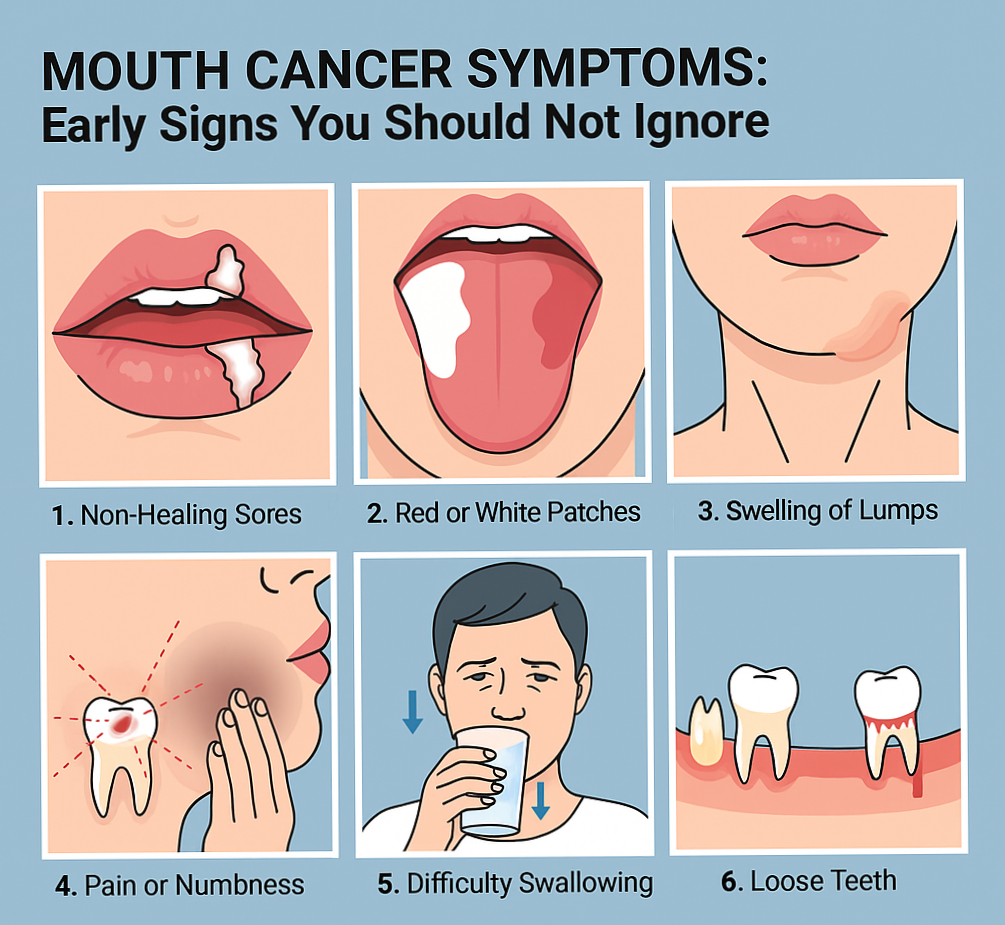
Mouth Cancer Symptoms in Hindi | मुँह के कैंसर के लक्षण
आज के समय में मुँह का कैंसर (Oral Cancer) तेजी से बढ़ती स्वास्थ्य समस्या बन चुका है। जो ज़्यादातर मध्यम…
November 5, 2025
Is Bleeding from Mouth a Sign of Cancer? Understanding Oral Bleeding
Waking up to a faint trace of blood in your mouth can be unsettling. It’s a moment that often triggers…

February 22, 2022
Untreated Mouth Cancer : Can I survive with it?
Mouth cancer interchangeably used with oral cancer is the most common cancer of the neck. The course of the disease…
Get expert guidance instantly
Talk to a Specialist
Share a few details and our medical team gets back to you within 4 hours with the next steps.

✨ YOUR MEDICAL TRAVEL PARTNER
Find the Right Care for Your Condition
Tell us what you are facing and our medical team will guide you to the right doctors, hospitals and treatment.
✅
Free Review, No Commitment
Free assessment with no pressure to proceed.
👥
Trusted by 100,000+ Patients
Across 125+ countries worldwide
🏥
500+ Top Partner Hospitals
Globally accredited medical facilities
👨⚕️
5000+ Expert Specialists
Senior doctors across major specialties.
Our Impact So Far
Making quality healthcare accessible to patients worldwide
5000+
Specialists
500+
Partner Hospitals
100,000+
Patients Served
24/7
Support
Recommended for You
Joint Replacement Treatment Cost in India
Hip Arthroscopy Treatment Cost in India
Arthroscopic Surgery Treatment Cost in India
Best Adrenalectomy Doctors in India
Best Obstetricians and Gynecologists in India
Best Nephrologists in India
Best Spine Surgeons in India
Best Urologists in India
Best Hematologists in India
Best Cardiologists in India
Best Gastroenterologists in India
Best Kidney Hospitals in India
Best Spine Hospitals in India
Best ENT Hospitals in India
Best Eye Hospitals in India
Best Orthopedic Hospitals in India
Best General Surgery Hospitals in India
Best Pulmonology Hospitals in India
Best Endocrinology & Diabetes Hospital in India
Best Urology Hospitals in India
Best Rheumatology Hospitals in India
Best Hospitals for Dermatology in India
Best Hematology Hospitals in India
Best Gastroenterology Hospitals in India
Best Liver Hospitals in India
Best Maternity Hospitals in India
Best Vascular Surgery Hospitals in India
Best Children’s Hospitals in India
Best Heart Hospitals in India
Cervical Cancer Vaccine Cost in India
Mammography Test Cost in India
Best Oncologists at Max Hospital, Patparganj, Delhi
Best Oncologists at Indraprastha Apollo Hospital, New Delhi
Best Oncologists at Apollo Cancer Hospital, Chennai
Best Oncologists at Jaslok Hospital Mumbai
Best Oncologists at Rajiv Gandhi Cancer Hospital, Delhi
Best Oncologists in Sir Ganga Ram Hospital, New Delhi
Best Cancer Hospitals in India
Genetic Testing Cost For Cancer in India
Full Body Cancer Screening Cost in India
Best Oncologist in India
Best Cancer Hospitals in Gurgaon
Best Neurosurgeons in India
Top Dendritic Cell Therapy Hospitals in India for Cancer Treatment
Top Cancer Specialists in Medanta Hospital Gurgaon
Best Cancer Doctors in Max Hospital, Saket
Best Oncologists in BLK Max Super Speciality Hospital, Delhi
Top Cancer Specialists in Artemis Hospital, Gurgaon
Best Cancer Doctors in Apollo Proton Cancer Centre, Chennai
Best Cancer Specialists in Kokilaben Hospital, Mumbai
Best Cancer Specialists in Fortis Hospital, Gurgaon
Top Oncologists at Apollo Hospital, Chennai
Best Cancer Hospitals in India
Pituitary Gland Tumour Treatment Cost: Affordable Options & Insights
HCV Test Price in India
Surgery for Cancer
Common Questions About Our Services
Everything you need to know about choosing the right hospital, doctor and treatment plan.