
Germany follows internationally recognized, evidence-based guidelines, including the German S3 Guideline for Gastric Cancer and Onkopedia, to deliver personalized stomach cancer care through multidisciplinary teams. Treatment packages for international patients generally start from around €18,000, with costs varying based on the stage of cancer and the recommended treatment plan. Patients have access to advanced surgical techniques, biomarker-guided therapies, and coordinated follow-up care in line with current clinical guidelines.
Reply in 4 hours · Plan and quote in 2 days · 100% confidential
A stomach cancer (gastric cancer) diagnosis can be overwhelming, but advances in diagnosis, surgery, and systemic therapies have improved treatment after-effects for many patients, particularly when the disease is detected at an early stage. Germany is recognized for its structured approach to stomach cancer care, combining standardized clinical pathways, multidisciplinary expertise, and access to advanced treatment technologies.
National organizations such as the German Cancer Society (Deutsche Krebsgesellschaft), together with the German S3 Guideline for Gastric Cancer, support standardized recommendations for the diagnosis, rehab, and follow-up of stomach cancer.
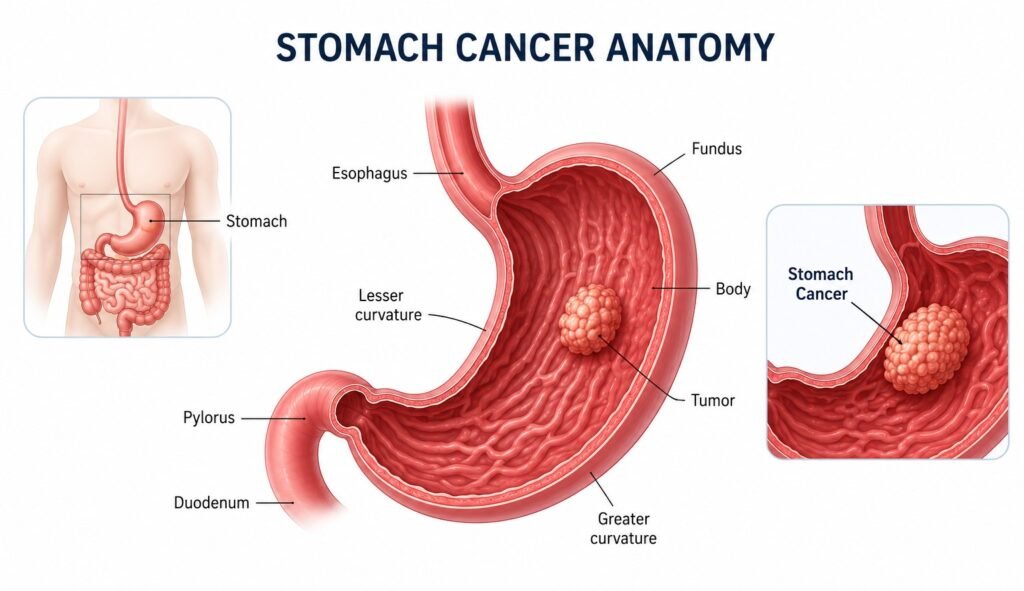
Patients in Germany have access to custom treatment plans developed by cancer specialists which combine surgery, chemotherapy, targeted therapy, immunotherapy, and supportive care all based on the stage of the disease and individual clinical needs.
This guide explains stomach cancer diagnosis, treatment options, advanced technologies, costs, recovery, survival rates, and what international patients can expect when receiving treatment in Germany.
Receiving a stomach cancer diagnosis can feel overwhelming, bringing physical, emotional, and practical challenges for both patients and their families. If you’re considering treatment abroad, Germany is one destination worth exploring because of its organized healthcare system and overall approach to cancer care. Guided by nationally recognized clinical recommendations, those seeking treatment have access to personalized rehabilitation plans, harmonised care, and support throughout their recovery journey.
According to the Centre for Cancer Registry Data at the Robert Koch Institute, around 15,000–16,000 people are diagnosed with stomach cancer in Germany each year, making it an important focus of the country’s gastrointestinal cancer care programs.
Stomach cancer, also known as gastric cancer, occurs when abnormal cells in the lining of the stomach grow uncontrollably and form a tumor. According to the World Health Organization (WHO), it is the fifth most common cancer and the fifth leading cause of cancer-related deaths worldwide, underscoring the importance of early diagnosis and appropriate treatment.
Most stomach cancers begin in the innermost layer of the stomach and may gradually spread into deeper tissues, nearby lymph nodes, or other parts of the body if left untreated. Early detection is important because it can improve treatment options and results.
Several types of stomach cancer exist, but the 4 most common include:
Stomach cancer is generally classified into stages based on the size of the tumor and how far it has spread:
The stage of stomach cancer is crucial in choosing the best course of treatment and aids medical professionals in projecting treatment outcomes. For example, Stage IV stomach cancer often requires a different treatment strategy focused on controlling the disease, managing symptoms, and improving quality of life. Learn more about Stage IV stomach cancer, its treatment options, and prognosis.
An accurate diagnosis is the first step in developing an essential treatment regimen. In Germany, stomach cancer is diagnosed through a combination of clinical evaluation, endoscopic procedures, imaging tests, and laboratory analysis.
The diagnostic process follows evidence-based guidelines, helping specialists determine the type, stage, and extent of the cancer before recommending the most appropriate treatment.
The evaluation begins with a detailed review of your symptoms, medical history, family history of cancer, and overall health. Your doctor will also perform a physical examination to identify any signs that may require further investigation.
An upper gastrointestinal endoscopy, also called a gastroscopy, is the primary test used to examine the inside of the stomach. A thin, flexible tube with a camera is passed through the mouth to inspect the stomach lining for abnormal areas or tumors.
If suspicious tissue is found during the endoscopy, small samples are collected and examined under a microscope. A biopsy is the only way to confirm a diagnosis of stomach cancer and identify the specific type of cancer cells.
Blood tests help evaluate your overall health and organ function before treatment. They may include:
Once stomach cancer is confirmed, imaging tests are performed to determine whether the cancer has spread beyond the stomach. These may include:
An endoscopic ultrasound combines endoscopy with ultrasound imaging to determine how deeply the tumor has grown into the stomach wall and whether nearby lymph nodes are involved. This information is important for staging the cancer.
For some patients with locally advanced stomach cancer, a minimally invasive procedure called diagnostic laparoscopy may be recommended. It helps detect small areas of cancer spread within the abdomen that may not be visible on imaging scans.
Tumor tissue may be tested for biomarkers such as HER2, MSI/MMR, and PD-L1. These results help determine whether targeted therapies or immunotherapy are appropriate treatment options.
Note: Not every patient requires every diagnostic test. The investigations recommended depend on the suspected stage of the cancer and the individual’s clinical condition.
Finally, specialists review all diagnostic findings to determine the stage of the cancer using the TNM staging system. Here, treatment recommendations are typically discussed by a to develop a tailored care plan based on the cancer stage, tumor characteristics, and the patient’s overall health.
Stomach cancer treatment in Germany is tailored to each patient’s diagnosis, taking into account the stage of the cancer, tumor location, overall health, and individual treatment goals. Following a complete evaluation, specialists develop guideline-directed treatment.
| Stage | Typical treatment |
| Early | EMR/ESD or Surgery |
| Localized | Surgery + Chemotherapy |
| Locally Advanced | Peri-operative Chemotherapy + Surgery |
| Metastatic | Chemotherapy + Targeted Therapy/Immunotherapy + Supportive Care |
Depending on the patient’s condition, treatment may involve one or a combination of the following approaches with surgery and chemotherapy being the most frequently used:
Surgery is the primary treatment for early-stage and many locally advanced stomach cancers. The goal is to remove the tumor along with a margin of healthy tissue and nearby lymph nodes to reduce the risk of recurrence.
Depending on the size and location of the tumor, surgeons may perform:
Whenever appropriate, minimally invasive laparoscopic or robotic-assisted techniques may be used to support recovery. These techniques are discussed in detail below.
Chemotherapy uses anti-cancer drugs to destroy cancer cells or slow their growth. It may be given:
Radiation therapy uses high-energy beams to target and destroy cancer cells. Although it is used less frequently than surgery or chemotherapy for stomach cancer, it may be recommended:
Targeted therapy focuses on specific proteins or genetic changes that help cancer cells grow. Before treatment, tumor tissue is tested for biomarkers such as HER2 to determine whether targeted medicines are appropriate. These therapies are most commonly used for advanced or metastatic stomach cancer.
Immunotherapy helps the body’s immune system recognize and attack cancer cells. It may be recommended for patients whose tumors have specific biomarkers, such as PD-L1 expression or MSI-H/dMMR status, particularly in advanced or recurrent stomach cancer. Immunotherapy may be used alone or in combination with chemotherapy, depending on the clinical situation.
Palliative care focuses on improving quality of life by relieving symptoms and managing the physical and emotional effects of stomach cancer. It can be provided alongside active cancer treatment at any stage of the disease and may include pain management, nutritional support, symptom control, and psychological support for patients and their families.
A combination of these treatment approaches is often the most effective strategy. The healthcare team develops a care plan tailored according to the patient’s needs.
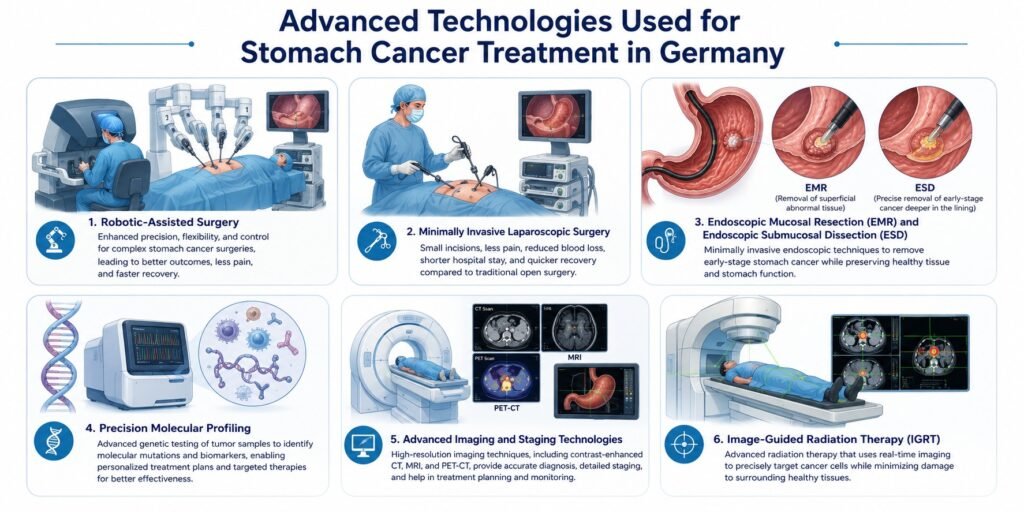
Germany integrates advanced medical technologies into the diagnosis and treatment of stomach cancer to improve precision, support minimally invasive procedures, and personalize treatment. It is important to note that technologies used vary depending on the stage of the disease and are recommended only when clinically appropriate.
Robotic-assisted surgical systems provide surgeons with enhanced precision, flexibility, and control during complex procedures.
For selected patients, this approach may help minimize blood loss, reduce postoperative pain, shorten hospital stays, and support a faster recovery compared with traditional open surgery.
Laparoscopic surgery uses small incisions and specialized instruments to remove stomach tumors.
When appropriate, this technique may result in less pain, lower risk of complications, and quicker recovery while maintaining effective cancer treatment outcomes.
For carefully selected patients with very early-stage stomach cancer, advanced endoscopic techniques such as EMR and ESD can remove superficial tumors without the need for major surgery.
These procedures help preserve the stomach whenever clinically appropriate.
German cancer centers routinely perform molecular and biomarker testing to identify characteristics such as HER2, MSI/MMR, and PD-L1 status.
These results help determine whether targeted therapies or immunotherapy are suitable, supporting a more personalized treatment approach.
High-resolution imaging techniques, including contrast-enhanced CT, MRI, PET-CT, and endoscopic ultrasound (EUS), are used to accurately determine the extent of the cancer. Precise staging enables specialists to recommend the most appropriate treatment strategy while avoiding unnecessary procedures.
When radiation therapy is indicated, image-guided radiation therapy (IGRT) helps deliver radiation with greater accuracy by using imaging before or during each treatment session.
This allows radiation to be focused on the tumor while reducing exposure to nearby healthy tissues.
All in all, these technologies support accurate diagnosis, precise delivery of the treatment, and personalized care, helping specialists choose the most appropriate treatment approach for each patient.
Germany is a popular destination for patients seeking stomach cancer treatment abroad. While countries such as the United Kingdom and the United States also provide high-quality stomach cancer treatment, Germany offers several practical advantages that may appeal to patients travelling from abroad.
Stomach cancer care in Germany follows nationally recognized clinical recommendations, including the German S3 Guideline for Gastric Cancer and Onkopedia guidelines. These empirically-based protocols help ensure that diagnosis, treatment, and follow-up are consistent with current medical research and best practices.
Compared with the United States, the cost of stomach cancer treatment in Germany is often lower while maintaining high standards of medical care. Patients seeking specialized care abroad paying out of pocket, treatment costs are generally more predictable because hospitals commonly provide treatment estimates before admission.
For patients from the United Kingdom, Germany may also be an option when seeking treatment outside the NHS, particularly if they are looking for additional specialist opinions or wish to access care through private healthcare arrangements. However, NHS services continue to provide comprehensive stomach cancer treatment for eligible UK residents. Detailed cost comparison discussed below.
Collaborative approach enables treatment decisions to be tailored to each patient’s diagnosis, cancer stage, and overall health.
Patients are typically treated by a coordinated care team that includes gastroenterologists, surgical oncologists, medical oncologists, radiation oncologists, radiologists, pathologists, and nutrition specialists.
Hospitals routinely perform biomarker testing, including HER2, PD-L1, and MSI/MMR testing, when clinically appropriate. These results help determine whether targeted therapies or immunotherapy are suitable, allowing treatment plans to be personalized based on the biology of the tumor.
Many hospitals in Germany offer minimally invasive laparoscopic procedures and robotic-assisted surgery for eligible patients.
These techniques may reduce postoperative pain, shorten hospital stays, and support faster recovery while maintaining the principles of effective cancer surgery.
Recovery is an important part of stomach cancer treatment. Considerable emphasis is given on rehabilitation, nutritional support, follow-up care, and monitoring after treatment to help patients regain strength and manage life after surgery or systemic therapy.
A stomach cancer diagnosis does not determine what the outcome will be for every patient, as every case comes with its own challenges, complications and degree.
Note : Survival rates are based on large groups of people and serve as estimates rather than predictions for an individual.
A patient’s outlook depends on several factors such as :
According to the Centre for Cancer Registry Data (ZfKD) at the Robert Koch Institute, survival for stomach cancer in Germany has improved over the years, largely due to earlier diagnosis, advances in surgery, systemic therapies, and Interdisciplinary cancer care.
The figures below represent five-year relative survival and should be interpreted as population estimates rather than predictions for an individual patient.
| Survival Measure | Estimated Survival |
| 5-year relative survival (Men) | 39% |
| 5-year relative survival (Women) | 42% |
| Overall 5-year relative survival | Around 40% |
Source: Centre for Cancer Registry Data (ZfKD), Robert Koch Institute.
The stage at which stomach cancer is diagnosed has the greatest impact on survival.
| Stage | General Outlook |
| Stage 0 | Excellent prognosis with appropriate treatment; cure is often possible. |
| Stage I | High survival rates, especially when treated with surgery and appropriate additional therapy. |
| Stage II | Good chance of long-term survival with a combination of surgery and systemic treatment. |
| Stage III | Survival decreases as the cancer spreads further, but multimodal treatment can improve consequences. |
| Stage IV | Treatment focuses on prolonging survival, controlling symptoms, and maintaining quality of life. |
Different types of stomach cancer may have different outcomes depending on their biological behavior and how early they are identified.
| Type of Stomach Cancer | General Prognosis |
| Adenocarcinoma | Prognosis depends largely on the stage at diagnosis; early-stage disease has the best outcomes. |
| Gastrointestinal Stromal Tumor (GIST) | Often associated with favorable results when diagnosed early and treated with surgery and targeted therapy, when indicated. |
| Neuroendocrine Tumors (NETs) | Prognosis varies depending on the tumor grade, size, and extent of spread. |
| Primary Gastric Lymphoma | Many patients respond well to chemotherapy, immunotherapy, or treatment of underlying H. pylori infection, depending on the subtype. |
Early-stage stomach cancer is more likely to be managed and treated successfully because the tumor is often confined to the stomach and can be completely removed with surgery or treated using endoscopic techniques in selected cases.
As the cancer advances to later stages, treatment becomes more complex and may require a combination of surgery, chemotherapy, targeted therapy, immunotherapy, or palliative care.
Although survival statistics provide valuable information, every patient’s journey is unique. Evolution continues to improve results for many people being diagnosed with stomach cancer in personalized treatment, biomarker-guided therapies, and coordinated multifaceted care.
The cost of stomach cancer treatment in Germany varies depending on the stage of the disease, the type of treatment recommended, the hospital, and the patient’s whole medical condition. Germany is often considered a cost-effective option for patients traveling internationally for treatment , offering cancer care at a lower cost than many countries, particularly the United States.
Note : The costs below are approximate estimates based on published information from German hospitals, medical tourism providers, and healthcare resources. Actual treatment costs vary depending on the hospital, room category (standard/private),stage of the cancer, and individual’s treatment plan.
| Treatment | Estimated Cost (EUR) |
| Initial consultation & diagnostic evaluation | €500–€2,000 |
| Endoscopy with biopsy | €800–€2,000 |
| Gastrectomy (Partial or Total) | €15,000–€30,000 |
| Laparoscopic or Robotic Gastrectomy | €20,000–€35,000 |
| Chemotherapy (per cycle) | €1,500–€5,000 |
| Targeted Therapy / Immunotherapy | Varies depending on the medicine prescribed |
| Follow-up consultations & imaging | €300–€1,500 |
Estimated treatment packages for overseas patients generally start from approximately €18,000, with costs increasing if multiple treatment modalities such as surgery, chemotherapy, targeted therapy, or immunotherapy are required.
Multiple factors can affect the overall cost of stomach cancer treatment, including:
The whole cost of stomach cancer treatment differs across countries due to variations in healthcare systems, hospital charges, insurance coverage, and treatment pathways.
| Country | Approximate Cost | Key Considerations |
| Germany | From €18,000–€40,000+ | Transparent treatment estimates, current medical evidence care, and comprehensive support for international patients. |
| United Kingdom | £20,000–£45,000+ (private care) | NHS treatment is available to eligible UK residents, while private treatment costs vary by hospital and treatment complexity. |
| United States | US$50,000–US$150,000+ | Costs vary widely depending on the hospital, insurance coverage, treatment type, and length of care. Out-of-pocket expenses can be substantial without adequate insurance. |
While costs are an important consideration, they are only one part of the decision-making process. Patients exploring stomach cancer treatment in Germany often compare not only the cost but also points such as treatment timelines, comprehensive care, rehabilitation services, and the overall treatment experience with countries such as the United Kingdom and the United States.Understanding the expected costs along with additional expenses such as travel, accommodation, and follow-up care can help patients and their families prepare financially and make informed decisions before travelling to Germany.
There is a well-established network of certified cancer centers in Germany that provide specialized care for patients with stomach cancer. Treatment requirements vary according to the stage of stomach cancer. While localized disease is often managed with surgery, Stage 4 stomach cancer typically requires a combination of systemic therapies and supportive care delivered through an integrated team.
Many university hospitals are accredited by the German Cancer Society (Deutsche Krebsgesellschaft), reflecting their commitment to standardized treatment recommendations, multidisciplinary care, and continuous quality improvement.
Cities such as Heidelberg, Berlin, Munich, Freiburg, and Hamburg are home to hospitals with dedicated gastrointestinal oncology services for both German and foreign patients.
| Hospital | City | Stomach Cancer Care Services |
| University Hospital Heidelberg | Heidelberg | Gastroscopy and advanced diagnostics, minimally invasive and open gastric cancer surgery, chemotherapy, targeted therapy, immunotherapy, nutritional support, and follow-up care. |
| Charité – Universitätsmedizin Berlin | Berlin | Comprehensive stomach cancer diagnosis, integrated treatment planning, gastrectomy procedures, systemic therapies, clinical trials, rehabilitation, and survivorship care. |
| University Hospital Rechts der Isar (TUM University Hospital) | Munich | Surgical oncology, laparoscopic and robotic-assisted procedures, chemotherapy, biomarker testing, personalized treatment planning, and post-treatment monitoring. |
| University Hospital Freiburg | Freiburg | Endoscopic diagnosis, gastric cancer surgery, medical oncology services, targeted treatments, supportive care, and long-term follow-up programs. |
| University Hospital Hamburg-Eppendorf (UKE) | Hamburg | Versatile gastrointestinal cancer care, advanced imaging, surgery, chemotherapy, immunotherapy, palliative care, and rehabilitation services. |
While the exact process may vary by hospital, the treatment journey generally includes the following steps:
The first step is to submit your medical documents for review. These typically include:
Specialists review these records to understand your condition and determine whether additional tests or treatment in Germany may be beneficial.
Based on your reports, the treating team prepares a treatment plan outlining:
Patients usually have the opportunity to discuss the proposed treatment plan before moving ahead making a decision.
Once the treatment plan is confirmed, patients can begin preparing for their visit to Germany.
This typically includes:
Patients are advised to check the latest visa requirements with the German Embassy or Consulate in their country before travelling.
After arriving, patients attend their first hospital appointment, where specialists review previous reports and may perform additional tests (if needed) to confirm the diagnosis or update the treatment plan before therapy begins.
Treatment starts according to the personalized care plan and may include surgery, chemotherapy, radiation therapy, targeted therapy, immunotherapy, or a combination of these approaches. Throughout treatment, patients are monitored closely by gastrointestinal oncology specialists to manage their progress and address any side effects.
Following treatment, patients receive guidance on recovery, nutrition, physical activity, medication, and follow-up care. Depending on the treatment received, rehabilitation services may be recommended to support recovery and improve quality of life.
Before returning home, patients receive:
Many hospitals also offer remote follow-up consultations, allowing patients to remain in contact with their treating team after returning to their home country.
Recovery after stomach cancer treatment varies from person to person and depends on factors such as the type of treatment received, the extent of surgery, and the patient’s overall health. While some individuals recover within a few weeks, others may require several months of rehabilitation and ongoing medical support.
After stomach cancer surgery, many patients stay in the hospital for approximately one to two weeks, although the exact duration depends on the type of surgery performed, the patient’s overall health, and how quickly they recover. The healthcare team closely monitors healing, manages pain, and gradually reintroduces food and physical activity during this time.
Following stomach cancer surgery, patients often need to make dietary adjustments while the digestive system heals. A clinical dietitian may recommend:
Many patients benefit from rehab programs designed to improve strength, mobility, and well-being. Depending on individual needs, rehabilitation may include:
Regular follow-up appointments are important for monitoring and identifying any recurrence or treatment-related complications at an early stage. Follow-up care may include:
The frequency of follow-up visits varies according to the stage of the cancer, the treatment received, and the patient’s whole condition.
Recovering from stomach cancer involves more than physical healing. Many patients experience emotional challenges such as anxiety, stress, or concerns about recurrence. Counselling services, patient support groups, and mental health professionals can help patients and their families cope with the emotional aspects of recovery.
Most patients continue with regular follow-up for several years after treatment. Maintaining a healthy lifestyle, attending scheduled appointments, and reporting any new or persistent symptoms promptly can support and enhance long-term recovery along with overall quality of life. Your healthcare team will provide recommendations based on your treatment and recovery progress.
Published By
.webp)
Global Patient Care, Redefined
The CancerRounds Medical Content Team specialises in creating accurate, clear and patient-focused healthcare content. Our content is written by medically trained writers, medically reviewed, and based on reputable medical sources to support informed healthcare decisions.


Get expert guidance instantly
Share a few details and our medical team gets back to you within 4 hours with the next steps.
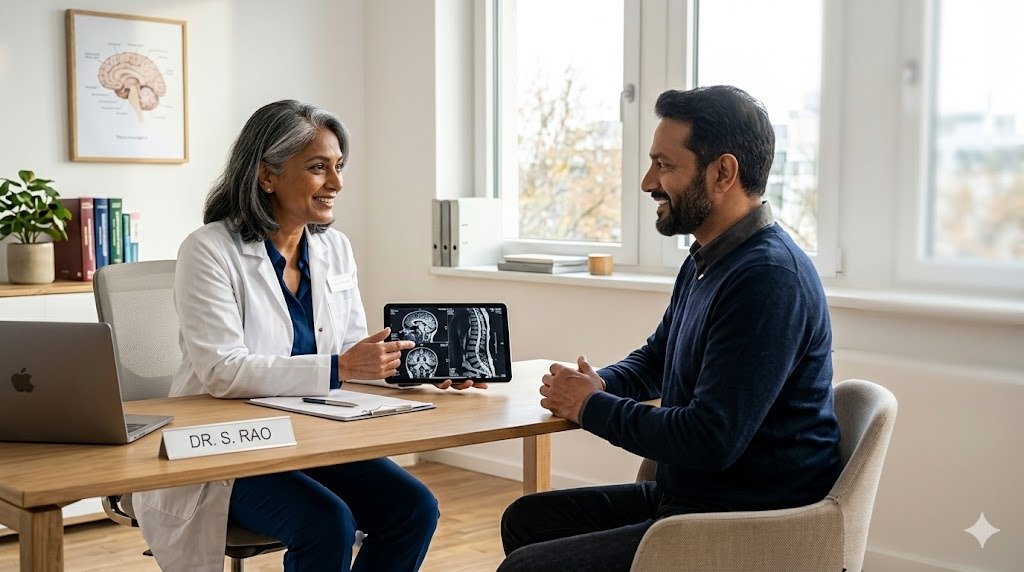
Tell us what you are facing and our medical team will guide you to the right doctors, hospitals and treatment.
Free Review, No Commitment
Free assessment with no pressure to proceed.
Trusted by 100,000+ Patients
Across 125+ countries worldwide
500+ Top Partner Hospitals
Globally accredited medical facilities
5000+ Expert Specialists
Senior doctors across major specialties.
Making quality healthcare accessible to patients worldwide
Everything you need to know about choosing the right hospital, doctor and treatment plan.