
Germany performs approximately 268,000 spine surgeries annually, making it a leading destination for spinal care in Europe. Advanced techniques such as robotic-assisted surgery, minimally invasive procedures, and artificial disc replacement are available, with treatment costs typically ranging from €8,000 to €60,000+, depending on the procedure.
Reply in 4 hours · Plan and quote in 2 days · 100% confidential
Germany performs approximately 268,000 spine surgery procedures annually, making it one of Europe’s leading destinations for treating spinal conditions. Patients benefit from advanced techniques such as robotic-assisted surgery, minimally invasive procedures, and artificial disc replacement, delivered in specialized spine centers following German clinical guidelines. The estimated cost of spine surgery in Germany ranges from €8,000 to €60,000+, depending on the procedure and treatment complexity.
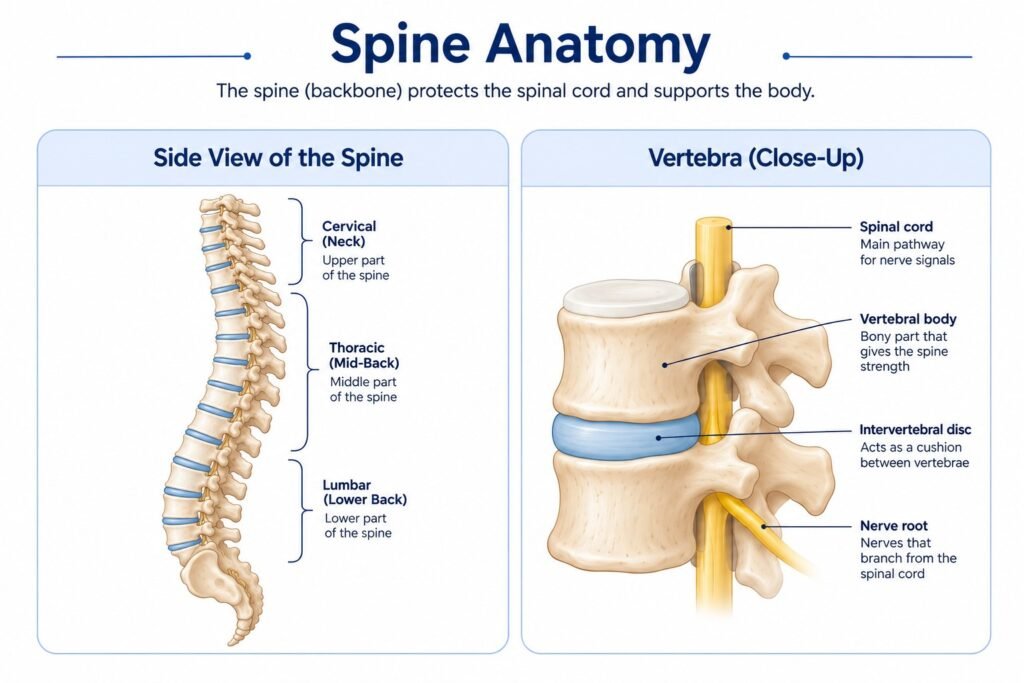
Germany is recognized for its advanced healthcare system and expertise in treating a wide range of spinal conditions, from herniated discs and spinal stenosis to scoliosis and complex spinal deformities. Approximately 268,000 spine surgery procedures are performed in Germany each year, Of these, around 150,000 procedures were performed to treat intervertebral disc conditions, highlighting the high prevalence of herniated discs and other degenerative spinal disorders requiring surgical intervention. The high procedural volume also enables many German spine centers to develop extensive experience in managing both common and highly complex spinal disorders.
Moreover, both men and women undergo spine surgery in Germany. Degenerative spinal disorders and osteoporotic vertebral fractures are more frequently seen in older women, particularly after the age of 50, while lumbar disc herniation tends to occur more often in younger and middle-aged men. Women undergo these procedures more frequently than men, consistently accounting for about 56% to 59% of all spinal surgery cases.
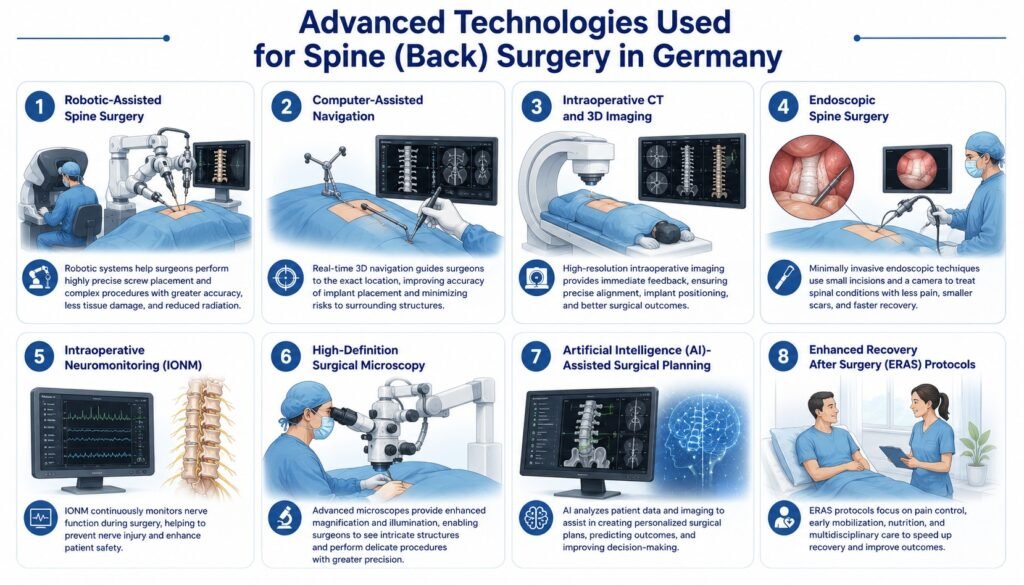
As spine surgery (also commonly known as back surgery) continues to evolve, German hospitals are increasingly adopting technologies such as robotic-assisted navigation, 3D image-guided systems, and artificial intelligence (AI) to enhance surgical planning, improve procedural accuracy, and support personalized patient care. These innovations complement the country’s specialized spine centers and evidence-based treatment approach.
Having access to modern technological surgery equipment, best practices, and end-to-end patient services for native patients as well as those seeking surgery from other nations, Germany has become an ideal location for people who are considering spine surgery.
Spine surgery in Germany is performed by orthopedic spine surgeons and neurosurgeons with specialized training in managing degenerative, traumatic, deformity-related, and spinal tumor conditions.
The German spine care system places a strong emphasis on subspecialization and collaborative decision-making.
Hospitals have dedicated spine centers that provide comprehensive care under one roof.
These centers bring together specialists from multiple disciplines, including orthopedic surgery, neurosurgery, diagnostic imaging, pain management, anesthesiology, and rehabilitation medicine. Major medical hubs for spine surgery include Berlin, Munich, Hamburg, Frankfurt, Cologne, Dresden, Hanover, and Erlangen, where several university hospitals and specialized spine centers are located.
This collaborative approach helps ensure accurate diagnosis, coordinated treatment planning, and continuity of care before, during, and after surgery.
Spine centers are equipped with advanced technologies that help improve surgical precision and patient outcomes.
These may include robotic-assisted spine surgery, computer-assisted navigation systems, intraoperative CT and 3D imaging, surgical microscopes, intraoperative neuromonitoring, and endoscopic techniques.
How it helps: These technologies support greater accuracy during surgery while enabling many procedures to be performed through minimally invasive approaches, which may reduce tissue damage, postoperative pain, and recovery time.
Many German hospitals offer dedicated services to support patients coming for spine surgery throughout their treatment journey.
Post-surgery consultations can often be arranged remotely after patients return to their home country.
In Germany, many hospitals follow a multidisciplinary approach in which orthopedic spine surgeons, neurosurgeons, radiologists, pain specialists, anesthesiologists, physiotherapists, and rehabilitation experts work together to develop individualized treatment plans. Whenever appropriate, conservative treatments such as medication, physical therapy, or spinal injections may be recommended before considering surgery.
Clinical decision-making is guided by evidence-based practices and nationally recognized recommendations, including guidelines developed by the Association of the Scientific Medical Societies in Germany (AWMF) and the German Spine Society (Deutsche Wirbelsäulengesellschaft, DWG) for the diagnosis and management of various spinal conditions.
These guidelines support standardized patient assessment along with appropriate surgical indications. Care is provided by following the current clinical evidence and standards. This ensures that treatment is tailored to each patient’s condition.
The right time to consider getting spine surgery, commonly referred to as back surgery, is when all non-surgical treatments such as medication, physical therapy, or injections do not provide adequate relief, or when a spinal condition causes persistent pain, nerve compression, spinal instability, or reduced mobility.
Understanding the Terminology: The terms spine surgery and back surgery are often used interchangeably. However, spine surgery also includes procedures involving the cervical (neck) and thoracic (mid-back) spine, in addition to the lumbar (lower back) region.
A herniated or slipped disc occurs when the soft inner material of a spinal disc pushes through its outer layer, placing pressure on nearby nerves.
Depending on the severity of symptoms, surgery such as a microdiscectomy or endoscopic discectomy may be recommended to relieve pain, numbness, or muscle weakness.
Degenerative disc disease is an age-related condition in which the spinal discs gradually lose their cushioning ability, leading to chronic back or neck pain and reduced flexibility.
When conservative treatments are no longer effective, procedures such as artificial disc replacement or spinal fusion may be considered to restore spinal stability and improve function.
Spinal stenosis is the narrowing of the spinal canal, It can cause the spinal cord or nerve roots to compress.
This condition commonly affects the lower back or neck and may cause pain, numbness, leg weakness, or difficulty walking. Surgical decompression may be recommended when symptoms significantly affect daily activities.
Spinal deformities such as scoliosis, an abnormal sideways curvature of the spine, and kyphosis, an excessive forward curvature of the upper back, can lead to pain, impaired posture, breathing difficulties, or reduced mobility.
Surgery may be considered for severe or progressive deformities when non-surgical treatment is insufficient.
Spondylolisthesis occurs when one vertebra slips forward over the one below it, potentially causing lower back pain, nerve compression, and spinal instability.
Depending on the severity of the condition, surgical treatment may involve spinal decompression, spinal fusion, or a combination of both.
Spinal fractures may result from trauma or weakened bones caused by conditions such as osteoporosis, while spinal tumors may originate in the spine or spread from other parts of the body.
Surgical treatment aims to stabilize the spine, relieve pressure on the spinal cord or nerves, and preserve neurological function whenever possible.
Disorders affecting the cervical and lumbar spine include conditions such as cervical disc disease, lumbar disc degeneration, spinal instability, and nerve compression.
Treatment is tailored to the affected region of the spine and the patient’s symptoms, with surgery considered when conservative management does not provide sufficient relief.
Sciatica is a common cause of lower back and leg pain, typically resulting from compression of the sciatic nerve.
It is most commonly caused by a herniated disc or spinal stenosis, although conditions such as piriformis syndrome may produce similar symptoms. When severe nerve compression persists despite non-surgical treatment, surgery may be recommended to relieve pressure on the affected nerve.
The patient’s diagnosis, symptoms, age, activity level, and overall well-being are assessed in order to create a treatment strategy.
The choice of procedure depends on the underlying spinal condition, the severity of symptoms, and the goals of treatment. That’s why, whenever possible, specialists may recommend minimally invasive techniques to reduce tissue damage and support faster recovery.
Artificial disc replacement (ADR) is a motion-preserving procedure used to treat selected patients with degenerative disc disease affecting the cervical or lumbar spine.
Instead of fusing the affected vertebrae, the damaged disc is replaced with an artificial implant designed to maintain spinal movement while relieving pain.
Point to note: This procedure may be suitable for patients with isolated disc degeneration who meet specific clinical criteria.
Spinal fusion is one of the most commonly performed spine surgeries and is used to stabilize the spine by permanently joining two or more vertebrae.
It may be recommended for conditions such as degenerative disc disease, spondylolisthesis, spinal instability, spinal deformities, or certain spinal fractures. Depending on the condition, surgeons may use bone grafts, cages, screws, and rods to support spinal stability and promote bone healing.
Microdiscectomy is a minimally invasive procedure routinely performed to remove part of a herniated disc that is compressing a spinal nerve.. Surgeons can relieve pressure on the affected nerve through a small incision while preserving surrounding tissues using specialized instruments and magnification.
Note: The procedure is often recommended for patients with persistent leg pain, numbness, or weakness caused by lumbar disc herniation.
Laminectomy is a decompression procedure that involves removing a portion of the vertebral bone, known as the lamina, to create more space within the spinal canal.
It is most frequently performed to treat spinal stenosis and relieve pressure on the spinal cord or nerve roots, helping reduce pain, numbness, and difficulty walking.
Endoscopic spine surgery is an advanced minimally invasive technique that uses a small camera (endoscope) and specialized instruments inserted through tiny incisions.
This approach allows surgeons to treat selected spinal conditions with minimal disruption to surrounding muscles and soft tissues. A lot of the patients benefit from reduced postoperative pain, shorter hospital stays, and quicker recovery compared with traditional open surgery.
Minimally invasive spine surgery encompasses a range of techniques designed to access the spine through smaller incisions than conventional surgery. Depending on the condition being treated, MISS may be used for procedures such as decompression, spinal fusion, and disc surgery.
Potential benefits include less blood loss, reduced muscle damage, lower postoperative discomfort, and a faster return to daily activities, although suitability varies from patient to patient.
Scoliosis correction surgery is performed to straighten and stabilize an abnormally curved spine when the deformity is severe, progressive, or causing significant symptoms.
The procedure involves spinal fusion with specialized rods and screws to improve spinal alignment, reduce pain, and prevent further progression of the curve.
Treatment is individualized for adolescents and adults based on the degree of curvature and overall spinal health.
Vertebroplasty and kyphoplasty are minimally invasive procedures used to treat certain painful vertebral compression fractures, most commonly those caused by osteoporosis or, in selected cases, spinal tumors.
Both procedures involve injecting medical-grade bone cement into the fractured vertebra to improve stability and reduce pain. However, during kyphoplasty, a small balloon is first inserted and inflated to help restore vertebral height before the cement is injected.
Continuous innovation in spine surgery has contributed to improved surgical precision, enhanced patient safety, and better functional outcomes. Advances such as minimally invasive techniques, image-guided navigation, intraoperative monitoring, and modern spinal implants have helped reduce complications, shorten recovery times, and improve the overall success of surgical treatment for many spinal disorders.
Depending on the hospital and the procedure, these may include:
| Hospital | City | Spine Surgery Services to Include |
| University Hospital Frankfurt | Frankfurt | Provides surgical treatment for degenerative spinal disorders, herniated discs, spinal stenosis, spinal deformities, fractures, and spinal tumors. The hospital offers minimally invasive and complex spine surgery supported by multidisciplinary care and advanced diagnostic imaging. |
| University Medical Center Hamburg-Eppendorf (UKE) | Hamburg | Specializes in the surgical treatment of degenerative spinal disorders, spinal deformities, tumors, infections, fractures, and revision spine surgery. The department offers minimally invasive procedures, motion-preserving techniques, spinal stabilization, and multidisciplinary care for complex spinal conditions. |
| Hannover Medical School (MHH) | Hanover | surgical treatment for degenerative spinal disorders, spinal deformities, fractures, infections, tumors, and spinal instability. The department performs minimally invasive and reconstructive spine procedures. |
| Städtisches Klinikum Solingen | Solingen | Degenerative spinal disorders, herniated discs, spinal stenosis, spinal deformities, vertebral fractures, and spinal tumors. The center offers minimally invasive and reconstructive spine surgery with multidisciplinary care, advanced diagnostics, and comprehensive rehabilitation services. |
| University Hospital Cologne | Cologne | Provides care for degenerative spinal disorders, spinal deformities, vertebral fractures, spinal tumors, and spinal infections. The department offers minimally invasive and complex reconstructive spine surgery through a multidisciplinary team, supported by advanced diagnostics and rehabilitation services. |
| University Hospital Erlangen | Erlangen | Surgical treatment for degenerative spinal disorders, spinal deformities, vertebral fractures, spinal tumors, and spinal infections. The department performs minimally invasive and complex spine procedures, supported by multidisciplinary care, advanced imaging, and comprehensive rehabilitation. |
| University Hospital Carl Gustav Ca rus Dresden | Dresden | Provides specialized care for degenerative spinal disorders, spinal deformities, vertebral fractures, spinal tumors, and complex spinal conditions. The hospital offers multidisciplinary spine care with advanced diagnostics, modern surgical techniques, and comprehensive rehabilitation services. |
If you’re planning to travel to Germany for spine surgery or are exploring your treatment options use this checklist to compare hospitals and make an informed decision.
| ✔ | What to Look For | Why It Matters |
| ☐ | Expertise in Your Diagnosis | Ensure the hospital regularly treats your specific spinal condition, such as a herniated disc, spinal stenosis, scoliosis, or spinal tumor. |
| ☐ | Experience with Your Procedure | Confirm the hospital has expertise in the recommended procedure, whether it’s disc replacement, spinal fusion, minimally invasive surgery, or complex reconstruction. |
| ☐ | Accreditations & Certifications | Look for recognized quality standards and specialized spine centers that demonstrate a commitment to safe, evidence-based care. |
| ☐ | Guideline-Based Treatment | Hospitals following recommendations from the German Spine Society (DWG) and AWMF are more likely to provide standardized, evidence-based treatment. |
| ☐ | Revision Surgery Expertise | If you’ve had previous spine surgery, choose a center experienced in managing revision and complex spinal procedures. |
| ☐ | Pediatric or Adult Spine Care | Select a hospital with specialists who routinely treat patients in your age group. |
| ☐ | Rehabilitation Services | Check whether physiotherapy, pain management, and postoperative rehabilitation are available as part of your recovery plan. |
| ☐ | International Patient Support | Dedicated services such as online consultations, visa assistance, interpreters, and post-treatment monitoring and care can make your treatment journey smoother. |
Choosing where to undergo spine surgery involves more than comparing hospitals or treatment costs. Healthcare systems differ significantly across countries in terms of access to care, treatment philosophy, and overall costs, all of which can influence a patient’s experience and clinical journey. The table below provides a general comparison of spine surgery services in Germany, the United States (US), and the United Kingdom (UK) to help international patients understand some of the key differences when evaluating treatment options.
| Factor | Germany | United States | United Kingdom |
| Healthcare System | Public-private system with specialized university hospitals | Predominantly private healthcare | NHS with private options |
| Advanced Spine Technologies | Robotic-assisted surgery, navigation, intraoperative CT, minimally invasive techniques | Widely available | Available at major specialist centers |
| Specialized Spine Centers | Extensive network of university hospitals and dedicated spine centers | Comprehensive academic medical centers | Specialist NHS and private spine units |
| Treatment Approach | Evidence-based, multidisciplinary, guideline-driven | Highly specialized, individualized care | Guideline-based with multidisciplinary teams |
| Waiting Time | Generally short for international self-paying patients | Usually short with private insurance or self-payment | Can be longer within the NHS |
| Rehabilitation Services | Integrated rehabilitation and physiotherapy programs | Available, varies by provider | Available through NHS and private care |
| Approximate Cost | Moderate | Highest | Moderate to high |
Note: The availability of treatments, waiting times, costs, and even the technologies employed may differ due to the hospital, complexity of the spinal condition, and the surgery itself. For example, minimally invasive disc surgery and complex scoliosis correction differ significantly in terms of surgical expertise, hospital stay, recovery time, and overall treatment costs.
Please be informed that the cost stated below is just an estimate:
| Spine Surgery Procedure | Estimated Cost in Germany (EUR) | Cost Considerations |
| Artificial Disc Replacement | €15,000–€28,000 | Varies by the cervical or lumbar spine, implant type, and hospital. |
| Spinal Fusion | Cervical: €12,000–€20,000 Lumbar: €18,000–€35,000 | Cost depends on the spinal segment, number of fused vertebrae, implants, and surgical complexity. |
| Microdiscectomy | €8,000–€15,000 | Depends on the affected spinal level, surgeon’s expertise, and hospital stay. |
| Laminectomy | €10,000–€18,000 | Costs vary according to the spinal region treated and whether decompression alone or additional stabilization is required. |
| Endoscopic Spine Surgery | €9,000–€18,000 | Influenced by the spinal level, type of endoscopic procedure, and complexity of the condition. |
| Minimally Invasive Spine Surgery (MISS) | €12,000–€30,000 | Pricing varies based on the number of vertebral levels involved, surgical approach, and implants used. |
| Scoliosis Correction Surgery | €30,000–€60,000+ | Determined by curve severity, number of vertebrae corrected, instrumentation, and length of hospital stay. |
Please note that, apart from the surgery itself, the total cost could be different according to the city in which the procedure is carried out, hospital, the skill of the surgeon, number of vertebral levels to be operated on, need for implants, and duration of stay in the hospital.
Recovery time varies depending on the procedure performed, the number of spinal levels treated, the patient’s overall health, and adherence to the prescribed rehabilitation plan.For example, patients undergoing a minimally invasive microdiscectomy may return to daily activities within a few weeks, whereas recovery after multilevel spinal fusion or scoliosis correction may take several months and require structured rehabilitation.
| Recovery Timeline | What to Expect |
| Hospital Stay | Typically 1–5 days, although complex procedures require extended hospitalization. Mobilization is advised only under medical supervision. |
| First 2 Weeks | Pain and stiffness gradually improve. Walking is encouraged, while heavy lifting, bending, and twisting should be avoided. |
| 2–6 Weeks | Resuming light daily activities and may begin a supervised physiotherapy program, depending on the procedure performed. |
| 6–12 Weeks | Strength, flexibility, and mobility continue to improve. Many patients can return to desk-based work (if approved by their surgeon). |
| 3–6 Months | Further improvements in functionality. Although spinal fusion and scoliosis surgery recovery will take more time because the spine heals slowly. |
| 6–12 Months | Bone healing and spinal fusion (where applicable) continue. Follow-up imaging and rehabilitation help monitor long-term recovery and functional outcomes. |
International Patients: It is possible that you will be recommended to remain in Germany for some time following your surgery in order to conduct any necessary follow-ups and start your rehabilitation process. Prior to returning home, make sure that your surgeon has confirmed that you are physically fit to travel.
If you are planning to travel to Germany for spine surgery, understanding each step of the treatment process can help you prepare for a smooth and well-organized experience.
| Step | What You Need to Do |
| 1. Share Your Medical Records | Send your medical history, MRI or CT scans, X-rays, laboratory reports, previous surgical records (if applicable), referral letters, and a list of current medications for an initial medical review. |
| 2. Receive a Treatment Plan & Cost Estimate | After reviewing your records, the hospital will provide a preliminary diagnosis, recommended procedure, estimated costs, expected hospital stay, and recovery timeline. |
| 3. Plan Your Medical Travel | Once you decide to proceed, schedule your treatment dates, arrange accommodation, book flights, and apply for a German medical visa (Schengen Visa – Type C or National Visa – Type D, depending on the planned duration of treatment) if required. |
| 4. Prepare Your Travel & Medical Documents | Keep your passport, visa, hospital invitation letter, treatment confirmation, medical records, imaging studies (digital and printed), health insurance details (if applicable), and emergency contact information readily available before travelling. |
| 5. Arrival and Preoperative Evaluation | After arriving in Germany, you will undergo a consultation with your spine specialist, a physical examination, imaging or laboratory tests (if required), and a final discussion of the surgical plan before the procedure. |
| 6. Spine Surgery & Hospital Stay | Surgery will be done as per your personalized plan. It is based on your procedure, but on average, you will be in the hospital from 1–5 days for less complicated surgeries and longer if it involves spinal fusion/deformity correction. |
| 7. Recovery and Rehabilitation | Physiotherapy, pain management, wound care, and routine assessments begin soon after surgery. Your healthcare team will provide rehabilitation guidance and instructions for a safe recovery. |
| 8. Return Home & Long-Term Monitoring | Before travelling home, your surgeon will assess your recovery and fitness to fly. Many hospitals also offer teleconsultations and coordinate post-surgery care with your local healthcare provider to support long-term recovery. |
Travel Tip: Keep digital and printed copies of all medical documents, prescriptions, imaging studies, and discharge summaries. These records are important for follow-up care after you return to your home country.
Why do people choose Germany for back surgery?
Germany is a preferred destination for back surgery because of its well-established network of specialized spine centers and university hospitals that treat both routine and complex spinal disorders. Care is delivered by multidisciplinary teams of orthopedic spine surgeons, neurosurgeons, radiologists, pain specialists, and rehabilitation experts, following evidence-based recommendations from organizations such as the German Spine Society (DWG) and AWMF. Many hospitals also offer advanced technologies—including robotic-assisted surgery, computer-assisted navigation, intraoperative 3D imaging, and minimally invasive techniques—along with dedicated services for international patients, such as medical record reviews, treatment coordination, interpreter support, and follow-up care.
Is spinal fusion expensive in Germany?
Spinal fusion in Germany typically costs between €12,000 and €35,000, depending on the spinal region being treated (cervical or lumbar), the number of vertebral levels involved, the implants used, and the hospital. A personalized treatment plan and detailed cost estimate are usually provided after your medical records have been reviewed.
Are there additional costs apart from the surgery?
Yes. In addition to the surgical procedure, you may need to budget for preoperative tests, specialist consultations, medications, rehabilitation, accommodation, travel, visa fees, and follow-up care, depending on your treatment plan.
Is healthcare better in Germany or the UK for spine surgery?
Both countries have well-established healthcare systems. Germany is often preferred by international patients seeking faster access to specialist consultations, advanced spine technologies, and treatment at specialized spine centers, while the UK provides high-quality care through the NHS and private healthcare providers.
How do I choose the right hospital for spine surgery in Germany?
Choose a hospital based on your diagnosis and the complexity of the recommended procedure. For example, patients requiring spinal fusion, scoliosis correction, revision surgery, or spinal tumor treatment may benefit from specialized spine centers with extensive experience in these procedures.
Is artificial disc replacement available in Germany?
Yes. Artificial disc replacement is offered at many specialized spine centers in Germany for carefully selected patients with degenerative disc disease. Eligibility depends on factors such as the location of the affected disc, spinal stability, and the patient’s overall health.
Is robotic spine surgery available in Germany?
Yes. Many specialized spine centers and university hospitals in Germany use robotic-assisted surgical systems for selected procedures such as spinal fusion and complex spinal reconstruction. Availability may vary between hospitals.
How do I choose the right hospital for spine surgery in Germany?
Choose a hospital that has experience treating your specific spinal condition and performing the procedure you need. Also consider whether it offers specialized spine services, follows evidence-based German treatment guidelines, provides postoperative rehabilitation, and has dedicated support for international patients, including medical record reviews, travel assistance, and follow-up care.
Can spine surgery be avoided?
Not always. Many spinal conditions can initially be managed with non-surgical treatments such as physiotherapy, medications, lifestyle modifications, or spinal injections. Spine surgery is generally recommended when conservative treatments fail to relieve symptoms, pain significantly affects daily life, or there is nerve compression, progressive neurological deficits, spinal instability, or deformity requiring surgical intervention.
Can I get a second opinion from a spine specialist in Germany before deciding on surgery?
Yes. Many German hospitals offer online second-opinion consultations for international patients. After reviewing your medical history, MRI or CT scans, X-rays, and previous treatment records, a spine specialist can recommend whether surgery is necessary, discuss suitable treatment options, and provide a preliminary treatment plan before you travel to Germany.
Is spine surgery the same as back surgery?
Yes. Back surgery is a commonly used term for procedures performed on the spine, particularly the lower back (lumbar spine). However, spine surgery is a broader term that also includes operations on the cervical (neck) and thoracic (mid-back) spine.
Sources
Published By
.webp)
Global Patient Care, Redefined
The CancerRounds Medical Content Team specialises in creating accurate, clear and patient-focused healthcare content. Our content is written by medically trained writers, medically reviewed, and based on reputable medical sources to support informed healthcare decisions.
Get expert guidance instantly
Share a few details and our medical team gets back to you within 4 hours with the next steps.
Tell us what you are facing and our medical team will guide you to the right doctors, hospitals and treatment.
Free Review, No Commitment
Free assessment with no pressure to proceed.
Trusted by 100,000+ Patients
Across 125+ countries worldwide
500+ Top Partner Hospitals
Globally accredited medical facilities
5000+ Expert Specialists
Senior doctors across major specialties.
Making quality healthcare accessible to patients worldwide
Everything you need to know about choosing the right hospital, doctor and treatment plan.