
German cancer centers provide advanced radiation treatments such as IMRT, IGRT, Proton Beam Therapy, SBRT, and Brachytherapy for a wide range of cancers. Costs generally start from €8,000, with dedicated international patient services available for treatment planning, travel assistance, and follow-up care.
Reply in 4 hours · Plan and quote in 2 days · 100% confidential
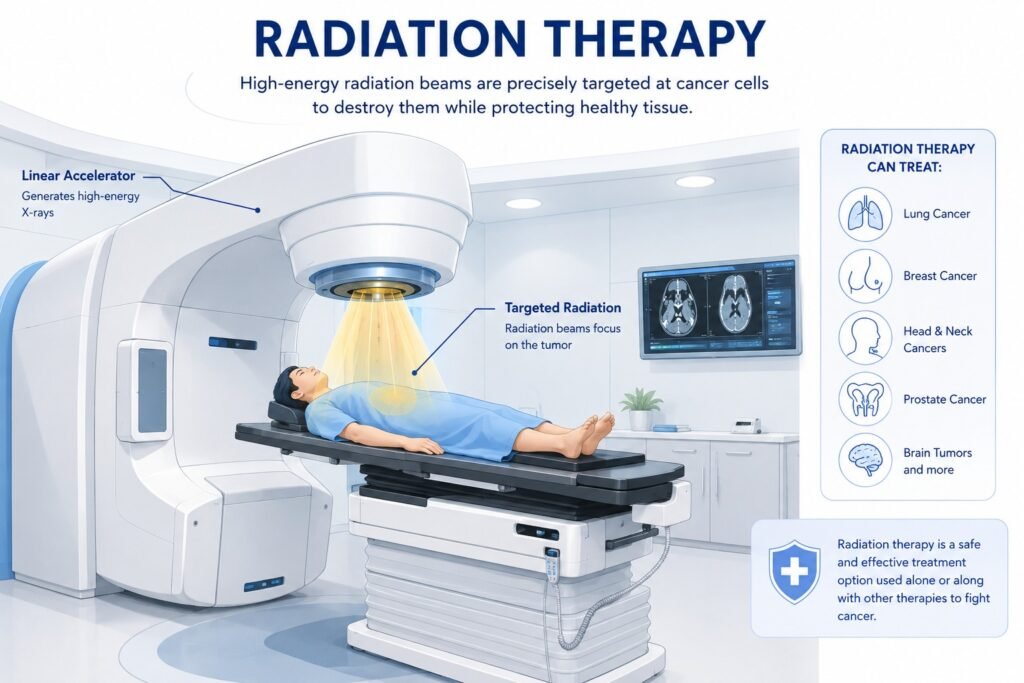
Radiotherapy, also commonly known as radiation therapy, is a cancer treatment that uses high-energy radiation, such as X-rays, gamma rays, proton beams, or other charged particles, to destroy cancer cells or stop them from growing and dividing. It works by damaging the DNA inside cancer cells, making it difficult for them to multiply while allowing healthy cells to recover over time. Depending on the type and stage of cancer, radiotherapy may be used alone or in combination with surgery, chemotherapy, immunotherapy, or targeted therapy.
Radiotherapy is an essential part of modern cancer care, with approximately 50% of all patients with cancer requiring radiation therapy at some point during their treatment. It plays an important role in both curative and palliative care, helping to treat cancer, reduce the risk of recurrence, or relieve symptoms such as pain, bleeding, and pressure caused by tumors.
Yes, Radiotherapy and radiation therapy refer to the same treatment. While “radiotherapy” is more commonly used in Europe, including Germany, “radiation therapy” is the preferred term in countries such as the United States and Canada. Both involve using carefully planned doses of radiation to target cancer cells while minimizing exposure to nearby healthy tissues.
A radiation oncologist in Germany may recommend radiotherapy for various reasons, depending on the type, stage, and location of the cancer, as well as the patient’s overall health. Radiotherapy may be used to:
Radiotherapy is a powerful tool in the fight against cancer, and it comes in various forms, each tailored to meet specific needs. Here’s a closer look at the different types that are making a significant impact in treatment plans:
Radiation therapy in Germany is used to treat many types of cancer, either as a standalone treatment or as part of a comprehensive treatment plan. Common cancers treated with radiotherapy include:
Modern radiation treatment in Germany offers several advantages through advanced imaging, precision planning, and highly targeted treatment delivery.
Some key benefits include:
Like all cancer therapies, radiotherapy carries certain risks for potential side effects, which depend on several different parameters. These include the region being irradiated, the radiation dose, treatment period, and the characteristics of a particular patient. Most side effects are temporary and manageable; however, some may appear even several months or years after therapy.
Side effects can include:
When receiving radiotherapy treatment in Germany, patients are under constant control of radiation oncologists and supportive care specialists.
For many international patients, Germany is home to numerous radiation oncology centers that benefit from national professional organizations such as DEGRO, which promote high clinical standards, continuous education, and research in radiation therapy.
With modern radiotherapy facilities, internationally recognized quality standards, and dedicated support services for overseas patients, Germany has become a preferred destination for cancer treatment.
The radiotherapy process in Germany is carried out systematically and follows a multidisciplinary procedure in which every radiotherapy plan is formulated according to the patient’s illness, health status, and treatment objectives. Patients coming from abroad usually go through the below-mentioned stages.
Based on the plan, the radiation oncology team selects the most appropriate technique. This may include External Beam Radiation Therapy for many common cancers, Brachytherapy for cancers such as prostate or cervical cancer, Proton Beam Therapy for selected tumors requiring greater precision, or approaches that are specialised, such as Stereotactic Body Radiation Therapy and Stereotactic Radiosurgery for small, well-defined tumors. Most treatments are delivered on an outpatient basis, allowing patients to return to their accommodation the same day. The modern techniques have been discussed below in more detail.
Once treatment has been completed, follow-ups are scheduled to check how successful the treatment was. For international patients, a treatment summary is provided, along with the necessary recommendations for follow-ups.
Advanced radiotherapy in Germany combines modern imaging, computerized radiation treatment planning, and precision delivery systems to treat a wide range of cancers.
The hospitals or centers also follow recommendations developed by professional organizations such as the German Society for Radiation Oncology (DEGRO), supporting evidence-based treatment planning, quality assurance, and the adoption of modern radiotherapy techniques.
Leading radiation oncology centers in Germany use these technologies to personalize treatment according to the cancer type, tumor location, and stage while minimizing radiation exposure to surrounding healthy tissues.
| Technology | Commonly Used For | Key Benefits |
| External Beam Radiation Therapy (EBRT) | Breast, lung, prostate, head and neck, colorectal, and many other cancers | The most widely used form of radiation therapy that delivers high-energy beams from outside the body. |
| Intensity-Modulated Radiation Therapy (IMRT) | Prostate, head and neck, gynecologic cancers, and brain tumors | Shapes the radiation dose to match the tumor while reducing exposure to nearby healthy organs. |
| Image-Guided Radiation Therapy (IGRT) | Lung, prostate, liver, and abdominal cancers | Uses imaging before each treatment session to verify tumor position and improve treatment accuracy. |
| Volumetric Modulated Arc Therapy (VMAT) | Prostate, pelvic, and head and neck cancers | Delivers radiation from multiple angles in a shorter treatment time than many conventional techniques. |
| Stereotactic Body Radiation Therapy (SBRT) | Early-stage lung cancer, liver tumors, spinal tumors, and selected metastatic cancers | Delivers high-dose radiation in a small number of treatment sessions with excellent local tumor control for carefully selected patients. |
| Stereotactic Radiosurgery (SRS) (CyberKnife/Gamma Knife) | Brain tumors, brain metastases, and selected neurological disorders | Provides highly focused radiation to small targets in the brain without making a surgical incision. |
| Proton Beam Therapy | Pediatric cancers, skull base tumors, brain tumors, eye tumors, and cancers near critical organs | Uses proton particles to reduce radiation exposure beyond the tumor, helping protect healthy tissues. |
| Brachytherapy (Internal Radiation Therapy) | Prostate, cervical, uterine, breast, and selected skin cancers | Places a radioactive source inside or close to the tumor, delivering a high dose directly to the affected area. |
Not every radiotherapy technique is suitable for every patient. German cancer centers recommend the most appropriate approach based on the diagnosis and treatment goals.
Commonly used therapies
Specialized therapies for selected patients
| Treatment | Key Difference |
| Stereotactic Body Radiation Therapy vs. Stereotactic Radiosurgery | Stereotactic Body Radiation Therapy treats tumors in the body, such as those in the lungs, liver, or spine, whereas Stereotactic Radiosurgery is primarily used for brain tumors and certain neurological conditions. Despite its name, Stereotactic Radiosurgery does not involve surgery. |
| Proton Beam Therapy vs. Conventional Radiation Therapy | Proton Beam Therapy uses proton particles that release most of their energy directly within the tumor, reducing radiation exposure beyond the target. Conventional radiation therapy uses high-energy X-rays and remains the standard treatment for many cancers. |
| External Beam Radiation Therapy vs. Brachytherapy | External Beam Radiation Therapy delivers radiation from a machine outside the body, while Brachytherapy places radioactive material inside or close to the tumor. |
For selected patients, therapies such as Stereotactic Body Radiation Therapy have demonstrated local tumor control rates exceeding 90% for certain early-stage cancers, particularly early-stage non-small cell lung cancer.
Likewise, Proton Beam Therapy can reduce radiation exposure to surrounding organs, making it a valuable option for selected pediatric cancers and tumors located close to critical structures.
Radiotherapy costs in Germany depend on the type of cancer, the radiotherapy method used, the facility, and the number of sessions. The treatment is available for foreigners at prominent cancer treatment centers in cities like Frankfurt, Berlin, Hannover, Hamburg, and Heidelberg, where they offer assistance in treatment planning, preparation of visa documents, interpreter services, and accommodation.
Most overseas patients receive treatment on a self-pay basis, although some international insurance plans may provide partial or full reimbursement subject to policy terms and prior authorization. Compared with private healthcare costs in countries such as the United States and the United Kingdom, radiotherapy in Germany often offers access to advanced treatment technologies at a more competitive price while maintaining high standards of cancer care.
For patients coming from outside Germany, the estimated cost of radiotherapy generally ranges from €8,000 to €90,000+.
Note: The cost mainly depends upon the type of radiotherapy required according to the need of the individual receiving the treatment.
The cost listing given below is for general reference only:
| Type of Radiation Therapy | Estimated Cost Range |
| Conventional External Beam Radiation Therapy | €8,000 – €16,000 |
| Intensity-Modulated Radiation Therapy (IMRT) | €15,000 – €29,000 |
| Image-Guided Radiation Therapy (IGRT) | €7,000 – €30,000 |
| Stereotactic Body Radiation Therapy (SBRT) | €7,000 – €23,000 |
| Stereotactic Radiosurgery (CyberKnife/Gamma Knife) | €13,000 – €34,000 |
| Brachytherapy | €8,000 – €25,000 |
| Proton Beam Therapy | €30,000 – €50,000+ (can go up to €90,000) |
The total cost of radiotherapy in Germany varies based on the duration and complexity of the treatment course. While some advanced techniques can be completed in just a few sessions, others require daily treatments over several weeks.
Please note that the exact number of sessions and treatment duration are determined after a detailed evaluation by the radiation oncology team and may vary based on the patient’s diagnosis, response to treatment, and clinical guidelines.
The additional factors which may increase the cost of treatment are as follows:
The location and complexity of the tumor can affect planning and treatment. For example, treating a brain tumor or head and neck cancer may require more detailed planning than treating an early-stage breast cancer.
Advanced treatments generally cost more than conventional techniques. For instance, Proton Beam Therapy for selected pediatric or skull base tumors is typically more expensive than External Beam Radiation Therapy, while Stereotactic Body Radiation Therapy (SBRT) may cost more than standard fractionated radiotherapy due to its high precision.
Some treatments are completed in just one to five sessions, such as Stereotactic Radiosurgery (SRS) or SBRT, whereas conventional radiotherapy for cancers like breast or prostate cancer may involve 15–39 sessions, depending on the prescribed treatment course.
Imaging tests such as CT simulation, MRI, or PET/CT, along with specialist consultations, are often required before treatment begins and may contribute to the overall cost.
Costs can differ between university hospitals, specialized cancer centers, and private hospitals, as well as across various cities, depending on the available facilities and services. For instance, cancer treatment centers or university hospitals in larger cities like Frankfurt or Berlin may charge more than smaller regional centers for radiation therapy in Germany.
International patients should also budget for expenses such as accommodation, interpreter services, local transportation, visa-related costs, and follow-up consultations, which are usually not included in the treatment fee.
Your coverage can greatly depend on your insurance provider and the country you live in, so it’s essential to understand your options for the best possible care.
Some international health insurance plans may cover treatment abroad, while others may only reimburse a portion of the costs or require prior authorization.
Before traveling to Germany, patients should:
Patients whose insurance does not cover treatment abroad can usually choose self-pay options, with German hospitals providing a cost estimate before therapy starts.
| Hospital | City | Radiation Oncology Highlights |
| University Hospital Frankfurt am Main | Frankfurt | Precision radiotherapy, tumor boards, and personal treatment planning for various cancers. |
| St. Hedwig Hospital | Berlin | End- to-end radiation services for solid tumors with coordinated oncology care. |
| University Hospital of Hannover (MHH) | Hannover | Cancer treatment supported by advanced imaging and evidence-based radiotherapy. |
| University Medical Center Hamburg-Eppendorf (UKE) | Hamburg | Modern radiation oncology and dedicated international patient services. |
| Heidelberg University Hospital | Heidelberg | Advanced radiotherapy, proton therapy expertise (selected indications), and close collaboration with the German Cancer Research Center (DKFZ). |
Tips for Choosing the Right Hospital
Preparing for your journey can significantly impact your treatment experience, so it’s vital to be informed about key aspects both before and after your trip.
To ensure a smooth experience, international patients should:
Before leaving Germany and after your therapy is complete, there are several important steps to take:
Careful preparation before travel and close communication with the treating hospital can help make the experience of receiving radiation therapy in Germany more organized and ensure a smoother transition back to care at home.
Recovery after radiation therapy in Germany can vary based on several factors, including the type of cancer, the area being treated, the radiation dose, and your overall health. Many patients are able to maintain their daily routines during treatment, while others may require additional rest as side effects gradually develop.
Most short-term side effects typically begin to improve within 2 to 4 weeks after finishing treatment, though recovery may continue for several months. Your radiation oncology team will schedule follow-up visits to monitor your progress, manage any side effects, and evaluate your response to treatment.
The side effects of radiotherapy depend on the part of the body being treated. Common physical symptoms may include:
Most of these side effects are temporary and improve with time, although some patients may experience late effects that require ongoing follow-up and supportive care.
To support recovery after radiation therapy in Germany, consider the following:
Yes. Many German hospitals have dedicated international patient departments that assist with medical record reviews, treatment planning, visa documentation, interpreter services, accommodation arrangements, and follow-up coordination.
The cost of radiation therapy in Germany typically ranges from €7,000 to €50,000+, depending on the cancer type, treatment technique, number of sessions, hospital, and individual treatment requirements.
Radiotherapy is used to treat many cancers, including breast, prostate, lung, brain, head and neck, cervical, colorectal, liver, and skin cancers. It may be used alone or alongside surgery, chemotherapy, immunotherapy, or targeted therapy.
It depends on the treatment plan. Some stereotactic treatments can be completed in one to five sessions, while conventional radiotherapy is typically delivered over 3–7 weeks.
Yes. Many hospitals review pathology reports, imaging scans, and previous medical records remotely before travel. Based on this evaluation, patients usually receive a preliminary treatment recommendation, estimated treatment duration, and cost estimate.
It depends. German residents covered under Statutory Health Insurance (GKV) or Private Health Insurance (PKV) are generally covered for medically necessary treatment according to their policy. International patients should check with their insurance provider, as overseas coverage varies by insurer and country.
Yes. Proton therapy in Germany is available at selected specialized centers and may be recommended for certain pediatric cancers, skull base tumors, eye tumors, and cancers located near critical organs when clinically appropriate.
In most cases, yes. Since radiotherapy is often delivered over multiple sessions, patients are usually advised to remain in Germany until the planned treatment course and initial follow-up assessment are completed.
Common side effects include fatigue, skin irritation, and symptoms related to the area being treated, such as difficulty swallowing, bowel changes, or urinary symptoms. Most short-term side effects improve within a few weeks after treatment, although recovery varies from person to person.
Germany is recognized for its specialized radiation oncology departments, advanced radiotherapy technologies, multidisciplinary cancer care, and internationally recognized quality standards. Many hospitals also provide comprehensive support services to help international patients throughout their treatment journey.
Sources:
Published By
.webp)
Global Patient Care, Redefined
The CancerRounds Medical Content Team specialises in creating accurate, clear and patient-focused healthcare content. Our content is written by medically trained writers, medically reviewed, and based on reputable medical sources to support informed healthcare decisions.
Get expert guidance instantly
Share a few details and our medical team gets back to you within 4 hours with the next steps.

Tell us what you are facing and our medical team will guide you to the right doctors, hospitals and treatment.
Free Review, No Commitment
Free assessment with no pressure to proceed.
Trusted by 100,000+ Patients
Across 125+ countries worldwide
500+ Top Partner Hospitals
Globally accredited medical facilities
5000+ Expert Specialists
Senior doctors across major specialties.
Making quality healthcare accessible to patients worldwide
Everything you need to know about choosing the right hospital, doctor and treatment plan.