
CAR-T cell therapy in Germany is an advanced personalized immunotherapy for certain blood cancers, including leukemia, lymphoma, and multiple myeloma. Treatment starts from €300,000 and is available at specialized university hospitals using EMA-approved CAR-T therapies with comprehensive care for international patients.
Reply in 4 hours · Plan and quote in 2 days · 100% confidential
Chimeric Antigen Receptor T-cell (CAR-T) Therapy is a highly advanced form of personalized immunotherapy that uses a patient’s own immune cells to recognize and destroy certain blood cancers. Unlike conventional treatments that directly target cancer cells, CAR-T therapy enhances the body’s natural defense system by genetically modifying T cells, a type of white blood cell, to better identify and attack cancer. The therapy stages have been discussed below in detail.
Researchers are studying CAR-T cell therapy for additional blood cancers like acute myeloid leukemia, chronic lymphocytic leukemia, etc., and certain solid tumors such as glioblastoma (brain cancer), neuroblastoma, ovarian cancer, pancreatic cancer, etc., in clinical trials. However, these uses are still under clinical trials and are not yet part of standard treatment.
Unlike chemotherapy, which works by killing rapidly dividing cells, including healthy cells such as those in the hair follicles, digestive tract, and bone marrow. CAR-T cell therapy specifically targets cancer cells expressing a particular antigen. This targeted approach can reduce damage to normal tissues, although patients still require careful monitoring for unique side effects such as cytokine release syndrome (CRS) and neurological complications.
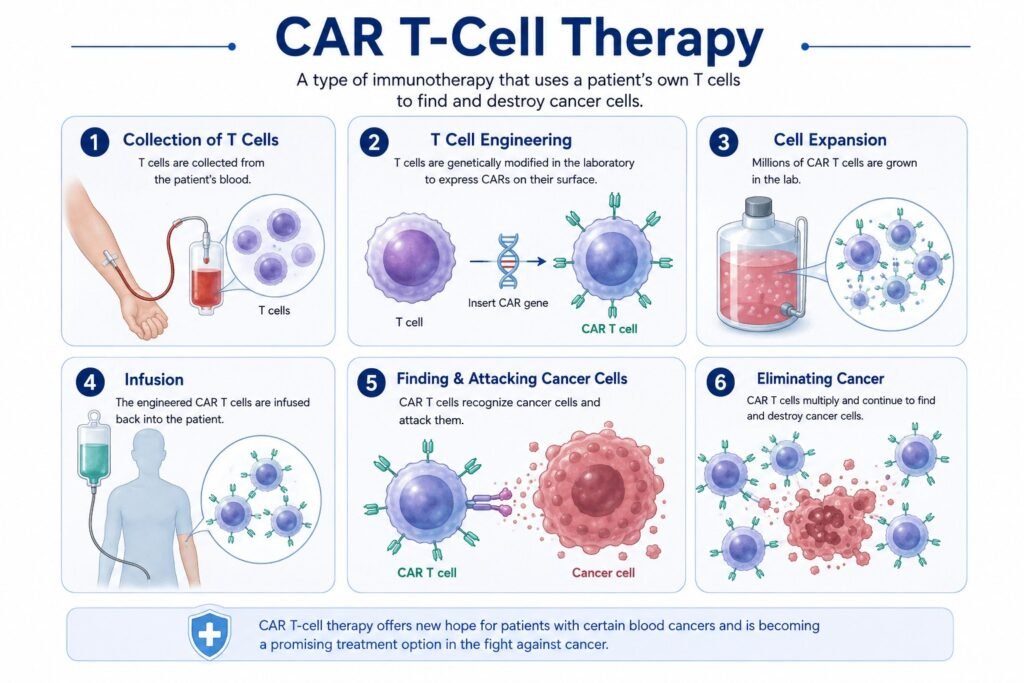
A stem cell transplant replaces damaged or diseased bone marrow with healthy blood-forming stem cells after high-dose chemotherapy or radiation. In contrast, CAR-T therapy does not replace the bone marrow. Instead, it modifies the patient’s own immune cells to actively recognize and eliminate cancer cells.
Today, CAR-T cell therapy is approved for several relapsed or refractory blood cancers, meaning, for cancers that have returned after treatment or have not responded to standard therapies. These include:
Researchers are also studying CAR-T cell therapy for additional blood cancers like acute myeloid leukemia, chronic lymphocytic leukemia, etc., and certain solid tumors such as glioblastoma (brain cancer), neuroblastoma, ovarian cancer, pancreatic cancer, etc., in clinical trials. However, these uses are still under clinical trials and are not yet part of standard treatment.
Germany has become one of the key locations in Europe as well as the world for CAR-T treatments. It offers CAR-T cell therapy at university hospitals and cancer centers specializing in cellular immunotherapy. Patients get support from top-notch diagnostics, hematology-oncology professionals
Germany has developed a robust infrastructure to support CAR-T cell therapy, combining specialized treatment centers, advanced laboratory facilities, and coordinated patient care.
University hospitals offering CAR-T therapy have dedicated hematology-oncology units, accredited stem cell transplant and cellular therapy programs, GMP-compliant manufacturing facilities or established partnerships with certified manufacturers, modern intensive care units (ICUs), and specialized teams trained to manage CAR-T-related complications.
CAR-T cell therapy in Germany is delivered according to European Medicines Agency (EMA) approvals and established clinical guidelines.
Hospitals follow standardized protocols for T-cell collection, infusion, toxicity management, infection prevention, and long-term follow-up. Many centers also participate in national and international quality assurance initiatives and clinical research, helping maintain high standards of patient care.
Germany is home to more than 15 Comprehensive Cancer Centers, many of which are certified by the German Cancer Aid (Deutsche Krebshilfe), having built a strong national ecosystem for cancer research and cellular immunotherapy through organizations such as the German Cancer Consortium (DKTK).
These institutions bring together university hospitals, research institutes, and clinical specialists to advance precision oncology and improve access to innovative treatments.
One of the country’s pioneering institutions is Heidelberg University Hospital, which introduced CAR-T cell therapy into clinical practice in Germany in 2018. Today, its dedicated CAR-T Center Heidelberg provides specialized patient evaluation, CAR-T treatment, management of treatment-related toxicities, and long-term follow-up. Other university hospitals, including those in Erlangen and Freiburg, are also actively involved in CAR-T research, translational medicine, and the development of next-generation cellular therapies.
| Stage | What Happens? |
| 1. Patient Evaluation | Specialists assess whether CAR-T cell therapy is suitable based on the patient’s cancer type, previous treatments, and overall health. Tests may include blood tests, PET/CT or CT scans, bone marrow biopsy (when required), molecular diagnostics, organ function tests, and infection screening. |
| 2. T-cell Collection (Leukapheresis) | T cells are collected from the patient’s blood using a machine that separates white blood cells and returns the remaining blood components to the body. The procedure usually takes 2–4 hours. |
| 3. CAR-T Cell Manufacturing | The collected T cells are genetically modified to express chimeric antigen receptors (CARs), multiplied in a specialized laboratory, and undergo rigorous quality testing before being prepared for infusion. |
| 4. Bridging Therapy (If Needed) | Some patients receive temporary treatment, such as chemotherapy or targeted therapy, while waiting for their CAR-T cells to be manufactured to help control disease progression. |
| 5. Lymphodepleting Chemotherapy | A short course of chemotherapy is given a few days before CAR-T cell infusion to reduce existing immune cells and create space for the modified T cells to expand and function effectively. |
| 6. CAR-T Cell Infusion | The engineered CAR-T cells are infused into the bloodstream through an intravenous (IV) line. The infusion usually takes 30–60 minutes. |
| 7. Close Hospital Monitoring | Patients are closely monitored for treatment response and potential side effects, particularly Cytokine Release Syndrome (CRS) and Immune Effector Cell-Associated Neurotoxicity Syndrome (ICANS), through regular clinical assessments and laboratory tests. |
Note: The complete CAR-T cell therapy process from the initial evaluation to the infusion of engineered T cells typically takes 3–6 weeks, although the exact timeline depends on the patient’s condition, manufacturing schedule, and whether bridging therapy is required.
Germany has established itself as a leading destination for advanced CAR-T cell therapy, offering international patients access to specialized treatment centers, commercially approved CAR-T therapies, and comprehensive care delivered according to European clinical standards.
CAR-T cell therapy is available for international patients at specialized university hospitals and certified cellular therapy centers in cities such as Heidelberg, Frankfurt, Hamburg, Cologne, Hannover, and Dresden. A lot of the hospitals offer dedicated international patient services, including treatment coordination, medical record review, visa assistance, interpreter services, and accommodation support.
For international self-paying patients, the estimated cost of CAR-T cell therapy in Germany generally ranges from €300,000 to €500,000.
Most overseas patients receive CAR-T therapy on a self-pay basis, although some international health insurance plans may provide partial or full reimbursement depending on the policy terms and prior authorization. Compared with countries such as the United States and the United Kingdom, Germany offers access to EMA-approved CAR-T cell therapies through highly specialized treatment centers while maintaining internationally recognized standards of quality and patient safety.
| Common Indications | Estimated Cost (Self-Pay) |
| B-cell Acute Lymphoblastic Leukemia (B-ALL) | €300,000–€420,000 |
| Diffuse Large B-cell Lymphoma (DLBCL) | €320,000–€450,000 |
| Primary Mediastinal Large B-cell Lymphoma (PMBCL) | €320,000–€450,000 |
| Follicular Lymphoma (FL) | €300,000–€450,000 |
| Mantle Cell Lymphoma (MCL) | €330,000–€470,000 |
| Multiple Myeloma (MM) | €350,000–€500,000+ |
Note: The above costs are estimated for self-paying international patients and may vary depending on the CAR-T cell product used, hospital, treatment complexity, duration of hospitalization, and supportive care required.
The final cost may vary depending on:
Coverage for CAR-T cell therapy abroad depends on the patient’s insurance provider and policy conditions. Some international health insurance plans may cover treatment in Germany, while others may reimburse only part of the cost or require prior authorization before treatment.
Before traveling to Germany, international patients should:
Patients whose insurance does not cover treatment abroad can usually choose the self-pay option. Most German hospitals provide an individualized cost estimate after reviewing the patient’s medical records and confirming eligibility for CAR-T cell therapy.
The availability of specific CAR-T cell therapies and patient eligibility may differ among hospitals, diagnoses, previous treatments, and current clinical guidelines. Multidisciplinary teams evaluate patients individually before recommending treatment.
| Hospital | City | CAR-T Cell Therapy Services |
| University Hospital Frankfurt am Main | Frankfurt | Provides CAR-T cell therapy for eligible patients with relapsed or refractory blood cancers, including leukemia, lymphoma, and multiple myeloma. Offers multidisciplinary evaluation, leukapheresis, CAR-T infusion, toxicity management, and follow-up care. |
| Heidelberg University Hospital | Heidelberg | Home to the dedicated CAR-T Center Heidelberg, offering patient evaluation, CAR-T cell therapy, management of CAR-T-related complications (including CRS and ICANS), long-term follow-up, and ongoing cellular therapy research. |
| University Hospital Erlangen (Universitätsklinikum Erlangen) | Erlangen | Offers CAR-T cell therapy through its hematology and oncology program, including eligibility assessment, leukapheresis, infusion of commercially approved CAR-T therapies, specialized monitoring, and participation in cellular therapy research. |
| University Hospital Cologne (Uniklinik Köln) | Cologne | Provides CAR-T cell therapy for selected hematological malignancies, supported by multidisciplinary care, advanced diagnostics, stem cell transplantation expertise, inpatient monitoring, and comprehensive post-treatment follow-up. |
International patients planning to undergo CAR-T cell therapy in Germany should prepare for a treatment journey that extends beyond the infusion itself. From pre-treatment evaluation to post-treatment monitoring, careful planning helps ensure a safe and coordinated experience.
Before coming to Germany, patients should:
After undergoing CAR-T cell therapy, patients should take some important steps to support their recovery and overall well-being. It’s essential to stay proactive and informed during this journey
Important: Recovery after CAR-T cell therapy varies from person to person. Because serious side effects may occur days or weeks after the infusion, patients are generally advised to stay close to the treating center during the initial recovery period and travel only after receiving medical clearance from their healthcare team.
Recovery after CAR-T cell therapy takes place in several stages, beginning with close inpatient monitoring immediately after the infusion, followed by outpatient recovery and regular follow-up care. While the recovery timeline varies for each patient, most people progress through these stages over a period of several weeks to months, depending on their overall health, treatment response, and any treatment-related side effects.
| Recovery Stage | What to Expect | Typical Timeline |
| Early Monitoring & Inpatient Care | Patients remain hospitalized after CAR-T cell infusion for close monitoring of vital signs, blood counts, and early side effects such as Cytokine Release Syndrome (CRS) and Immune Effector Cell-Associated Neurotoxicity Syndrome (ICANS). Supportive care is provided as needed. | First 1–2 weeks |
| Outpatient Recovery | After discharge, there are frequent outpatient visits for blood tests, physical examinations, and assessment of treatment response. Fatigue, reduced blood counts, and a higher risk of infection may persist, so patients are advised to avoid infections and follow their care team’s recommendations. | Weeks 2–8 |
| Medium- to Long-Term Recovery | Energy and immune function gradually improve. Regular assessments help monitor blood counts, immune recovery, and any late treatment-related effects. Many patients can progressively return to normal daily activities based on their doctor’s advice. | 2–6 months or longer |
| Long-Term Follow-up | Ongoing follow-up includes routine consultations, laboratory investigations, imaging (when required), and monitoring for disease recurrence or late side effects. Care is often coordinated between the treating center and the patient’s local healthcare provider. | Beyond 6 months |
Yes. Several specialized university hospitals and certified cellular therapy centers in Germany offer CAR-T cell therapy to eligible international patients. Most hospitals provide international patient services, including medical record review, treatment planning, visa assistance, interpreter support, and follow-up coordination.
Eligibility depends on the type of cancer, previous treatments, overall health, and whether the disease has relapsed or is refractory to standard therapies. A multidisciplinary team evaluates each patient through blood tests, imaging, and other diagnostic assessments before recommending CAR-T cell therapy.
Germany currently offers EMA-approved CAR-T cell therapies for selected blood cancers, including B-cell Acute Lymphoblastic Leukemia (B-ALL), Diffuse Large B-cell Lymphoma (DLBCL), Primary Mediastinal Large B-cell Lymphoma (PMBCL), Follicular Lymphoma, Mantle Cell Lymphoma, and Multiple Myeloma. Additional indications may be available through clinical trials at selected centers.
The complete treatment process typically takes 3–6 weeks, including eligibility assessment, T-cell collection, CAR-T cell manufacturing, chemotherapy, and infusion. Patients usually need to remain in Germany for additional monitoring after treatment before receiving medical clearance to travel.
The estimated cost generally ranges from €300,000 to €500,000, depending on the CAR-T product used, the hospital, the patient’s condition, the duration of hospitalization, and supportive care requirements. Hospitals usually provide an individualized treatment estimate after reviewing the patient’s medical records.
Yes, for eligible patients covered under Germany’s Statutory Health Insurance (GKV) or Private Health Insurance (PKV), CAR-T cell therapy may be covered when it is medically indicated and provided at authorized treatment centers. Coverage for international patients depends on their insurance policy and provider.
Yes. Patients are generally advised to remain close to the treating hospital for several weeks after the infusion so healthcare teams can monitor for side effects such as Cytokine Release Syndrome (CRS) and Immune Effector Cell-Associated Neurotoxicity Syndrome (ICANS). The exact duration depends on the patient’s recovery and medical condition.
CAR-T cell therapy has shown promising outcomes for many patients with relapsed or refractory blood cancers, particularly when other treatments have not been effective. However, treatment response varies depending on the cancer type, disease stage, the CAR-T product used, and individual patient factors.
Common side effects include fever, fatigue, low blood counts, and an increased risk of infection. Some patients may also develop Cytokine Release Syndrome (CRS) or neurological side effects known as Immune Effector Cell-Associated Neurotoxicity Syndrome (ICANS). These complications are carefully monitored and managed at specialized treatment centers.
Germany is home to specialized university hospitals and accredited cellular therapy centers that offer EMA-approved CAR-T cell therapies, advanced molecular diagnostics, experienced multidisciplinary teams, and structured follow-up care. Many hospitals also provide dedicated international patient services, making treatment more accessible for patients traveling from abroad.
Sources :
Published By
.webp)
Global Patient Care, Redefined
The CancerRounds Medical Content Team specialises in creating accurate, clear and patient-focused healthcare content. Our content is written by medically trained writers, medically reviewed, and based on reputable medical sources to support informed healthcare decisions.
Get expert guidance instantly
Share a few details and our medical team gets back to you within 4 hours with the next steps.

Tell us what you are facing and our medical team will guide you to the right doctors, hospitals and treatment.
Free Review, No Commitment
Free assessment with no pressure to proceed.
Trusted by 100,000+ Patients
Across 125+ countries worldwide
500+ Top Partner Hospitals
Globally accredited medical facilities
5000+ Expert Specialists
Senior doctors across major specialties.
Making quality healthcare accessible to patients worldwide
Everything you need to know about choosing the right hospital, doctor and treatment plan.