
Head and neck cancer treatment in Germany starts from €8,000 for selected early-stage cases with surgery and definitive radiation therapy. While treatment for advanced or Stage III–IV disease may range from €25,000 to €80,000+ with targeted and/or immunotherapy, Popular treatment destinations include Heidelberg, Berlin, Munich, Frankfurt, Hamburg, and Hannover.
Reply in 4 hours · Plan and quote in 2 days · 100% confidential
A diagnosis of head and neck cancer can be life-changing, affecting not only your health but also essential functions such as speaking, swallowing, breathing, and eating.
Head and neck cancer is the seventh most common cancer worldwide, with approximately 650,000 people diagnosed each year.
Europe reports around 100,800 new cases annually, while the United States records approximately 60,000–70,000 new diagnoses each year, and the United Kingdom sees nearly 12,000–14,000 new cases annually. Although tobacco and alcohol remain major risk factors, the rising incidence of human papillomavirus (HPV)-associated cancers, particularly cancers of the oropharynx, has changed the pattern of this disease in many countries.
For international patients seeking head and neck cancer treatment in Germany, the country has become a preferred destination because of its structured cancer care system, advanced diagnostic capabilities, and multidisciplinary treatment approach. Unlike many healthcare systems where surgery, radiation, and medical oncology may be delivered separately, Germany brings these specialists together through dedicated interdisciplinary tumor boards, ensuring that every treatment plan is developed collaboratively and tailored to the patient’s head and neck cancer type, stage, overall health, and personal treatment goals.
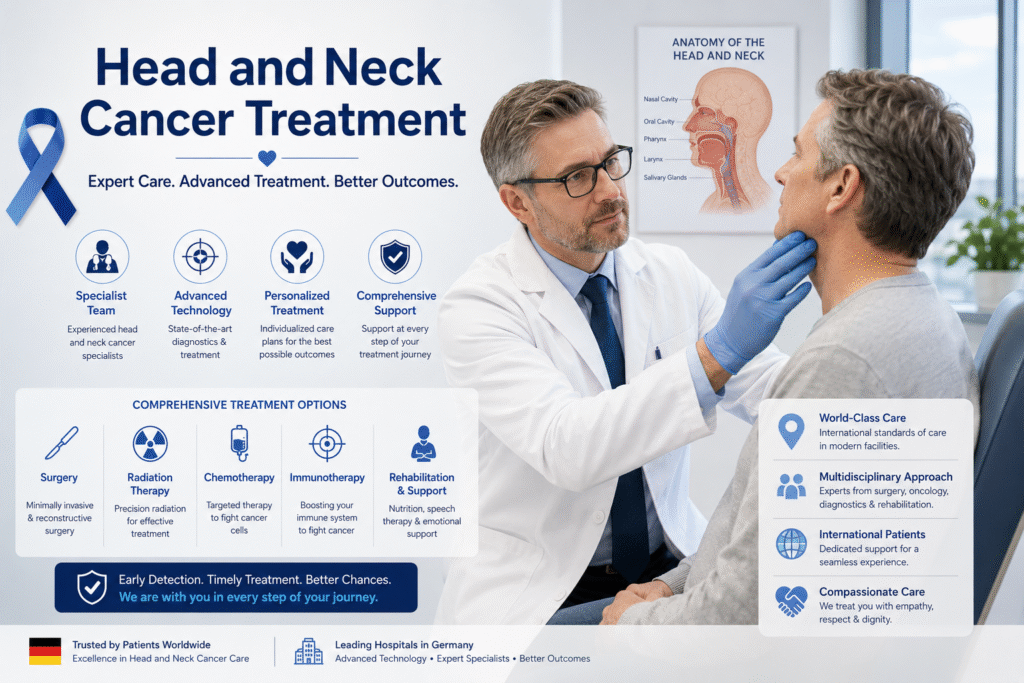
Depending on the diagnosis, treatment may include: minimally invasive surgery, transoral robotic surgery (TORS), laser microsurgery, radiation therapy, proton beam therapy, chemotherapy, targeted therapy, immunotherapy, reconstructive surgery, and speech and swallowing rehabilitation.
Note: Whenever appropriate, specialists also focus on preserving vital functions such as speech, swallowing, facial appearance, and long-term quality of life alongside treating the specific head and neck cancer itself.
This guide explains everything international patients need to know about head and neck cancer treatment in Germany, including how the disease is diagnosed, the types, the therapy/treatment options available, advanced technologies used by German cancer centers, expected treatment costs, hospitals, the journey overview for foreign patients, recovery, follow-up care, and survival outcomes to help patients and their families with making informed decisions.
International patients consider Germany for cancer treatment because of its advanced healthcare infrastructure, experienced cancer specialists, and multifaceted approach to planning and delivering care. Choosing where to receive head and neck cancer treatment is an important decision, especially when treatment can affect essential functions such as speaking, swallowing, breathing, and appearance.
It is important to remember that no two head and neck cancers are exactly alike. The location of the tumor, its stage, HPV status, overall health, and individual treatment goals all influence the most appropriate treatment plan.
Rather than relying on a single specialist, Germany follows a collaborative cancer care model, where head and neck surgeons, medical oncologists, radiation oncologists, radiologists, pathologists, reconstructive surgeons, speech and swallowing therapists, and rehabilitation specialists work together to review each case.
Overall, patients get the following benefits while receiving any type of head and neck cancer treatment in Germany:
Before treatment starts, patients undergo an evaluation to understand the extent of the disease and determine the most suitable treatment strategy. Depending on the individual’s condition, this may include:
The information gathered from these evaluations allows specialists to personalise treatment while aiming to preserve important functions and achieve the best possible outcomes.
Head and neck cancer is not a single disease but a group of cancers that develop in the tissues and organs of the mouth, throat, voice box (larynx), nose, paranasal sinuses, salivary glands, and other structures of the head and neck. Most of these cancers begin in the thin, flat cells lining these areas, known as squamous cells, and are therefore referred to as head and neck squamous cell carcinomas (HNSCC).
While head and neck cancers account for only a small percentage of all cancers worldwide, they can significantly affect speaking, swallowing, breathing, eating, and appearance if left untreated. Early diagnosis and timely treatment play an important role in improving treatment outcomes and preserving these vital functions.
Depending on where the cancer begins, head and neck cancers are classified into several types:
| Type | Area Affected |
| Oral cavity (mouth) cancer | Affects the lips, tongue, gums, inner cheeks, floor of the mouth, hard palate, and the area behind the wisdom teeth. It is one of the most common types of head and neck cancer worldwide. |
| Oropharyngeal cancer (throat cancer) | Develops in the middle part of the throat, including the tonsils, soft palate, and base of the tongue. Many cases are associated with human papillomavirus (HPV) infection. |
| Laryngeal cancer (voice box cancer) | Starts in the larynx, including the vocal cords, often causing persistent hoarseness or voice changes. |
| Hypopharyngeal cancer | Begins in the lower part of the throat behind the larynx. It is relatively uncommon and is often diagnosed at a later stage. |
| Nasopharyngeal cancer | Develops in the upper part of the throat behind the nose. Unlike many other head and neck cancers, it is less strongly associated with tobacco or alcohol use. |
| Nasal cavity and paranasal sinus cancer | Forms inside the nasal cavity or the air-filled sinuses surrounding the nose and may cause persistent nasal blockage or recurrent nosebleeds. |
| Salivary gland cancer | A rare cancer that develops in the glands responsible for producing saliva, usually near the jaw or floor of the mouth. |
The symptoms of head and neck cancer vary depending on where the tumour develops. Many of these symptoms can also occur with non-cancerous conditions, but they should be evaluated if they persist for more than two to three weeks.
Common warning signs include:
Several factors increase the likelihood of developing head and neck cancer. The most important include:
After diagnosis, the next step is determining the stage of the cancer to understand how far it has spread. Staging’s main goal is to help guide treatment decisions and estimate prognosis. This is commonly done using the internationally recognized TNM staging system, where:
German cancer centers generally use the AJCC (American Joint Committee on Cancer) or the UICC (Union for International Cancer Control) TNM classification, which are internationally harmonized. The German S3 Guidelines and multidisciplinary tumor boards also base treatment decisions on TNM stage, along with other factors.
Based on the TNM findings, the cancer is grouped into Stages I to IV, helping specialists choose the most appropriate treatment approach and estimate the overall prognosis.
To accurately identify the cancer type, its location, and stage, specialists perform a detailed diagnostic evaluation using advanced imaging, endoscopy, biopsy, and other investigations before recommending treatment.
In Germany, the diagnostic work-up follows evidence-based clinical guidelines, including the German S3 Guideline for Oral Cavity Cancer and other Head and Neck Malignancies, ensuring a standardized and accurate approach to diagnosis.
The diagnostic process may include one or more of the following tests:
An ear, nose, and throat (ENT/HNO) specialist or oral and maxillofacial surgeon performs a thorough examination of the mouth, throat, and neck. Flexible or rigid endoscopy is often used to examine areas such as the nasal cavity, pharynx, larynx, and vocal cords that cannot be seen during a routine physical examination.
If a suspicious lesion or lump is found, a biopsy is performed to confirm whether it is malignant or benign. The tissue sample is examined by a pathologist to determine the cancer type, which is most commonly head and neck squamous cell carcinoma (HNSCC). For selected patients, additional testing for HPV or Epstein-Barr virus (EBV) may be performed to help guide treatment decisions.
Imaging tests help determine the size of the primary tumor, lymph node involvement, and whether the cancer has spread. Depending on the clinical findings, specialists may recommend:
After all test results are available, specialists combine the clinical findings, pathology report, imaging results, and TNM stage to develop an individualized treatment plan. Depending on the diagnosis, treatment may include surgery, radiation therapy, chemotherapy, targeted therapy, immunotherapy, or a combination of these approaches.
Advances in surgical techniques, imaging, radiation therapy, and precision oncology have transformed the treatment of head and neck cancer. Germany is home to certain cancer centers that use modern technologies.
Some of the advanced technologies used for head and neck cancer treatment in Germany include:
What is it? Transoral Robotic Surgery (TORS) is a minimally invasive surgical technique used to remove selected oral cancer, throat cancer, tongue cancer, oropharyngeal cancer, and laryngeal cancer without external incisions.
How does it work? The surgeon controls robotic instruments through the mouth using a magnified 3D camera and wristed surgical tools. This allows precise removal of tumors in the tongue, tonsils, oropharynx, larynx, and selected hypopharyngeal cancers while helping preserve speech, swallowing, and breathing functions.
Note: TORS is most suitable for carefully selected patients with early-stage or certain locally advanced head and neck cancers.
What is it? Transoral Laser Microsurgery (TLM) is a laser-assisted technique commonly used for laryngeal cancer treatment, pharyngeal cancer treatment, and selected mouth and throat cancers.
How does it work? Using a high-precision surgical laser and operating microscope, surgeons remove tumors layer by layer while preserving healthy tissue. TLM is widely used for early laryngeal cancer, hypopharyngeal cancer, and selected oropharyngeal cancers.
Note: TLM often reduces recovery time while preserving voice and swallowing function.
What is it? IMRT is an advanced form of radiation therapy for head and neck cancer that delivers highly conformal radiation to complex tumors.
How does it work? IMRT is commonly used to treat oral cancer, mouth cancer, throat cancer, nasopharyngeal cancer, laryngeal cancer, and salivary gland cancer. Computer-controlled radiation beams are shaped around the tumor while minimizing radiation exposure to nearby organs such as the salivary glands, spinal cord, jawbone, and swallowing muscles.
Note: IMRT has become a standard treatment for many head and neck cancers because it reduces side effects while maintaining excellent tumor control.
What is it? IGRT enhances the precision of radiation therapy for head and neck cancer by using imaging before each treatment session.
How does it work? Daily imaging verifies the exact position of tumors in patients undergoing treatment for oral cavity cancer, pharyngeal cancer, laryngeal cancer, nasopharyngeal cancer, and other head and neck cancers. This allows radiation delivery to be adjusted if small anatomical changes occur during treatment.
Note: IGRT is frequently combined with IMRT to improve treatment accuracy.
What is it? PET/CT combines metabolic and anatomical imaging to accurately stage head and neck cancers.
How does it work? It is commonly used before treating mouth cancer, tongue cancer, throat cancer, laryngeal cancer, nasopharyngeal cancer, and recurrent disease. PET identifies active cancer cells while CT maps their exact location, helping specialists define radiation targets and detect lymph node involvement or distant metastasis.
Note: PET/CT is particularly valuable in advanced disease and treatment planning.
What is it? Robotic-assisted reconstruction helps restore appearance and function after surgery for complex oral, tongue, jaw, and throat cancers.
How does it work? Following tumor removal for oral cancer treatment, tongue cancer treatment, or extensive head and neck oncology procedures, robotic technology assists surgeons in performing delicate tissue reconstruction with greater precision, helping improve speech, swallowing, and facial symmetry.
Note: It is usually performed after extensive tumor resection when reconstruction is required.
What is it? 3D surgical planning allows surgeons to virtually plan complex head and neck operations before entering the operating room.
How does it work? CT and MRI images are converted into detailed 3D models for patients undergoing mouth cancer treatment, tongue cancer treatment, jaw reconstruction, salivary gland cancer treatment, and skull base surgery. Surgeons can design patient-specific cutting guides and implants to improve surgical precision.
Note: This technology is especially valuable for complex reconstructive procedures.
What is it? AI-assisted pathology supports pathologists in diagnosing head and neck squamous cell carcinoma (HNSCC) and other tumors.
How does it work? AI analyzes digital pathology slides from biopsies of oral cancer, laryngeal cancer, salivary gland cancer, tongue cancer, and other head and neck tumors to help identify abnormal tissue patterns and support accurate diagnosis.
Note: AI supports but does not replace the expertise of specialist pathologists.
What is it? Molecular profiling evaluates the genetic and molecular characteristics of a tumor to support personalized treatment.
How does it work? It is mainly used in patients with recurrent, advanced, or metastatic head and neck cancers, including selected oropharyngeal, nasopharyngeal, and salivary gland cancers. Testing may identify biomarkers such as HPV, EBV, or other genetic alterations that help guide targeted therapy or immunotherapy for head and neck cancer.
Note: Molecular profiling is recommended only when the results are expected to influence treatment decisions.
What are the benefits of getting treatment in Germany? Germany combines advanced medical technology, which we have already discussed; moreover, step-by-step guides for action that combine scientific research, expert professional skills, and patient or user preferences. To provide maximum cancer management from diagnosis through rehabilitation and follow-up and beyond.
What does this mean for patients considering head and neck cancer treatment in Germany?
Every head and neck cancer is different. Treatment is tailored according to the type of cancer, its stage, HPV status (when applicable), overall health, and the patient’s individual needs and treatment goals.
German cancer centers use modern technologies such as Transoral Robotic Surgery (TORS), Transoral Laser Microsurgery (TLM), IMRT, IGRT, PET/CT-guided planning, molecular profiling, and advanced reconstructive techniques to improve treatment precision while preserving healthy tissues whenever possible.
Patients benefit from coordinated treatment planning by a team of specialists, including head and neck surgeons, medical oncologists, radiation oncologists, radiologists, pathologists, reconstructive surgeons, speech and swallowing therapists, nutrition specialists, and rehabilitation professionals. This integrated approach helps ensure that every aspect of treatment is carefully considered before therapy begins.
Whenever clinically appropriate, treatment strategies focus not only on removing or controlling the cancer but also on preserving speech, swallowing, breathing, facial appearance, and overall quality of life.
Recovery continues after treatment. Patients may receive speech and swallowing therapy, nutritional support, dental rehabilitation, physical therapy, psychological support, and regular follow-up evaluations to monitor recovery and detect recurrence at an early stage.
Many German hospitals have dedicated international patient departments that assist with medical record reviews, appointment scheduling, interpreter services, treatment coordination, and guidance throughout the treatment journey, making the process more organized for patients traveling from abroad.
Planning treatment abroad often begins with understanding the expected costs. Since head and neck cancer treatment in Germany is highly individualized, there is no single fixed price. Head and neck cancer treatment in Germany typically starts from approximately €8,000-18,000 for selected treatments (surgery and radiation) and can exceed €70,000 for complex surgery with reconstruction, proton therapy, or multimodal treatment.
below provides approximate self-pay costs for common head and neck cancer services in Germany.
| Treatment | Estimated Cost (EUR) |
| Initial consultation and diagnostic evaluation | €500 – €2,000 |
| Biopsy and pathological examination | €500 – €2,000 |
| CT, MRI or PET/CT imaging | €600 – €2,500 |
| Head and neck cancer surgery | €12,000 – €40,000+ |
| Complex surgery with reconstructive (microvascular flap) surgery | €20,000 – €55,000+ |
| Transoral Robotic Surgery (TORS) | €15,000 – €35,000+ |
| Transoral Laser Microsurgery (TLM) | €14,000 – €27,000 |
| Radiation therapy (IMRT/IGRT) | €8,000 – €25,000 |
| Proton Beam Therapy (when indicated) | €35,000 – €70,000+ |
| Chemotherapy (per cycle) | €1,000 – €5,000 |
| Targeted therapy or immunotherapy | Varies depending on the medication and treatment duration |
| Speech and swallowing rehabilitation | €100 – €300 per session |
| Follow-up consultation and monitoring | €200 – €600 per visit |
| Cancer Stage | Typical Treatment Approach | Estimated Cost (EUR) |
| Stage I | Surgery (including Transoral Laser Microsurgery or Transoral Robotic Surgery where appropriate) or definitive radiation therapy | €8,000–€18,000 |
| Stage II | Surgery with or without neck dissection, or radiation therapy depending on the tumor site | €15,000–€28,000 |
| Stage III | Combined treatment such as surgery followed by radiation therapy or chemoradiotherapy | €25,000–€45,000 |
| Stage IVA–IVB | Extensive surgery, reconstructive (microvascular flap) surgery, radiation therapy, chemotherapy, targeted therapy and/or immunotherapy | €40,000–€80,000+ |
| Stage IVC (Metastatic/Recurrent) | Systemic therapy, immunotherapy, targeted therapy, palliative radiation, or individualized treatment plans | €20,000–€100,000+ |
Please note: These are approximate self-pay estimates for international patients. The final treatment cost depends on the tumor location (such as oral cavity, tongue, larynx, pharynx, salivary gland, or nasopharynx), TNM stage, reconstruction requirements, duration of hospitalization, rehabilitation, medications, and the treating hospital. Patients receive a personalized cost estimate after their medical records have been reviewed.
The final cost of head and neck cancer treatment in Germany depends on several factors, including:
Insurance for head and neck cancer treatment in Germany depends on the patient’s nationality, type of insurance, and hospital of treatment. International patients must always clarify coverage before coming to Germany since there may be significant differences between insurance policies.
Some international private health insurance providers might cover either partially or completely the costs of diagnosis, surgical procedure, radiation therapy for head and neck cancer, chemotherapy, immunotherapy, hospitalization, and follow-up. Nevertheless, the coverage usually depends on pre-authorization, medical necessity, limits of the policy, and the insurance itself.
Before going to Germany, it is recommended to:
Germany is home to several internationally recognized university hospitals and specialty centers in major medical hubs such as Frankfurt am Main, Hamburg, Hannover, and Bonn, and is considered among the leading countries globally for head and neck oncology care, comparable to top cancer treatment destinations in the United States, United Kingdom, and other advanced healthcare systems. In addition to these cities, other prominent German medical hubs for head and neck cancer treatment include Berlin, Munich, Heidelberg, and Cologne, all offering highly specialized multidisciplinary care.
| Hospital | Location | Key Expertise |
| University Hospital Frankfurt am Main | Frankfurt | Head and neck oncology, robotic surgery, radiation oncology, reconstructive surgery, collaborative cancer care |
| University Medical Center Hamburg-Eppendorf (UKE) | Hamburg | Oral and maxillofacial surgery, ENT oncology, advanced radiation therapy, cancer rehabilitation |
| Hannover Medical School (University Hospital of Hannover) | Hannover | Head and neck cancer surgery, medical oncology, immunotherapy, reconstructive microsurgery, clinical research |
| Beta Clinic | Bonn | Personalized oncology, advanced diagnostics, minimally invasive surgery, coordinated cancer care |
Please note: The hospitals listed above are provided for informational purposes only and do not represent a ranking or endorsement. Patients should consult their treating physician and review each hospital’s expertise, available treatment options, and international patient services before making a treatment decision.
Visiting a foreign country for cancer treatment can be a daunting experience, especially as the patient will not only have to cope with being diagnosed but will have many other questions regarding travel, communication, the transfer of medical documentation, accommodation, and what lies ahead once you get there. Luckily, most German hospitals have an international patient department which can assist you in organizing your treatment journey.
Even though every individual case will differ, the general treatment procedure will look like this:
This step includes the exchange of your medical documentation, such as your biopsy results, pathology results, CT, MRI, or PET/CT scans, laboratory documentation, and previous therapy.
Upon analysis of your documents, the hospital makes a tentative treatment suggestion depending upon the nature and stage of your head and neck cancer. Patients usually get an estimated treatment program, duration of stay, and cost assessment before booking the flight tickets.
After confirming the treatment, the patient can start arranging their medical visa (if needed), flight bookings, lodging, and travel insurance. Hospitals assist their international patients with the help of their patient care offices and provide invitation letters, scheduling, interpretation services, and pre-arrival information.
After reaching Germany, the patient gets a comprehensive clinical evaluation. Further investigations such as endoscopy, imaging studies, blood tests, or even re-review of the pathological findings may be done in order to confirm the diagnosis and develop a treatment approach.
Depending on the diagnosis, treatment may involve surgery, radiation therapy for head and neck cancer, chemotherapy, targeted therapy, immunotherapy, or a combination of these approaches. Throughout treatment, patients are supported by a coordinated team of specialists, including surgeons, oncologists, radiation specialists, rehabilitation therapists, nutrition experts, and speech and swallowing therapists.
Recovery plays an essential role during treatment, especially for those who will go through surgical or radiation therapy. As required, recovery might involve speech therapy, nutrition counseling, physical rehabilitation, dental treatment, and psychological counseling among others.
Upon discharge, a patient gets a comprehensive discharge report, instructions for medications, pathology reports, imaging studies, and a follow-up plan. The medical team also gives the patient some advice that may be communicated to the physician in the patient’s home country.
A diagnosis of head and neck cancer does not automatically determine the outcome. Today, advances in surgery, radiation therapy, chemotherapy, targeted therapy, immunotherapy, and supportive care have significantly improved survival compared with previous decades. Early diagnosis and timely treatment remain the most important factors in achieving the best possible outcomes.
Studies have shown that the overall 5-year relative survival rate for head and neck cancers has improved from approximately 55% to nearly 66% over the past decade, reflecting continued advances in diagnosis and treatment. The greatest improvements have been reported in tonsillar (oropharyngeal) and tongue cancers, largely due to earlier detection, improved treatment techniques, and better multidisciplinary care.
The outlook for patients depends on several clinical and personal factors, including:
For patients with recurrent or metastatic head and neck squamous cell carcinoma (HNSCC), treatment options have expanded in recent years. The introduction of PD-1 inhibitor immunotherapy, often combined with chemotherapy, has improved survival for selected patients. Emerging evidence also suggests that carefully selected patients with limited metastatic disease may benefit from metastasis-directed radiotherapy (MDRT) alongside systemic treatment, although this approach is individualized and continues to be evaluated in ongoing clinical research.
While survival statistics provide useful information, they cannot predict an individual patient’s outcome. Every case is unique, and prognosis depends on multiple factors, including the type of head and neck cancer, stage at diagnosis, HPV status, overall health, and response to treatment. Discussing your specific diagnosis with your treating team is the best way to understand what these statistics mean for you.
How Immunotherapy Is Improving Survival- Immunotherapy has changed the treatment landscape for advanced and recurrent head and neck squamous cell carcinoma (HNSCC).
Recovery after head and neck cancer treatment is a gradual process that extends beyond surgery, radiation therapy, or systemic treatment. Depending on the type of cancer and the treatment received, patients may need rehabilitation to regain speech, swallowing, nutrition, breathing, and overall quality of life.
In Germany, follow-up care is delivered according to the German Oncology Guideline Program (Leitlinienprogramm Onkologie) and the quality standards of DKG-certified cancer centers. Care is provided by a coordinated team of specialists, ensuring that patients receive both medical treatment and comprehensive supportive care throughout recovery.
Supportive care begins early, often during the diagnostic and treatment planning stage, and continues throughout hospitalization and follow-up. Depending on individual needs, patients may receive:
The importance of follow-up visits is crucial to ensure timely identification and long-term recovery in the case of any recurrent condition. Following the German approach to oncology, patients typically undergo follow-up sessions for a minimum of 5 years, although extended periods may be required for some patients.
| Time After Treatment | Typical Follow-Up |
| Years 1–2 | Clinical review approximately every 3 months, including examination and symptom assessment. |
| Years 3–5 | Follow-up every 6 months, with ongoing monitoring of recovery and quality of life. |
| Beyond 5 years | Individualized follow-up for selected patients based on cancer type, recurrence risk, and rehabilitation needs. |
Follow-up appointments may include:
With advances in head and neck oncology, many patients can return to their daily activities following treatment. Regular follow-up, rehabilitation, and adherence to the care plan play an important role in maximizing recovery, preserving function, and maintaining long-term quality of life.
Yes. Many head and neck cancers are highly treatable, especially when diagnosed at an early stage. The chances of successful treatment depend on the cancer type, stage, HPV status (for certain throat cancers), and the patient’s overall health.
Germany is known for its advanced medical technology, experienced head and neck oncology teams, multidisciplinary care, and access to treatments such as Transoral Robotic Surgery (TORS), Transoral Laser Microsurgery (TLM), IMRT, IGRT, proton therapy, and personalized cancer therapies.
The cost depends on the type and stage of cancer and the treatment required. Treatment generally starts from around €8,000 for selected early-stage treatments and can exceed €80,000 for complex surgery, reconstruction, advanced radiation therapy, or multimodal treatment.
Treatment duration varies by the treatment plan. Surgery may require a hospital stay of several days, while radiation therapy usually lasts 6–7 weeks. Combined treatments involving surgery, chemotherapy, rehabilitation, and follow-up may take several months.
Yes. Many German hospitals have dedicated international patient departments that provide English-speaking coordinators, interpreter services, appointment scheduling, and assistance with medical documentation and travel arrangements.
Treatment may include surgery, radiation therapy, chemotherapy, targeted therapy, immunotherapy, or a combination of these approaches. The treatment plan is personalized based on the cancer type, stage, and the patient’s overall condition.
Patients are encouraged to contact their chosen hospital as soon as possible after diagnosis. After reviewing medical records, the hospital can provide a treatment recommendation, estimated costs, and guidance on travel planning and scheduling.
Many patients benefit from rehabilitation, particularly after surgery or radiation therapy. Rehabilitation may include speech and swallowing therapy, nutritional counselling, physical therapy, dental care, and psychological support to improve recovery and quality of life.
Yes. German cancer centers offer immunotherapy for eligible patients, particularly those with recurrent or metastatic head and neck squamous cell carcinoma (HNSCC). Eligibility depends on factors such as the type of cancer, biomarker testing, and clinical guidelines.
Patients should carry their pathology reports, biopsy results, CT/MRI/PET scans, laboratory reports, previous treatment records, a list of current medications, passport, visa documents (if required), health insurance information, and any medical referral letters. Having complete medical records helps specialists develop an accurate and personalized treatment plan.
Published By
.webp)
Global Patient Care, Redefined
The CancerRounds Medical Content Team specialises in creating accurate, clear and patient-focused healthcare content. Our content is written by medically trained writers, medically reviewed, and based on reputable medical sources to support informed healthcare decisions.
Get expert guidance instantly
Share a few details and our medical team gets back to you within 4 hours with the next steps.

Tell us what you are facing and our medical team will guide you to the right doctors, hospitals and treatment.
Free Review, No Commitment
Free assessment with no pressure to proceed.
Trusted by 100,000+ Patients
Across 125+ countries worldwide
500+ Top Partner Hospitals
Globally accredited medical facilities
5000+ Expert Specialists
Senior doctors across major specialties.
Making quality healthcare accessible to patients worldwide
Everything you need to know about choosing the right hospital, doctor and treatment plan.