
Gynecologic cancer treatment in Germany includes personalized care for ovarian, cervical, uterine, vulvar, and vaginal cancers. Treatment may involve surgery, chemotherapy, radiation, targeted therapy, immunotherapy, and advanced options such as robotic surgery and HIPEC for selected patients.
Reply in 4 hours · Plan and quote in 2 days · 100% confidential
A diagnosis of gynecologic cancer can feel overwhelming, bringing uncertainty about treatment, fertility, and the future. According to the World Health Organization (WHO), more than 1.4 million women are diagnosed with a gynecologic cancer each year worldwide, with approx. 100,000 getting diagnosed in the United States annually.
Even though gynaecologic cancers can occur at any age, the risk generally increases after 40 years, with ovarian and endometrial cancers most commonly diagnosed in postmenopausal women.
Endometrial or uterine cancer is the most common in high-income countries, while cervical cancer remains one of the leading causes of cancer-related deaths among women globally.
In Europe, Germany has proven to be a leading destination for gynecologic cancer care. Official German cross-border healthcare data does not identify a single gynecologic cancer as the most routinely treated for international patients; ovarian and uterine (endometrial) cancers are among the leading reasons women travel to Germany for specialized care. Ovarian cancer, in particular, attracts many international patients due to Germany’s expertise in advanced cytoreductive surgery and multidisciplinary treatment.
This guide is designed for international women seeking gynecologic cancer treatment in Germany. It covers ovarian, cervical, uterine (endometrial), vulvar, and vaginal cancers, including diagnosis, treatment options, advanced technologies, treatment costs, hospitals and cancer care centers, recovery, and what to expect before traveling to Germany for care.
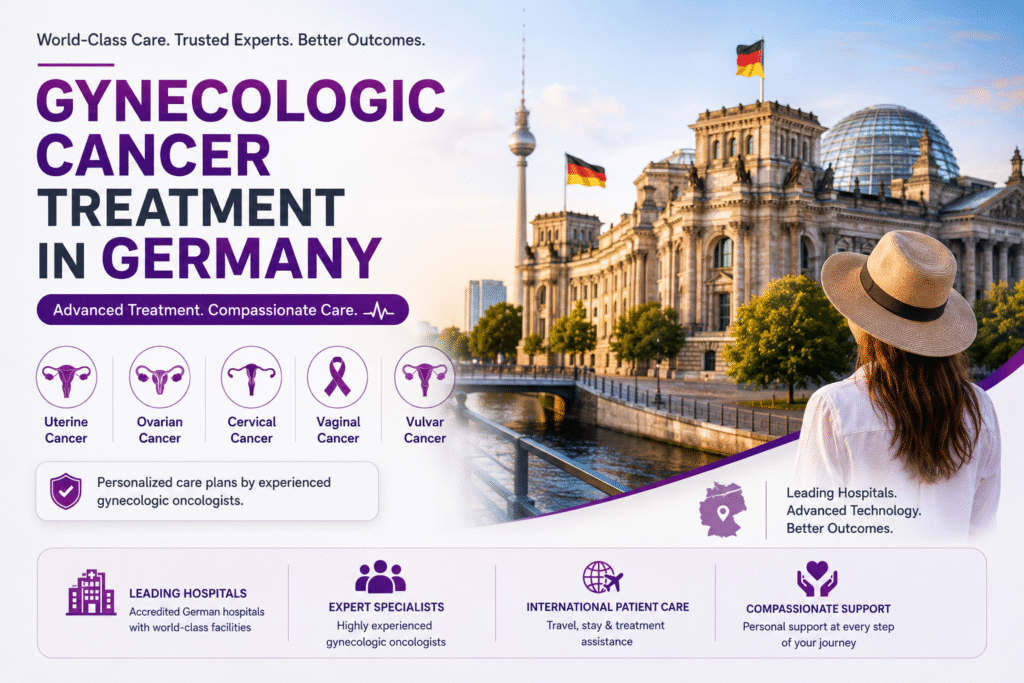
It is important to note that gynecologic cancers account for roughly 15% of all new women’s cancer cases worldwide. Gynecologic cancer refers to a group of cancers that develop in a woman’s reproductive organs. These cancers can affect different parts of the pelvic anatomy and reproductive system, requiring expert care from gynecologic oncologists.
The five main types of gynecologic cancer include:
Gynecologic cancers develop due to a combination of genetic factors such as a family or personal history of gynecologic or related cancers, which may indicate an underlying genetic predisposition; hormonal imbalances; lifestyle factors such as Smoking, which contributes to an increased risk of cervical and vulvar cancers; aging playing a contributing role; and lastly, environmental factors. While the exact cause is not always known, several risk factors can increase a woman’s chance of developing these cancers.
HPV Vaccination and Screening
The HPV vaccine protects against the high-risk HPV types responsible for most cervical cancers, as well as many vaginal and vulvar cancers. It is most effective when administered before exposure to the virus and is routinely recommended for preteens, with catch-up vaccination available for many older individuals.
Of all gynecologic cancers, cervical cancer is the only one with established screening tests. Regular Pap tests and HPV tests can identify precancerous changes or early-stage cancer, making treatment more effective and often preventing progression.
Must do: Those who have received the HPV vaccine should continue routine cervical cancer screening as recommended by their healthcare provider.
Ovarian Cancer: Often called the “silent disease” because ovarian symptoms can be subtle in the early stages. Common signs include persistent abdominal bloating, pelvic or abdominal pain, feeling full quickly while eating, frequent urination, fatigue, and unexplained changes in weight.
Cervical Cancer: Early-stage cervical cancer may not cause noticeable symptoms. As the disease progresses, women may experience abnormal vaginal bleeding (between periods, after sexual intercourse, or after menopause), unusual vaginal discharge, pelvic pain, and pain during intercourse.
Uterine Cancer: The most common symptom is abnormal uterine bleeding, particularly after menopause. Other signs include unusually heavy or irregular menstrual periods, pelvic pain, and watery or blood-tinged vaginal discharge.
Vulvar Cancer: Symptoms may include persistent itching, burning, tenderness, or pain around the vulva, along with a lump, sore, ulcer, or changes in the color or texture of the skin that do not heal.
Vaginal Cancer: Although rare, vaginal cancer can cause abnormal vaginal bleeding or discharge, pelvic pain, pain during sexual intercourse, a lump or mass in the vagina, and painful or frequent urination.
If you need guidance for any type of Gynaecolgic (ovarian, cervical, uterine, etc.) cancer treatment in Germany, CancerRounds can help you understand your diagnosis, explore treatment options, connect with specialized hospitals, and coordinate your medical journey as an international patient.
The stage of gynecologic cancer (in general) describes how far the cancer has grown or spread and is one of the most important factors in planning treatment. Most gynecologic cancers are staged using the FIGO (International Federation of Gynecology and Obstetrics) staging system, although the exact criteria vary slightly depending on the type of cancer.
In general, gynecologic cancers are classified into four stages:
In addition to the FIGO system, the TNM classification system (Tumor–Node–Metastasis) is also widely used in Germany and many other countries, particularly in oncology documentation and multidisciplinary cancer care. The TNM system describes:
In clinical practice, especially in Germany, both systems are often used together. The TNM system provides a detailed anatomical description of the cancer, while the FIGO stage offers a simplified, disease-specific classification that is especially important for gynecologic cancers. Guidelines and cancer registries translate TNM findings into FIGO stages to ensure consistency in treatment planning and reporting.
As each type of gynecologic cancer has its own staging criteria, doctors use a combination of pelvic examination, imaging tests (CT, MRI, or PET-CT), biopsy results, and sometimes surgical findings to determine the stage accurately.
This comprehensive assessment helps the multidisciplinary team choose the most appropriate treatment and estimate prognosis.
If you’re considering coming for your cancer treatment in Germany, then you should know that roughly 150,000 to 250,000 people come to receive medical treatment (this number includes both inpatient stays and ambulatory care services), with more than 50,000 coming annually for their cancer treatment.
Offering high standards of cancer care through German Cancer Society (DKG) certified gynecologic oncology centers, experienced gynecologic oncologists, and multidisciplinary tumor boards. Patients benefit from treatment plans based on the type of cancer, its stage, molecular profile, fertility goals, etc.
When we talk about the actual treatment options, which are also advanced, expertise in robotic-assisted and minimally invasive surgery helps reduce blood loss, postoperative pain, and recovery time when clinically appropriate.
Availability of precision radiotherapy, including IMRT, IGRT, VMAT, stereotactic radiotherapy, and MRI-guided image-guided brachytherapy for selected cancers.
Comprehensive supportive care, including fertility preservation, genetic counseling, psycho-oncology, pain management, rehabilitation, and survivorship programs.Access to innovative therapies and selected clinical trials for eligible patients.
For international self-paying patients, Germany often provides an attractive balance between advanced technology, specialist expertise, and treatment costs.
An accurate diagnosis is essential for choosing the most appropriate treatment for gynecologic cancer. In Germany, patients undergo a thorough evaluation to identify the type of cancer, determine its stage, and assess whether it has spread. The diagnostic process follows international guidelines and is carried out by a multidisciplinary team of gynecologic oncologists, radiologists, pathologists, medical oncologists, and radiation oncologists.
The tests recommended may vary depending on the suspected type of gynecologic cancer.
When appropriate, German cancer centers also perform molecular and genetic testing, including biomarkers such as BRCA1/BRCA2, HRD, MMR/MSI, or other genomic alterations. These results help determine whether targeted therapies or immunotherapy may be beneficial.
Once the diagnosis and stage have been confirmed, each patient’s case is reviewed by a multidisciplinary tumor board (MDT). This team includes specialists in gynecologic oncology, medical oncology, radiation oncology, pathology, radiology, genetics, fertility preservation, and supportive care. Together, they evaluate the clinical findings, imaging, pathology, and molecular test results to develop a personalized treatment plan.
Since this is a treatment page, I recommend organizing the section by treatment modality (surgery, chemotherapy, etc.) and, within each modality, mentioning which gynecologic cancers commonly receive that treatment. This is more user-friendly than repeating each cancer type under every treatment.
The treatment option that is chosen for a patient getting any type of gynecologic treatment depends highly on what the diagnosis says and follows the course of what treatment options need to be chosen, as well as whether it is required to combine more treatment options. Combining surgery and chemotherapy is a standard, highly effective multimodal approach for treating many forms of gynecologic cancers, including ovarian, uterine, and advanced cervical cancers. Treatment order and intensity depend heavily on the specific cancer type, location, and stage at diagnosis.
Surgery is the primary treatment for many early-stage gynecologic cancers and may also be used in selected advanced cases.
Common surgical procedures include:
Whenever possible, German centers perform robotic-assisted or minimally invasive laparoscopic surgery, helping reduce postoperative pain, blood loss, hospital stay, and recovery time.
Chemotherapy uses anti-cancer drugs to destroy rapidly dividing cancer cells. It may be given before surgery (neoadjuvant therapy), after surgery (adjuvant therapy), or as the primary treatment for advanced or recurrent disease.
It is commonly used for:
Radiation therapy delivers high-energy beams to destroy cancer cells while minimizing damage to surrounding tissues.
German cancer centers use advanced techniques such as Intensity-Modulated Radiation Therapy (IMRT), Image-Guided Radiation Therapy (IGRT), Volumetric Modulated Arc Therapy (VMAT), and MRI-guided brachytherapy.
Radiation therapy is most commonly used for:
Targeted therapy works by blocking specific molecules or genetic changes that help cancer cells grow.
It is commonly used for:
Immunotherapy helps the body’s immune system recognize and attack cancer cells. Biomarker testing is performed to identify patients who are most likely to benefit.
Immunotherapy is increasingly used for:
Hormone therapy is mainly used for endometrial cancer and selected low-grade ovarian tumors that depend on hormones for growth. It may also be considered for women who wish to preserve fertility or those who are not suitable candidates for surgery.
For younger women who wish to have children in the future, Germany offers fertility-preserving treatment whenever it is considered safe.
Depending on the cancer type and stage, options may include:
Treatment decisions are always individualized to balance effective cancer control with the patient’s reproductive goals and long-term quality of life.
This format keeps the page concise while clearly showing which treatment is most commonly used for which gynecologic cancer, which is what international patients are usually looking for.
I would structure this section by technology category rather than by cancer type. Under each category, explain what the technology is, which gynecologic cancers it is commonly used for, and at which stage(s) it is typically used. That keeps it organized and avoids repetition.
Germany is at the forefront of gynecologic cancer care, combining advanced medical technology with evidence-based, multidisciplinary treatment. Patients have access to state-of-the-art diagnostics, minimally invasive and robotic-assisted surgery, precision radiotherapy, molecular profiling, targeted therapies, immunotherapy, and specialized rehabilitation services through certified cancer centers. This integrated approach enables personalized treatment plans that aim to improve survival, preserve quality of life, and, where appropriate, maintain fertility while ensuring comprehensive care throughout the patient journey. The choice of technology depends on the type of gynecologic cancer, its FIGO stage, and the patient’s overall health.
Early and accurate diagnosis is essential for selecting the most effective treatment.
Germany is recognized for its expertise in minimally invasive and complex gynecologic cancer surgery.
Modern radiation techniques help deliver higher doses to tumors while protecting healthy tissues.
Germany increasingly incorporates molecular testing to personalize systemic treatment.
By integrating advanced diagnostic imaging, minimally invasive surgery, precision radiotherapy, and biomarker-driven therapies, Germany offers comprehensive, evidence-based care for women with ovarian, cervical, uterine (endometrial), vulvar, and vaginal cancers across all stages of the disease.
The cost of gynecologic cancer treatment in Germany varies widely because every patient’s treatment plan is unique. There is no fixed price, as costs depend on the type of gynecologic cancer, its stage, the treatment approach (surgery, chemotherapy, radiation therapy, targeted therapy, or immunotherapy), length of hospital stay, diagnostic tests, medications, and follow-up care. International self-paying patients typically receive a personalized cost estimate after their medical records have been reviewed.
| Gynecologic Cancer Type | Estimated Cost (EUR) | Estimated Cost (USD) |
| Cervical Cancer | €10,000–€35,000 | $11,500–$40,000 |
| Ovarian Cancer | €18,000–€70,000+ | $20,500–$80,000+ |
| Uterine (Endometrial) Cancer | €12,000–€45,000 | $13,500–$51,500 |
| Vulvar Cancer | €12,000–€40,000 | $13,500–$46,000 |
| Vaginal Cancer | €15,000–€45,000 | $17,000–$51,500 |
Note: The estimated costs above generally reflect standard treatment pathways for each type of gynecologic cancer. The final cost may increase if more advanced or complex treatments are required.
For example, patients with Stage III or IV disease often need a combination of surgery, chemotherapy, radiation therapy, and long-term targeted therapy or immunotherapy, which significantly increases the overall treatment cost.
Similarly, procedures such as robotic-assisted surgery, HIPEC (for selected advanced ovarian cancers), molecular and genetic profiling (e.g., BRCA, HRD, MSI/MMR testing), precision radiotherapy (IMRT, IGRT, or brachytherapy), fertility preservation procedures, prolonged hospitalization, intensive postoperative care, or rehabilitation services may add to the total expense. Because every treatment plan is individualized, hospitals provide a personalized cost estimate after reviewing the patient’s medical records and diagnostic findings.
Several factors can influence the overall cost of treatment, including:
Patients covered under the European Health Insurance Card (EHIC/GHIC) or with international private health insurance may be eligible for partial or full reimbursement, depending on their insurer and the planned treatment. Coverage for advanced therapies, robotic surgery, targeted therapy, and immunotherapy varies between insurance providers and policies.
International self-paying patients are generally required to provide a financial guarantee or make an advance payment before treatment begins. Most German hospitals provide a detailed treatment plan and cost estimate in advance, allowing patients to understand their expected expenses before traveling.
Choosing the right hospital is an important part of planning gynecologic cancer treatment in Germany, especially for foreign patients with a difficult case or an advanced cancer case. Rather than choosing a hospital based solely on its size or reputation, consider whether it has a specialized gynecologic oncology department, expertise in your particular cancer type and stage, and multidisciplinary tumor boards, advanced surgical and radiotherapy equipment, molecular diagnostics, and clinical trials.
For international patients, it may be helpful to verify whether the hospital has an international patient department or services, gives a preliminary treatment estimation before admission, and coordinates medical records, appointments, translations, documents, and aftercare.
| Hospital | City | Gynecologic Cancer Services & Specialization |
| Charité – Universitätsmedizin Berlin | Berlin | Comprehensive gynecologic oncology care for ovarian, cervical, endometrial, vulvar, and vaginal cancers. Services include complex cancer surgery, minimally invasive procedures, systemic therapy, radiation oncology, molecular diagnostics, and multidisciplinary treatment planning. |
| University Hospital Heidelberg (Universitätsklinikum Heidelberg) | Heidelberg | Provides multidisciplinary treatment for major gynecologic cancers, including ovarian, cervical, uterine, vulvar, and vaginal cancers. Offers advanced cancer surgery, systemic treatment, precision oncology, molecular diagnostics, and access to specialized cancer research. |
| LMU Klinikum | Munich | Comprehensive gynecologic oncology services, including treatment of ovarian, cervical, endometrial, vulvar, and vaginal cancers. Care includes gynecologic cancer surgery, minimally invasive techniques, systemic therapies, diagnostics, and multidisciplinary treatment planning. |
| University Medical Center Hamburg-Eppendorf (UKE) | Hamburg | Specialized gynecologic oncology care covering ovarian, cervical, endometrial, vulvar, and vaginal cancers, including complex surgery, medical oncology, radiation therapy, molecular diagnostics, and individualized treatment planning. |
| University Hospital Cologne (Universitätsklinikum Köln) | Cologne | Provides multidisciplinary treatment for ovarian, cervical, endometrial, vulvar, and vaginal cancers, with access to gynecologic cancer surgery, systemic therapies, radiation oncology, molecular diagnostics, and advanced cancer care. |
Note: Availability of specific procedures, clinical trials, and advanced therapies depends on the cancer type, stage, molecular characteristics, and individual eligibility. International patients should have their medical records reviewed by the hospital before deciding where to receive treatment.
The prognosis for gynecologic cancer depends on several factors, including the type of cancer, stage at diagnosis, tumor biology, and response to treatment. In general, cancers detected at an early stage have significantly better outcomes than those diagnosed after they have spread.
The table below provides approximate 5-year relative survival rates for the five major gynecologic cancers.
| Type of Gynecologic Cancer | Approximate 5-Year Survival Rate |
| Cervical Cancer | 66% (all stages combined) |
| Ovarian Cancer | 51% (all stages combined) |
| Uterine (Endometrial) Cancer | 81% (all stages combined) |
| Vulvar Cancer | 71% (all stages combined) |
| Vaginal Cancer | 52% (all stages combined) |
Survival rates are based on population-level data and represent approximate 5-year relative survival estimates for all stages combined. These figures are population-based estimates and should be interpreted with caution.
Source: National Cancer Institute (NCI) Surveillance, Epidemiology, and End Results (SEER) Program; American Cancer Society. Survival rates are based on population-level data and represent approximate 5-year relative survival estimates for all stages combined.
Recovery after gynecologic cancer treatment varies according to the type and stage of cancer, treatment received, age, overall health, and whether the reproductive organs were affected or removed.
Recovery can range from a few weeks to several months.
Patients undergoing minimally invasive surgery may return to many daily activities within 2–4 weeks, while recovery after major open surgery or combined cancer treatment may take 6–12 weeks or longer. Fatigue and treatment-related effects from chemotherapy or radiation can persist for several months, so follow-up and rehabilitation are an important part of recovery.
After treatment, women may experience fatigue, pain, changes in bowel or bladder function, hormonal changes, sexual health concerns, or emotional distress. Recovery programs may include physical rehabilitation, nutritional support, psychological counseling, pain management, and help with returning to normal daily activities.
The effects can also differ by age:
Follow-up care is an important part of gynecologic cancer management. After completing treatment, patients usually have scheduled appointments to monitor recovery, manage treatment-related effects, and look for signs of recurrence.
Follow-up may include:
The frequency and type of follow-up depend on the specific cancer, stage, treatment received, and individual risk of recurrence. Routine imaging or tumor-marker testing is not required for every patient and is generally guided by symptoms and clinical findings.
Gynecologic cancer treatment can affect fertility when it involves removal of the uterus or ovaries, ovarian tissue damage from chemotherapy, or radiation exposure to the reproductive organs. However, fertility-preserving approaches may be possible for carefully selected younger women, particularly when the cancer is detected at an early stage.
Depending on the cancer type and treatment plan, options may include:
When fertility may be affected, fertility specialists should ideally be involved before treatment begins. Depending on the patient’s age, cancer type, treatment plan, and available time before therapy, options may include egg or embryo freezing, ovarian tissue cryopreservation, or other fertility-preservation strategies.
Treatment can sometimes cause premature or treatment-induced menopause, particularly when both ovaries are removed or ovarian function is affected by chemotherapy or radiation. Symptoms may include hot flashes, sleep problems, vaginal dryness, reduced sexual desire, and changes in bone health.
Women may also experience changes in body image, sexual function, relationships, or emotional wellbeing after treatment. Gynecologic cancer survivorship care can include menopause management, sexual health counseling, pelvic-floor rehabilitation, psychological support, and treatment of vaginal or urinary symptoms.
For women who have completed treatment, long-term care focuses not only on detecting recurrence but also on helping them return to a healthy and meaningful life. In Germany, this may involve coordination between gynecologic oncologists, fertility specialists, rehabilitation teams, psycho-oncology services, and other specialists according to the patient’s needs.
Considering Gynecologic Cancer Treatment in Germany?
CancerRounds can help international patients compare treatment options, hospitals, and estimated costs based on their individual diagnosis. Get an unbiased overview of available options to make a more informed decision about where and how to proceed with treatment.
Published By
.webp)
Global Patient Care, Redefined
The CancerRounds Medical Content Team specialises in creating accurate, clear and patient-focused healthcare content. Our content is written by medically trained writers, medically reviewed, and based on reputable medical sources to support informed healthcare decisions.
Get expert guidance instantly
Share a few details and our medical team gets back to you within 4 hours with the next steps.

Tell us what you are facing and our medical team will guide you to the right doctors, hospitals and treatment.
Free Review, No Commitment
Free assessment with no pressure to proceed.
Trusted by 100,000+ Patients
Across 125+ countries worldwide
500+ Top Partner Hospitals
Globally accredited medical facilities
5000+ Expert Specialists
Senior doctors across major specialties.
Making quality healthcare accessible to patients worldwide
Everything you need to know about choosing the right hospital, doctor and treatment plan.