
Spine Surgery in Turkey

Affordable spine surgery in Turkey can provide international patients with access to procedures such as microdiscectomy, laminectomy, spinal fusion, disc replacement, scoliosis correction, and minimally invasive spine surgery at lower private-care costs than in many Western countries. 


Language Interpreter Assistance
Accredited Partner Hospitals
End-to-End Care Coordination
Visa and Travel Assistance
5000+
Specialists
500+
Partner Hospitals
125+
Countries Served

Get Your Treatment Plan and Quote

Reply in 4 hours · Plan and quote in 2 days · 100% confidential


    Trusted by 100,000+ Patients Worldwide


    Fast response • Verified doctors • 100% confidential

    What Is Spine Surgery?

    Spine surgery, also called spinal or back surgery, refers to surgical procedures used to treat conditions affecting the spinal column, vertebrae, intervertebral discs, spinal nerves, or surrounding structures. The spine supports the body, protects the spinal cord, and helps with movement and stability.

    When is spine surgery required? Back surgery is usually considered when a spinal condition causes significant pain, nerve-related symptoms, instability, or loss of function, and non-surgical treatments (physical therapy) have not provided enough relief or improvement in the condition. This is why surgery is not usually the first treatment for common back pain.

    The decision depends on how long the pain has been there, any sort of underlying conditions, how severe the symptoms are (mild or new), and imaging findings or scans.

    Spinal surgery can involve different areas of the spine:

    • Cervical spine surgery – problems affecting the neck region.
    • Thoracic spine surgery – addresses conditions in the middle or upper back.
    • Lumbar spine surgery – conditions affecting the lower back and is one of the most common areas for spinal procedures.
    • Sacral surgery – involves the lower end of the spinal column.

    Why Consider Affordable Spine Surgery in Turkey?

    Turkey reportedly receives more than 1.2 million medical tourists annually. Turkey has become a significant destination for medical tourism, attracting international patients for both elective and complex treatments.

    When we talk about spine or back surgery specifically, there are several technologies available for spine-related procedures; some of them are also advanced, such as robotic guidance, intraoperative navigation, endoscopic systems, and 3D imaging.
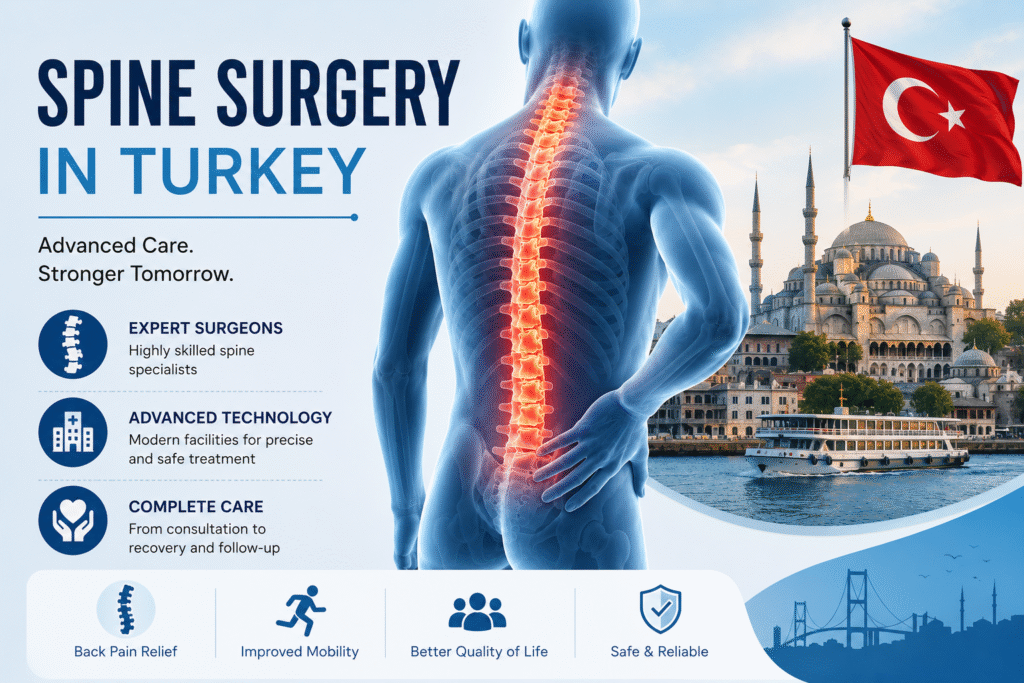
    Spine surgery in Turkey with advanced medical care and expert spine surgeons

    But then why consider Turkey for spine surgery? When compared with spine procedures globally, Turkey can be considerably less expensive than comparable private treatment in the US, UK, and some Western European countries. Turkey offers major procedures like lumbar fusions and microdiscectomies for 60% to 80% less, often bundled in all-inclusive medical tourism packages.

    • Is Spine Surgery in Turkey Safe?

    Those who are coming from other nations for spinal treatment in Turkey should know that any type of spinal surgery in Turkey can be performed safely when patients choose an appropriately accredited hospital and an experienced orthopedic spine specialist, neurosurgeon, etc. Some hospitals follow national healthcare quality standards and, where applicable, hold Joint Commission International (JCI) accreditation, which assesses areas such as patient safety, infection prevention, clinical care, and hospital management, ensuring global standards for medical procedures.

    • Turkey also has a national healthcare quality and accreditation system through TÜSKA (Türkiye Health Care Quality and Accreditation Institute). Patients should verify the hospital’s current accreditation status, the surgeon’s qualifications, the proposed procedure, and the hospital’s facilities before treatment.
    • This is important because, as with spine surgery anywhere, risks such as infection, bleeding, nerve injury, blood clots, or complications related to anesthesia can occur, and individual safety depends on the patient’s condition and treatment strategy.
    • How Is Spine Surgery Performed in Turkey?

    Back surgery in Turkey generally begins with a specialist evaluation and review of the patient’s medical records and imaging. Advanced spine surgery technologies in Turkey may include robotic guidance systems such as Mazor X Stealth and ExcelsiusGPS, full endoscopic camera systems, and intraoperative 3D imaging and navigation. When clinically appropriate, these technologies can assist surgeons with preoperative planning, implant positioning, and minimally invasive spinal procedures. Availability varies by hospital and procedure, so international patients should confirm the specific technology and surgical expertise offered by their chosen center.

    For patients coming from abroad, the usual process starts with:

    1. Remote medical evaluation: You can share the MRI/CT scans, medical reports, previous treatment records, and a list of medications for an online consultation to the Turkish hospital’s orthopedic spine specialist.
    2. Planning and quotation: The surgeon evaluates whether surgery is appropriate and recommends the procedure, expected hospital stay, and estimated cost.
    3. Travel arrangements: Once treatment is agreed upon, the patient can arrange the travel and any required visa or medical-entry documentation.
    4. In-person assessment: On arrival, the patient undergoes a physical examination and any additional imaging, blood tests, or other pre-operative investigations required by the surgical team.
    5. Surgery: The selected type of spine surgery, such as discectomy, laminectomy, spinal fusion, disc replacement, or minimally invasive surgery, is performed under appropriate anesthesia. Robotic or navigation technology may be used when clinically indicated.
    6. Hospital recovery and discharge: Patients are monitored after surgery and receive instructions regarding medication, mobility, wound care, physiotherapy, and follow-up.

    Requirements for International Patients: Patients should prepare relevant medical documentation, recent scans or imaging, prior spine-related surgical or treatment records, medication details, and identification documents before traveling. Most likely, the hospital may require additional tests or an in-person evaluation before confirming the surgery. Additionally, patients should discuss their suitability for travel and expected duration of stay with their medical team. The specific surgical method will depend on the spinal condition, its location, severity, and the overall health of the patient. The primary types of spine surgery performed in Turkey are detailed below.

    Types of Spine and Back Surgery Available in Turkey

    Turkey offers a diverse array of surgical procedures for spinal conditions, ranging from minimally invasive approaches to complex reconstructive surgeries. The choice of procedure is determined by various factors, including the location and severity of the spinal issue, the symptoms present, imaging results, and the patient’s overall health.

    • What the procedure involves
    • How complex it is
    • Typical recovery (results may vary on the characteristics of the specific patient)

    Discectomy and Microdiscectomy

    • Discectomy removes part or all of a damaged intervertebral disc that is pressing on a spinal nerve. Microdiscectomy uses a smaller incision and magnification to remove the portion of a herniated disc causing nerve compression. It is commonly considered for persistent symptoms such as sciatica that do not improve with conservative treatment.
    • General Complexity: Low-moderate
    • Hospital stay may be same day or 1 night; light activities often resume within a few weeks.

    Laminectomy

    • laminectomy removes part of the vertebral bone called the lamina to create more space around compressed nerves or the spinal cord. It is commonly used as a decompression procedure for spinal stenosis and other conditions causing narrowing of the spinal canal.
    • General Complexity: Moderate. Complexity increases when multiple spinal levels or additional procedures are involved.
    • Often 1–3 days in hospital, and recovery may take several weeks.

    Spinal Fusion

    • Spinal fusion joins two or more vertebrae to provide stability and limit abnormal movement. Screws, rods, cages, bone grafts, or other implants may be used. Fusion can be performed for conditions such as spinal instability, certain degenerative disorders, deformities, and some fractures.
    • General Complexity: Moderate-high
    • Recovery generally takes several months, making postoperative planning particularly important for international patients.

    Cervical Spine Surgery

    • Cervical spine surgery treats conditions affecting the neck portion of the spine, including herniated discs, spinal stenosis, nerve compression, and cervical myelopathy. Depending on the condition, procedures may include cervical discectomy, decompression, fusion, or artificial disc replacement.
    • Complexity varies according to the condition and procedure. Patients may resume light activities within several weeks, although complete recovery can take several months.

    Lumbar Spine Surgery

    • Lumbar spine surgery addresses problems affecting the lower back, including herniated discs, spinal stenosis, spondylolisthesis, and degenerative disc disease. Procedures may include discectomy, decompression, or lumbar fusion depending on the underlying problem.
    • Generally less complex than multi-level lumbar fusion, Recovery can range from several weeks for simpler procedures to several months after fusion.

    Artificial Disc Replacement

    • Artificial disc replacement removes a damaged spinal disc and replaces it with an artificial implant designed to preserve movement between the vertebrae. It may be performed in selected patients with cervical or lumbar disc disease.
    • Moderate-to-complex procedure, depending on the spinal level and patient’s condition.
    • Hospital stay and recovery vary, with activity restrictions commonly continuing for several weeks.

    Scoliosis and Spinal Deformity Surgery

    • Surgery for scoliosis and other spinal deformities aims to correct significant curvature or deformity and improve spinal alignment and stability. Spinal fusion with instrumentation is commonly used for patients whose deformity is severe or causing functional problems.
    • More complex types of spine surgery may require a longer hospital stay and several months of recovery and rehabilitation.

    Spinal Stenosis and Decompression Surgery

    • Decompression surgery creates additional space for the spinal cord or nerves when the spinal canal or nerve passages have become narrowed. Depending on the location and cause of compression, this may involve a laminectomy, foraminotomy, or other decompression technique.
    • Complexity varies depending on whether fusion must also be performed.

    Minimally Invasive and Endoscopic Spine Surgery (MISS)

    • Minimally invasive spine surgery (MISS) uses smaller incisions and specialized instruments to access the spine while minimizing disruption to surrounding muscles and tissues. Endoscopic spine surgery uses a small camera to visualize the surgical area and may be suitable for selected disc and spinal stenosis procedures. These approaches are not appropriate for every patient or type of spinal condition.
    • For appropriate patients, they may involve a shorter hospital stay and faster initial recovery than comparable open procedures. However, they are not suitable for every spinal condition.

    Spine Surgery in Turkey: Cost for International Patients

    Turkey is often considered for spine surgery because private treatment can be more affordable than comparable care in the US, UK, and parts of Western Europe, while selected hospitals offer advanced surgical and navigation technologies. Turkey also has more than 40 JCI-accredited hospitals, with spine surgery hospitals located in popular cities like Istanbul, Ankara, and Antalya.

    International patients also benefit from dedicated medical-tourism services, including treatment coordination, interpretation, airport transfers, and accommodation packages. But note that costs and services vary considerably between hospitals, so patients should compare itemized quotations rather than relying on advertised package prices. Generally, the spine surgery costs in Turkey start from $3,500 and can go up to $22,000+.

    In Turkey, the most frequently performed spinal surgeries include lumbar microdiscectomy and decompression laminectomy, which are used to treat herniated discs and spinal stenosis. These lower back surgeries aim to relieve nerve compression that leads to debilitating pain or sciatica, and they have high success rates ranging from 85% to 95%.

    • Spine Surgery Success Rate

    Lumbar discectomy or microdiscectomy has reported success rates of around 90%–95% for relieving leg and lower-back symptoms in appropriately selected patients. Minimally invasive or endoscopic spine surgery has reported success rates of approximately 90%–92%, with potential benefits such as smaller incisions and faster initial recovery. Spinal fusion, including single- and multi-level procedures, has reported success rates of around 70%–90% for improving stability and reducing pain. For brain and spinal cord tumors or other complex neurological cases, specialized centers may report outcomes around 91%,

    Note: Results depend heavily on type, location, neurological involvement, and the extent of surgery possible. These figures are general clinical estimates and should not be interpreted as Turkey-wide or guaranteed success rates.

    • Estimated Cost for Spinal Surgery for International Self-Paying Patients

    Spine Surgery TypeEstimated Cost in Turkey (USD)
    Discectomy / Microdiscectomy$3,500–$7,000
    Laminectomy$4,000–$8,000
    Spinal Fusion$7,000–$17,500+
    Cervical Spine Surgery$4,500–$11,500+
    Lumbar Spine Surgery$4,000–$14,000+
    Artificial Disc Replacement$7,000–$14,000+
    Scoliosis & Spinal Deformity Surgery$11,500–$21,000+
    Spinal Stenosis / Decompression Surgery$4,000–$9,500+
    Minimally Invasive / Endoscopic Spine Surgery (MISS)$4,000–$9,500+

    *These are general estimates; figures can vary by location within Turkey and also by individual cases, as each case is unique or may encounter different challenges.

    How to Choose a Spine Surgeon or Hospital in Turkey

    The international patient needs to take into consideration factors such as clinical quality, accreditation, surgeon expertise, technological facilities, and continuity of care in evaluating a Turkish spine hospital, not just the price. Factors to consider are:

    • Hospital accreditation: It is important to establish if the hospital is currently JCI accredited and/or accredited by any other accreditation body for quality healthcare, like the TÜSKA (Türkiye Health Care Quality and Accreditation Institute).
    • Surgeon’s qualifications: Ensure that the surgeon holds a valid license and has been qualified in his specialization. Determine his experience and how many surgeries he has undertaken for your condition.
    • Experience with the procedure: While the hospital may be experienced in spine surgery in general, they might not have experience in certain conditions and procedures including scoliosis, revision surgery, spinal tumors, cervical surgery among others.
    • Technological and infrastructural facilities: Where clinically possible, establish availability of robotic systems, image-guided navigation, three-dimensional imaging, endoscopy, neuromonitoring and minimally invasive surgery techniques.
    • Inter-disciplinary care: Complex conditions would call for consultation with other experts in the field of neurosurgeons, orthopedic spine surgeons, radiologists, neurologists, anesthesiologists and rehabilitation specialists.
    • Safety for the patient: Establish the infection control policies, available anesthesia facilities, intensive-care facilities, emergency facilities, blood-banking facilities and management of surgical complications in the hospital.
    • Transparency in pricing: Ask for a quotation that includes the surgeon’s fee, anesthesia services, stay in the hospital, imaging facilities, surgical implants, pharmaceuticals, and international patient services.
    • International patient facilities: Interpretation, coordination of medical record, airport transfers, hotel facilities and an international patient coordinator.
    • Recovery and follow-up: Ask how long you should remain in Turkey, when you can safely fly home, whether physiotherapy is required, and how postoperative follow-up will be managed after you return to your country.
    • Independent verification: Check accreditation, surgeon credentials, and hospital information through official or independent sources rather than relying solely on medical-tourism advertisements or package providers.
    • Hospitals Offering Spine-Related Surgeries in Turkey

    Istanbul, Ankara, Bursa, and Izmir are among the cities worth considering, but the best location depends more on the specific spine condition, required procedure, surgeon expertise, hospital accreditation, and postoperative care than on the city itself. To give an idea, here is a list of hospitals you can look into:

    1. VM Medical Park Pendik Hospital – Istanbul
      The hospital provides orthopedic and neurosurgical spine care for conditions like herniated discs, spinal stenosis, and degenerative disorders. Treatment options include minimally invasive procedures, decompression, discectomy, and spinal stabilization or fusion.
    2. Turan & Turan Bone, Joint and Spine Surgery Medical Center – Bursa
      Turan & Turan has a particular focus on orthopedic and spine disorders, addressing a range of conditions such as disc herniation, spinal stenosis, scoliosis, and degenerative issues. Their approach to spine care emphasizes minimally invasive techniques, including endoscopic spine surgery, microdiscectomy, percutaneous procedures, and minimally invasive decompression or stabilization when suitable. This focus on advanced surgical methods aims to improve patient recovery times and outcomes while minimizing discomfort.
    3. Medical Park Hospitals Group – Multiple Locations

    Medical Park hospitals provide a diverse array of spine procedures, though the availability of technology and specialist expertise varies across locations. Depending on the specific campus and patient case, the following services may be offered:

    • Microdiscectomy
    • Endoscopic spine surgery
    • Minimally invasive decompression
    • Percutaneous spinal fixation
    • Cervical fusion
    • Lumbar fusion
    • Robotic-assisted spinal surgery

    Certain facilities may utilize advanced technologies such as the Mazor X Stealth Edition robotic guidance system, intraoperative navigation, and 3D imaging to assist in intricate spinal instrumentation. International patients are encouraged to verify the specific Medical Park campus and the technologies accessible for their planned procedures.

    1. Hisar Hospital Intercontinental – Istanbul
      Hisar provides neurosurgical and orthopedic treatment for spinal disorders, including conditions affecting the cervical and lumbar spine.

    Available procedures may include:

    • Disc surgery
    • Spinal decompression
    • Spinal fusion
    • Other minimally invasive spinal procedures: microsurgical visualization and intraoperative imaging
    1. Memorial Hospitals Group – Multiple Locations
      Memorial provides neurosurgical and orthopedic spine treatment across its hospital network, including surgery for herniated discs, spinal stenosis, degenerative conditions, deformities, and complex spinal disorders. Depending on where the hospital branch is and the surgical team,

    Procedures may include:

    • Microdiscectomy,
    • Endoscopic or minimally invasive decompression, minimally invasive spinal fusion, percutaneous screw fixation, and robotic or navigation-assisted spinal surgery.
    • Some Memorial centers use advanced 3D intraoperative imaging and navigation systems to support implant placement and complex spinal procedures.

    An important note: do not choose a hospital solely because it advertises the lowest price or claims to have the “best” spine surgeons. The safest choice is a center with appropriate accreditation (JCI) and relevant procedure-specific expertise; check whether the hospital you have chosen has a dedicated spine center, transparent costs, and a clear plan for postoperative care.

    What International Patients Should Know Before Spine Surgery in Turkey?

    For those considering spine surgery for themselves or their loved one, especially if you’re considering Turkey as an option, some prerequisites need to be considered before you make a decision.

    Firstly, any kind of surgery that involves the nervous system requires precision and the highest level of care and attention.

    Multi-level spinal fusions, spinal deformity corrections (for advanced scoliosis or kyphosis), and spinal tumor resections are some of the complex procedures that involve extensive restructuring of the skeletal system alongside critical neurovascular pathways, which significantly increases their risk profile compared to routine, minimally invasive decompression surgeries like microdiscectomies.

    In general, though, here are a few things to keep in mind before your spine surgery in Turkey:

    • Before your travel to Turkey

    First, check in your home country whether you’re eligible to travel for a spine surgery, and send or share MRI/CT scans, previous surgical records, medical history, medication, and allergy details to the Turkish hospital for review. They should obtain medical clearance from their doctor at home, confirm the proposed procedure, hospital stay, recovery period, total cost, and expected time in Turkey, and arrange postoperative follow-up both in Turkey and after returning home.

    • Preparing for Surgery in Turkey

    After arrival, the surgical team may repeat or request blood tests, imaging, physical examination, cardiac assessment, or other pre-operative investigations. Tell the medical team about all medications and supplements you take. Do not stop blood thinners or other prescribed medicines unless your doctor specifically instructs you to do so. Your hospital should also provide instructions regarding fasting, bathing, smoking, medications, and what to bring before surgery.

    • Plan Your Stay Around Recovery, Not Just Surgery

    The hospital stay depends on the procedure. A straightforward microdiscectomy may require considerably less inpatient care than a multi-level spinal fusion or scoliosis correction. Do not book a return flight immediately after discharge. Your surgeon should determine when you are medically fit to travel, particularly after major surgery. International patients may need additional time in Turkey for wound checks, mobility assessment, and early postoperative review.

    • Post-surgery, Recovery and Follow-up

    Before leaving Turkey, be sure to obtain your discharge summary, operative report, imaging, medication instructions, implant details, and follow-up plan. It’s important to ask when you can safely resume activities like walking, driving, work, and lifting, as well as whether you will need physiotherapy. Also, make arrangements for a follow-up with a spine specialist in your home country. Lastly, clarify how the Turkish hospital will address any postoperative questions or complications once you return.

    • Travel and Logistics

    For the journey home, it’s important to discuss the following with your surgical team: flight timing, sitting restrictions, mobility, pain medication, wound care, and the risk of blood clots related to prolonged travel after your surgery. Depending on how mobile you are, you might require wheelchair assistance at the airport or need to travel with a companion. Be sure to arrange accessible accommodation and transportation instead of assuming you’ll be able to travel or walk normally right after the procedure.

    Recovery, Aftercare, Online Follow-ups After Spine Surgery in Turkey

    Recovery after spine surgery depends on several factors such as the procedure, the number of spinal levels treated, and whether complications occur.

    For example, a patient undergoing a single-level L4–L5 microdiscectomy for a herniated disc may recover faster than a patient undergoing a two- or three-level L3–S1 spinal fusion. Similarly, multi-level scoliosis correction is a more extensive procedure and generally requires a longer hospital stay, rehabilitation, and overall recovery period.

    • After surgery, patients are typically advised to gradually start walking and to steer clear of extended periods of bed rest. The first week post-operation includes pain management, wound care, and restrictions on activities based on the specific procedure performed.
    • As 4-6 weeks pass, aftercare often involves physiotherapy to help regain strength, flexibility, posture, and ensure safe movement. It’s important to avoid heavy lifting, excessive bending or twisting, and any strenuous exercise until the surgeon gives the go-ahead that it’s safe to resume those activities.
    • 3–6 months: Many patients regain substantially more function and can progressively return to normal activities. Spinal fusion and complex deformity surgeries may require longer for complete healing.
    • 6–12 months: Some patients, particularly those undergoing fusion or extensive reconstruction, may continue to experience gradual improvement and spinal healing during this period.
    • Risks and Possible Complications of Spine Surgery

    Like any major operation, spine surgery carries potential risks. The likelihood depends on the procedure, number of spinal levels treated, patient’s health, and surgical complexity.

    • Infection at the surgical site or deeper tissues
    • Bleeding or blood clots
    • Nerve or spinal cord injury, which can cause weakness, numbness, or other neurological problems
    • Dural tear or cerebrospinal fluid (CSF) leak
    • Persistent or recurrent pain after surgery
    • Damage to nearby blood vessels or organs, depending on the spinal level and surgical approach
    • Implant or hardware problems, such as loosening, displacement, or breakage
    • Failure of spinal fusion (non-union) after fusion surgery
    • Adjacent segment problems, where spinal levels near a fusion later develop degeneration
    • Blood clots in the legs or lungs, particularly after major surgery or prolonged immobility
    • Anesthesia-related complications
    • Need for revision surgery if symptoms persist, complications develop, or the spine does not heal as expected.

    FAQs About Affordable Spine Surgery in Turkey

    1. Is spine surgery in Turkey safe for international patients?

    Yes, spine surgery is performed for international patients in Turkish hospitals, including facilities with international and national accreditation. Safety depends on the hospital, surgeon’s experience, procedure, patient health, and postoperative care.

    2. Is spine surgery cheaper in Turkey than in the US or UK?

    Generally, it can be. Private spine surgery in Turkey may cost less than comparable treatment in the US, UK, and some Western European countries, although the actual difference depends on the procedure, hospital, implants, and services included.

    3. How much does spine surgery cost in Turkey?

    Approximately $3,500 to $29,000+, depending on the procedure. Simple procedures such as microdiscectomy may cost less, while multi-level fusion and complex spinal deformity surgery can cost considerably more.

    4. What is the most affordable spine surgery in Turkey?

    There is no single cheapest procedure for every patient. Less complex procedures such as discectomy, microdiscectomy, or certain decompression procedures generally cost less than spinal fusion, artificial disc replacement, or scoliosis correction.

    5. How long should international patients stay in Turkey after spine surgery?

    It depends on the procedure and recovery. A straightforward procedure may require a shorter stay, while spinal fusion, scoliosis correction, or complex surgery may require several days of hospitalization followed by additional recovery time in Turkey. The surgeon should determine when it is safe to fly home.

    6. Can I travel to Turkey for spine surgery if I have already had spine surgery?

    Yes, in some cases, but previous surgery can make treatment more complex. Patients should provide previous operative reports and imaging so the Turkish spine specialist can assess whether revision surgery is appropriate.

    7. What should I bring when traveling to Turkey for spine surgery?

    Bring MRI/CT scans and reports, previous medical and surgical records, medication and allergy information, identification documents, and relevant test results. Obtain medical clearance for travel and surgery from your doctor at home when appropriate.

    8. How soon can I return home after spine surgery in Turkey?

    There is no fixed timeframe. Patients undergoing simpler procedures may be able to travel sooner than those undergoing multi-level fusion or complex surgery. Your surgeon should assess your wound, mobility, pain control, and overall condition before approving air travel.

    9. Does the cost of spine surgery in Turkey include accommodation and airport transfers?

    Sometimes, but not always. Some international-patient packages include accommodation, airport transfers, interpretation, and treatment coordination, while others cover only medical expenses. Always request an itemized quotation before booking.

    10. Can I continue my spine surgery follow-up after returning home?

    Yes. Patients should arrange follow-up with a spine specialist in their home country and obtain their operative report, discharge summary, imaging, medication instructions, implant details, and rehabilitation plan before leaving Turkey.

    Published By

    CancerRounds — Global Patient Care

    CancerRounds Medical Content Team

    Global Patient Care, Redefined

    The CancerRounds Medical Content Team specialises in creating accurate, clear and patient-focused healthcare content. Our content is written by medically trained writers, medically reviewed, and based on reputable medical sources to support informed healthcare decisions.

    Medically Reviewed By: Dr. Farrukh Ahmed
    Last Updated on August 24, 2026
    Based on current medical guidelines
    Published at August 24, 2026

    Get expert guidance instantly

    Chat Now

    Talk to a Specialist

    Share a few details and our medical team gets back to you within 4 hours with the next steps.

      ✨ YOUR MEDICAL TRAVEL PARTNER

      Find the Right Care for Your Condition

      Tell us what you are facing and our medical team will guide you to the right doctors, hospitals and treatment.

      Free Review, No Commitment

      Free assessment with no pressure to proceed.

      👥

      Trusted by 100,000+ Patients

      Across 125+ countries worldwide

      🏥

      500+ Top Partner Hospitals

      Globally accredited medical facilities

      👨‍⚕️

      5000+ Expert Specialists

      Senior doctors across major specialties.

      Our Impact So Far

      Making quality healthcare accessible to patients worldwide

      5000+
      Specialists
      500+
      Partner Hospitals
      100,000+
      Patients Served
      24/7
      Support

      Common Questions About Our Services

      Everything you need to know about choosing the right hospital, doctor and treatment plan.

      WhatsApp

      Thank You!

      We have received your details. Our medical team will get back to you shortly.