
Reply in 4 hours · Plan and quote in 2 days · 100% confidential
Regenokine Therapy is often grouped under the umbrella of regenerative medicine or biologic treatments is an autologous blood-derived treatment that uses a patient’s own blood to prepare an anti-inflammatory serum for injection into painful or inflamed joints and other musculoskeletal areas. Are both Regenokine and Orthokine the same treatments? Yes, Regenokine and Orthokine are essentially the same treatment. Both terms refer to a patented regenerative medical procedure scientifically known as Autologous Conditioned Serum (ACS).
What is Regenokine used for? Regenokine is primarily used as a non-surgical treatment approach for pain and inflammation affecting the joints and musculoskeletal system. It has been used particularly in conditions such as:
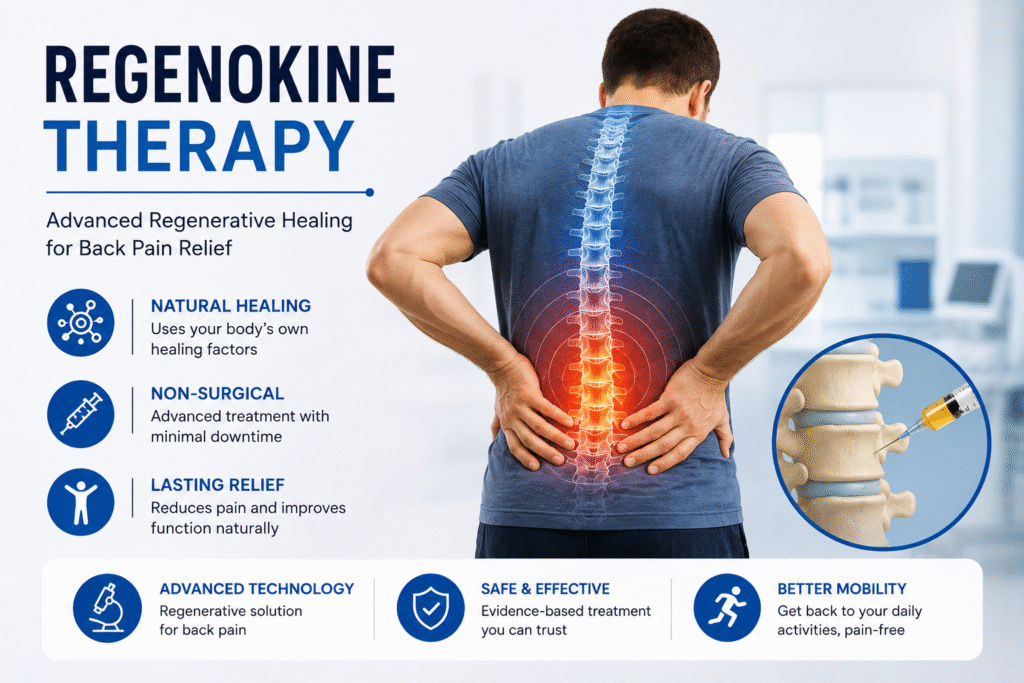
A small amount of the patient’s blood is drawn, processed to increase the concentration of certain anti-inflammatory proteins, and then injected into the affected area. One of the key components is interleukin-1 receptor antagonist (IL-1Ra), which can block the activity of interleukin-1, an inflammatory signaling molecule involved in joint and tissue inflammation.
What is Interleukin-1 (IL-1)? Promotes acute and chronic inflammation, triggers fever, and activates processes that degrade bone and joint cartilage (such as in osteoarthritis).
How does it help reduce pain? IL-1Ra blocks the effects of interleukin-1 (IL-1), a molecule involved in inflammation and joint tissue breakdown. By reducing this inflammatory signaling, Regenokine helps decrease inflammation and pain and improve joint functioning.
Both Regenokine therapy and platelet-rich plasma (PRP) use a patient’s own blood (autologous treatments). Regenokine is more specialised and restricted than PRP due to differences in biological processing, storage protocols, and regulatory oversight.
Regenokine uses autologous conditioned serum (ACS). The blood is incubated and processed to increase anti-inflammatory proteins, particularly interleukin-1 receptor antagonist (IL-1Ra), which helps counter inflammatory signaling.
PRP concentrates platelets and their associated growth factors from the patient’s blood. These substances are intended to support tissue repair and healing.
Regenokine primarily acts as a targeted anti-inflammatory blocker to stop joint pain, while PRP concentrates platelets and growth factors to actively jumpstart tissue repair and structural healing.
They also differ in processing time: PRP is prepared same-day in 30 to 60 minutes, while Regenokine requires an 18 to 24-hour incubation period before it can be injected.
Overall, it’s not as if one is better than the other; the choice depends on the condition of the individual, expected goals, and physician assessment.
The cost of Regenokine therapy in Germany is typically around €1,500–€3,000 per session (approximately US1,750–3,500). A treatment course commonly involves 3–5 sessions, although the number of injections depends on the condition, severity, and physician’s treatment plan.
| Treatment | Estimated Cost in Germany |
| Regenokine per session | €1,500–€3,000 (US1,750–3,500) |
| 5-session course | €7,500–€15,000 (US8,750–17,500) |
Additional costs: The total treatment cost may also include the initial consultation, imaging, laboratory tests, medication, or follow-up appointments. International patients should request an itemized treatment estimate before traveling to Germany.
These are indicative estimates rather than fixed German prices. Actual costs can vary across different treatment centers, exact number of sessions required and individual plans.
Regenokine therapy in Germany typically requires international patients to pay out of pocket. Insurance coverage is often limited because Regenokine, also known as autologous conditioned serum (ACS), is not usually recognized as a standard reimbursable treatment for various musculoskeletal issues, and the quality of clinical evidence can differ depending on the specific condition.
Additionally, some applications of Regenokine are still under evaluation in clinical research, focusing on its long-term efficacy and how it stacks up against conventional treatments. If a treatment is part of a clinical trial, the associated costs may be covered or managed differently based on the trial’s guidelines. Patients should verify with both the treatment provider and their insurance company whether their procedure is part of a clinical study and which expenses are covered.
Regenokine uses autologous conditioned serum (ACS) prepared from the patient’s own blood. Its main potential benefits include:
Regenokine has several significant limitations:
For patients from other countries interested in Regenokine therapy in Germany, it is necessary to have a medical assessment prior to making travel arrangements and to determine the suitability of ACS for your condition.
Considering Regenokine treatment in Germany? CancerRounds will provide you with information about your available treatment choices, compare cost estimates, and get you in touch with appropriate therapy centers. Send us your medical records to discuss further treatment possibilities.
Regenokine is mainly used for joint pain and inflammatory musculoskeletal conditions, particularly osteoarthritis. It may also be considered for selected tendon, ligament, sports-related, and spine-related conditions depending on the patient’s diagnosis.
No. Both use the patient’s own blood, but Regenokine uses autologous conditioned serum (ACS) with increased anti-inflammatory proteins such as IL-1Ra, while PRP concentrates platelets and growth factors to support tissue healing.
Blood is collected from the patient, incubated and processed to prepare autologous conditioned serum, and then injected into the affected joint or tissue. The exact preparation and injection protocol can vary between providers.
The number of injections depends on the condition and treatment response. A treatment course commonly involves 4-5 injections, but the physician determines the schedule for each patient.
The injection itself is relatively quick, but preparation of the autologous conditioned serum (ACS) requires an incubation and processing period. Patients should confirm the exact timeline with their treatment center.
No. Regenokine should not be described as a guaranteed cure or as a treatment proven to regenerate damaged cartilage. Some patients may experience pain and functional improvement, but results vary.
Yes, Regenokine/ACS treatment is available through selected orthopedic and regenerative medicine providers in Germany. Patients should confirm that the center offers the specific Regenokine or Orthokine protocol before traveling.
Yes. International patients can seek Regenokine treatment in Germany, subject to medical assessment and provider acceptance. Medical records and imaging can usually be reviewed before travel to determine whether treatment may be appropriate.
Costs vary by provider and treatment plan. Regenokine therapy may cost approximately €1,500–€3,000 (US1,750–3,500) per session, excluding additional consultations, imaging, or follow-up services.
International patients generally need to self–pay for Regenokine treatment themselves. Coverage depends on their private or international insurance policy, so patients should obtain confirmation from their insurer before traveling.
This depends on the treatment site, number of injections, and your doctor’s advice. International patients should discuss travel timing and follow-up care with their treating physician before booking their return journey.
Published By
.webp)
Global Patient Care, Redefined
The CancerRounds Medical Content Team specialises in creating accurate, clear and patient-focused healthcare content. Our content is written by medically trained writers, medically reviewed, and based on reputable medical sources to support informed healthcare decisions.
Get expert guidance instantly
Share a few details and our medical team gets back to you within 4 hours with the next steps.
Tell us what you are facing and our medical team will guide you to the right doctors, hospitals and treatment.
Free Review, No Commitment
Free assessment with no pressure to proceed.
Trusted by 100,000+ Patients
Across 125+ countries worldwide
500+ Top Partner Hospitals
Globally accredited medical facilities
5000+ Expert Specialists
Senior doctors across major specialties.
Making quality healthcare accessible to patients worldwide
Everything you need to know about choosing the right hospital, doctor and treatment plan.