
In the evolving landscape of oncology, dendritic cell therapy has emerged as one of the most promising immunotherapy approaches for patients battling advanced cancers. Often called the “master cells” of the immune system, dendritic cells have the unique ability to recognize cancer antigens and activate the body’s defense mechanisms to attack tumors.
Over the past decade, scientific breakthroughs—particularly in Germany—have firmly established dendritic cell therapy for cancer as a personalized, targeted, and highly effective treatment option. Its growing global acceptance stems from impressive results, improved quality of life, and a strong potential to extend dendritic cell therapy life expectancy, even in late-stage diseases such as dendritic cell therapy stage 4 cancer cases.
Confused about treatment options?
Get a free second opinion from our oncologists
Cancer treatment with dendritic cells is now considered one of the most in-demand branches of immunotherapy in Europe. The significance of this innovation was highlighted in 2011, when American immunologist Ralph Steinman was awarded the Nobel Prize for his pioneering discovery of dendritic cells and their vital role in immune regulation.
Specialized oncology centers—especially in India and Germany—are now attracting a growing number of patients worldwide. This is largely due to the country’s exceptional medical standards, extensive research infrastructure, and the remarkable dendritic cell therapy success rate achieved by its healthcare professionals.
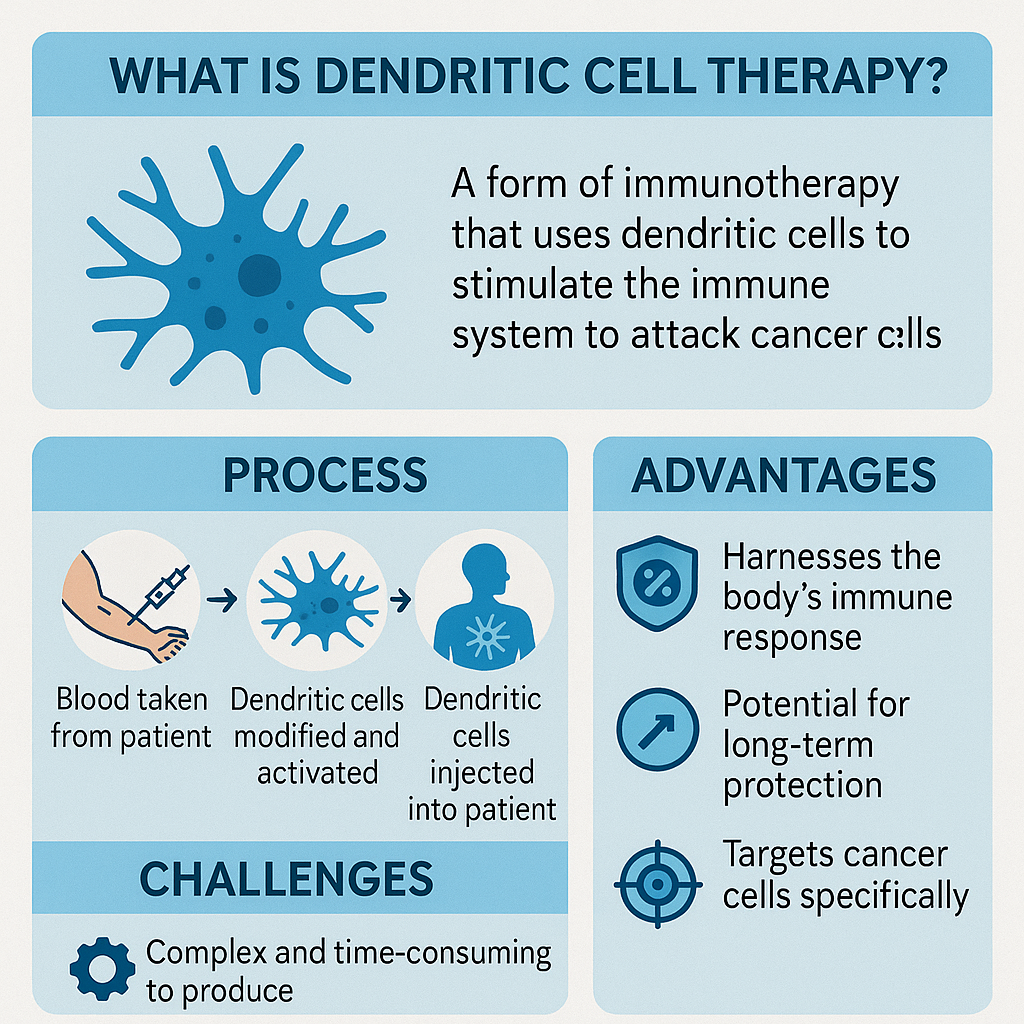
Dendritic cell therapy involves extracting a patient’s own immune cells, programming them in the lab to recognize cancer cells, and then reintroducing them into the body. These re-engineered cells help the immune system detect and destroy cancer more effectively. Unlike traditional chemotherapy, which attacks both healthy and cancerous cells, dendritic cell therapy for cancer offers a highly targeted approach with fewer side effects.
S.No. | Steps | Process Description |
| 1 | Initial Consultation & Eligibility Check | A cancer specialist evaluates the patient’s medical history, diagnosis, and tumor type to determine suitability for dendritic cell therapy for cancer. Factors such as stage, overall health, and previous treatments are considered. |
| 2 | Pre-Treatment Workup | Comprehensive imaging (MRI, PET-CT), lab tests, and tumor antigen profiling are done to design a personalized dendritic cell therapy protocol. |
| 3 | Leukapheresis (Cell Collection) | Blood is drawn, and white blood cells containing monocytes are separated using apheresis technology. These cells are the raw material for dendritic cell therapy. |
| 4 | Laboratory Activation & Antigen Loading | The collected cells are matured in a specialized lab and “trained” with tumor antigens so they can recognize and attack cancer cells effectively. |
| 5 | Vaccine Preparation | The activated dendritic cells are processed into a personalized dendritic cell vaccine for infusion into the patient. |
| 6 | Vaccine Administration (Infusion) | The dendritic cell therapy vaccine is injected intradermally or intravenously in multiple sessions, typically over weeks or months. |
| 7 | Adjunct Therapies (If Needed) | Some protocols combine dendritic cell therapy with low-dose chemotherapy, radiotherapy, or hyperthermia to boost immune response. |
| 8 | Immune Monitoring & Tumor Response Evaluation | Regular scans and blood tests check tumor size reduction, immune system activity, and local tumor control rates. |
| 9 | Post-Treatment Follow-Up | Long-term monitoring ensures sustained dendritic cell therapy life expectancy improvements and detects early signs of recurrence. |
| 10 | Outcome Analysis & Quality of Life Assessment | Doctors assess survival rates, side effects, and patient-reported quality of life to measure dendritic cell therapy benefits. |
| Role | Key Responsibilities in DCT |
| Medical Oncologist | Determines patient eligibility, integrates DCT into treatment plan, monitors tumor markers. |
| Immunotherapy Specialist | Designs DCT protocol, oversees cell extraction, processing, and reinfusion. |
| Pathologist | Confirms cancer type, analyzes tumor antigens for dendritic cell programming. |
| Radiologist / Nuclear Medicine Specialist | Conducts imaging for staging, response evaluation, and local tumor control assessment. |
| Surgical Oncologist | Performs biopsies or tumor resections needed for antigen harvesting. |
| Radiation Oncologist | Coordinates radiotherapy if required in combination with DCT to boost immune activation. |
| Nursing Coordinator | Patient education, therapy scheduling, and side effect monitoring. |
| Nutritionist | Optimizes immune function through a diet tailored to DCT protocols. |
| Palliative Care Specialist | Symptom management, pain control, and psychological support. |
| Patient Navigator / Case Manager | Central point of contact, manages records, travel (for medical tourism cases), and follow-up. |
Over recent years, dendritic cell therapy has been extensively evaluated in clinical trials—both as a standalone monotherapy and in combination with chemotherapy, radiotherapy, or targeted therapies. The findings have been remarkably encouraging:
A 2024 comprehensive review by Hato et al. further strengthens this optimism, showcasing dendritic cell vaccination (DCV) as a unique therapeutic strategy capable of coordinating both innate and adaptive immune responses. This is particularly critical for immune desert tumors, where other treatments—such as checkpoint inhibitors—often fail.
Due to these promising outcomes, dendritic cell therapy and DC vaccines have now been integrated into updated cancer treatment protocols across various malignancies, including:
These advancements are not only enhancing patient outcomes but also contributing to longer dendritic cell therapy life expectancy and improved dendritic cell therapy 1 year survival rate across cancer types
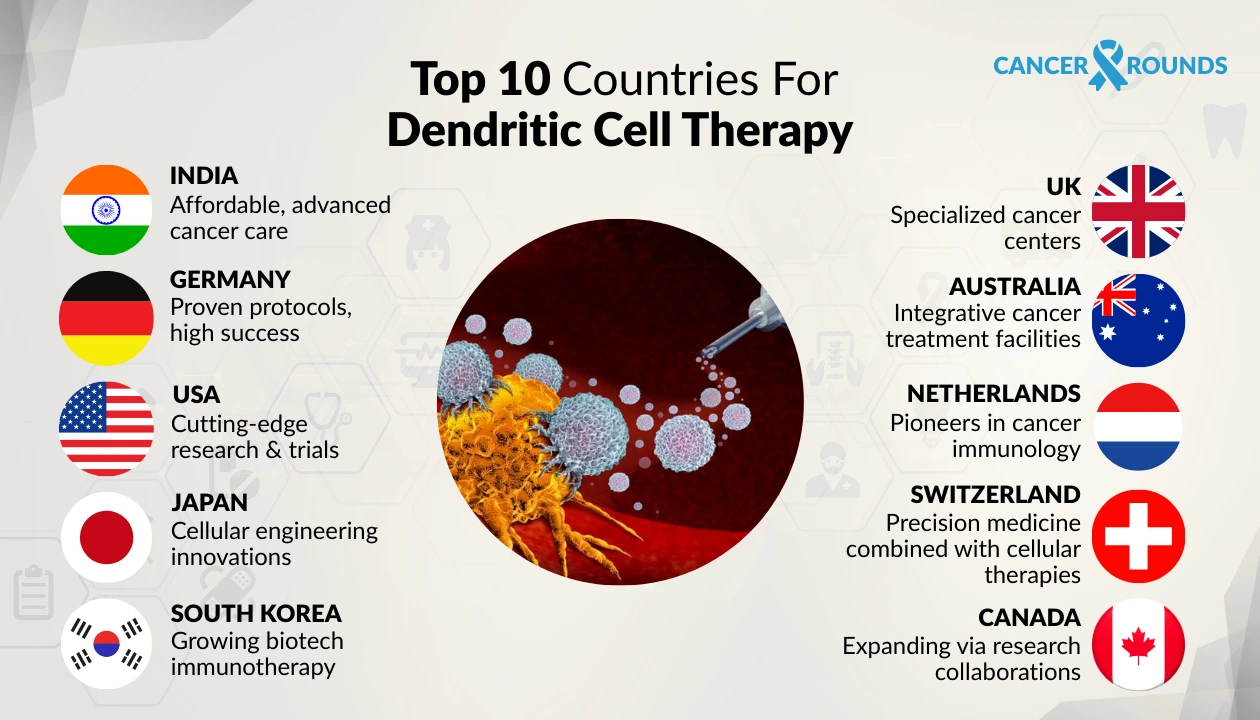
The table mentions the top 10 countries offering dendritic cell therapy alongside survival rates and commonly treated tumor types in particular countries.
| Rank | Country | Est. 1-Year Survival Rate | Avg. Local Tumor Control | Common Tumor Types Treated |
| 1 | India | 50–65% | 55–65% | Breast, Colon, Pancreatic, Lung |
| 2 | Germany | 65–78% | 70–80% | Glioblastoma, Melanoma, Pancreatic, Lung |
| 3 | United States | 60–75% | 65–75% | Melanoma, Renal, Colon, Breast |
| 4 | Japan | 58–70% | 65–72% | Osteosarcoma, Glioblastoma, Gastric |
| 5 | South Korea | 55–68% | 60–70% | Breast, Liver, Melanoma |
| 6 | United Kingdom | 55–65% | 60–68% | Melanoma, Lung, Renal |
| 7 | Australia | 53–65% | 58–65% | Melanoma, Glioblastoma, Mesothelioma |
| 8 | Netherlands | 55–68% | 60–70% | Melanoma, Glioblastoma |
| 9 | Switzerland | 60–70% | 65–72% | Pancreatic, Kidney, Breast |
| 10 | Canada | 54–66% | 60–68% | Colon, Breast, Lung |
Here’s the cost range for dendritic cell therapy across the top 10 countries, showing both the minimum and maximum estimated treatment costs in USD for each location.
The dendritic cell therapy cost depends on the country, clinic, and complexity of treatment. Germany generally charges between $20,000 and $40,000 USD for complete protocols, while India offers the same therapy at a fraction of the cost, making it accessible to a larger patient base without compromising on quality.
Unlike conventional treatments, dendritic cell therapy for cancer focuses on stimulating the patient’s immune system to recognize and eliminate malignant cells. This immunological precision can help alleviate symptoms such as cancer-related bone pain, potentially improve healing rates, and even reduce long-term treatment costs compared to chemotherapy or targeted drugs.
Furthermore, the dendritic cell therapy cost—though higher in countries like Germany—is offset by its potential to minimize relapse rates and enhance long-term survival. Patients seeking more budget-friendly options can also consider India, where advanced treatment is available at a fraction of the price, without compromising clinical standards.
The dendritic cell therapy life expectancy varies depending on cancer type, stage, and patient health. In stage 4 cancer, achieving a complete cure is challenging, but dendritic cell therapy stage 4 cancer patients have shown improved quality of life and extended survival compared to conventional treatments alone. Several studies in Germany report a promising dendritic cell therapy 1 year survival rate for certain tumor types, offering renewed hope for patients.
Here’s the bar graph showing the estimated 1-year survival rate for dendritic cell therapy patients across the top 10 countries, with Germany leading in outcomes.
The dendritic cell therapy success rate varies but is generally higher when initiated earlier in the disease process or combined with other therapies. Research continues worldwide, aiming to refine protocols, lower costs, and improve long-term remission rates.
As technology advances, dendritic cell therapy is moving closer to becoming a standard treatment, giving patients with advanced and refractory cancers a real chance at extended survival and better quality of life.
For patients exploring innovative cancer treatments, dendritic cell therapy for cancer—especially in leading nations like Germany—offers a scientifically backed, personalized, and hopeful alternative. Whether seeking cutting-edge facilities abroad or more cost-effective options in India, this therapy represents a promising frontier in oncology.
Cancer Rounds assists cancer patients for personalized dendritic cell therapy with seamless coordination between oncologists, immunotherapy specialists, and support teams—aiming for higher dendritic cell therapy success rate, improved local tumor control, and better dendritic cell therapy 1 year survival rate.
.webp)
Get expert guidance instantly
Tell us about your condition and we will help you find the right care.
Get expert guidance instantly
Share a few details and our medical team gets back to you within 4 hours with the next steps.

Tell us what you are facing and our medical team will guide you to the right doctors, hospitals and treatment.
Free Review, No Commitment
Free assessment with no pressure to proceed.
Trusted by 100,000+ Patients
Across 125+ countries worldwide
500+ Top Partner Hospitals
Globally accredited medical facilities
5000+ Expert Specialists
Senior doctors across major specialties.
Making quality healthcare accessible to patients worldwide
Everything you need to know about choosing the right hospital, doctor and treatment plan.