
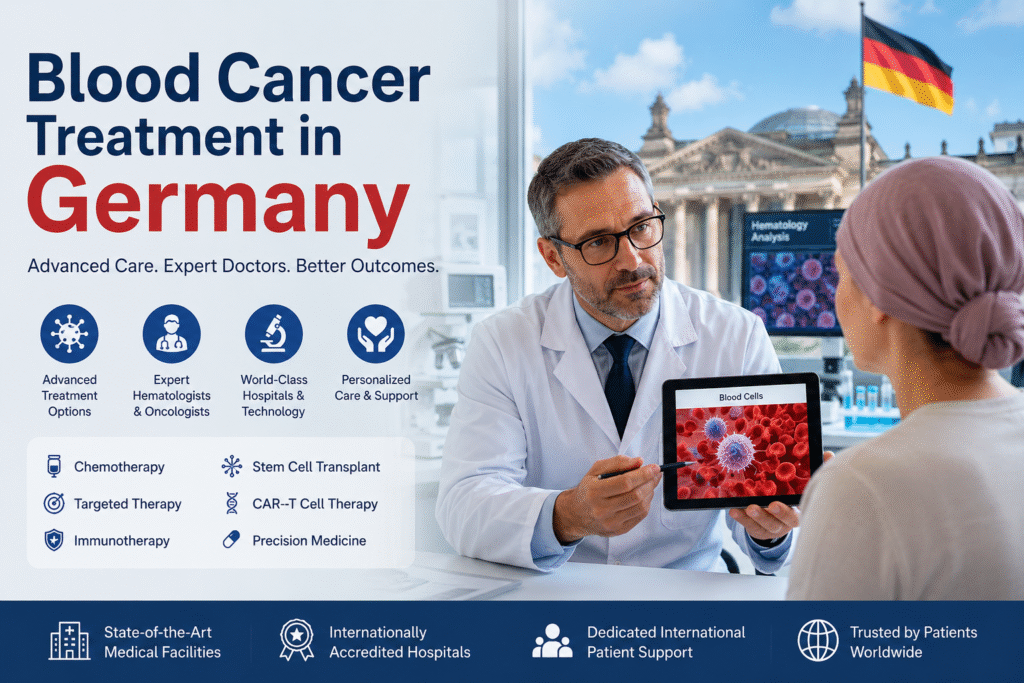
Blood cancer treatment options in Germany include chemotherapy, targeted therapy, immunotherapy, CAR T-cell therapy, and stem cell transplantation. International patients can access advanced hematology care at leading centers in cities like Berlin, Munich, Heidelberg, and Frankfurt, with personalized treatment plans based on cancer type and stage.
Reply in 4 hours · Plan and quote in 2 days · 100% confidential
Blood cancer is a group of cancers that affect the blood, bone marrow, and lymphatic system. Unlike solid tumors that form in organs, blood cancers develop in cells responsible for producing blood or supporting the immune system. As these abnormal cells multiply uncontrollably, they crowd out healthy blood cells, making it harder for the body to fight infections, carry oxygen, and control bleeding.
Worldwide, more than 1.3 million people are diagnosed with blood cancers each year, and these diseases account for over 700,000 deaths annually. Together, leukemia, lymphoma, and multiple myeloma represent approximately 6–7% of all newly diagnosed cancers worldwide. Although blood cancers can occur at any age; the incidence generally increases with age, with acute lymphoblastic leukemia accounting for 80% of the cases in children and young adults.
The three main types of blood cancer are:
Each of these major blood cancers includes several subtypes that differ in how quickly they grow and how they are treated:
Blood cancer can affect anyone, but the likelihood of developing the disease depends on several factors, including age, sex, genetics, environmental exposures, and certain medical conditions.
Age is one of the strongest risk factors. Most blood cancers are diagnosed in adults over the age of 60, particularly chronic leukemias, multiple myeloma, and many non-Hodgkin lymphomas. However, some forms have a different age pattern.
Acute lymphoblastic leukemia (ALL) is the most common cancer in children, while Hodgkin lymphoma often occurs in adolescents and young adults between 15 and 35 years, with another smaller peak after age 55.
Gender also influences risk. Overall, men are more likely than women to develop most blood cancers, including all types. Researchers believe this difference results from a combination of genetic, hormonal, and environmental factors, although the exact reasons are still being studied.
The symptoms of blood cancer tend to progress slowly and may even mimic the symptoms of regular infections, frequently resembling the flu, routine viral infections, extreme stress, or iron-deficiency anemia, making them very easy to overlook. This can make it hard to diagnose early on. Because the symptoms associated with blood cancer result from the inability of the blood cancer to produce healthy cells, which affects the body’s ability to fight off infection, form healthy red blood cells, and stop bleeding.
Common symptoms include persistent exhaustion, recurrent infections, fever, night sweats, and unexplained weight loss. Swollen lymph nodes in the neck, armpit, or groin, as well as excessive bruising, easy nosebleeds, or prolonged bleeding due to low platelet counts, are some of the signs that one may have blood cancer.
In certain types of blood cancers, especially multiple myeloma, patients may experience back pain, rib pain, hip pain, bone fractures, and an increased risk of bone fractures. Patients may suffer from abdominal bloating due to an enlarged spleen or liver and shortness of breath due to anemia.
Unlike most solid tumors, blood cancers do not all use the same staging system. Because these cancers originate in the blood, bone marrow, or lymphatic system and often involve multiple areas of the body from the outset, staging varies depending on the specific type of blood cancer.
Blood cancer is no longer considered uniformly fatal. Many blood cancers are now highly treatable, and some are potentially curable when diagnosed early and managed with modern therapies. Others are managed as chronic conditions with long-term treatment and monitoring. Innovations and progression in Germany around precision medicine, immunotherapy, CAR T-cell therapy, and stem cell transplantation have significantly improved survival and quality of life for many patients.
Blood cancers vary widely in their behavior and goals of treatment.
Some blood cancers, particularly acute leukemias, Hodgkin lymphoma, and certain aggressive non-Hodgkin lymphomas, can often be cured when diagnosed early and treated appropriately.
Children with acute lymphoblastic leukemia (ALL) and adults with Hodgkin lymphoma, for example, now achieve high long-term survival rates with modern treatment protocols.
Other blood cancers, such as chronic lymphocytic leukemia (CLL), chronic myeloid leukemia (CML), many indolent lymphomas, and multiple myeloma, are generally considered treatable but not always curable. T
Thanks to targeted therapies, immunotherapies, and newer cellular therapies, many patients can achieve long periods of remission, allowing them to live active lives for many years.
Treatment goals therefore differ between patients. Depending on the disease, therapy may aim to:
The outlook for blood cancer is highly individualized. Doctors evaluate several factors before estimating prognosis and selecting the most appropriate treatment.
Important prognostic factors include:
Prognosis today is more closely linked to biological characteristics and treatment response than to diagnosis alone.
Diagnosis early on gives patients the best opportunity to begin any type of cancer care before the disease causes serious complications. Even though blood cancers develop slowly, others can progress rapidly and require urgent medical attention.
Detecting blood cancer early can help:
The diagnosis of blood cancer in Germany follows a multidisciplinary and precision-based approach involving hematologists, oncologists, pathologists, radiologists, and laboratory specialists. Cancer centers in Germany employ modern diagnostic techniques to diagnose a specific blood cancer, its genetic features, and the risk of disease, as well as to choose the appropriate treatment methods.
Because blood cancers include leukemia, lymphoma, and multiple myeloma, the diagnostic process varies depending on the suspected disease.
Usually begins with a detailed review of symptoms, medical history, family history, and previous illnesses. Doctors perform a physical examination to check for signs such as:
Blood tests are often the first step when blood cancer is suspected. A complete blood count (CBC) helps evaluate the levels and appearance of:
Additional laboratory tests may include blood chemistry tests, inflammatory markers, and tests to assess kidney and liver function. Abnormal blood cell counts may indicate the need for further investigations.
Bone Marrow Aspiration and Biopsy is an important investigation for diagnosing various forms of blood cancer such as leukemia and multiple myeloma. Bone marrow is sampled and analyzed under the microscope.
This test can help to identify the following:
Flow cytometry analyzes individual cells using laser-based technology to identify specific markers on the surface of cancer cells. It helps classify different types of leukemia and lymphoma and supports accurate diagnosis.
There is an increasing reliance on molecular profiling and genetic testing at Germany’s hematology centers to gain knowledge of the biological features of blood cancer.
This can include:
These tests allow the identification of genetic mutations that affect the prognosis and suitability for treatment options.
Imaging is particularly important for lymphoma and some cases of multiple myeloma. Doctors may use:
In certain leukemias and lymphomas, doctors may perform a lumbar puncture to examine cerebrospinal fluid and determine whether cancer cells have affected the central nervous system.
Many patients get evaluated at specialized hematology and oncology clinics, including university hospitals and accredited cancer care centers. In these centers, multidisciplinary tumor boards review the diagnostic results of patients and formulate treatment plans in line with international guidelines.
If you’re looking for Blood cancer treatment in Germany, then you should know by now that Germany is a leading destination for Cancer treatment, including blood cancer treatment, because of its infrastructure, dedicated cancer treatment facilities, and cutting-edge treatment options like CAR-T cell therapy, stem cell transplants, and precision medicine. Leukemia, lymphoma, multiple myeloma, and other forms of blood cancer can be diagnosed and treated following international guidelines.
Berlin, Heidelberg, Freiburg, Munich, Cologne, Hamburg, etc.. are some of the cities that international patients choose to get their treatment from in Germany, as these cities have advanced hematology departments and university hospitals, DKG-certified cancer centers, and Specialized Hematology Units.
Germany has a large network of certified cancer centers recognized by the German Cancer Society (DKG). These centers follow strict quality standards and provide coordinated care through specialized hematology and oncology departments.
Hospitals such as Charité – Universitätsmedizin Berlin, University Hospital Heidelberg, and University Medical Center Hamburg-Eppendorf (UKE) etc. offer care and treatment related to blood cancers.
Germany has one of the largest bone marrow and stem cell donor registries in the world, operated by DKMS (German Bone Marrow Donor Center). The registry supports access to compatible donors for patients requiring allogeneic hematopoietic stem cell transplantation (HSCT).
Many transplant centers in Germany are JACIE-accredited, meaning they meet internationally recognized standards for stem cell transplantation and cellular therapy.
This means eligible patients may also have access to advanced treatments such as: CAR T-cell therapy for selected leukemia and lymphoma cases, Targeted therapies, Monoclonal antibody treatments, and Immunotherapy.
Blood cancer treatment in Germany increasingly relies on precision medicine. What exactly is precision medicine? – Precision medicine is an approach that tailors blood cancer treatment to the specific biological characteristics of a patient’s cancer rather than using the same treatment for everyone. Doctors analyze the cancer cells for genetic mutations, molecular changes, and other biomarkers to understand how the disease behaves and which therapies are most likely to work.
In blood cancers such as leukemia, lymphoma, and multiple myeloma, precision medicine may help doctors select targeted therapies, immunotherapies, or other personalized treatments.
These may include:
Blood cancer treatment in Germany is usually planned through a multidisciplinary team (MDT) approach. If you are diagnosed with blood cancer, your doctors may involve hematologists, oncologists, transplant specialists, radiologists, pathologists, and other experts to review your diagnosis, test results, and overall health before recommending treatment.
The MDT reviews your case according to national treatment guidelines, international recommendations, and the latest scientific evidence for your specific type of blood cancer. If you have any treatment preferences, concerns, or specific goals, your doctor can discuss these with the team and consider them when creating your personalized treatment plan.
Germany has a strong clinical research network, with university hospitals and cancer centers such as the German Cancer Research Centre (DKFZ) participating in studies for new blood cancer treatments. Depending on your diagnosis and eligibility, you may have access to clinical trials investigating:
German hospitals have dedicated international patient departments that help facilitate care for patients traveling from abroad. Support may include:
This support helps reassure patients, also making them feel at ease about other tasks that need to be taken care of. Keeping focus on the treatment and recovery.
If you need guidance for blood cancer treatment in Germany, CancerRounds can help you understand your diagnosis, explore treatment options, connect with specialized hospitals, and coordinate your medical journey as an international patient.
In Germany, blood cancer treatment depends on the kind of cancer (whether leukemia, lymphoma, or multiple myeloma), the risk group of the disease, genetic features of the disease, and overall condition of the patient.
The treatment strategy is usually devised by multidisciplinary hematology teams.
Chemotherapy uses medicines that destroy rapidly dividing cancer cells or slow their growth. It remains an important treatment for many blood cancers, including acute leukemias, lymphomas, and multiple myeloma. Chemotherapy may be given alone or combined with targeted therapy, immunotherapy, or stem cell transplantation.
Targeted therapies are designed to block specific molecules or genetic changes that help cancer cells grow and survive. Before treatment, doctors may perform molecular testing to identify whether a patient’s cancer has specific targets that can be treated with these medicines.
Immunotherapy helps the body’s immune system recognize and attack cancer cells. It includes treatments such as immune-modulating drugs and immune checkpoint therapies, which may be used for certain blood cancers depending on the disease type and individual factors.
Monoclonal antibodies are laboratory-produced medicines designed to identify specific proteins on cancer cells. By attaching to these targets, they can help the immune system destroy abnormal cells or deliver treatment directly to cancer cells. They are commonly used in several types of lymphoma, leukemia, and multiple myeloma.
CAR T-cell therapy is an advanced form of personalized immunotherapy in which a patient’s own T-cells are modified in a laboratory to better recognize and attack cancer cells. In Germany, this treatment is available for selected patients with certain leukemias and lymphomas, particularly when standard treatments have not provided sufficient results.
Stem cell transplantation replaces damaged or cancerous blood-forming cells with healthy stem cells. It may be used for selected patients with high-risk leukemia, lymphoma, multiple myeloma, and other blood disorders. Depending on the condition, doctors may recommend:
Germany has specialized transplant centers with expertise in hematopoietic stem cell transplantation.
Radiation therapy uses high-energy radiation to destroy cancer cells or control their growth. Can radiation therapy be used for all sorts of blood cancer? No, it is used more commonly for certain lymphomas like Hodgkin Lymphoma, localized disease, or to relieve symptoms such as bone pain caused by multiple myeloma.
Some slow-growing blood cancers may not require immediate treatment. In selected cases, doctors may recommend active surveillance, where the disease is regularly monitored through blood tests, imaging, and clinical assessments. Treatment begins if the disease shows signs of progression.
Supportive care is an important part of all kinds of cancer without exception and blood cancer treatment, and focuses on managing symptoms, reducing treatment-related complications, and improving quality of life. It may include:
Blood cancer treatment has advanced considerably over the past two decades with the development of precision medicine, targeted therapies, immunotherapy, CAR T-cell therapy, and improved stem cell transplantation. These innovations allow doctors to personalize treatment based on the genetic and molecular features of each patient’s cancer.
Modern diagnostic tools such as next-generation sequencing (NGS) and minimal residual disease (MRD) monitoring also help improve treatment selection and monitor response more accurately.
Ongoing research is paving the way to new combinational and advanced cellular therapies that have proved successful in treating patients with leukemia, lymphoma, and multiple myeloma. The major cancer research institutes of Germany are involved in clinical research studies, giving patients access to novel therapies and trials.
Molecularly precise diagnostic tests examine the biological attributes of cancer cells. Such tests assist oncologists in classifying blood cancers and in selecting appropriate treatments that work on particular abnormalities in cancer cells.
With the advent of Next Generation Sequencing (NGS), it has become possible to analyze more than one gene at a time, thereby identifying the mutations and molecular alterations associated with blood cancer. In Germany, NGS is used by laboratories to diagnose, assess risks, and treat blood cancer patients, especially those with leukemia.
Minimal Residual Disease (MRD) testing detects very small numbers of remaining cancer cells after treatment, even when a patient appears to be in remission. This advanced monitoring method helps doctors assess treatment effectiveness, estimate relapse risk, and adjust therapy when needed, especially in leukemia.
CAR T-cell therapy is an advanced cellular therapy that modifies a patient’s own immune cells to recognize and destroy cancer cells. Germany, this treatment is available at cancer centers specialised for selected patients with certain leukemias and lymphomas, particularly those who have not responded adequately to standard therapies.
Germany has extensive experience with hematopoietic stem cell transplantation (HSCT) for blood cancers. Depending on the disease and patient factors, doctors may use:
These approaches are used mainly for selected cases of leukemia, lymphoma, multiple myeloma, and other high-risk blood disorders.
Modern radiation therapy uses advanced planning and imaging technologies to deliver radiation more precisely while reducing exposure to surrounding healthy tissues. It may be used for certain lymphomas, localized disease, or symptom control in advanced blood cancers.
Artificial intelligence (AI) and digital pathology tools are increasingly being explored in blood cancer diagnosis. These technologies can assist specialists in analyzing blood and tissue samples, identifying patterns, and improving diagnostic accuracy.
Personalized medicine combines information from genetic testing, molecular profiling, disease characteristics, and treatment response to create an individualized treatment strategy. Instead of using a single approach for all patients, doctors select therapies based on the unique features of each person’s blood cancer.
Blood cancer treatment approaches in Germany will be characterized by increasing precision and personalization as well as technology-driven solutions. Progress is being made in the development of AI-powered decision support, genomics, advanced cell therapy, and combination therapies to match individuals with the right medications. For instance, researchers at the German Cancer Research Center (DKFZ) have created an AI solution that could support specialists in prescribing appropriate treatments for complicated cases of blood cancers using significant data.
The expenses for the treatment of blood cancers in Germany will differ greatly according to the kind of blood cancer being treated, the stage of the illness, the diagnosis criteria, treatment methods, hospitalization period, and whether or not more advanced treatment is necessary, such as stem cell transplantation or CAR T-cell therapy.
For overseas private patients, the prices of treatment will normally be offered individually after the examination of medical documents, test results, and the treatment program. The figures mentioned below are just estimated.
| Procedure / Treatment | Estimated Cost Range |
| Initial diagnosis and blood cancer evaluation (blood tests, imaging, bone marrow examination, pathology) | €3,000 – €10,000 |
| Chemotherapy for blood cancer (depending on regimen and number of cycles) | €10,000 – €50,000+ |
| Targeted therapy for blood cancer | €20,000 – €100,000+ |
| Immunotherapy / monoclonal antibody therapy for blood cancer | €15,000 – €80,000+ |
| CAR T-cell therapy for blood cancer | €250,000 – €400,000+ |
| Autologous stem cell transplant | €130,000–220,000 |
| Allogeneic stem cell transplant (related and unrelated donor) | €130,000 – €290,000+ |
| Radiation therapy (selected blood cancers) | €8,000 – €28,000 |
| Hospitalization and supportive care (infection management, transfusions, monitoring) | €5,000 – €50,000+ |
| Blood Cancer Type | Typical Treatment Cost Estimate |
| Leukemia | €30,000 – €300,000+ depending on type, chemotherapy intensity, transplant requirements, and advanced therapies |
| Lymphoma | €20,000 – €150,000+ depending on subtype, chemotherapy cycles, immunotherapy, CAR T-cell therapy, or transplantation |
| Multiple Myeloma | €30,000 – €200,000+ depending on targeted therapies, treatment duration, and stem cell transplantation needs |
The final cost may depend on:
For international patients, hospitals generally prepare a personalized cost estimate after reviewing previous medical reports, pathology results, imaging, and treatment history.
The insurance for the treatment of blood cancer in Germany depends on the country of residence of the patient, type of insurance, and treatment process.
Patients With International Health Insurance
If you have international health insurance, the treatment of blood cancer will be covered under your insurance. Before undergoing any treatment in Germany, the patient should first ascertain the following factors:
Can international patients without insurance coverage get blood cancer treatment in Germany? Yes, some international patients receive blood cancer treatment in Germany without insurance, but they are usually treated as self-paying (private-pay) patients. This is more common among patients who travel specifically for medical treatment from countries where their local insurance does not cover treatment abroad, where advanced therapies are unavailable, or when they are seeking a second opinion or specialized care.
Germany has several internationally recognized university hospitals and specialized cancer centers offering treatment for leukemia, lymphoma, multiple myeloma, and other hematologic malignancies. These hospitals provide multidisciplinary hematology care, advanced diagnostics, stem cell transplantation, cellular therapies, and access to clinical research.
| Hospital | City | Blood Cancer Treatment Expertise |
| Charité – Universitätsmedizin Berlin | Berlin | Diagnosis and treatment of leukemia, lymphoma, and multiple myeloma; hematology, stem cell transplantation, cellular therapies, and clinical research |
| University Hospital Heidelberg | Heidelberg | Advanced hematology and oncology care; leukemia and lymphoma treatment, molecular diagnostics, stem cell transplantation, and innovative therapies |
| University Hospital Cologne | Cologne | Specialized care for leukemia, lymphoma, plasma cell disorders, immunotherapy, cellular therapies, and clinical trials |
| LMU University Hospital Munich | Munich | Treatment of acute and chronic leukemia, lymphoma, and multiple myeloma using multidisciplinary and personalized approaches |
| University Medical Center Hamburg-Eppendorf (UKE) | Hamburg | Hematology and oncology services including blood cancer diagnosis, systemic therapies, transplant medicine, and research programs |
Blood cancers include leukemia, lymphoma, and multiple myeloma, and each has different survival outcomes. Advances in targeted therapy, immunotherapy, CAR T-cell therapy, and stem cell transplantation have significantly improved survival rates for many patients. According to recent reports from the American Cancer Society, the overall 5-year relative survival rate for all cancers combined has increased to approximately 70%,
| Blood Cancer Type | Approximate 5-Year Relative Survival Rate* |
| Hodgkin Lymphoma | Around 85–90% |
| Non-Hodgkin Lymphoma | Around 70–75% (varies significantly by subtype) |
| Leukemia (all types combined) | Around 65–70% |
| Chronic Lymphocytic Leukemia (CLL) | Around 85–90% |
| Acute Lymphoblastic Leukemia (ALL) | Around 70% (higher in children) |
| Acute Myeloid Leukemia (AML) | Around 30% overall (higher in younger patients) |
| Multiple Myeloma | Around 60% |
*Approximate estimates based on SEER and the American Cancer Society. Survival varies by age, disease stage/risk group, genetic features, and treatment received.
Blood cancer outcomes have dramatically improved owing to early diagnosis, improved supportive care, and progress in individualized therapy. Patients are now able to enter into long-lasting remission, while some of the blood cancers that used to be hard to treat now have better treatment options available.
Foreign patients looking for treatment in Germany have an opportunity to benefit from specialized hematological centers, molecular diagnostics, clinical trials, bone marrow transplants, and cell therapies.
Recovery after blood cancer treatment depends on the type of cancer, treatment approach, and individual health condition. Some patients recover within weeks after completing treatment, while others may need several months, especially after intensive therapies such as stem cell transplantation or CAR T-cell therapy. Recovery focuses not only on physical healing but also on rebuilding strength, preventing complications, and supporting emotional well-being.
The recovery period varies based on the treatment received:
Blood cancer treatments can weaken the immune system, increasing infection risk. Recovery may include:
Cancer-related fatigue is one of the most common challenges after treatment. Helpful approaches include:
Finishing treatment can bring mixed emotions, including relief, anxiety, or fear of recurrence. Emotional support may include:
Rehab programs help patients regain independence and improve quality of life. They may include a combination of physical therapy to rebuild strength and mobility, nutritional support, occupational therapy for returning to daily routines, and support for managing long-term treatment effects.
Regular follow-up is an essential part of long-term recovery. Your doctors may perform blood tests and imaging when required, monitoring for treatment side effects, assessment of remission status, screening for late effects of treatment, and supportive care planning.
The time needed to return to normal activities depends on the treatment type, energy levels, and overall recovery. Some patients may return gradually within weeks, while others, especially after stem cell transplantation, may need several months.
Your healthcare team can guide you on when it is safe to resume:
With appropriate follow-up, rehabilitation, and lifestyle support, many blood cancer survivors can return to active and fulfilling lives after treatment.
The journey after cancer treatment is a gradual process of healing and rebuilding. With medical follow-up, rehabilitation, and emotional support, many survivors continue to regain strength and move forward with renewed hope and confidence.
Step 1: Provide Your Medical Records
Provide your reports of blood tests, results of bone marrow biopsy, pathology reports, images, and previous treatment.
Step 2: Online Consultation
Have an online consultation with a specialist in hematology in order to get information about your diagnosis, treatment, possible outcomes, its cost, and the time of your stay in the hospital.
Step 3: Personalized Treatment Plan
Your medical examination is used for creating the personalized treatment plan, schedule of treatment, and estimation of costs.
Step 4: Help with Travel Documents
After your treatment is confirmed, the international office of the hospital will give you documents that will help you apply for a medical visa and organize your trip.
Step 5: Arrival and Stay in Germany
After you arrive in Germany, registration and accommodation in the hotel take place, then you need to visit your appointments in the hospital.
Step 6: Hospital Admission and Treatment
If necessary, additional tests are done before the beginning of your treatment, which includes chemotherapy, targeted therapy, immunotherapy, CAR T-cell therapy, stem cell transplantation, or the combination of these methods.
Step 7: Recovery and Rehabilitation
After the treatment process, your health condition is monitored and rehabilitated if necessary.
At CancerRounds, we make the search for advanced cancer care easier and more transparent. Our team supports patients in exploring treatment options in Germany with trusted medical guidance, hospital coordination, and personalized assistance.
Sources:
Published By
.webp)
Global Patient Care, Redefined
The CancerRounds Medical Content Team specialises in creating accurate, clear and patient-focused healthcare content. Our content is written by medically trained writers, medically reviewed, and based on reputable medical sources to support informed healthcare decisions.
Get expert guidance instantly
Share a few details and our medical team gets back to you within 4 hours with the next steps.

Tell us what you are facing and our medical team will guide you to the right doctors, hospitals and treatment.
Free Review, No Commitment
Free assessment with no pressure to proceed.
Trusted by 100,000+ Patients
Across 125+ countries worldwide
500+ Top Partner Hospitals
Globally accredited medical facilities
5000+ Expert Specialists
Senior doctors across major specialties.
Making quality healthcare accessible to patients worldwide
Everything you need to know about choosing the right hospital, doctor and treatment plan.


