
An itchy neck is usually caused by dry skin, eczema, allergies, or contact dermatitis rather than cancer. However, persistent unexplained itching can sometimes be associated with conditions such as lymphoma, leukemia, or liver disease. If itching occurs alongside swollen lymph nodes, unexplained weight loss, night sweats, or jaundice, consult a doctor.
Confused about treatment options?
Get a free second opinion from our oncologists
An itchy neck is rarely a sign of cancer on its own. Most people who search this question are dealing with something far more ordinary: dry skin, eczema, contact dermatitis, an allergy, or sweat and friction from a collar or necklace.
That said, certain cancers can cause itching (the medical term is pruritus). When they do, it is usually persistent, unexplained and accompanied by other symptoms, rather than a short-lived itch in one spot. This guide explains the common causes, which warning signs matter, how doctors investigate persistent itching, and when it is time to book an appointment.
It can be, but this is uncommon, and neck-specific itching is not a recognised early warning sign of any cancer. Persistent itching is more often linked to cancer when it is generalised (all over the body) or has no clear cause.
Pruritus may occur with some cancers because of immune responses, inflammatory chemicals released by the body, or changes caused by the disease itself. Cancers that have been associated with itching include:
Itching does not mean cancer is present. For a broader overview, read our guide on what cancer can cause itchy skin.
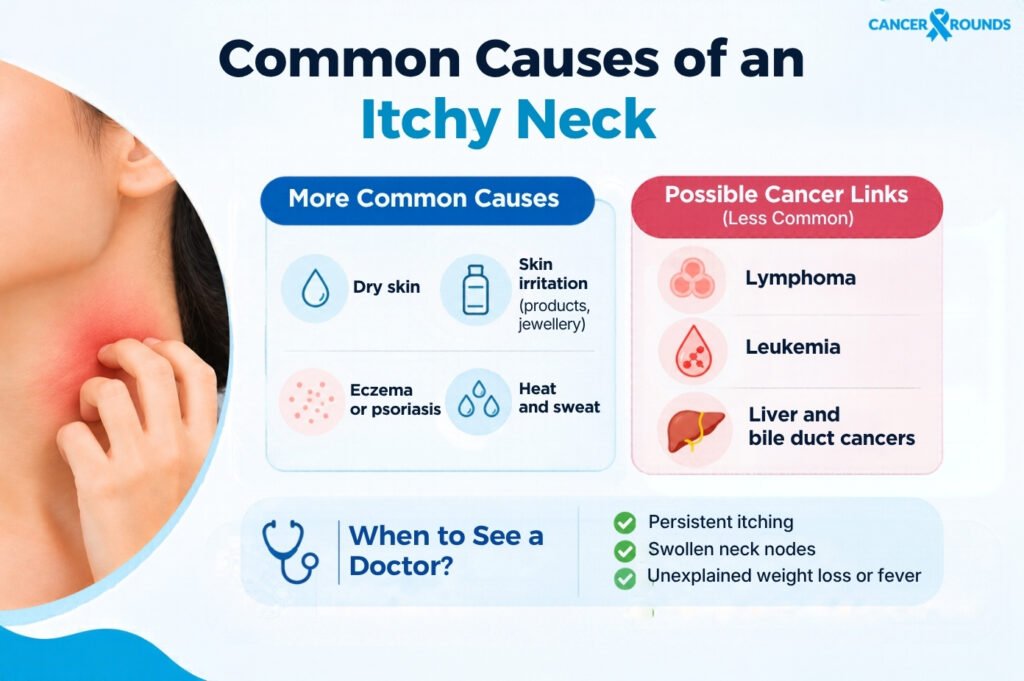
Most neck itching comes from the skin itself or from something touching it. The most common causes are:
Some people have an itchy neck without a rash. This can happen with dry skin, nerve-related itching, or a new product that irritates without leaving visible marks. If no cause is clear and the itch continues, it deserves a medical review.
These patterns are a guide to possible explanations, not a tool for diagnosing yourself.
| Symptom pattern | Possible explanation |
| Itchy neck with dry, flaky skin | Dry skin or eczema |
| Itchy neck after wearing jewellery | Contact dermatitis |
| Itchy neck with redness and bumps | Allergic or inflammatory skin reaction |
| Persistent itching without a visible rash | Several possible causes, including systemic conditions |
| Itching with swollen lymph nodes and night sweats | Needs medical assessment; lymphoma is one possible consideration |
| Generalised itching with jaundice | Possible liver or bile duct disorder |
Be concerned if an itchy neck persists or keeps returning without an obvious explanation, or if it comes with any of these:
These symptoms have many possible causes and are not proof of cancer. Still, persistent itching combined with other unexplained symptoms is the pattern that deserves prompt medical assessment. To understand how cancer symptoms are usually recognised, see our overview of understanding cancer symptoms.
Not everyone with an itchy neck needs cancer tests. A doctor starts with the simplest explanations and orders further investigations only when the findings justify them.
The tests chosen depend on the suspected cause. Clinical guidelines on chronic pruritus describe this stepwise approach, moving from history and examination to targeted testing. You can read more in our guide to how cancer is diagnosed.
Simple skin care often settles mild itching:
If itching persists, worsens or comes with other symptoms, seek medical advice rather than trying one product after another. A pharmacist or doctor can advise whether a medicated cream or antihistamine suits your situation.
.webp)
Get expert guidance instantly
Tell us about your condition and we will help you find the right care.
Get expert guidance instantly
Share a few details and our medical team gets back to you within 4 hours with the next steps.

Tell us what you are facing and our medical team will guide you to the right doctors, hospitals and treatment.
Free Review, No Commitment
Free assessment with no pressure to proceed.
Trusted by 100,000+ Patients
Across 125+ countries worldwide
500+ Top Partner Hospitals
Globally accredited medical facilities
5000+ Expert Specialists
Senior doctors across major specialties.
Making quality healthcare accessible to patients worldwide
Everything you need to know about choosing the right hospital, doctor and treatment plan.