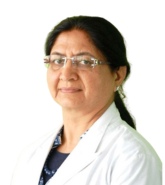
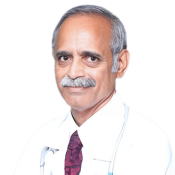
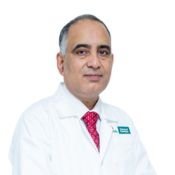
Best Vulvar Cancer Treatment Doctors in India

Dr. Vinod Raina


Dr. Pramod Kumar Julka

Dr. Surender Kumar Dabas

Dr. Jalaj Baxi

Dr. Mukesh Patekar

Dr. Anil K Dhar

Dr. Rajat Bajaj

Dr. Sajal Kakkar

Dr. Tejinder Kataria

Dr. Subodh Chandra Pande

Dr. S.V.S.S Prasad

Dr. T Raja

Dr. Ashok Kumar Vaid

Dr. Feroz Pasha

Dr. S Hukku

Dr. Nalini Rao

Dr. Subhash Chandra Chanana

Dr. Bhawana Saddy Awasthy

What Patients with Vulvar Cancer Worry About Most
Women diagnosed with vulvar cancer worry about how disfiguring surgery will be, whether sexual function will be lost, whether the cancer has spread to the groin lymph nodes, and whether radiation will be needed afterwards. Many also feel embarrassed and delay seeking care, which can let the disease progress. Modern surgical planning preserves as much normal anatomy as possible, sentinel lymph node biopsy avoids full groin dissection in many cases, and reconstruction options restore appearance and function.
How Vulvar Cancer Is Diagnosed
A persistent vulvar lump, ulcer, itching, or pain that does not heal needs biopsy. Histology confirms squamous cell carcinoma in most cases, with melanoma, basal cell, and adenocarcinoma being less common. Magnetic resonance imaging of the pelvis assesses local extent and groin lymph nodes. Computed tomography of the chest, abdomen, and pelvis is done for staging. Sentinel lymph node biopsy with technetium and blue dye is now standard for early-stage disease with clinically negative groin nodes.
Treatment Options for Vulvar Cancer in India
Wide local excision is sufficient for very small early lesions. Radical local excision with sentinel lymph node biopsy is the standard for stage one and two disease. Full inguinofemoral lymphadenectomy is needed when sentinel nodes are positive or for larger tumours. Reconstruction with local flaps preserves appearance. Locally advanced disease is treated with chemoradiation using cisplatin and external beam radiation, sometimes followed by surgery. Recurrent or metastatic disease is treated with platinum-based chemotherapy and immunotherapy in selected cases. Fortis Memorial Research Institute, Medanta, Apollo, BLK-Max, and Tata Memorial run gynae-oncology programmes with experience in vulvar surgery and reconstruction.
Recovery, Success Rates, and Follow-Up
Five-year survival is around ninety percent for stage one disease, seventy to seventy-five percent for stage two, fifty percent for stage three, and twenty percent for stage four. Hospital stay for radical local excision with sentinel lymph node biopsy is three to five days. Full inguinofemoral lymphadenectomy needs five to seven days and carries a risk of lymphedema. Wound healing takes four to six weeks and may need wound care support. Chemoradiation runs for six to seven weeks. Follow-up is every three to four months for two years, then every six months until year five.
How to Choose the Right Doctor
Look for a gynae-oncologist with focused experience in vulvar surgery and sentinel lymph node biopsy. Ask how many vulvar cancer cases the surgeon treats per year, whether the centre offers sentinel lymph node biopsy, whether plastic surgery support is available for reconstruction, and whether the radiation oncology team has experience with vulvar planning. A multidisciplinary tumour board adds value for complex cases.
Support for International Patients
Vulvar cancer surgery and full adjuvant treatment in India cost substantially less than in the United Kingdom, United States, or Middle East. Cancer Rounds arranges the medical visa invitation letter, airport pickup, accommodation near the treatment hospital, multilingual support in eleven plus languages, and full coordination with the gynae-oncology unit. Patients from Nigeria, Bangladesh, Oman, Kuwait, Qatar, Kenya, Uganda, Tanzania, Ghana, Ethiopia, Cameroon, Mauritius, Mozambique, Senegal, Zimbabwe, Zambia, Guinea, Liberia, Madagascar, South Sudan, Qatar, Chad, Sierra Leone, Congo, Iraq & Uzbekistan, and other countries travel to India for vulvar cancer care every year.

Frequently Asked Questions
Will surgery affect sexual function?
Modern vulvar surgery preserves as much normal tissue as possible, and reconstruction with local flaps restores appearance. Sexual function is often preserved, especially when sentinel lymph node biopsy is used and radical procedures are avoided.
What is sentinel lymph node biopsy?
It is a technique that identifies and removes only the first draining lymph nodes in the groin instead of all groin lymph nodes. It accurately stages the disease while sparing patients the risk of lymphedema from full lymphadenectomy.
Is chemoradiation a substitute for surgery?
For locally advanced disease that would otherwise need very disfiguring surgery, chemoradiation can shrink the tumour first and sometimes avoid radical surgery altogether. The decision depends on tumour size, location, and response to treatment.
What causes vulvar cancer?
Most squamous cell vulvar cancers are linked to human papillomavirus infection or to long-standing inflammatory skin conditions like lichen sclerosus. Smoking, immune suppression, and previous cervical lesions raise the risk.
How do I prevent lymphedema after surgery?
Sentinel lymph node biopsy when possible, early physiotherapy, gentle leg elevation, skin care to prevent infection, and compression garments when needed all reduce the risk and severity of lymphedema after groin surgery.
Can vulvar cancer come back?
Yes, mostly at the original site or in the groin nodes. Close follow-up every three to four months in the first two years catches recurrence early when further surgery or radiation can still be curative.